Month: August 2026

  • When the App Becomes the Queer Space: Grindr, HeeSay and Digital Life in Pakistan

    When the App Becomes the Queer Space: Grindr, HeeSay and Digital Life in Pakistan

    Author: Ahmed Rik

    Published by: PridePakistan.org

    A gay man can spend an entire day surrounded by people and still have nowhere to be openly gay.

    He might go to university, work, sit with friends, eat dinner with family, and move through a city of millions. Queer people undoubtedly exist around him, but most remain invisible to one another.

    Then he opens an app.

    Suddenly, there are profiles nearby. Someone is a few kilometres away. Someone else lives in the same neighbourhood. Another person understands a joke he would never make around his straight friends.

    The city has not changed. His ability to see a queer community inside it has.

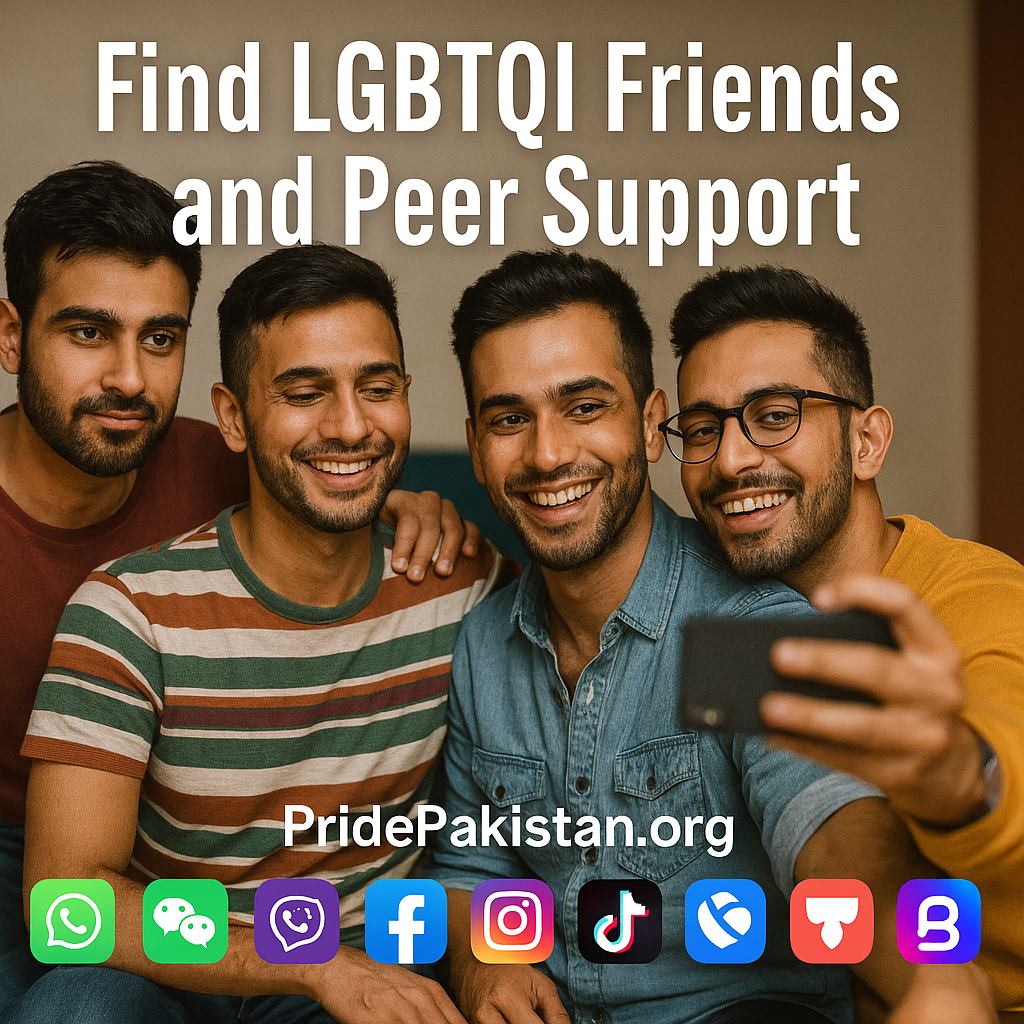
    That is why apps such as Grindr and HeeSay (formerly Blued) cannot be understood in Pakistan simply as dating or hookup apps. People certainly use them for sex, dating, and relationships. But they can also become places to make friends, gossip, argue, ask questions, find health information, deal with loneliness, and simply spend time around other queer people.

    In a country where openly LGBTQ+ physical spaces are extremely limited, sometimes the app itself becomes the queer space.

    Why an app matters differently when there is nowhere else to go

    Queer digital life in Pakistan exists inside a difficult legal and social environment.

    Section 377 of the Pakistan Penal Code, inherited from British colonial law, criminalizes what the statute describes as intercourse “against the order of nature.” Pakistan’s wider legal environment around sexuality and gender also remains deeply contested.

    The Transgender Persons (Protection of Rights) Act of 2018 represented an important expansion of recognition for transgender people, including self-perceived gender identity. However, in May 2023, the Federal Shariat Court struck down key provisions relating to self-identification, reflecting ongoing legal challenges.

    Then there are the social pressures that never appear neatly in legal statutes:

    • Family expectations
    • Marriage pressure
    • Religious stigma
    • Fear of being outed
    • Fear of losing housing, employment, or relationships

    For many gay, bisexual, and queer men, survival can mean separating different parts of life. Your family knows one version of you. Your workplace knows another. Your queer friends may know someone much closer to the person you actually feel yourself to be. That is the environment in which digital platforms can become unusually important.

    Grindr reveals a queer city hiding inside the ordinary one

    Grindr’s basic idea is simple: show people who are nearby.

    But proximity means something very different when a community cannot easily make itself visible in public. Open the app in Karachi, Lahore, or Islamabad and suddenly the ordinary geography of the city gains another layer.

    There are gay men around you. They were there before you opened the app. You simply could not see one another.

    Academic research on digital media in South Asia describes Grindr as a space where Pakistani queer men negotiate desire, secrecy, identity, and risk. A profile that initially appears because of attraction may eventually become a friend. A conversation intended to last ten minutes may continue for months. Someone you never meet physically may still become part of your social world.

    The technology begins doing something larger than matching people: it starts mapping an otherwise invisible community.

    HeeSay and the rise of a “second social life”

    This becomes even easier to see with HeeSay.

    Blued’s international platform was rebranded as HeeSay and expanded beyond one-to-one dating toward livestreaming, voice conversations, and community content. That creates a different kind of queer digital environment.

    Someone can finish work, come home, deal with family responsibilities, and then spend several hours in a livestream or voice room. People arrive. Someone starts flirting. Someone tells a story. Two people fight. Everybody else discusses the fight. Someone dramatically leaves. Twenty minutes later, they return.

    Friendships form. Rivalries form. Crushes appear. Inside jokes develop. None of this sounds particularly revolutionary, and that is precisely why it matters. These are ordinary forms of social life.

    In places with visible queer neighbourhoods, bars, organisations, and community centres, some of these interactions happen physically. When those spaces are difficult or impossible to access, they can migrate into an app.

    For some users, this creates something resembling a second social life: a queer social world existing alongside the heterosexual-facing life they navigate offline.

    A digital mehfil

    Perhaps one useful way to understand these spaces in a Pakistani context is as a kind of digital mehfil. A mehfil is a gathering. People come together to talk, listen, perform, exchange stories, flirt, debate, and simply spend time in one another’s presence. The technology is new; the human need behind it is not.

    Scholarly literature on South Asian gender and sexuality challenges the idea that queer life in Pakistan is simply a Western import. Same-sex intimacy, gender variance, and non-normative desire have rich histories intertwined with South Asian cultural, literary, and spiritual traditions.

    Digital platforms are therefore not creating queer Pakistanis. They are creating new ways for queer Pakistanis to find one another.

    The community does not end at Pakistan’s borders

    Digital queer spaces can also matter to Pakistanis who have left the country.

    Someone living in the United States, Canada, Britain, or elsewhere may have far greater access to gay bars, Pride events, and LGBTQ+ organisations. But access to gay life does not automatically replace access to Pakistani gay life. Language matters. Humour matters. Urdu slang matters. Cultural references matter. The particular experience of being both Pakistani and queer matters.

    A Pakistani gay man abroad can join a HeeSay room and suddenly be surrounded again by familiar accents, jokes, arguments, and references. One platform can therefore respond to two different forms of isolation:

    • Inside Pakistan: It connects people who lack physical queer infrastructure.
    • Outside Pakistan: It reconnects people with a queer cultural world they miss.

    Sometimes a dating app becomes part of public health

    There is another reason these platforms deserve serious attention: they can help sexual-health information reach people whom traditional outreach struggles to reach.

    UNAIDS and national surveillance estimates highlight elevated HIV vulnerability among key populations in Pakistan, including men who have sex with men (MSM) and transgender individuals. Mental health literature also points to significant rates of anxiety, depression, and minority stress among marginalized communities. At the same time, social stigma can discourage individuals from seeking timely healthcare.

    Imagine being afraid that simply asking a doctor about HIV testing, PrEP, or sexual health might expose your sexuality. Traditional outreach therefore faces significant structural limits.

    Historically, community initiatives—such as the pioneer work by the Naz Male Health Alliance (NMHA)—demonstrated the importance of tailored community health programs. While physical community-based organizations in Pakistan face operational and regulatory hurdles today, digital outreach models have increasingly stepped into the gap. Internationally, platforms like Blued/HeeSay pioneered “Internet + HIV Prevention” models to connect users with confidential health resources.

    If someone is reluctant to visit a physical clinic, but opens a social app every evening, digital health communication can serve as an accessible first step toward accurate information and safer practices.

    The same technology that connects you can expose you

    This is where the story becomes more complicated.

    Grindr works because location matters; you want to know who is nearby. But when membership in a queer dating app itself reveals sensitive information about someone, location becomes much more than a convenience.

    Global cybersecurity research has demonstrated techniques such as location trilateration, where multiple distance measurements can potentially be used to estimate someone’s physical location. While these technical studies examine digital infrastructure globally, the risk becomes particularly serious in any environment where being identified as queer carries severe social or legal risks.

    For a closeted gay man, a location leak is therefore not merely a technical privacy problem; it can become a physical-safety problem.

    The same principle applies elsewhere:

    • A screenshot can become blackmail.
    • An intimate photograph can become leverage.
    • A fake profile can become a trap.

    Reports on digital security in Pakistan document users navigating risks including catfishing, extortion, and offline harassment.

    The closet can be weaponised

    Blackmail targeting queer people works because the attacker understands the victim’s social environment. The threat does not have to be: “Give me money or I will hurt you.”

    It can simply be:

    • “Give me money or I will tell your family.”
    • “I will send these photos to your employer.”
    • “I will tell people you were using Grindr.”

    The attacker is weaponising the closet. That is why queer digital safety cannot be reduced to basic advice like “use a strong password.” The danger does not exist only inside the phone; it comes from what can happen when information from the phone enters someone’s family, workplace, or community.

    The Pakistani internet is not politically neutral

    Queer users also navigate a broader environment of internet regulation and surveillance. Pakistan’s Prevention of Electronic Crimes Act (PECA) grants authorities extensive powers over online content and electronic data.

    In September 2020, the Pakistan Telecommunication Authority (PTA) blocked several popular location-based dating applications, including Grindr and Tinder, citing content moderation policies. Users frequently respond to blocked services through VPNs and circumvention tools. Meanwhile, regional discussions continue around expanding digital monitoring and filtering systems.

    This produces a complex paradox: the internet becomes important partly because offline queer life is restrictive, while digital spaces themselves remain subject to restrictions and monitoring.

    Your information may travel further than your screen

    Location is not the only privacy concern. Dating apps exist inside a much larger digital advertising and analytics ecosystem.

    Applications interact with analytics providers, advertising networks, and software development kits (SDKs). Globally, major dating platforms have faced scrutiny over data-sharing practices and the broader real-time bidding advertising ecosystem, where device data circulates across advertising networks.

    Most users never see any of this. You open an app, an advertisement appears, and everything looks ordinary. For queer users in sensitive contexts, the stakes are particularly high when data trails could potentially link to sexual orientation or location.

    Safety features matter differently in Lahore than in Los Angeles

    Technology companies increasingly recognise that identical product design does not create identical levels of safety everywhere.

    Initiatives like Grindr for Equality have introduced safety adjustments for users in higher-risk countries, such as disabling precise distance displays, offering disappearing media, discreet app icon options, and PIN locks.

    This points toward a much larger lesson for technology companies: localization cannot mean translation alone. Changing English into Urdu does not automatically make a product locally safe. True localization requires understanding the social environment around the user:

    • Can family members inspect their phone?
    • Could a lock-screen notification accidentally out them?
    • Could revealing an exact distance expose their home?
    • Can private photographs be saved or screenshotted?
    • Can someone browse without becoming publicly visible?

    These are product-design questions. For some users, they are also survival questions.

    Should you have to pay to be safer?

    This leads to a critical question regarding app design. Grindr and HeeSay operate through freemium models where basic access is free and additional capabilities require paid subscriptions.

    While charging for premium features is standard commercial practice, tension arises when privacy and safety controls are placed behind subscription tiers—creating what researchers refer to as a “safety paywall.”

    It raises a fundamental question every platform serving vulnerable communities should ask: Which features are premium conveniences, and which should be part of the minimum safety standard for every user?

    Staying safer on queer dating and social apps

    No safety advice can eliminate the risks created by criminalisation, stigma, or bad actors. The responsibility for harassment or harm always rests entirely on the person committing it.

    Still, users can reduce potential exposure through proactive digital hygiene:

    • Avoid revealing exact home or workplace locations early in conversations.
    • Exercise caution with profiles that push for immediate unverified meetups.
    • Consider meeting new acquaintances in public spaces first.
    • Share meetup plans or locations with a trusted friend.
    • Be mindful when sharing photos that include identifiable facial features or recognizable locations.
    • Review notification previews, app-lock settings, and discreet icon options.
    • Utilize screenshot protection or disappearing media features where available.
    • Exercise extreme caution if anyone attempts blackmail, extortion, or coercion. Preserve evidence safely if possible.
    • For sexual health, seek guidance from verified health literature and competent healthcare professionals.

    These apps are not heroes; they are not villains either

    It would be easy to categorize dating apps as either purely liberating or purely dangerous. Reality is more complex.

    • They can foster meaningful connections while exposing users to potential risk.
    • They can alleviate isolation while reflecting social hierarchies and biases.
    • They can serve as channels for health awareness while operating within commercial data structures.
    • They can offer a sense of community while creating digital footprints.

    That complexity is a reason to analyze these platforms thoughtfully rather than dismiss them.

    What would queer-centred technology look like?

    A queer-centred approach to digital product design begins with a core principle: The most vulnerable user should not be treated as an edge case.

    That means:

    • Minimizing unnecessary sensitive data collection at the source.
    • Providing granular, free control over location visibility and profile exposure.
    • Offering discreet, customizable notifications.
    • Ensuring clear data-deletion and account-purging procedures.
    • Implementing responsive mechanisms against extortion, harassment, and catfishing.
    • Making essential safety features accessible to all users regardless of subscription status.

    Most importantly, developers benefit from engaging directly with local community perspectives to understand the real-world environments in which their technologies operate.

    Sometimes four hours of “engagement” is really four hours with friends

    Technology platforms track user metrics through sessions, retention, and time spent. A four-hour session looks like high engagement on a dashboard.

    Behind the metric, however, that time represents human connection: sitting in a voice room with friends, discussing a personal setback, asking about health resources, sharing humor, or simply existing in a space without having to conceal one’s identity.

    For many queer Pakistanis, these digital platforms serve multiple roles simultaneously: a social network, a health access point, a digital mehfil, and a vital space for community connection.

    Editorial Note:This article reflects the personal observations, analysis, and opinions of the member, Ahmed Rik. Information regarding digital platforms, public health, and human rights is drawn from a combination of published literature, academic research, and personal observation. For specific references, data sources, or inquiries regarding the information cited in this piece, please contact the author directly.
  • Beyond Boundaries: How Phone Searches and Digital Profiling Are Criminalizing LGBTQI+ Existence in Pakistan

    Beyond Boundaries: How Phone Searches and Digital Profiling Are Criminalizing LGBTQI+ Existence in Pakistan

    Living as a gay or queer individual in Pakistan has long required navigating systemic prejudice and quiet survival. However, a dangerous escalation by state authorities is making even basic existence increasingly perilous. Law enforcement and border control agencies—including the Federal Investigation Agency (FIA) and local police—are actively violating individual privacy by conducting random, arbitrary checks of personal mobile phones to target, blackmail, and arrest individuals based on private social media conversations and text messages.

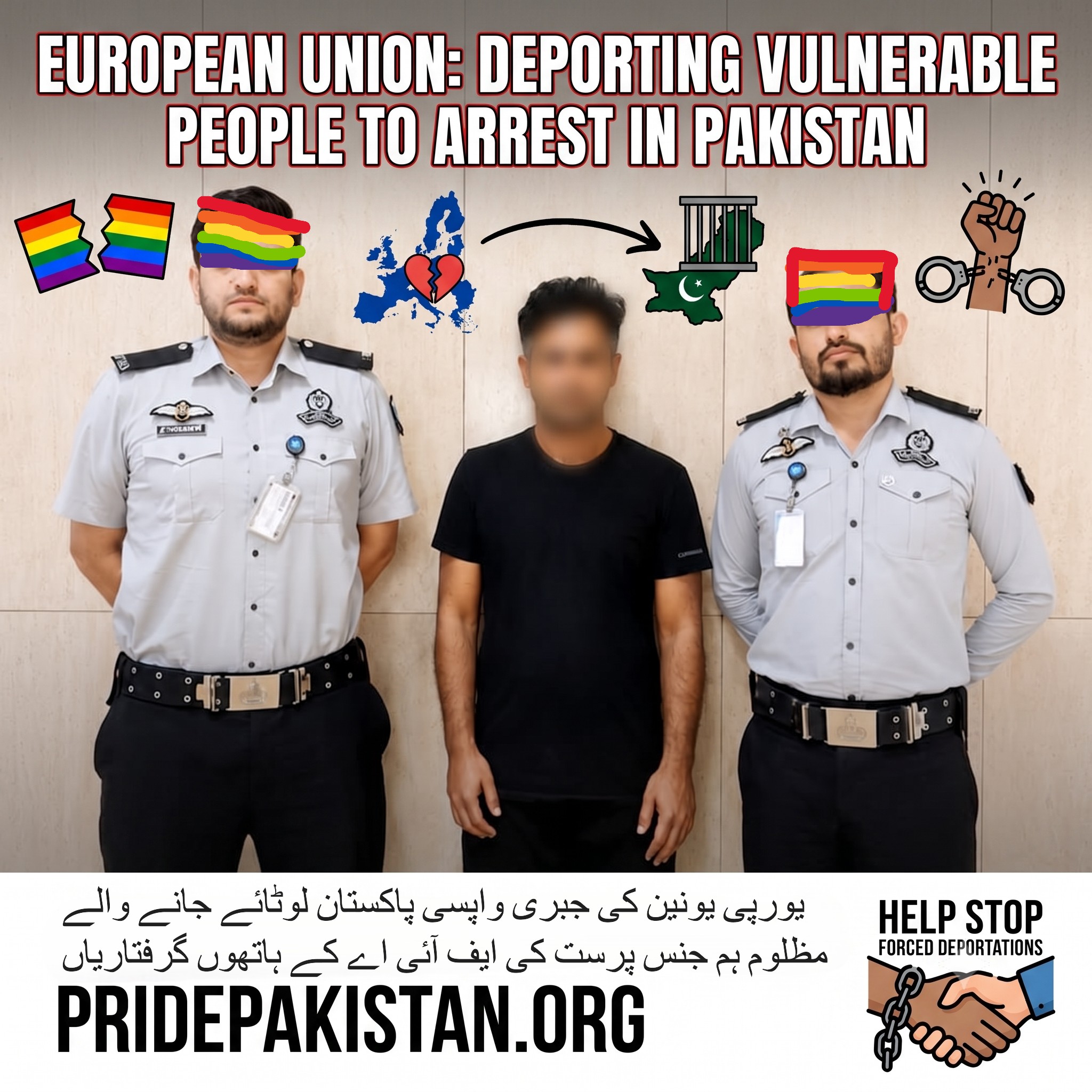
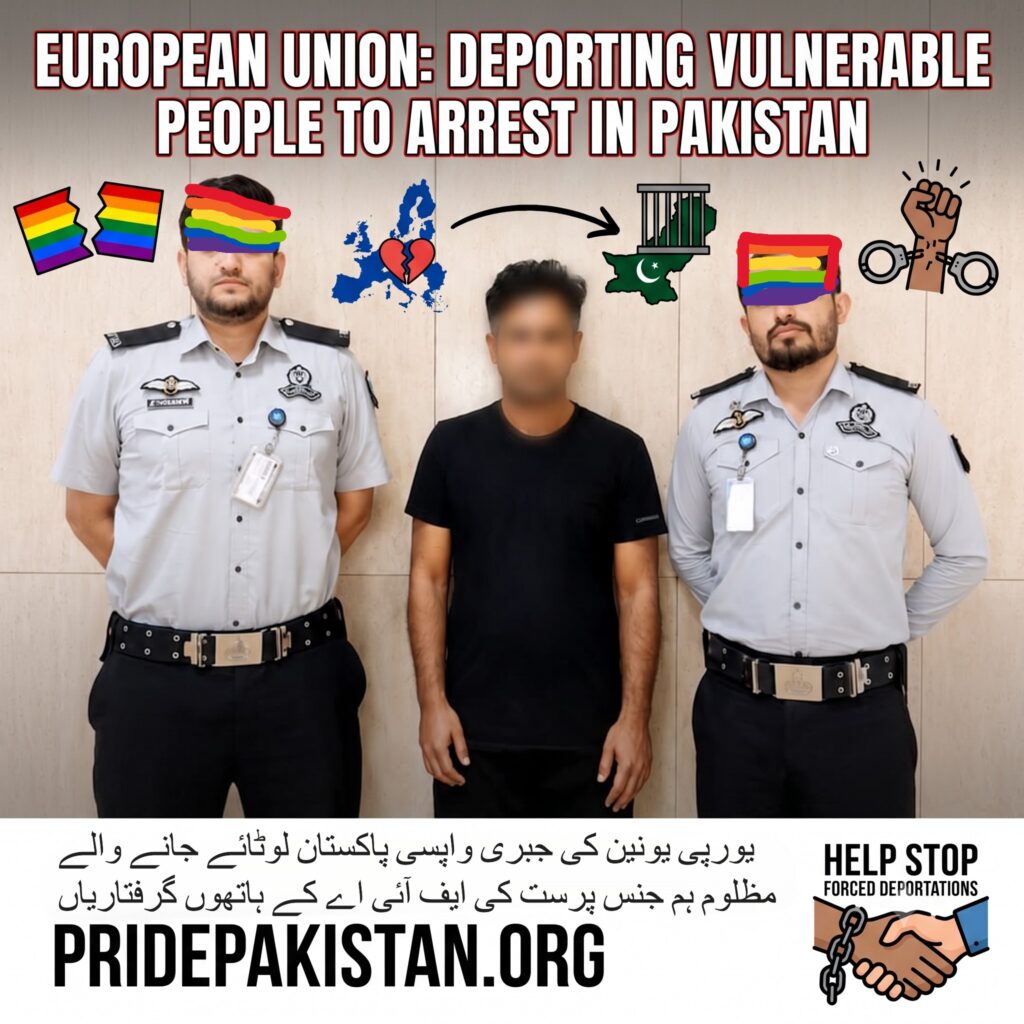
    This alarming pattern came to light once again in a recent case reported by national media (Jang News). A gay individual, previously deported from an European Union member state, was intercepted while traveling. During an inspection, FIA officers searched his personal phone, discovered private chat histories with his boyfriend, and subsequently arrested him, restricting his movement entirely on the grounds of his sexual orientation.

    This case is not an isolated incident. It exposes two critical, interconnected human rights crises: the dangerous flaws in Western asylum deportations, and the expanding surveillance state within Pakistan.

    From “Adult Content” to Criminalizing Identity

    Previously, authorities often relied on vague statutes regarding illegal or explicit digital media to confiscate devices or intimidate individuals. Now, state agencies have moved far beyond checking for restricted media. Personal chats, private WhatsApp messages, dating app profiles, or simple expressions of affection between consenting adults are now being weaponized as grounds for arrest, false FIRs (First Information Reports), and detention.

    When an individual’s private digital life is subjected to arbitrary search without a warrant or legal cause, the legal system ceases to operate on evidence of harm and instead becomes a tool for moral policing and state extortion.

    The Deadly EU Connection

    This case once again highlights the severe flaw in European immigration policies regarding queer asylum seekers. EU member states frequently reject asylum applications from LGBTQI+ Pakistanis under the false assumption that Pakistan is “safe enough” if individuals simply remain discreet.

    Yet, as this incident proves, discretion is impossible in an environment of arbitrary digital stop-and-frisks. When European authorities deport queer individuals back to Pakistan, they send them directly into a system where border officials inspect devices, uncover their identity, and immediately detain them upon arrival. By ignoring these realities, EU states are actively feeding vulnerable individuals back into a pipeline of state persecution.

    The Reality of Daily Life: Living in Constant Fear

    The weaponization of digital devices makes it virtually impossible for queer Pakistanis to live a normal, peaceful life. The psychological and social impact of this surveillance includes:

    • Constant Paranoia and Self-Censorship: Individuals are forced to constantly clear their search histories, delete private messages, or avoid keeping contact details of partners on their phones, fearing that a random police checkpoint or airport inspection could lead to immediate arrest.
    • Fabricated Charges and Extortion: Knowing the intense social stigma and legal vulnerability surrounding same-sex relations, corrupt officials frequently use private chats to fabricate severe FIRs, forcing victims or their terrified families to pay heavy bribes to avoid public exposure.
    • Complete Isolation: When digital spaces—the only place where many queer individuals can find community, peer support, or affirmative mental health advice—become surveillance traps, individuals are cut off from safe human connection, leading to severe mental health crises and despair.

    A Call for Accountability and Digital Privacy

    Every individual has a fundamental right to privacy, bodily autonomy, and freedom from arbitrary detention under international human rights law. State authorities in Pakistan must cease the illegal searching of personal electronic devices without due legal process and stop using private conversations to criminalize consenting adults.

    At the same time, international protection agencies and European immigration tribunals must recognize that as long as state agencies in Pakistan use digital profiling and phone searches to arrest gay individuals, returning asylum seekers to the country remains a direct violation of international human rights and the principle of non-refoulement.

    (Note: If you are accessing our website from within Pakistan, please ensure you use a VPN to view our resources safely.)

    حد سے آگے: فونز کی تلاشی اور ڈیجیٹل نگرانی کے ذریعے پاکستانیوں کو نشانہ بنانے کا عمل

    پاکستان میں ہم جنس پرست افراد کے لیے زندگی ہمیشہ سے مشکلات کا شکار رہی ہے، لیکن اب سرکاری اداروں کا نیا رویہ اس وجود کو مزید خطرناک بنا رہا ہے۔ قانون نافذ کرنے والے اور سرحدی سیکیورٹی کے ادارے، بشمول فیڈرل انویسٹی گیشن ایجنسی اور مقامی پولیس، عام شہریوں کے موبائل فونز کی تلاشی لے کر اور ان کے نجی میسجز اور سوشل میڈیا چیٹس کو بنیاد بنا کر گرفتاریوں اور بلیک میلنگ کا سلسلہ چلا رہے ہیں۔

    یہ سنگین صورتحال حال ہی میں قومی اخبار جنگ کی رپورٹ کے ذریعے دوبارہ سامنے آئی۔ یورپی یونین کے ایک رکن ملک سے زبردستی واپس بھیجے گئے ایک شخص کو دورانِ سفر روک کر اس کے فون کی تلاشی لی گئی۔ متعلقہ اہلکاروں نے اس کے فون سے اس کے دوست کے ساتھ نجی چیٹ تلاش کی اور اس بنیاد پر اسے گرفتار کر کے اس کی نقل و حرکت پر مکمل پابندی لگا دی۔

    یہ واقعہ کوئی واحد واقعہ نہیں ہے، بلکہ یہ دو بڑے مسائل کو اجاگر کرتا ہے: یورپ کی پناہ گزین پالیسیوں کی ناکامی اور پاکستان میں شہریوں کی پرائیویسی کی شدید خلاف ورزی۔

    نجی معلومات سے لے کر گرفتاریوں تک

    ماضی میں اکثر غیر قانونی مواد کا بہانہ بنا کر فون ضبط کیے جاتے تھے، لیکن اب ادارے نجی پیغامات، واٹس ایپ چیٹس، اور اپلیکشنز پر کی گئی گفتگو کو باقاعدہ مقدمات، جعلی ایف آئی آرز، اور حراست کی بنیاد بنا رہے ہیں۔

    جب بغیر کسی قانونی جواز کے شہریوں کے موبائل فونز کی تلاشی لی جاتی ہے، تو قانون کا مقصد تحفظ کے بجائے عام لوگوں کو ڈرانے اور ان سے پیسے بٹورنے کا ذریعہ بن جاتا ہے۔

    یورپی یونین کا خطرناک کردار

    یہ واقعہ ایک بار پھر یورپ کی پناہ گزینوں سے متعلق پالیسی کی خامیاں سامنے لاتا ہے۔ یورپی ممالک اکثر یہ کہہ کر درخواستیں مسترد کر دیتے ہیں کہ پاکستان میں چھپ کر رہنا ممکن ہے۔

    لیکن جب پاکستانی ادارے ایئرپورٹس پر فونز کی تلاشی لے کر لوگوں کو گرفتار کر رہے ہوں، تو ایسی صورت میں محتاط رہنا ناٹ ممکن ہو جاتا ہے۔ یورپ سے ڈیپورٹ کیے جانے والے افراد کو سیدھا ان اداروں کے حوالے کر دیا جاتا ہے جو ان کی نجی معلومات دیکھ کر انہیں فوری حراست میں لے لیتے ہیں۔

    روزمرہ زندگی کے شدید اثرات

    فونز کی غیر قانونی تلاشی نے عام شہریوں کی زندگیوں کو شدید خوف میں مبتلا کر دیا ہے:

    • مسلسل خوف اور ہراس: لوگ اپنے فونز سے میسجز اور ہسٹری پاک کرنے پر مجبور ہیں تاکہ کسی بھی ناکے یا ایئرپورٹ پر تلاشی کے دوران گرفتاری سے بچ سکیں۔
    • جعلی مقدمات اور بلیک میلنگ: نجی چیٹس کا سہارا لے کر جعلی پرچے کاٹ دیے جاتے ہیں اور لوگوں کو بلیک میل کر کے بھاری رقم وصول کی جاتی ہے۔
    • تنہائی: جب آن لائن رابطے بھی غیر محفوظ ہو جائیں، تو لوگ ایک دوسرے سے کٹ جاتے ہیں اور شدید ذہنی تناؤ کا شکار ہو جاتے ہیں۔

    پرائیویسی اور بنیادی حقوق کا مطالبہ

    ہر شہری کا بنیادی حق ہے کہ اس کی پرائیویسی اور ذاتی زندگی کا احترام کیا جائے۔ پاکستان میں اداروں کو بغیر قانونی اجازت کے فونز کی تلاشی کا یہ سلسلہ فوری بند کرنا چاہیے۔

    اس کے ساتھ ساتھ بین الاقوامی اداروں کو بھی یہ سمجھنا ہو گا کہ جب تک یہاں پرائیویٹ چیٹس کی بنیاد پر گرفتاریوں کا سلسلہ جاری ہے، تب تک لوگوں کو واپس بھیجنا انسانی حقوق کے بین الاقوامی اصولوں کی کھلی خلاف ورزی ہے۔

    (نوٹ: پاکستان میں ہماری ویب سائٹ کھولنے کے لیے وی پی این کا استعمال کریں۔)

  • Exposed and Persecuted: How Pakistani Police Weaponize Criminal Laws and Social Media Against Gay Minors

    Exposed and Persecuted: How Pakistani Police Weaponize Criminal Laws and Social Media Against Gay Minors

    نابالغ ہم جنس پرستوں کو نشانہ بنانا: پولیس کا سوشل میڈیا پر ٹرائل اور قانونی شقوں کا غلط استعمال

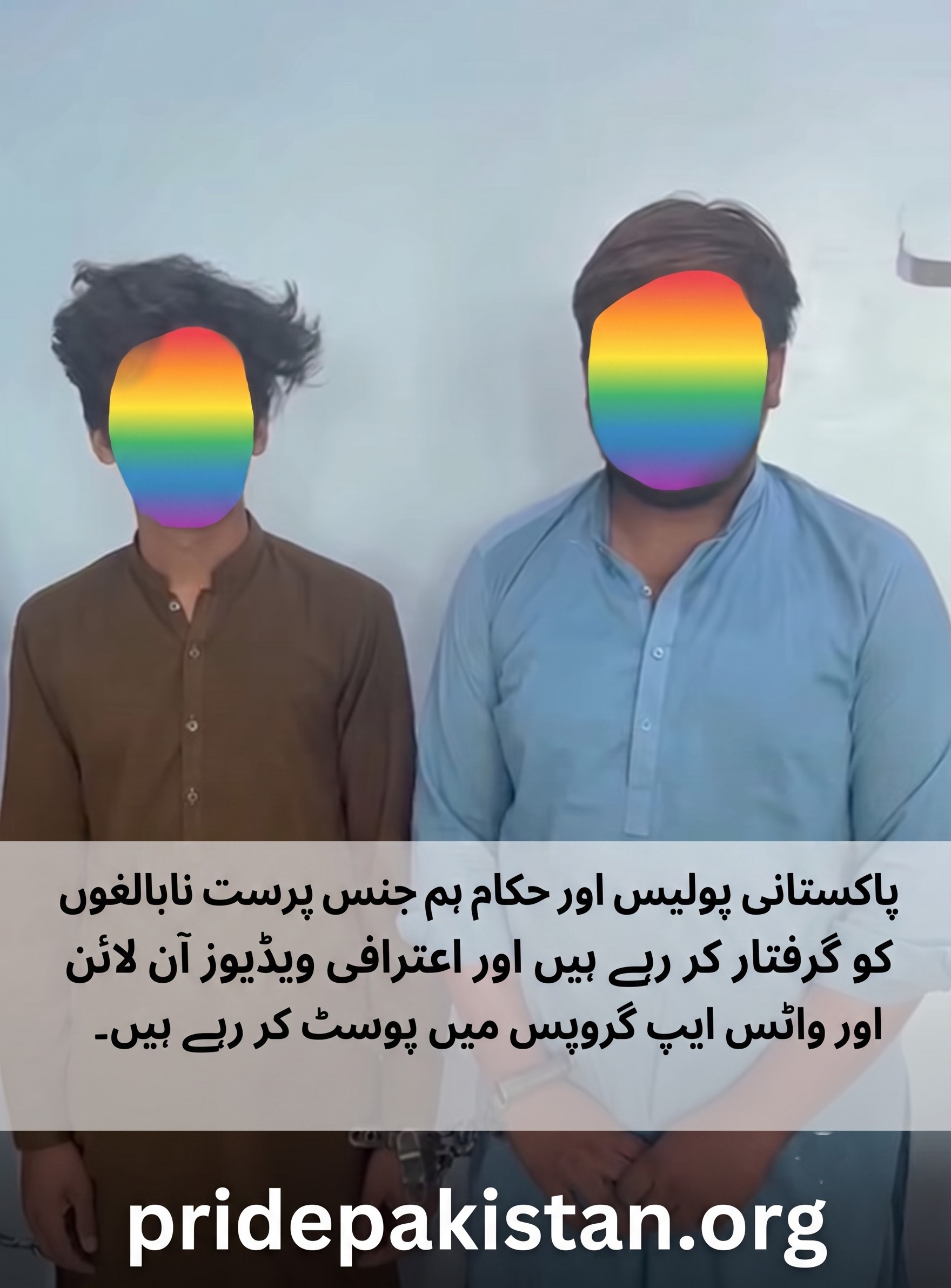
    In a alarming trend across Pakistan, police authorities are increasingly targeting, arresting, and publicly shaming gay and queer minors. Rather than protecting vulnerable youth, law enforcement agencies are weaponizing severe criminal statutes—often framing consensual or vulnerable same-sex encounters under heavy charges like gang rape (ijtimai ziyadati)—to justify unlawful detentions, extort families, and boost their public image.

    A recent incident involving the Stra Police Station (Thana Stra) in Punjab highlights the terrifying reality faced by young queer individuals in the country.

    The Incident: Public Shaming and Misuse of the Law

    In a video posted directly to social media by the Station House Officer (SHO), police celebrated the swift arrest of two minors, claiming credit for apprehending suspects in an alleged gang rape case:

    Police Statement:

    “ایس ایچ و تھانہ ستراہ چوہدری اکرم شہباز گجر کی بروقت کاروائی اجتماعی زیادتی کے ملزمان فوری گرفتار کرلئے اہلیان تھانہ ستراہ نے ایس ایچ او اکرم شہباز کی کارکردگی پر خراج تحسین پیش کیا چوہدری اکرم شہباز نے بتایا کہ ملزمان کو عدالت سے بہترین تفیتیش کی بدولت قرار واقعی سزا دلوائی جائے گی”

    (Timely action by SHO Stra Police Station, Chaudhry Akram Shahbaz Gujjar: Suspects of gang rape arrested immediately. Residents praised the performance of SHO Akram Shahbaz. Chaudhry Akram Shahbaz stated that through thorough investigation, the suspects will be given exemplary punishment by the court.)

    Beyond the severe legal charges leveled against these minors, the police officer personally recorded a video of the detained youth and published it online across social media platforms, boasting that the department would ensure they receive “exemplary punishment.”

    A Pattern of Abuse Across Pakistan

    This is not an isolated event. Similar cases involving gay and queer minors are surfacing with alarming frequency across various districts in Pakistan:

    1. Manipulation of Criminal Charges: Consensual same-sex relationships among young people or instances of police entrapment are routinely converted into non-bailable, heavy charges such as rape (Section 376 PPC), gang rape, or unnatural offenses (Section 377 PPC). By framing these cases under the umbrella of violent crime, police bypass basic juvenile protections and rally public hostility against the minors.
    2. Violations of Juvenile Rights and Privacy: Under both Pakistani law (the Juvenile Justice System Act, 2018) and international human rights conventions, the identity, privacy, and dignity of minors in custody must be strictly protected. Recording videos of detained children and broadcasting their faces on social media for public praise directly violates juvenile protection laws and destroys the lives of these minors before any court trial even begins.
    3. Forced Confessions and Public Trials by Media: Posting media content of detained individuals creates a public verdict long before due process takes place. As highlighted in international human rights reports, a vast majority of prisoners in Pakistan are held without fair trials, often coerced into making video statements under police duress and threats of physical abuse.

    The Human Rights Impact

    When police officers use social media to parade arrested minors as trophies for public approval, they expose these children to extreme societal violence, honor-related threats, and permanent psychological trauma. Framing queer youth under severe rape laws rather than recognizing their vulnerability strips them of fair legal representation and leaves families terrified to seek justice.

    Pride Pakistan calls upon child protection bureaus, legal advocacy groups, and human rights watchdogs to hold police officials accountable for filming and publishing videos of minors, to monitor the misuse of severe criminal charges against queer youth, and to ensure that juvenile justice laws are strictly enforced across all police jurisdictions.

    (Note: If you are accessing our website from within Pakistan, please ensure you use a VPN to view our resources safely.)

    Source: https://www.facebook.com/reel/981884561245762

    : نابالغ ہم جنس پرستوں کو نشانہ بنانا: پولیس کا سوشل میڈیا پر ٹرائل اور قانونی شقوں کا غلط استعمال

    پاکستان میں گزشتہ کچھ عرصے سے ایک انتہائی تشویشناک رجحان سامنے آ رہا ہے جہاں پولیس اور قانون نافذ کرنے والے ادارے ہم جنس پرست اور خواجہ سرا نابالغ افراد کو گرفتار کر کے نہ صرف ان پر سنگین دفعات عائد کر رہے ہیں بلکہ ان کی ویڈیوز بھی سوشل میڈیا پر جاری کر رہے ہیں۔

    حال ہی میں ضلع سیالکوٹ کے تھانہ ستراہ میں سامنے آنے والے ایک واقعے نے اس طرزِ عمل کو بظاہر بے نقاب کیا ہے۔

    واقعے کا پس منظر اور میڈیا پر اعترافی ویڈیوز

    تھانہ ستراہ کے ایس ایچ او نے دو نابالغ افراد کی گرفتاری کی تصویر اور ویڈیو سوشل میڈیا پر پوسٹ کی، جس میں ان پر سنگین الزامات عائد کیے گئے اور دعویٰ کیا گیا کہ انہیں عدالت سے “قرار واقعی سزا” دلوائی جائے گی۔

    اس قسم کے واقعات میں درج ذیل قانونی اور انسانی حقوق کی خلاف ورزیاں دیکھنے میں آتی ہیں:

    1. سنگین دفعات کا استعمال: رضا مندی کے تعلقات یا ہراساں کیے جانے کے واقعات کو اکثر پولیس کی جانب سے گینگ ریپ (اجتماعی زیادتی) یا دفعہ 377 جیسی غیر ضمانتی اور سخت دفعات میں تبدیل کر دیا جاتا ہے تاکہ عوام میں اپنی کارکردگی کا ڈھنڈورا پیٹا جا سکے۔
    2. جووینائل جسٹس ایکٹ کی خلاف ورزی: پاکستان کے “جووینائل جسٹس سسٹم ایکٹ 2018” اور بین الاقوامی قوانین کے تحت کسی بھی زیرِ حراست نابالغ شخص کی شناخت، چہرہ، یا ویڈیو عام کرنا مکمل طور پر ممنوع ہے۔ سوشل میڈیا پر نابالغ بچوں کی ویڈیوز پوسٹ کرنا ان کی پرائیویسی اور بنیادی انسانی حقوق کا سنگین التزام ہے۔
    3. میڈیا پر پیشگی فیصلہ: حراست میں لیے گئے بچوں کو میڈیا اور واٹس ایپ گروپس میں پیش کر کے ان کا ٹرائل کیا جاتا ہے، جس سے نہ صرف ان کی زندگی خطرے میں پڑ جاتی ہے بلکہ عدالت کے فیصلوں سے پہلے ہی انہیں معاشرتی طور پر نشانہ بنا دیا جاتا ہے۔

    انسانی حقوق پر اثرات

    جب پولیس حکام عوامی داد حاصل کرنے کے لیے زیرِ حراست نابالغوں کی ویڈیوز جاری کرتے ہیں، تو اس سے ان بچوں کی زندگی، حفاظت اور ذہنی صحت شدید خطرے میں پڑ جاتی ہے۔

    پرائیڈ پاکستان تمام انسانی حقوق کی تنظیموں اور چائلڈ پروٹیکشن بیوروز سے اپیل کرتی ہے کہ وہ نابالغ افراد کے حقوق کے تحفظ کے لیے پولیس کے اس غیر قانونی اور امتیازی طرزِ عمل کے خلاف آواز اٹھائیں۔

    (نوٹ: پاکستان میں ہماری ویب سائٹ تک رسائی کے لیے وی پی این کا استعمال کریں۔)

  • The EU’s Dangerous Deportation Pipeline: How Returning LGBTQI+ Pakistanis Leads to Direct Arrest and Persecution

    The EU’s Dangerous Deportation Pipeline: How Returning LGBTQI+ Pakistanis Leads to Direct Arrest and Persecution

    The international legal framework surrounding asylum was created to protect individuals fleeing imminent danger, torture, and state persecution. However, a troubling pattern has emerged across European Union member states: a rapid shift toward stricter anti-immigration stances, accompanied by an increasingly dismissive attitude toward asylum claims based on sexual orientation and gender identity (SOGIESC).

    Multiple stories have surfaced of Pakistani gay and queer individuals whose asylum applications were rejected by EU immigration tribunals on the flawed premise that “being gay alone is not sufficient grounds for international protection,” or under the false assumption that Pakistan is “safe enough” for queer people to return to if they simply live discreetly.

    The reality on the ground completely shatters this assumption.

    The Reality on Arrival: Targeted FIA Arrests

    Far from returning to safety, deported LGBTQI+ individuals are facing immediate state intervention upon landing in Pakistan. Recent reporting and public documentation show that agencies like the Federal Investigation Agency (FIA) are actively apprehending returning individuals at major entry points, such as Karachi Airport.

    When EU authorities force queer Pakistanis back to their home country, these individuals are met not with safety, but with law enforcement officials operating under criminal codes like Article 377 of the Pakistan Penal Code (PPC), which explicitly criminalizes same-sex conduct. The information, digital records, or prior documentation linked to their asylum claims in Europe frequently leave a trail that puts them on high alert status at border controls.

    How European Deportations Violate Human Rights

    By turning a blind eye to the structural, criminal, and social threats awaiting queer individuals in Pakistan, EU member states are directly contributing to their endangerment.

    1. Violation of Non-Refoulement: Under international human rights law and Article 33 of the 1951 Refugee Convention, states are strictly prohibited from transferring or deporting an individual to a jurisdiction where they face threats to their life or freedom. Ignoring the state criminalization of LGBTQI+ people in Pakistan directly violates this principle.
    2. Complicity in Unlawful Arrests: When European authorities deport vulnerable queer individuals back to a country where homosexuality is criminalized, they effectively hand these individuals over to state authorities for prosecution, blackmail, or unlawful detention.

    A Call for Accountable Asylum Evaluation

    Pride Pakistan strongly urges European immigration tribunals and international human rights watchdogs to recognize the realities faced by LGBTQI+ Pakistanis. Being forced back to a state that actively criminalizes your existence is not a safe return—it is a sentence to persecution.

    European states must uphold their international commitments to human rights, re-evaluate their assessment of “safe countries of origin,” and stop deporting vulnerable queer individuals into the hands of waiting authorities.

    یورپی یونین کی جبری واپسی کا خطرناک سلسلہ: پاکستانی LGBTQI+ افراد کی ڈیپورٹیشن اور گرفتاری کا سچ

    بین الاقوامی قوانین کے تحت پناہ (Asylum) دینے کا مقصد ان افراد کو تحفظ فراہم کرنا ہے جو شدید خطرات، تشدد اور ریاستی مظالم سے بھاگ کر آتے ہیں۔ تاہم، یورپی یونین کے رکن ممالک میں ایک تشویشناک رجحان تیزی سے بڑھ رہا ہے، جہاں ہجرت کی سخت پالیسیوں کے تحت جنسیت اور جنسی شناخت (SOGIESC) کی بنیاد پر کی جانے والی پناہ کی درخواستوں کو مسترد کیا جا رہا ہے۔

    یورپ میں پناہ حاصل کرنے والے کئی پاکستانی ہم جنس پرست اور کوئیر (Queer) افراد کی درخواستیں یہ کہہ کر مسترد کر دی جاتی ہیں کہ “صرف ہم جنس پرست ہونا پناہ دینے کے لیے کافی نہیں” یا یہ دعویٰ کیا جاتا ہے کہ پاکستان ان کی واپسی کے لیے “محفوظ” ہے، بشرطیکہ وہ اپنی شناخت کو خفیہ رکھیں۔

    لیکن پاکستان میں زمینی حقائق اس موقف کو مکمل طور پر غلط ثابت کرتے ہیں۔

    واپسی پر تلخ حقیقت: ایف آئی اے کے ہاتھوں گرفتاریاں

    یورپ سے “محفوظ واپسی” کے نام پر بھیجے جانے والے افراد کو پاکستان پہنچتے ہی ریاستی اداروں کی جانب سے کارروائی کا سامنا کرنا پڑتا ہے۔ حالیہ رپورٹس اور عوامی دستاویزات سے ظاہر ہوتا ہے کہ فیڈرل انویسٹی گیشن ایجنسی (FIA) کراچی اور دیگر اہم ایئرپورٹس پر یورپ سے ڈیپورٹ کیے گئے افراد کو فوری حراست میں لے رہی ہے۔

    جب یورپی حکام کوئیر پاکستانیوں کو زبردستی واپس بھیجتے ہیں، تو انہیں یہاں تعزیراتِ پاکستان کی دفعہ 377 جیسے امتیازی قوانین کا سامنا کرنا پڑتا ہے، جو ہم جنس پرستی کو جرم قرار دیتی ہے۔ یورپ میں پناہ کی درخواست سے منسلک ڈیجیٹل ریکارڈز اور معلومات اکثر بارڈر کنٹرول پر ان کے لیے مزید مشکلات پیدا کر دیتی ہیں۔

    یورپی ڈیپورٹیشن اور انسانی حقوق کی خلاف ورزی

    پاکستانی کوئیر کمیونٹی کو درپیش سنگین اور قانونی خطرات کو نظر انداز کر کے، یورپی یونین کے ممالک ان افراد کی زندگیوں کو براہِ راست خطرے میں ڈال رہے ہیں:

    1. نون ریفلمنٹ (Non-Refoulement) کے اصول کی خلاف ورزی: بین الاقوامی انسانی حقوق کے قوانین اور 1951 کے رفیوجی کنونشن کے آرٹیکل 33 کے تحت، کسی بھی فرد کو ایسے ملک زبردستی واپس نہیں بھیجا جا سکتا جہاں اس کی زندگی یا آزادی کو خطرہ ہو۔ پاکستان میں ہم جنس پرست افراد کی مجرمانہ حیثیت کو نظر انداز کرنا اس بین الاقوامی اصول کی کھلی خلاف ورزی ہے۔
    2. غیر قانونی گرفتاریوں میں شمولیت: جب یورپی حکام ایسے مظلوم افراد کو زبردستی واپس بھیجتے ہیں جہاں ان کی شناخت ہی جرم ہے، تو وہ ان افراد کو تحویل، بلیک میلنگ اور قانونی کارروائی کے لیے براہِ راست مقامی اداروں کے حوالے کرنے کے ذمہ دار بن جاتے ہیں۔

    شفافیت اور انصاف کا مطالبہ

    پرائیڈ پاکستان یورپی ممالک کی ہجرت کی عدالتوں اور بین الاقوامی انسانی حقوق کی تنظیموں سے زوردار اپیل کرتی ہے کہ وہ پاکستان میں LGBTQI+ افراد کو درپیش حقیقی حالات کا ادراک کریں۔ کسی فرد کو ایسے ملک واپس بھیجنا جہاں اس کا وجود ہی قانوناً جرم ہو، محض ایک “عام واپسی” نہیں بلکہ اس کی زندگی کو خطرے میں ڈالنے کے مترادف ہے۔

    یورپی ممالک کو اپنے بین الاقوامی انسانی حقوق کے وعدوں کا پاس رکھنا چاہیے، “محفوظ ملک” کی تعریف کا دوبارہ جائزہ لینا چاہیے، اور مظلوم کوئیر افراد کو گرفتاری کے خطرے میں دھکیلنے کا یہ سلسلہ فوری طور پر بند کرنا چاہیے۔

    (نوٹ: پاکستان میں ہماری ویب سائٹ تک رسائی حاصل کرنے کے لیے براہِ کرم وی پی این کا استعمال کریں۔)