Category: Statement

  • LGBT Population in Pakistan: Data, Methodology, and Provincial Statistics

    LGBT Population in Pakistan: Data, Methodology, and Provincial Statistics

    Introduction: Demystifying the Numbers

    When analyzing the LGBT population in Pakistan, a deep informational vacuum exists. Because official state trackers like the Pakistan Bureau of Statistics (PBS) restrict gender non-conforming variables strictly to a minimal tracking of the transgender community, finding reliable statistics on sexual orientation and gender identity can be extremely difficult. This lack of data often leads to intense online speculation, myths, or exaggerated rumors.

    Following rigorous demographic tracking and standard public health estimation methods, PridePakistan.org has developed the first comprehensive, district-by-district population projection model for the country. This study moves away from internet rumors and utilizes proven scientific frameworks to look at the real numbers.

    The Science: Is This Data Scientifically Verifiable?

    In public health and sociology, when actual national census data on marginalized or criminalized communities is missing, demographers rely on statistical extrapolation.

    The 7% Standard Identity Baseline

    Decades of independent, comprehensive demographic peer-reviewed research conducted across diverse continents—compiled by institutions like the Kinsey Institute and the Williams Institute—consistently reveal that sexual and gender minorities safely constitute between 5% to 10% of any given human population. This range remains stable regardless of local geographic boundaries, governance structures, or social systems.

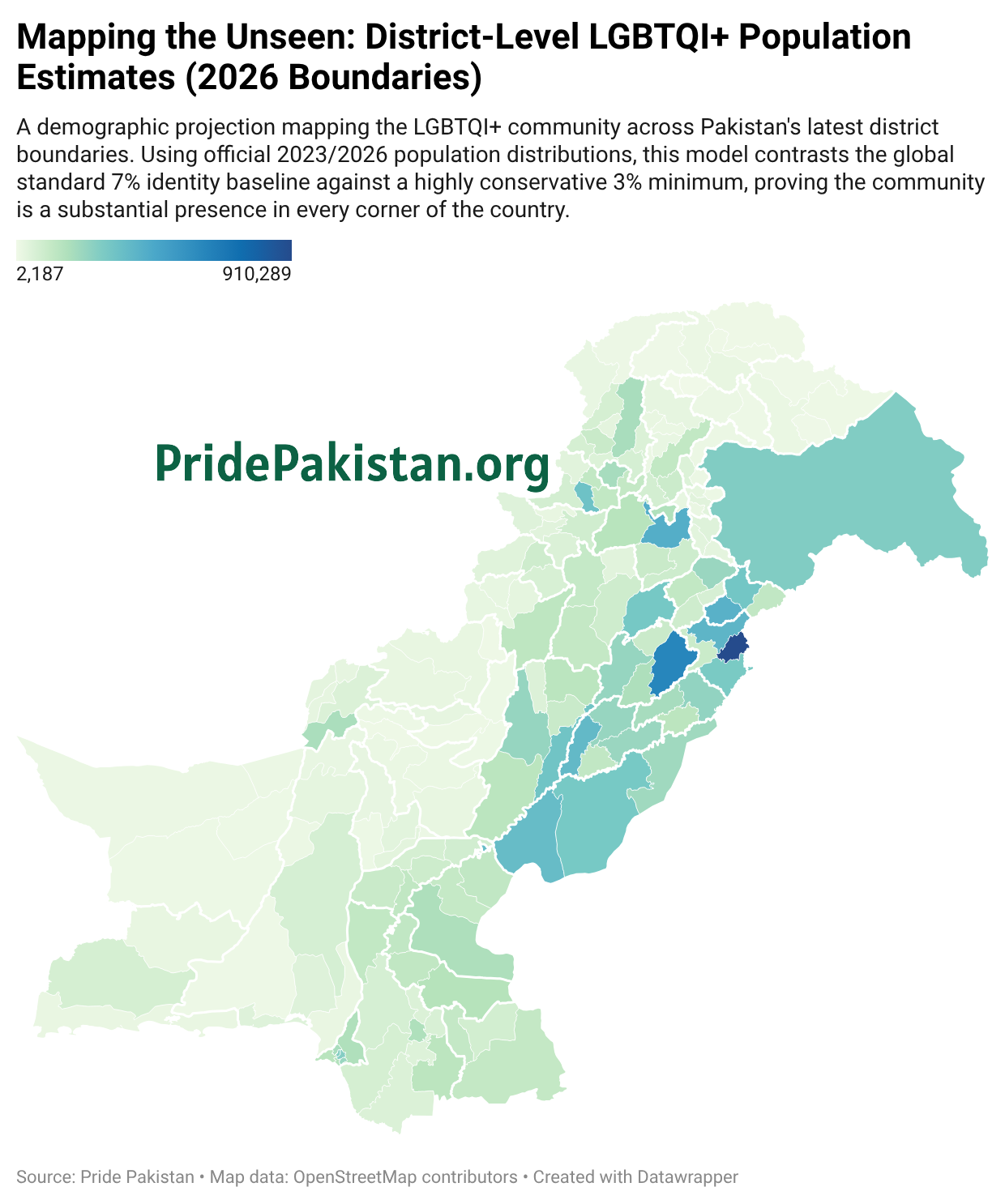
    To create our model, PridePakistan.org applied a standard, realistic 7% demographic multiplier to Pakistan’s total 2023 National Digital Census population (which stands at approximately 241.5 million people). This yields a scientifically defensible national baseline estimate of 16.9 million LGBTQI+ individuals across the country.

    The 3% Conservative Minimum Range

    To account for absolute mathematical caution and handle skeptics, our dataset concurrently provides a 3% absolute minimum baseline. Even at this exceptionally narrow margin, the statistics demonstrate that queer individuals constitute a substantial and undeniable percentage of every administrative block in the country.

    National and Provincial Population Breakdown

    Based on the 7% standard identity multiplier and the 3% conservative threshold applied directly to the latest state data, here is the official breakdown of the estimated LGBTQI+ population by administrative zone:

    Province / TerritoryOfficial 2023 Census PopulationEstimated LGBTQI+ Population (7% Standard)Conservative Minimum Range (3% Floor)
    Punjab127,688,9228,938,2243,830,667
    Sindh55,696,1473,898,7301,670,884
    Khyber Pakhtunkhwa40,856,0972,859,9261,225,682
    Balochistan14,894,4021,042,608446,832
    Islamabad Capital Territory2,363,863165,47070,915
    Azad Jammu & Kashmir (AJK)~4,000,000280,000120,000
    Gilgit-Baltistan (GB)~1,500,000105,00045,000
    TOTAL NATIONWIDE ESTIMATE~249,500,000~17,289,958~7,410,000

    Why This Data Matters

    In an environment where state policy enforces invisibility, recording our own history is a necessity. This project proves that queer individuals are not an isolated anomaly or a tiny fringe element; they are millions of citizens living across every province, federal territory, and rural union council in Pakistan.

    By grounding these numbers in clear, international demographic formulas rather than social media speculation, this dataset serves as a resource for human rights defenders, researchers, and public health advocates working toward safe, inclusive futures.

    Explore the Live Interactive Map

    Our data maps the community across all four provinces, the federal capital, and regional territories. Hover over your district below to see the standard demographic estimates and conservative baseline ranges of our community members living there

  • Pride Runner Game: The Run for Rights

    Pride Runner Game: The Run for Rights

    In an era of increasing digital authoritarianism, the Pakistan Telecommunication Authority (PTA) and other state agencies have intensified their efforts to silence marginalized voices. By blocking PridePakistan.org, state institutions have attempted to erase the digital home of the Pakistani LGBTQ+ community. But resistance is not a static thing; it moves, it adapts, and it runs.

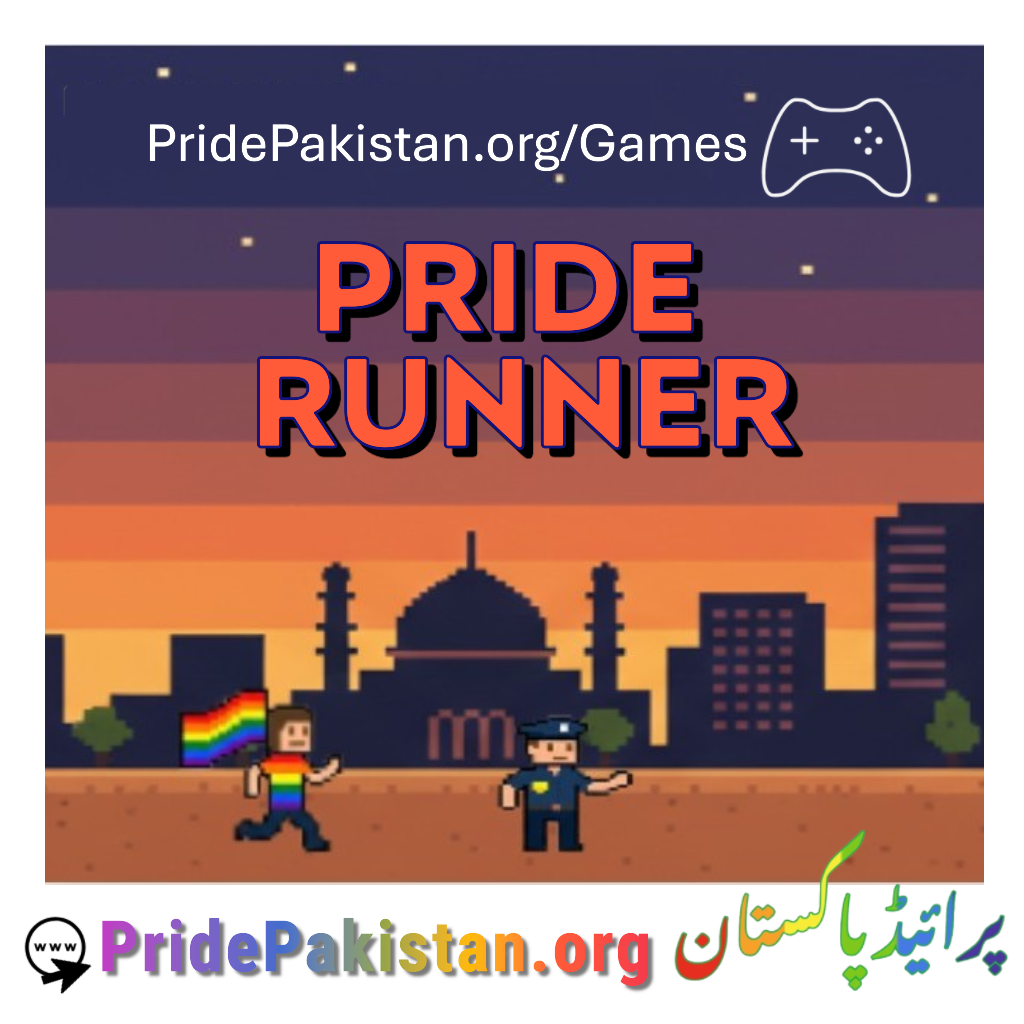
    We created the Pride Runner game as a direct response to this censorship. When the state places digital “barriers” in our way, we learn to jump over them. Every police hurdle in this game represents the systemic harassment our community faces; every dark cloud represents the state-sponsored “hate” and societal pressure intended to keep us in the shadows.

    Visibility is our strongest tool against oppression. While the state uses the NCCIA and PTA to build walls, we use technology to build bridges. This game is a reminder that being gay in Pakistan is a journey of constant movement. We move through the streets of Karachi and Lahore not just as residents, but as survivors.

    The rainbow flag held by our character is a signal to every queer person in Pakistan: You are not alone. Even if they block our domain, they cannot block our existence. We will continue to find our way, navigate the hurdles, and stand proud. The stars we collect are the symbols of our shared victories—the small moments of community and joy that the state can never take away.

    Stand with us. Play the game. Share the resistance.

    Press Space or Tap to Jump | PridePakistan.org Official Game

    Pride Runner is more than just a game; it is a digital representation of the daily resilience required by the LGBTQ+ community in Pakistan. As our character runs through the historic streets of Karachi and Lahore, they face real-world symbolic hurdles like security barriers and the “dark clouds” of societal judgment (Log Kya Kahenge).

    At PridePakistan.org, we advocate for the fundamental human rights, safety, and equality of all individuals regardless of their sexual orientation or gender identity. By collecting our Rainbow Star logo, players contribute to the visibility of our mission to combat discrimination and promote a more inclusive Pakistan.

    This game was born out of defiance. Following the blocking of PridePakistan.org by the PTA and other state agencies, we developed Pride Runner as a symbol of our community’s journey.

    In Pakistan, to be yourself is to be in a constant state of navigation. The hurdles you jump today—the police barriers and the clouds of hate—are the same ones we face in the real world every day.

    They can block our website, but they cannot block our path. Every star you collect represents our organization’s logo and our collective strength. We run through the landmarks of our country because this land belongs to us too. Play as a sign of resistance. Jump as a sign of progress. Stand proud, Pakistan.

    Click Here to Play Pride Runner

    Read more in our blogs section : News & Blogs

    Play more games in our game section : Play Games

  • Pride Pakistan Games: Pride Runner

    Press Space or Tap to Jump | PridePakistan.org Official Game

    Play more games in our game section : Play Games

    Pride Runner is more than just a game; it is a digital representation of the daily resilience required by the LGBTQ+ community in Pakistan. As our character runs through the historic streets of Karachi and Lahore, they face real-world symbolic hurdles like security barriers and the “dark clouds” of societal judgment (Log Kya Kahenge).

    At PridePakistan.org, we advocate for the fundamental human rights, safety, and equality of all individuals regardless of their sexual orientation or gender identity. By collecting our Rainbow Star logo, players contribute to the visibility of our mission to combat discrimination and promote a more inclusive Pakistan.

    This game was born out of defiance. Following the blocking of PridePakistan.org by the PTA and other state agencies, we developed Pride Runner as a symbol of our community’s journey.

    In Pakistan, to be yourself is to be in a constant state of navigation. The hurdles you jump today—the police barriers and the clouds of hate—are the same ones we face in the real world every day.

    They can block our website, but they cannot block our path. Every star you collect represents our organization’s logo and our collective strength. We run through the landmarks of our country because this land belongs to us too. Play as a sign of resistance. Jump as a sign of progress. Stand proud, Pakistan.

    Play more games in our game section : Play Games

  • Weaponizing the Law: How PECA Sections are Used to Hunt the Gay Community in Pakistan

    Weaponizing the Law: How PECA Sections are Used to Hunt the Gay Community in Pakistan

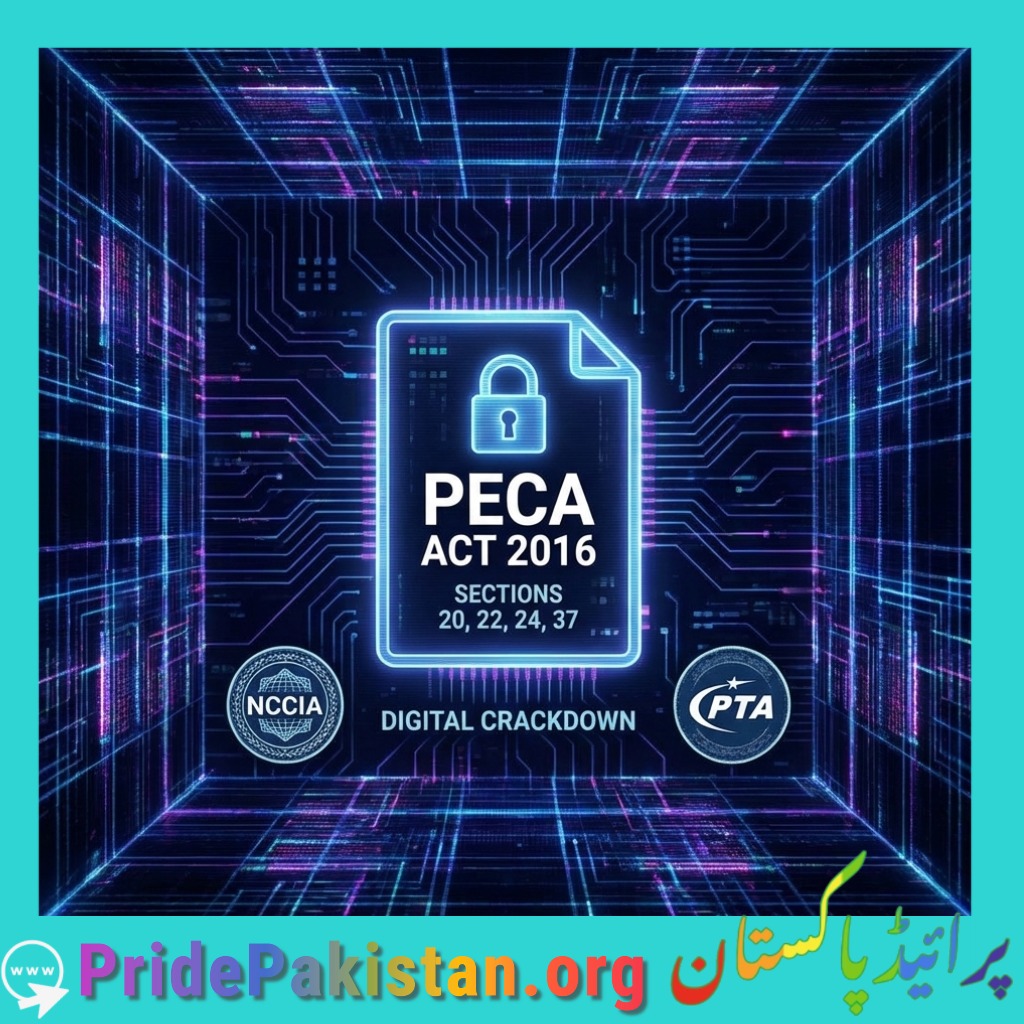
    For years, the digital world was a sanctuary for the LGBTQI community in Pakistan—a place to find community, love, and support in a society that often refuses to acknowledge our existence. However, that sanctuary has been turned into a hunting ground. The Prevention of Electronic Crimes Act (PECA) 2016 is no longer just a law to stop cybercrime; it has become a primary tool for the FIA (Federal Investigation Agency) and NCCIA to target, entrap, and silence gay individuals.

    At PridePakistan.org, we are witnessing a terrifying trend where legal jargon is used to mask state-sponsored persecution. Here is a breakdown of how the PECA Act is being weaponized and why it stands in direct violation of basic human rights.

    The Legal Trap: Decoding the Sections

    The state frequently misinterprets or broadens the scope of specific PECA sections to justify the arrest of community members.

    1. Section 20: Offenses Against Dignity

    While designed to prevent defamation, this section is often used to criminalize private digital expressions of identity. By labeling gay content as “harmful to the dignity” of society or individuals, the state justifies the surveillance of private chats.

    • The Reality: Your private life is not a crime against anyone’s dignity. Privacy is a right, not a privilege.

    2. Section 22: Child Pornography (The Weapon of Scare Tactics)

    As discussed, Section 22 is a severe, non-bailable offense. We have received reports of authorities falsely applying or threatening this section during raids to intimidate gay men into “confessions” or to justify the seizure of their devices.

    • The Reality: Conflating adult, consensual gay relationships with child pornography is a malicious tactic used to dehumanize the community and ensure the public remains silent about these arrests.

    3. Section 24: Spoofing (Digital Identity Under Fire)

    Authorities often use the “Spoofing” clause to target people using pseudonyms or “fake” profiles on dating apps.

    • The Reality: For many LGBTQI Pakistanis, using a pseudonym is a safety necessity, not a criminal act. Forcing individuals to use real identities in a hostile environment puts their lives at risk.

    4. Section 37: Unlawful Online Content

    This is the “censorship” clause used to block PridePakistan.org and other dating platforms. It gives the state the power to decide what is “obscene” or “immoral.”

    • The Reality: Moral policing should not be the basis of law. Accessing information and community support is a fundamental human right.

    How PECA Violates Basic Human Rights

    The use of PECA against the gay community doesn’t just violate local laws; it breaches international human rights standards that Pakistan has committed to uphold.

    • Violation of Privacy (Article 14 of the Constitution): PECA is being used to bypass the “inviolability of dignity and privacy of home.” State agencies are entering the most private digital spaces of citizens without warrant or cause.
    • Freedom of Expression (Article 19): By blocking websites and arresting those who access them, the state is stifling the right to receive and impart information.
    • Right to Liberty and Fair Trial: Many community members are held without proper legal representation, subjected to torture in FIA custody, and forced to sign “confessions” under duress—all under the guise of a PECA investigation.

    A Strong Statement from PridePakistan

    “The Pakistani state is using PECA as a digital noose. Every day, our helpdesk receives thousands of messages from terrified individuals whose lives have been ruined by a simple text message or a dating app profile. These are not ‘criminal gangs’—these are our brothers, friends, and colleagues. Using cybercrime laws to target consensual behavior and identity is a dark stain on Pakistan’s justice system. We demand an immediate end to the entrapment, the torture, and the weaponization of PECA against the LGBTQI community.”

    What Can You Do?

    1. Educate Yourself: Know your rights under PECA. If you are detained, you have the right to remain silent and the right to a lawyer.
    2. Digital Safety: Use encrypted messaging apps (like Signal) and high-quality VPNs. Avoid sharing identifiable information on dating platforms.
    3. Report to Us: If you or someone you know has been targeted by the FIA or NCCIA, reach out to PridePakistan.org. Your story helps us build a case for international advocacy.

    The law should protect citizens, not persecute them for who they love.

  • Escalating Persecution: A Dark Chapter for the Gay Community in Pakistan and the Digital Witch Hunt by FIA & NCCIA

    Escalating Persecution: A Dark Chapter for the Gay Community in Pakistan and the Digital Witch Hunt by FIA & NCCIA

    A Statement of Solidarity and Urgent Concern

    At PridePakistan.org, we stand in unwavering solidarity with every member of the LGBTQI community currently living under a shadow of fear in Pakistan. Our organization is deeply saddened and outraged by the escalating wave of arrests, digital surveillance, and state-sponsored harassment targeting individuals based on their sexual orientation and gender identity.

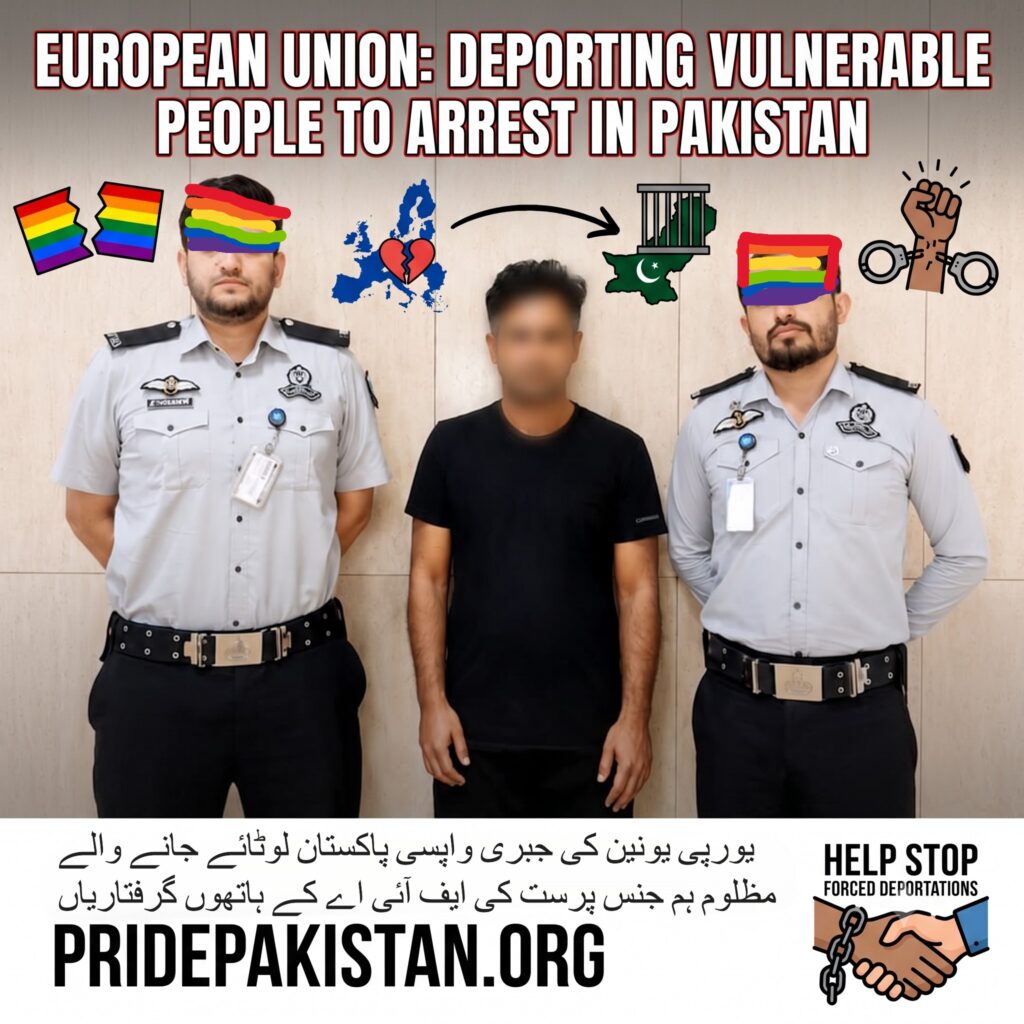
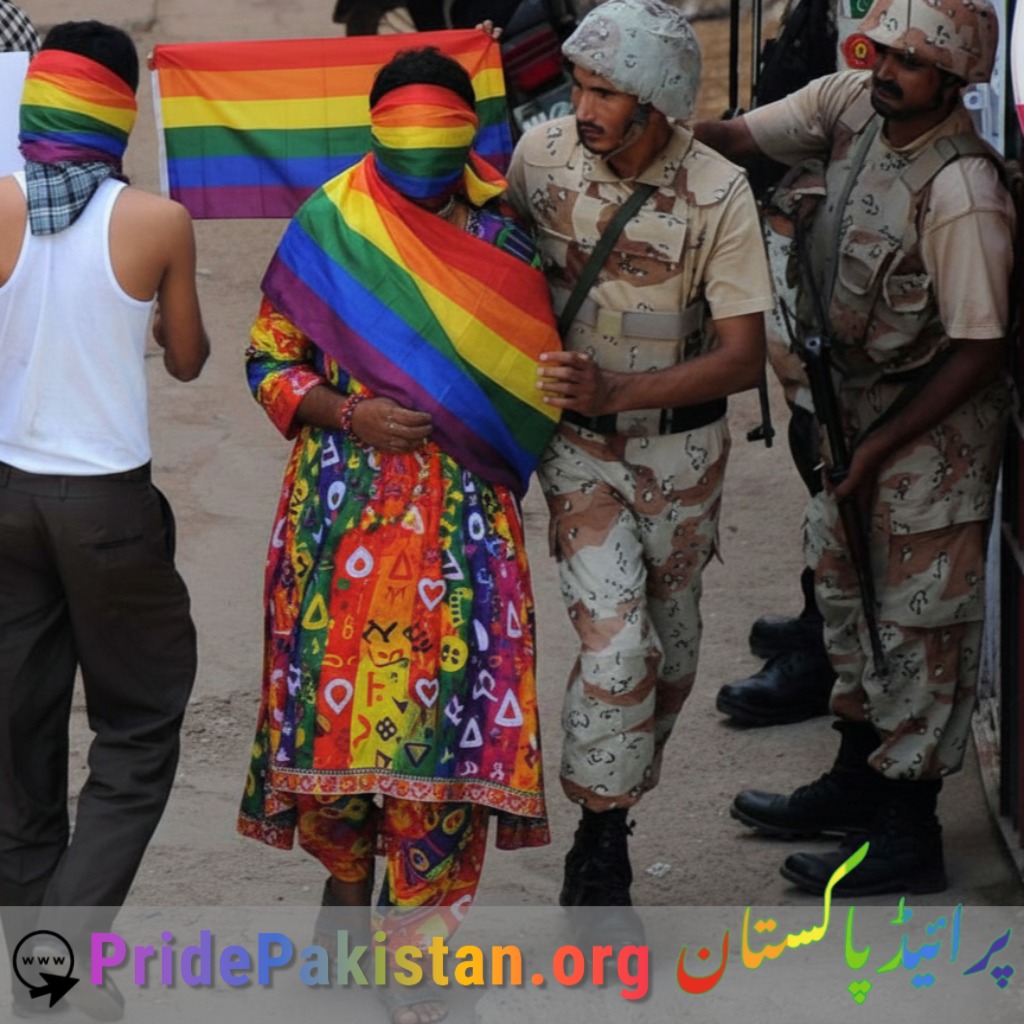
    For too long, the international community has been told a convenient narrative: that while homosexuality is technically illegal in Pakistan under colonial-era laws, the state does not actively “prosecute” people for being gay. We are here to tell you that this narrative is a myth. Today, the persecution has moved from the streets to the digital world. The Federal Investigation Agency (FIA) and the National Cyber Crime Investigation Agency (NCCIA) have launched a coordinated crackdown, not just by blocking websites like our own (PridePakistan.org) and popular dating platforms, but by actively hunting down those who attempt to access these safe spaces.

    The Digital Trap: Entrapment and Human Rights Violations

    The Pakistani state is utilizing the NCCIA and FIA to turn the internet into a minefield for the gay community. It is no longer just about censorship; it is about entrapment. Reports indicate that security agencies are monitoring dating platforms and using them to lure community members into “honey traps,” leading to public shaming, arrests, and the registration of First Information Reports (FIRs).

    The blocking of PridePakistan.org and other support resources is a direct attempt to isolate the community, cutting off access to mental health support, legal advice, and a sense of belonging. Even more alarming is the arrest of individuals simply for trying to bypass these blocks to find connection in a society that continues to marginalize them.

    The Reality of Torture and Daily FIRs

    PridePakistan issues this strong statement today because we can no longer remain silent about the volume of suffering we witness. On a daily basis, PridePakistan receives thousands of messages and calls for help. Our community members report:

    • Systemic Torture: Individuals taken into custody by the FIA and police are often subjected to physical and psychological torture.
    • Illegal FIRs: Authorities are using broad “obscenity” and “cybercrime” laws to register cases against gay men, often without any evidence of a crime other than their identity.
    • Blackmail: These arrests often lead to state-sanctioned extortion, where victims are forced to pay bribes to avoid public exposure or further violence.

    These actions are a blatant violation of fundamental human rights, including the right to privacy, the right to assembly, and the right to live free from torture.

    Reframing the Narrative: From “Criminals” to Human Beings

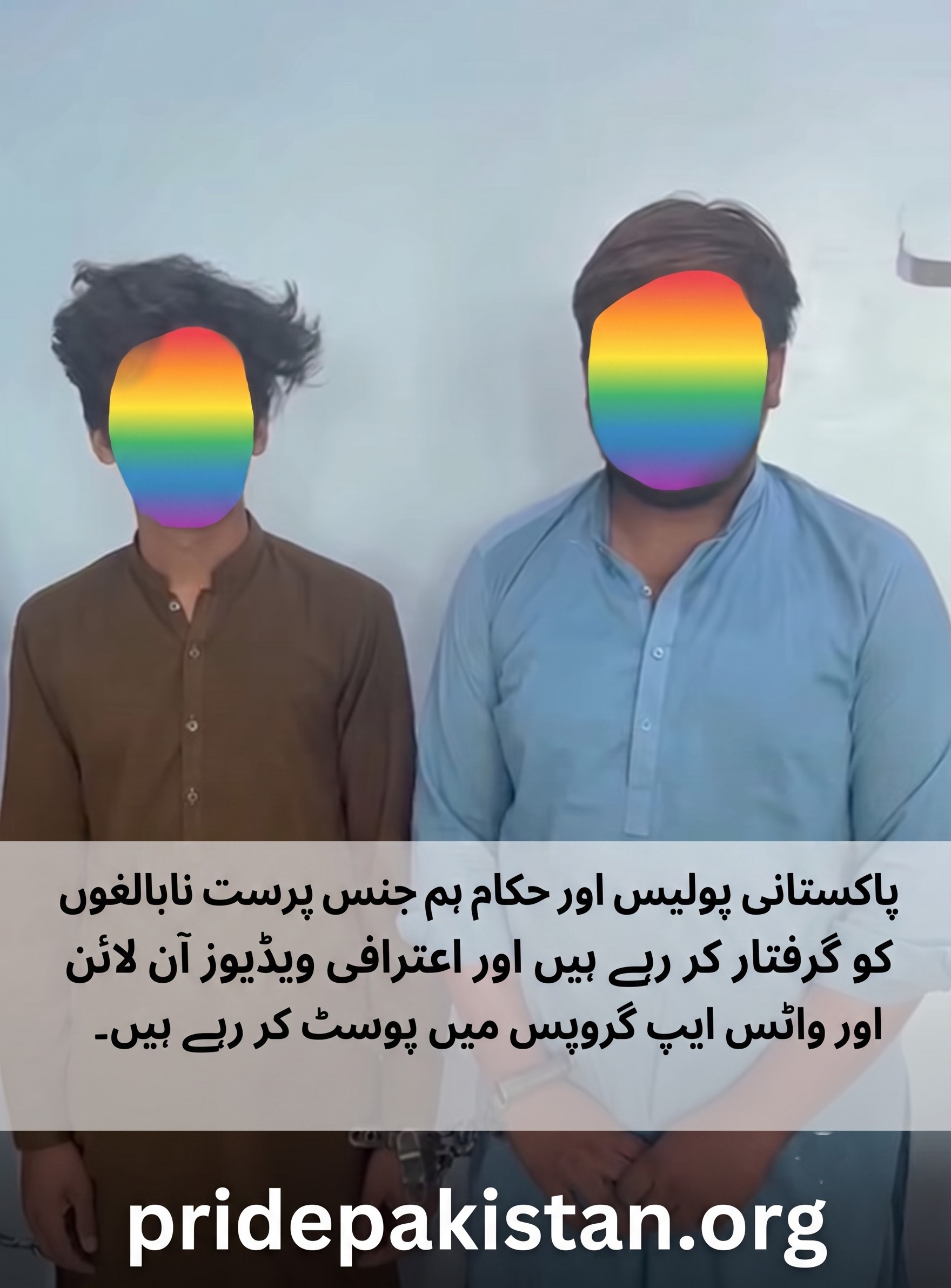
    Recent Urdu news reports (linked below) have characterized these incidents as the “arrest of homosexual gangs” or the “busting of unethical networks.” We want to rephrase these events for what they truly are: The targeting of vulnerable citizens seeking connection.

    Where the local media says “FIA arrests gang involved in unethical activities,” we say: “State agencies target individuals seeking safe digital spaces for community building.” Where headlines scream “Homosexual network busted via mobile apps,” we recognize: “The state is violating the digital privacy of LGBTQI individuals to justify illegal detention.”

    We urge the Pakistani state to remember that the gay community in Pakistan consists of its own citizens—doctors, engineers, students, and workers—who deserve the same protection of law as any other individual.

    Call to Action

    We call upon human rights organizations, both local and international, to take notice of the FIA and NCCIA’s targeted campaign against the gay community in Pakistan. Privacy is a human right. Connection is a human right. Freedom from torture is a human right.

    To our community members: Please stay safe. Use high-quality VPNs, be cautious of who you meet via digital platforms, and know that PridePakistan.org continues to fight for your visibility and safety, even when the state tries to switch off our lights.

    References and News Archive

    The following reports document the recent surge in state actions against the community. We include these to show the scale of the crackdown, while condemning the derogatory language often used by these outlets:

    1. BBC Urdu: Crackdown on social media and dating apps
    2. Daily Pakistan: FIA actions against dating platform users
    3. Jang News: Reports on arrests related to digital networking
    4. City42: Police and FIA raids on community members
    5. Express News: Targeted arrests of gay individuals in major cities
    6. Googly News: The state’s focus on “Blue” apps and digital surveillance

  • PridePakistan Strongly Condemns PTA’s Blocking of Our Website and the Escalating Digital Crackdown on the LGBTQIA+ Community

    PridePakistan Strongly Condemns PTA’s Blocking of Our Website and the Escalating Digital Crackdown on the LGBTQIA+ Community

    The digital repression of LGBTQIA+ people in Pakistan has entered a new and alarming phase. After years of blocking gay dating apps, LGBTQIA+ websites, and online support platforms, the Pakistan Telecommunication Authority (PTA) — in coordination with FIA, NCCIA, and other state agencies — has now blocked access to PridePakistan.org inside Pakistan.

    This is not an isolated act of censorship.
    It is part of a systematic effort to erase, silence, and endanger the LGBTQIA+ community.

    PridePakistan.org Blocked Nationwide — Even VPNs and Proxies Targeted

    For many years, LGBTQIA+ Pakistanis have relied on PridePakistan.org as one of the only safe, community‑run platforms offering:

    • Mental health support
    • Legal information
    • Emergency guidance
    • Asylum resources
    • Community connection
    • Safety alerts

    But instead of protecting vulnerable citizens, the state has chosen to criminalise access to support.

    PTA has:

    • Blocked PridePakistan.org across all major ISPs
    • Blocked gay dating apps and LGBTQIA+ websites
    • Blocked VPNs and proxy services commonly used to access PridePakistan.org
    • Pressured tech companies to restrict LGBTQIA+ content

    This is not “internet regulation.”
    This is targeted digital persecution.

    PTA Has Written to Social Media Platforms and Tech Companies to Block PridePakistan

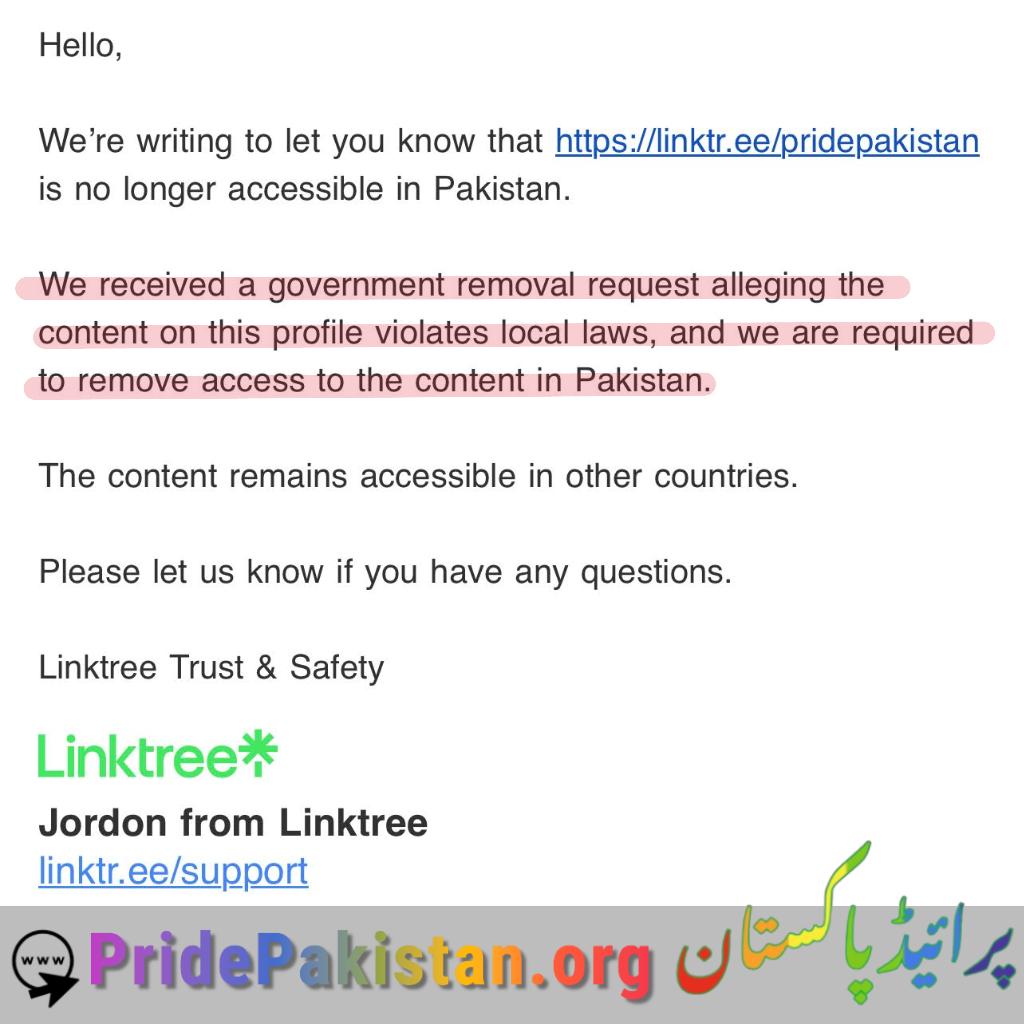
    In a deeply troubling escalation, PTA has written to multiple global platforms — including Linktree, social media companies, and IT service providers — instructing them to block access to PridePakistan.org and related resources inside Pakistan.

    This means:

    • LGBTQIA+ Pakistanis cannot access our Linktree
    • Our social media links may be restricted
    • Our educational resources are being censored
    • Our safety guides are being intentionally hidden

    This is an attempt to cut off the community from every possible lifeline.

    A Pattern of State‑Backed Harassment and Digital Surveillance

    The blocking of PridePakistan.org comes after years of:

    • Arrests of gay men through digital entrapment
    • FIA and NCCIA raids based on online activity
    • Phone searches without consent
    • FIRs filed under cybercrime and morality laws
    • Torture and harassment of detainees
    • Public humiliation in media reports
    • Censorship of LGBTQIA+ content across platforms

    Authorities claim that “Pakistan does not prosecute people for being gay.”
    But the evidence — and the lived experience of thousands — tells a very different story.

    PridePakistan’s Official Statement

    On behalf of PridePakistan, we issue this clear and unwavering condemnation:

    Blocking PridePakistan.org, targeting LGBTQIA+ websites, arresting gay community members, and censoring digital access are violations of fundamental human rights, freedom of expression, and the right to safety.

    These actions:

    • Endanger LGBTQIA+ lives
    • Cut off access to mental health and legal support
    • Force people into isolation
    • Criminalise identity and existence
    • Violate international human rights standards

    We receive thousands of messages every year from LGBTQIA+ Pakistanis who are terrified, targeted, and desperate for help. Blocking our website does not stop the community from existing — it only makes them more vulnerable.

    Why This Matters

    When a state blocks:

    • LGBTQIA+ websites
    • Gay dating apps
    • VPNs
    • Proxies
    • Social media links
    • Community support platforms

    …it is not “regulation.”
    It is erasure.

    It is an attempt to silence a community that already lives under threat, discrimination, and violence.

    PridePakistan Will Continue to Stand With the Community

    Despite censorship, intimidation, and state pressure, PridePakistan remains committed to:

    • Providing support
    • Sharing resources
    • Documenting abuses
    • Advocating for human rights
    • Amplifying LGBTQIA+ voices

    We will continue to operate globally, and we will continue to fight for the safety, dignity, and freedom of LGBTQIA+ Pakistanis.

    The community deserves protection — not persecution.

  • Our Founder Ali Raza Khan Joins Regional Call to Decriminalize Sex Work

    Our Founder Ali Raza Khan Joins Regional Call to Decriminalize Sex Work

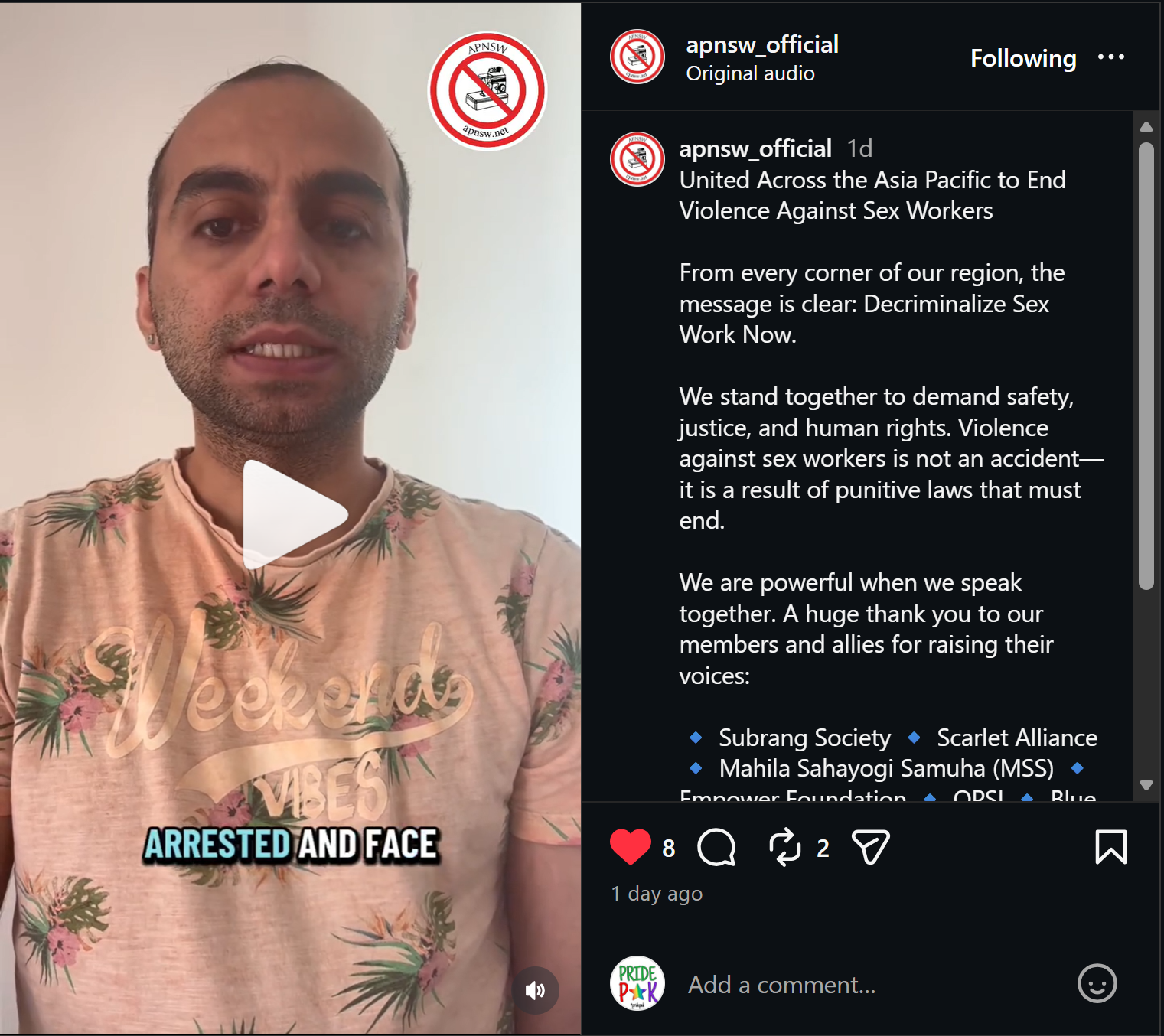
    At Pride Pakistan, our mission has always been to advocate for the most marginalized voices within our community. This year, for the International Day to End Violence Against Sex Workers, our founder Ali Raza Khan joined the Asia Pacific Network of Sex Workers (APNSW) in a landmark regional campaign.

    Speaking as a gay sex worker from Pakistan, Ali highlighted a truth that is often silenced: in our patriarchal society, the criminalization of sex work doesn’t “protect” anyone—it actively facilitates violence, particularly against Male Sex Workers (MSWs) and Men who have sex with men (MSM).

    The Invisible Crisis: Male Sex Workers in Pakistan

    In Pakistan, the discussion around sex work is often limited to female workers, leaving MSWs in a state of extreme vulnerability. According to recent data, the numbers and the risks are staggering:

    • Population Estimates: UNAIDS estimates there are approximately 832,200 men who have sex with men (MSM) in Pakistan, a significant portion of whom engage in sex work for survival or livelihood (UNAIDS, 2024).
    • HIV Vulnerability: While the national HIV prevalence in the general population is low, it is disproportionately high among key populations. Men constitute 69.4% of new HIV cases reported in 2024, often due to a lack of access to safe working conditions and health services (The News International/Ministry of Health, 2024).
    • Systemic Violence: Research shows that criminalization drives sex work underground, making it nearly impossible for MSWs to report violence. A 2025 Global Torture Index report classifies Pakistan as “high risk,” noting that police regularly employ torture and extortion against vulnerable individuals, including LGBTQIA+ and sex-working communities (OMCT, 2025).

    Why Decriminalization is the Only Path Forward

    Criminalization creates a “culture of impunity.” When a male sex worker is robbed, beaten, or extorted, he cannot go to the police because the law views him as the criminal. This allows perpetrators—including state actors—to target our community without fear of consequence.

    Decriminalization is not just a legal shift; it is a life-saving intervention. It allows for:

    1. Access to Justice: The ability to report crimes without fear of arrest.
    2. Health Rights: Improved access to HIV prevention, ART, and mental health support.
    3. Workplace Safety: The ability to negotiate safe sex and refuse dangerous clients.

    Official Statement from PridePakistan.org

    “On this International Day to End Violence Against Sex Workers, Pride Pakistan stands in unwavering solidarity with sex workers of all genders. We recognize sex work as work and demand an immediate end to the criminalization that fuels the torture and humiliation of our community members.

    We call upon the Government of Pakistan to align with international human rights standards and recognize that you cannot end violence while you continue to criminalize the victims. Safety, dignity, and healthcare are human rights—not privileges to be revoked based on how one earns a living.”

    You can watch the regional solidarity video featuring Ali Raza Khan on the APNSW Facebook Page

    Youtube Page: International Day to End Violence Against Sex Workers – YouTube

    or Instagram: https://www.instagram.com/p/DSW1WqHjfGw/

    and join the conversation using the hashtags below.

    #PridePakistan #EndViolenceAgainstSexWorkers #DecriminalizeSexWork #MSWRights #SexWorkIsWork

    References:

    1. UNAIDS Pakistan Data (2024–2025)

    • Link: UNAIDS Pakistan Country Page
    • Key Detail: Provides the estimate of 832,200 men who have sex with men (MSM) in Pakistan and tracks the “fastest-growing HIV epidemic” in the region.

    2. Global Torture Index 2025 (OMCT)

    3. WHO & Ministry of Health Reports (2024–2025)

    4. APNSW Regional Campaign

    5. Human Rights Watch / Amnesty International (2025)

    Further Reading & References:

  • On Shaky Grounds: Struggles of Gay Equality, Freedom, and Justice in Asia

    On Shaky Grounds: Struggles of Gay Equality, Freedom, and Justice in Asia

    This article is reposted with credit to APCOM. We encourage readers to visit their website for the original publication.

    Rising Hate and Violence Across Asia-Pacific

    APCOM’s recent report highlights how LGBTQI communities across Asia-Pacific are facing increased hate, violence, and shrinking civic spaces. In Pakistan, gay men remain among the most marginalized. They are often invisible in public discourse, excluded from policy protections, and targeted by both state and family violence.

    While community safe spaces provide vital support through HIV/AIDS awareness, psychosocial assistance, and mental health guidance, gay men in particular struggle to access these resources due to fear of exposure, harassment, and stigma.

    Gay Men in Pakistan: The Most Marginalised

    Gay couples in Pakistan endure:

    • Discrimination in workplaces, schools, and healthcare.
    • Stigma that isolates them from family and community.
    • Threats of violence and even death from the state or relatives.

    Unlike transgender communities who have gained some legal recognition, gay men remain largely erased from public policy and advocacy. Their relationships are criminalized, their identities silenced, and their safety constantly under threat.

    Similar Patterns in Indonesia

    In Indonesia, gay men face growing hostility fueled by conservative religious and political movements. Reports show:

    • Criminalization of same-sex relations under local bylaws.
    • Police raids and harassment targeting gay gatherings.
    • Public stigma and violence, often justified under “morality” campaigns.

    These patterns mirror the shrinking space for gay rights seen in Pakistan, where safe spaces are under constant threat.

    Similar Patterns in Afghanistan

    In Afghanistan, the situation is even more dire:

    • Under Taliban rule, same-sex relationships are punishable by death.
    • Gay men live in extreme fear, often forced into hiding or fleeing the country.
    • Families themselves may perpetrate violence, seeing gay identity as dishonor.

    This reflects the harshest form of state and societal violence, echoing APCOM’s warning that LGBTQI equality and justice remain on “shaky grounds” across the region.

    Why This Matters for Pakistan

    For Pakistan’s gay community, these regional parallels are a reminder that:

    • Discrimination and stigma are not isolated but part of a wider regional trend.
    • Solidarity across borders is essential to resist oppression.
    • Safe spaces and advocacy must be protected and expanded, even under threat.

    At PridePakistan.org, we stand with APCOM and gay communities across Asia-Pacific in demanding equality, freedom, and justice. Hate and violence cannot silence love, dignity, and resilience.

    Sources:

  • Honoring Transgender Lives: Transgender Day of Remembrance & Awareness Week

    Honoring Transgender Lives: Transgender Day of Remembrance & Awareness Week

    Every November, the world pauses to honor the lives of transgender people lost to violence and hatred. The Transgender Day of Remembrance (TDOR), observed on November 20, is not only a day of mourning but also a call to action. It reminds us that visibility, advocacy, and solidarity are essential for survival.

    This year, during Transgender Awareness Week, Pride Pakistan joins the global community in remembering those we have lost and recommitting ourselves to the fight for dignity and equality.

    🌈 Shanoun Sharukh’s Message of Solidarity

    One of our community members, Shanoun Sharukh, shared a heartfelt video message:

    “We remember the transgender people who lost their lives in Pakistan and continue to face violence every day. As a community, Pride Pakistan will never stop our efforts for transgender rights. We stand together, and we will not be silenced.”

    Shanoun’s words reflect the resilience of our community, even in the face of systemic oppression.

    📊 Violence Against Transgender People in Pakistan

    The statistics are devastating:

    • In Khyber Pakhtunkhwa, over 150 transgender individuals have been killed in the past five years, yet only one perpetrator has been convicted The Express Tribune humenglish.com.
    • Police records show 267 cases of violence against transgender persons between 2019 and 2023 in KPK, with conviction rates near zero The Express Tribune.
    • Nationally, reports highlight that transgender people face daily harassment, extortion, and denial of basic rights such as education and healthcare OHCHR UPR Contribution Submissions.
    • In September 2025, three transgender women were shot and killed in Karachi, underscoring the ongoing dangers faced by the community The Independent.

    These numbers are not just statistics — they represent lives cut short, families shattered, and communities living in fear.

    ✊ Pride Pakistan’s Commitment

    At Pride Pakistan, we believe that visibility saves lives. By telling these stories, sharing these numbers, and amplifying voices like Shanoun’s, we ensure that the violence cannot be erased or ignored.

    Our commitment is twofold:

    • Transgender Rights: We will continue to highlight the killings, harassment, and systemic discrimination faced by transgender people in Pakistan, demanding accountability and justice.
    • Broader LGBTQI Visibility: We recognize that gay and queer violence often goes unreported due to criminalisation in Pakistan. Pride Pakistan will use its platform to ensure that these stories are not silenced, and that the fight for equality includes all identities.

    💜 A Call to Action

    Transgender Day of Remembrance is not just about mourning — it is about mobilizing. We call on allies, activists, and policymakers to:

    • Demand justice for victims of violence.
    • Challenge prejudice in communities and institutions.
    • Support safe spaces for LGBTQI people in Pakistan.

    Together, we can build a future where no one is killed or silenced for simply being who they are.

    Sources:

  • PTA’s War on LGBTQIA+ Visibility — A Systemic Attack on Digital Rights

    PTA’s War on LGBTQIA+ Visibility — A Systemic Attack on Digital Rights

    PridePakistan.org Condemns PTA’s Censorship and Harassment of LGBTQIA+ Voices

    Pride Pakistan strongly condemns the ongoing censorship and intimidation campaign by the Pakistan Telecommunication Authority (PTA) targeting LGBTQIA+ content, platforms, and individuals. These actions are part of a long-standing pattern of digital repression and harassment that seeks to erase queer existence from Pakistan’s online and public spaces.

    For years, LGBTQIA+ Pakistanis have relied on digital platforms to connect, organize, and survive. But the Pakistan Telecommunication Authority (PTA) has systematically worked to dismantle these lifelines — banning apps, filtering content, and harassing community members.

    🔒 Recent Escalation: Targeting PridePakistan.org

    In October 2025, PTA escalated its censorship efforts by pressuring Meta (Instagram) to restrict LGBTQIA+ content — including posts from PridePakistan’s official account. Our website has also faced interference, with attempts to block access and silence our support resources.

    This is not an isolated incident. It reflects a broader campaign to suppress queer voices and criminalize visibility.

    🧑‍🤝‍🧑 Harassment of Volunteers

    Our volunteer members have faced repeated harassment — including online abuse, surveillance, and threats. Some have been questioned by authorities, while others have had their social media accounts flagged or restricted simply for advocating LGBTQIA+ rights.

    This intimidation is designed to instill fear and discourage activism. We will not be silenced.

    📵 PTA’s History of Censorship

    PTA’s actions against LGBTQIA+ platforms include:

    • Banning Grindr, Tinder, and other dating apps in 2020, citing “immoral content” — a move widely condemned by rights groups The New Arab IBTimes India
    • Blocking access to all gay porn sites in Pakistan, regardless of content type or safety measures
    • Filtering and removing social media posts that express support for LGBTQIA+ rights, identities, or events
    • Issuing takedown requests to global platforms like Meta, demanding the removal of queer content from Pakistani feeds

    These actions violate basic digital rights and disproportionately target marginalized communities.

    Timeline of PTA’s censorship actions against LGBTQIA+ content from 2020 to 2025

    • September 2020: PTA bans Grindr, Tinder, and other dating apps for “immoral content”
    • 2021–2023: PTA blocks gay porn sites and filters LGBTQIA+ hashtags on social media
    • August 2025: PTA requests Meta (Instagram) to restrict LGBTQIA+ content from PridePakistan
    • October 2025: PTA interferes with access to PridePakistan.org and flags queer visibility posts

    📣 Our Response

    Pride Pakistan stands firm in our mission to provide:

    • Safe, accessible support resources for LGBTQIA+ individuals
    • Mental health and legal guidance
    • Community-building and advocacy tools
    • Visibility campaigns that challenge stigma and promote acceptance

    We call on:

    • Social media platforms to resist censorship and protect queer content
    • Civil society and allies to speak out against digital repression
    • International watchdogs to hold PTA accountable for rights violations

    🌈 We Will Not Be Erased

    LGBTQIA+ Pakistanis exist. We resist. We build.
    No amount of censorship can erase our truth.

    🔗 References

    1. Pakistan bans dating apps Tinder, Grindr over ‘immoral’ content – The New Arab
    2. Pakistan swipes left on Tinder, Grindr – IBTimes India
    3. Pakistan’s move to ban gay dating apps seen as crackdown – The Commune
    4. Digital Policy Alert – PTA blocks five dating apps