Category: Violence

  • Qasim Iqbal: Speaking Out on Islam and LGBTQI Rights in Pakistan

    Qasim Iqbal: Speaking Out on Islam and LGBTQI Rights in Pakistan

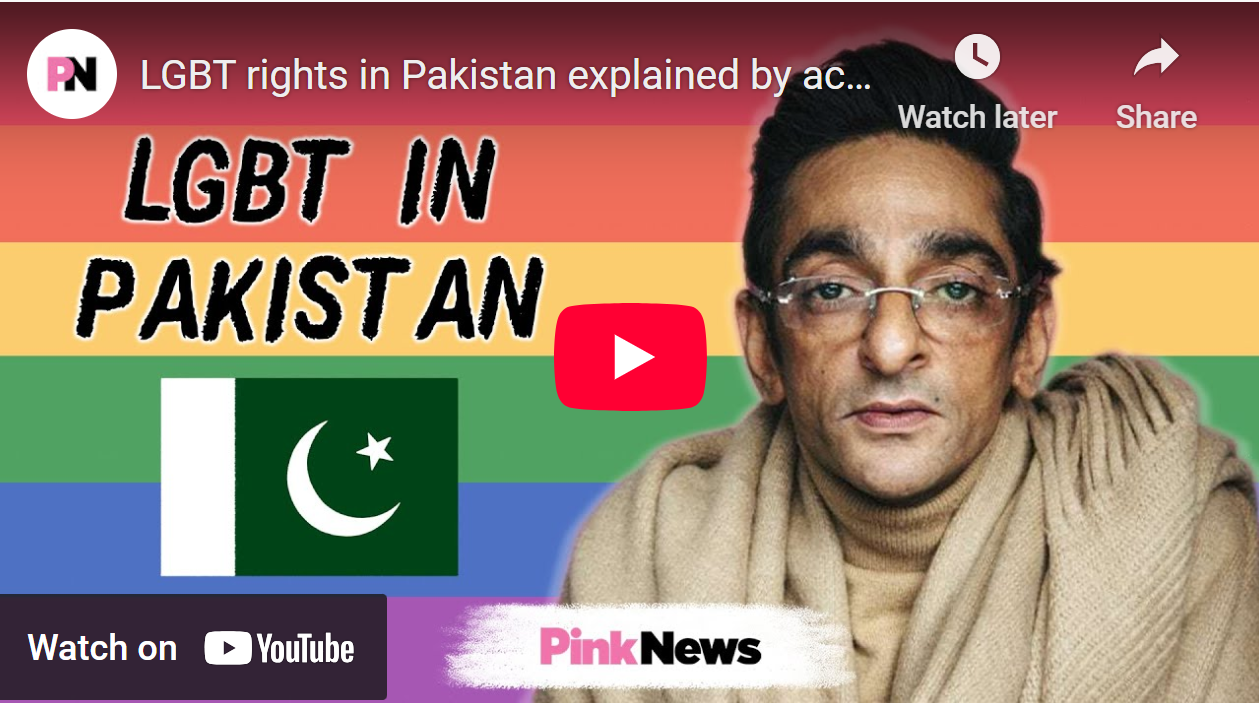
    In a country where LGBTQI voices are often silenced, Qasim Iqbal, a leading activist, has courageously spoken out about the realities faced by queer people in Pakistan. In this short but powerful video interview with PinkNews on Jun 4, 2020, he explains how laws, social stigma, and religious hate combine to make life unsafe for LGBTQI individuals.

    📢 Video Highlights

    • Criminalisation: Homosexuality remains illegal under Section 377 of the Penal Code, a colonial-era law still used to harass and intimidate.
    • Abuse of Power: Police and authorities exploit these laws to blackmail and extort LGBTQI people.
    • Social Stigma: Religious and cultural narratives fuel hate, forcing many into secrecy and isolation.
    • Resilience: Despite these challenges, activists like Qasim Iqbal continue to fight for dignity, equality, and recognition of LGBTQI rights as human rights.

    Qasim’s voice represents the lived reality of thousands of LGBTQI Pakistanis who cannot speak openly. His testimony is a reminder that our struggle is not invisible and that international solidarity is essential.

    You can watch the full interview here:
    LGBT rights in Pakistan explained by activist Qasim Iqbal (YouTube)

    📚 References & Further Reading

    Qasim Iqbal’s message is clear: LGBTQI rights are human rights. His courage in speaking out should inspire us all to continue raising awareness, challenging hate, and demanding equality in Pakistan and beyond.

  • اندرونِی جال و خاموشی: سلامتی کے ادارے پاکستان کی ہم جنس کمیونٹی کو کیسے نشانہ بناتے ہیں

    اندرونِی جال و خاموشی: سلامتی کے ادارے پاکستان کی ہم جنس کمیونٹی کو کیسے نشانہ بناتے ہیں

    ۵ اکتوبر ۲۰۲۵

    وہ کہانیاں جو ہم ہر روز سنتے ہیں

    پرائڈ پاکستان میں، ہمیں ہم جنس افراد کی جانب سے بے شمار پیغامات موصول ہوتے ہیں جنہوں نے ان لوگوں کے ہاتھوں ناقابلِ تصور زیادتی برداشت کی ہے جن کا کام ان کی حفاظت کرنا ہے۔ یہ کوئی الگ تھلگ کہانیاں نہیں ہیں. وہ ہانی ٹریپنگ، بلیک میل، جنسی زیادتی، جسمانی تشدد ، اور ایکسٹارشن کا ایک پریشان کن پیٹرن بناتی ہیں جو پاکستان کے ایف آئی اے، این سی سی آئی اے، پولیس، آرمی، اور انٹیلیجنس ایجنسیز سے منسلک افراد کے ذریعے انجام دی جاتی ہیں۔

    بہت سے متاثرین کے لیے، اس صدمے میں خاموشی کا اضافہ ہو جاتا ہے۔ خاندان اکثر ان سے لاتعلقی اختیار کر لیتے ہیں، معاشرہ انہیں قصوروار ٹھہراتا ہے، اور ریاست ان کے وجود کو ہی کریمینلائز کرتی ہے۔ یہ آرٹیکل ان آوازوں کے لیے وقف ہے، ان لوگوں کے لیے جنہوں نے خاموشی سے تکلیف سہی، جو ابھی بھی ٹریپڈ ہیں، اور جو مزاحمت جاری رکھے ہوئے ہیں۔

    پولیس پر مشتمل ہانی ٹریپ سکینڈلز

    لاہور اور راولپنڈی میں، پولیس افسران سمیت متعدد گینگز کو ہانی ٹریپ سکیمیں چلانے کے الزام میں گرفتار کیا گیا۔ متاثرین کو سوشل میڈیا کے ذریعے لالچ دیا جاتا تھا، نجی فلیٹس میں بلایا جاتا تھا، پھر ان پر حملہ کیا جاتا، ان کی فلم بنائی جاتی، اور بلیک میل کیا جاتا تھا۔ ایک کیس میں، ۵۰ سے زیادہ متاثرین کی شناخت ہوئی، جن کی فحش ویڈیوز کو بے نقاب کرنے کی دھمکی دے کر پیسے بٹورنے کے لیے استعمال کیا گیا۔

    بلال اسلم کا کیس (پنجاب پولیس)

    حال ہی میں، ایک متاثرہ شخص نے پرائڈ پاکستان سے رابطہ کیا اور پنجاب پولیس میں ایک حاضر سروس افسر، بلال اسلم کی شناخت کی، جو ہم جنس کمیونٹی کے ارکان کو جنسی زیادتی اور بلیک میل کر رہا ہے۔ زندہ بچ جانے والے افراد رپورٹ کرتے ہیں کہ انہیں بے نقاب کرنے کی دھمکی کے تحت جنسی زیادتی پر مجبور کیا گیا، اور ان کے خلاف جھوٹے مقدمات درج ہونے سے روکنے کے لیے پیسوں کا مطالبہ کیا گیا۔ یہ کیس واضح کرتا ہے کہ قانون نافذ کرنے والے اداروں کے اندر موجود افراد کس طرح کمزور کمیونٹی کے ارکان کا شکار کرنے کے لیے اپنے آتھارٹی کا استحصال کرتے ہیں۔

    ہم جنس مردوں کی منظم ہراسانی

    تحقیق سے پتہ چلتا ہے کہ پاکستان میں ہم جنس مردوں کو معمول کے مطابق وربَل ہَراسمنٹ، جنسی زیادتی ، اور بلیک میل کا سامنا کرنا پڑتا ہے، اکثر ایسے لوگوں کی طرف سے جو آتھارٹی کی پوزیشنوں پر فائز ہوتے ہیں۔

    قانون کا بطور ہتھیار استعمال

    پینل کوڈ کی دفعہ ۳۷۷، جو ہم جنس تعلقات کو کریمینلائز کرتی ہے، کو پولیس اور ایجنسیاں اکثر مقدمہ چلانے کے لیے نہیں بلکہ ایل جی بی ٹی کیو+ افراد کو دھمکانے، پسے حتیانے، اور خاموش کرانے کے لیے استعمال کرتی ہیں۔

    جس بھی شخص کو ٹریپ کیا گیا، زیادتی کیا گیا، یا بلیک میل کیا گیا: آپ کا درد حقیقی ہے، آپ کی کہانی اہمیت رکھتی ہے، اور آپ اکیلے نہیں ہیں۔

    ہم جانتے ہیں کہ ایسے صدمے کے بعد رابطہ کرنے کے لیے کتنی حمت کی ضرورت ہوتی ہے۔ بہت سے زندہ بچ جانے والے شرم، خوف اور ناامیدی کے جذبات کو بیان کرتے ہیں۔ لیکن ہمیں واضح ہونے دیں: شرم مجرموں کی ہے، آپ کی نہیں۔

    کمیونٹی ممبرز کے لیے حفاظتی رہنمائی

    آن لائن سیفٹی

    • اپنی شناخت اور مقام کی حفاظت کے لیے ایک وی پی این استعمال کریں۔
    • ملنے سے پہلے رابطوں کی ویریفائی کریں—پہلے ویڈیو کال کریں۔
    • انٹیمیٹ فوٹوز یا ذاتی تفصیلات کا اشتراک کرنے سے گریز کریں۔
    • ریڈ فلیگز پر نظر رکھیں: رازداری، جلدی ملنے کا دباؤ، شناخت ظاہر کرنے سے انکار۔

    آف لائن سیفٹی

    • پہلے عوامی مقامات پر ملیں۔
    • علیحدہ فلیٹس یا دور دراز علاقوں سے گریز کریں۔
    • اپنے مقام کی اطلاع کسی بھروسہ مند دوست کو دیں۔
    • اپنی انسٹنکٹس پر بھروسہ کریں اور اگر کچھ غیر محفوظ محسوس ہو تو وہاں سے چلے جائیں۔

    ہمارا مطالبہ ہے کہ:

    • حکومتِ پاکستان سلامتی کے اداروں کے اندر موجود افراد، بشمول بلال اسلم، جو زیادتی اور بلیک میل میں ملوث ہیں، کی تفتیش کرے اور ان پر مقدمہ چلائے۔
    • بین الاقوامی انسانی حقوق کی تنظیمیں بشمول ایمنسٹی انٹرنیشنل، ہیومن رائٹس واچ، اور یو این ہیومن رائٹس کونسل، پاکستان پر دباؤ ڈالیں کہ وہ ان طریقوں کو ختم کرے اور ایل جی بی ٹی کیو+ شہریوں کی حفاظت کرے۔
    • گلوبل ایلائیز ان کہانیوں کو ایمپلیفائی کریں تاکہ خاموشی مجرموں کو تحفظ فراہم کرنا جاری نہ رکھے۔

    حوالہ جات اور رپورٹس

    لاہور: ہانی ٹریپ سکینڈل میں پولیس افسران سمیت سات گرفتار – پاکستان – آج انگلش ٹی وی

    لاہور پولیس افسران، خواتین کو مردوں کو ہانی ٹریپ کرنے، فحش ویڈیوز فلم کرنے پر گرفتار کیا گیا

    اَبیوز اور وائلنس ایکسپیرینسڈ بائی گے مین لیونگ اِن پاکستانی کلچرل کَنٹیکسٹ

    سلامتی کے اداروں کی جانب سے پاکستان کی ہم جنس کمیونٹی کو نشانہ بنانا محض ہراسانی نہیں ہے—یہ اسٹیٹ-اینیبلڈ وائلنس ہے۔ ہر کہانی جو ہمیں موصول ہوتی ہے وہ تبدیلی کی فوری ضرورت کی یاد دہانی ہے۔

    ہماری کمیونٹی سے: محفوظ رہیں، مضبوط رہیں، اور جان لیں کہ آپ اکیلے نہیں ہیں۔ دنیا سے: نظریں نہ پھیریں۔

  • Psychological Clinics as Tools of Repression: The Case of Preetum Giani and the Silencing of Gay Voices in Pakistan

    Psychological Clinics as Tools of Repression: The Case of Preetum Giani and the Silencing of Gay Voices in Pakistan

    When Mental Health Becomes a Weapon

    In Pakistan, where same-sex relationships remain criminalised under Section 377 of the Penal Code, the state and segments of society continue to treat homosexuality not as a natural human variation but as a “disease” to be “cured.” This dangerous belief fuels the use of conversion therapy , a discredited and harmful practice condemned by every major global psychiatric and medical body.

    Instead of offering evidence-based mental health care, some psychiatric institutions in Pakistan have become tools of repression, used to silence and punish individuals for their sexual orientation. Reports received by Pride Pakistan indicate that electric shocks, forced medication, prolonged isolation, and psychological abuse are still being used under the guise of “treatment.”

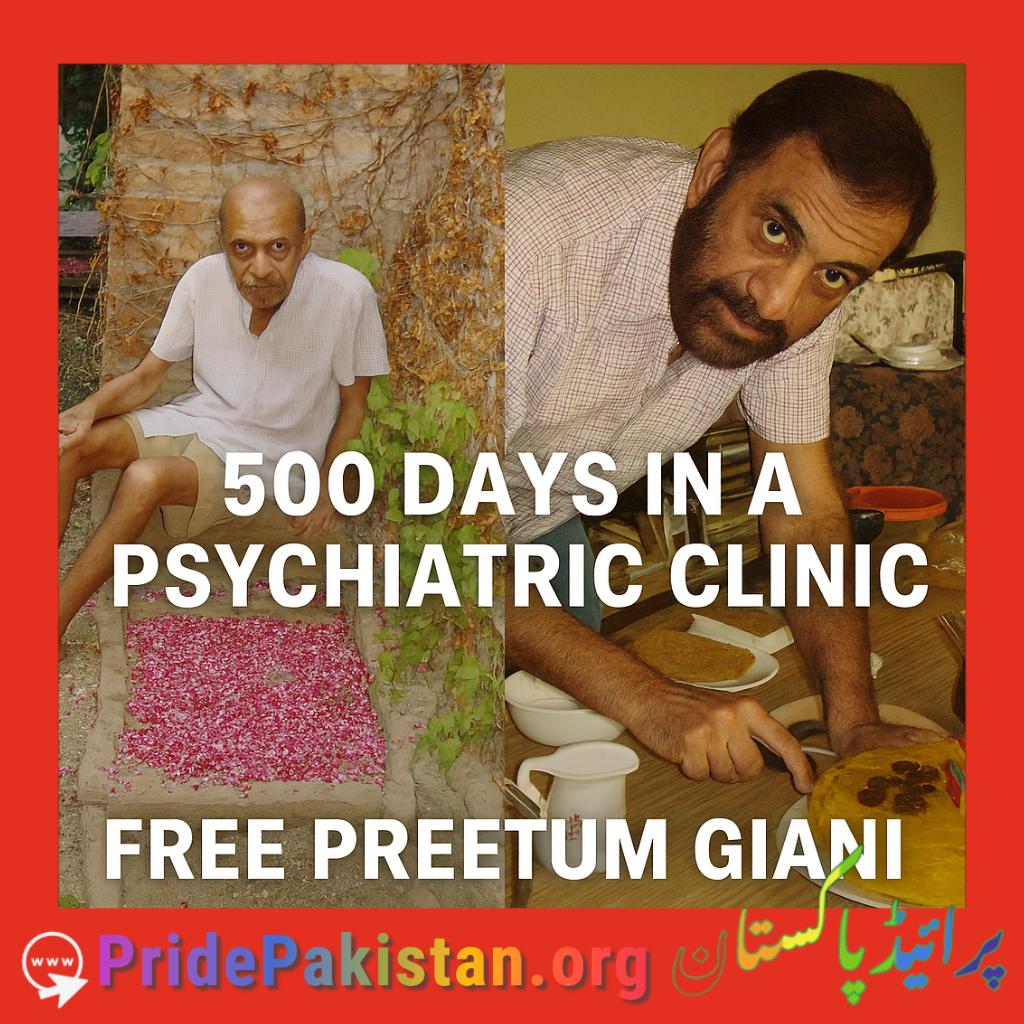
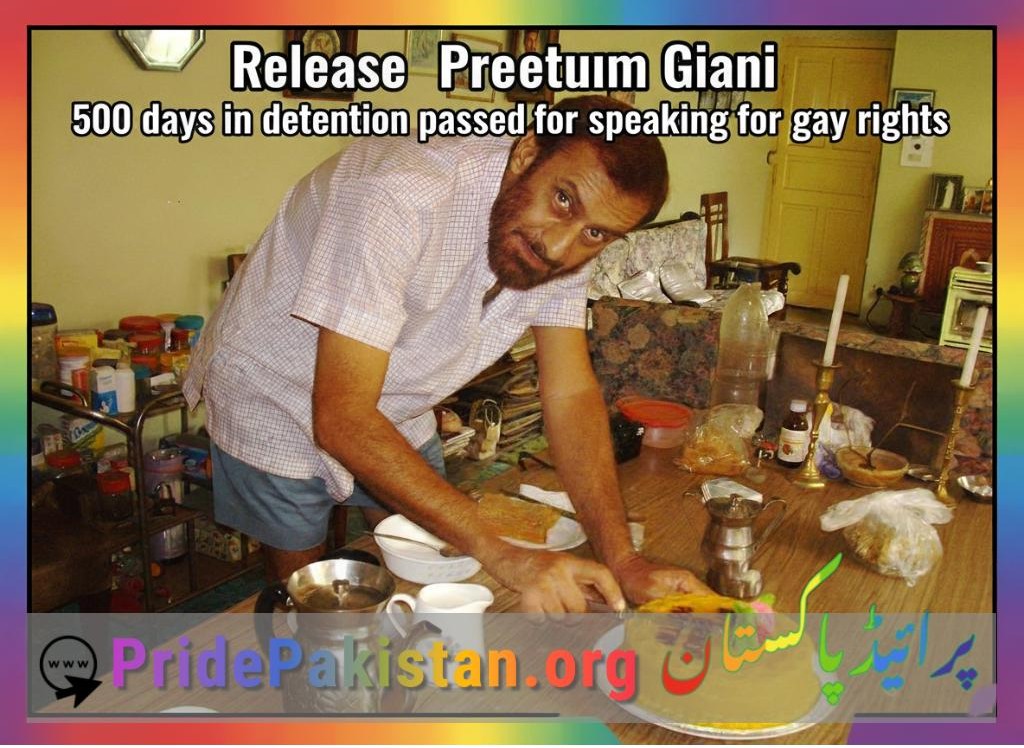
    The Case of Preetum Giani: 500 Days in Detention for Demanding Equality

    In May 2024, Preetum Giani, a 75-year-old human rights advocate, submitted an application to the Deputy Commissioner of Abbottabad to open the Lorenzo Gay Club, a safe, non-sexual social space for the LGBTQ+ community.

    The next day, on 9 May 2024, Giani was reportedly abducted by individuals linked to security agencies and transferred to the Sarhad Hospital for Psychiatric Disease in Peshawar. Friends and supporters have been denied access to him, and his current condition remains unknown.

    This is not an isolated case. It is part of a broader pattern where mental health facilities are misused as detention centres for LGBTQ+ individuals, often at the request of families or under state orders. The aim is not treatment, it is erasure.

    ⚠️ Conversion Therapy in Pakistan: A Hidden Crisis

    • No legal ban: Pakistan has no laws prohibiting conversion therapy.
    • Widespread abuse: Reports document the use of aversion techniques, including electric shocks, forced medication, and religious indoctrination.
    • Family complicity: Many victims are admitted to clinics by their own relatives, often under pressure from community or religious leaders.
    • State involvement: In some cases, as with Giani, state actors directly facilitate or order such detentions.

    These practices are scientifically baseless and have been shown to cause severe trauma, depression, anxiety, and suicidal ideation.

    📢 International Standards and Pakistan’s Obligations

    The United Nations, World Health Organization, and Amnesty International have all declared that sexual orientation is not a disorder and that conversion therapy constitutes torture or cruel, inhuman, and degrading treatment.

    Pakistan is a signatory to multiple international human rights treaties, including the International Covenant on Civil and Political Rights (ICCPR), which guarantees freedom from arbitrary detention and protection from torture. The continued detention of Preetum Giani and others like him is a clear violation of these obligations.

    ✊ Our Demands

    Pride Pakistan calls on:

    1. The Government of Pakistan to:
      • Immediately release Preetum Giani from psychiatric detention.
      • Ban all forms of conversion therapy and criminalise its practice.
      • Ensure mental health facilities operate under strict human rights oversight.
    2. The United Nations Human Rights Council, Amnesty International, Human Rights Watch, and other global bodies to:
      • Publicly condemn the detention of Giani.
      • Demand Pakistan’s compliance with international human rights standards.
      • Monitor and report on the misuse of psychiatric institutions against LGBTQ+ individuals.
    3. The International Medical Community to:
      • Suspend cooperation with Pakistani mental health institutions found to be complicit in conversion therapy or arbitrary detention.
      • Offer asylum and medical support to survivors.

    References & Further Reading

    🔴 Final Word

    Preetum Giani’s case is a stark reminder that in Pakistan, being openly gay can mean losing your freedom, your dignity, and your safety. As we approach 500 days of his detention, silence is complicity.

    We urge every ally, activist, and organisation to raise their voice. Share his story. Demand his release. And stand against the weaponisation of mental health care to erase LGBTQ+ lives.

  • Another Queer Life Targeted: The Arrest of Abdul Mughiz in Swabi and the Misuse of Morality Laws in KPK

    Another Queer Life Targeted: The Arrest of Abdul Mughiz in Swabi and the Misuse of Morality Laws in KPK

    By Pride Pakistan

    In yet another troubling example of state‑enabled harassment of queer Pakistanis, police in Swabi, Khyber Pakhtunkhwa, have arrested Abdul Mughiz, a resident of Bamkhel, for nothing more than expressing himself through clothing on TikTok.

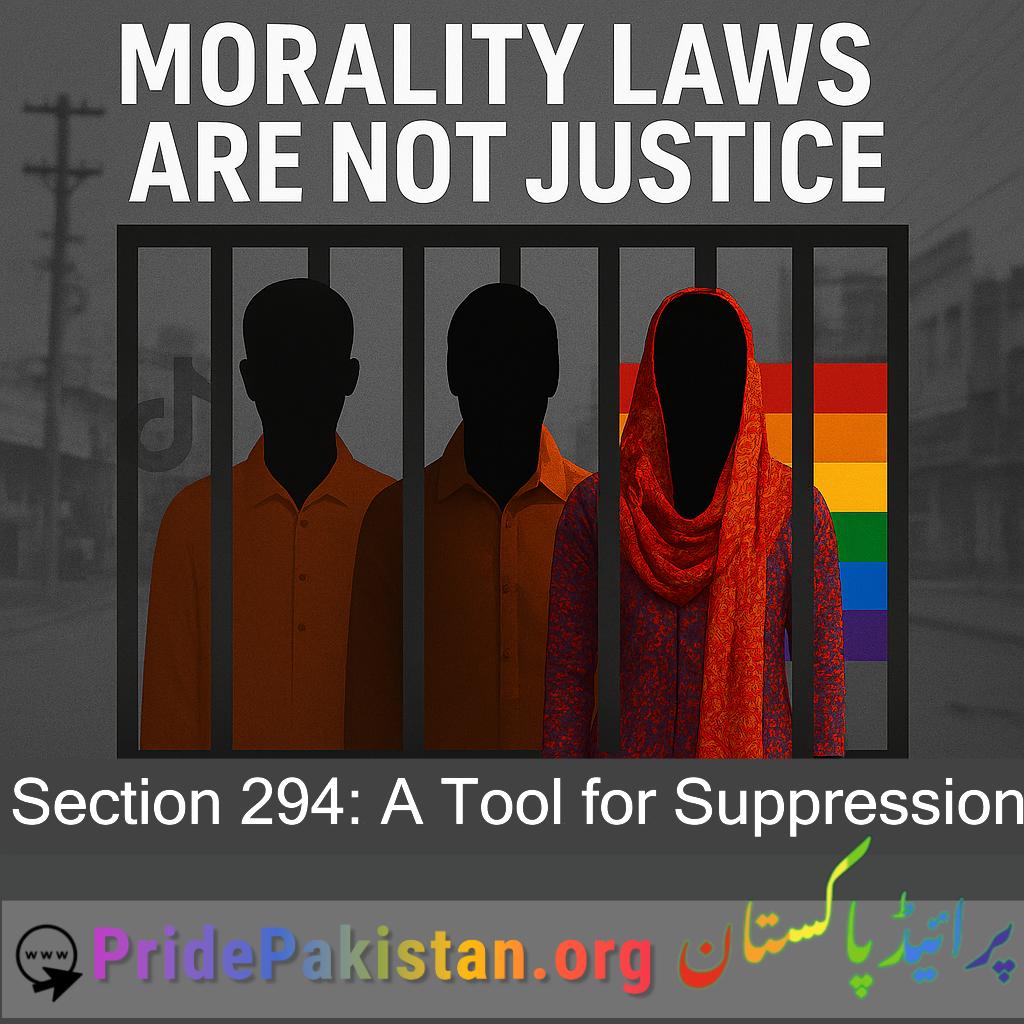
    According to police statements, Mughiz wore women’s clothing, posed for videos, and posted them online. Authorities claim these acts were “indecent” and “sparked public resentment”. He was charged under Section 294 of the Pakistan Penal Code, a provision that criminalises “obscene acts” in public places , a vague and subjective law that has repeatedly been weaponised against LGBTQI individuals in Pakistan, particularly in KPK.

    📜 Section 294: A Tool for Suppression

    Section 294 PPC states:

    “Whoever, to the annoyance of others, does any obscene act in any public place… shall be punished with imprisonment… or with fine, or with both.”

    Human rights observers note that this law is often applied selectively, targeting transgender women, queer men, and Khawaja Sira communities for their gender expression, while similar acts by cisgender, heterosexual individuals are ignored.

    🚨 A Pattern of Persecution in KPK

    Khyber Pakhtunkhwa has seen repeated incidents of harassment, violence, and even killings of LGBTQI people:

    • Harassment & Arbitrary Arrests: Transgender women in Peshawar and Mardan have reported being detained under morality laws for wearing “inappropriate” clothing or performing at private events.
    • Targeted Killings: Activists have documented multiple murders of trans women in KPK over the past decade, often after threats from extremist groups. In many cases, perpetrators were never brought to justice.
    • Police Extortion: Reports indicate that police have used the threat of Section 294 charges to extort money or sexual favours from queer individuals, particularly those working as dancers or in informal economies.

    These abuses occur despite the Transgender Persons (Protection of Rights) Act 2018, which legally recognises gender identity and prohibits discrimination, a law whose protections are routinely undermined by societal prejudice and selective enforcement of morality provisions.

    🌈 Why Abdul Mughiz’s Case Matters

    Mughiz’s arrest is not an isolated incident , it is part of a systemic pattern where queer expression is criminalised under the guise of “public morality.” This policing of identity not only violates Pakistan’s constitutional guarantees of equality but also fuels a climate of fear for LGBTQI people, especially in conservative regions like KPK.

    📢 Pride Pakistan’s Call to Action

    We demand:

    • An immediate review of Section 294 to prevent its misuse against marginalised communities.
    • Accountability for police harassment of LGBTQI individuals.
    • Public education campaigns to challenge prejudice and promote acceptance of gender diversity.

    📚 Further Reading & References

  • The Closing Walls: How Global Indifference is Fueling Pakistan’s War on its LGBTQI+ Community

    The Closing Walls: How Global Indifference is Fueling Pakistan’s War on its LGBTQI+ Community

    By Ali Raza Khan

    Ali Raza Khan is a steering committee member of TheYouthPACT, an HIV-positive gay activist, and lives with PTSD.

    There’s a particular kind of silence that haunts you when you live at the intersection of identities the world wishes to erase. As a gay man, as an HIV-positive person, as an activist in Pakistan, I have learned to live with the constant hum of threat. But the silence I hear now, echoing from the global corridors of power, is new. It is the sound of abandonment.

    The year 2025 will be remembered by my community as the year the walls truly started to close in. We are facing a crisis that is not merely financial but existential. The announced global funding cuts to development work, NGOs, and UN agencies are not just line items on a budget sheet; they are death sentences for queer people in Pakistan.

    The Double-Edged Sword: No Funds, No Diplomacy

    For years, we survived on a fragile lifeline. International funding allowed a handful of beleaguered NGOs to provide safe houses, HIV medication, legal aid, and a sliver of hope. This was often coupled with quiet, yet firm, diplomatic pressure. When Western nations funded human rights, they also, occasionally, spoke up for them. Countries would raise our plight within UN human rights bodies, ensuring the violations against us were at least recorded.

    That is now gone.

    This isn’t just about the money disappearing. It’s about the diplomatic shield vanishing with it. Major donor governments, citing domestic priorities, have slashed their aid budgets. A UN Women survey in March 2025 found that 47% of women’s rights organizations, often our allies and service providers—expect to shut down within six months. The US has terminated over $500 million in grants for programs tackling child labor and human trafficking, issues that disproportionately affect vulnerable LGBTQI+ youth.

    This withdrawal creates a vacuum of accountability. When UN bodies are themselves starved of funds, they cannot monitor or report on human rights violations. For the gay community, which already suffers from a severe lack of official data on persecution, this means we are being rendered invisible before we are eradicated. Our pain will not even be a statistic.

    The State Tightens Its Noose

    The Pakistani government has seized this moment of global indifference to launch a systematic assault. For NGOs, the labyrinth of bureaucracy has become a trap. The Economic Affairs Division (EAD) now demands exhaustive pre- and post-reporting on all foreign funds, effectively paralyzing organizations. Renewing an NGO’s registration or obtaining a No Objection Certificate (NOC) has become an exercise in futility. The result is mass closures, not by decree, but by a slow, deliberate strangulation. We are losing the very infrastructure that kept many of us alive.

    Simultaneously, the state is weaponizing the law. The 2025 amendments to the Prevention of Electronic Crimes Act (PECA) have created a vague and powerful tool to crush dissent. The law criminalizes the “intentional” dissemination of “false information,” a charge easily fabricated against any activist. It has also established a new Social Media Protection and Regulatory Authority (SMPRA) with sweeping powers to block any content deemed “unlawful or offensive.”

    This is a direct attack on us. The LGBTQI+ community in Pakistan exists primarily online. We cannot register as organizations because our very identities are criminalized under Section 377 of the Pakistan Penal Code, a colonial-era law that prescribes up to life in prison for “carnal intercourse against the order of nature.” The digital world was our last safe-ish space. Now, that space is being burned to the ground.

    The government has already banned Grindr and other dating apps. For a time, we used VPNs to circumvent the blocks, but in late 2024, the state began heavily regulating and blocking unregistered VPN services, further isolating us. This isn’t theoretical. The Federal Investigation Agency (FIA) in Faisalabad has actively used dating apps to entrap and arrest gay men. The state is not just censoring us; it is actively hunting us.

    The Human Cost of Silence

    When the system is designed to crush you, even seeking help is a risk. Activists who dare to speak out are met with the state’s full force. They are placed on travel restriction lists, like many activist who was blocked from traveling to participate in human rights related activities. They are subjected to enforced disappearances. They are slapped with fabricated FIRs that turn them into criminals in the eyes of the very international bodies that once might have helped them.

    The message is clear: you are on your own.

    The global community, by defunding our protectors and turning a blind eye to our persecution, has become complicit in this assault. They have signaled to the Pakistani government that the lives of queer people are disposable.

    As an activist, I am supposed to end with a message of hope. But hope is a luxury we can no longer afford. What we have is a burning, defiant rage. We see the walls closing in, we hear the silence of our former allies, and we know that we have only ourselves to rely on now. We will continue to organize in the shadows, to support each other in secret, to fight for our right to exist. But I ask the world, as you turn your back on us, how many of us have to disappear before you notice we are gone?
  • A Dark Day in Karachi: The Unseen Epidemic of Violence Against Gay Men in Pakistan

    A Dark Day in Karachi: The Unseen Epidemic of Violence Against Gay Men in Pakistan

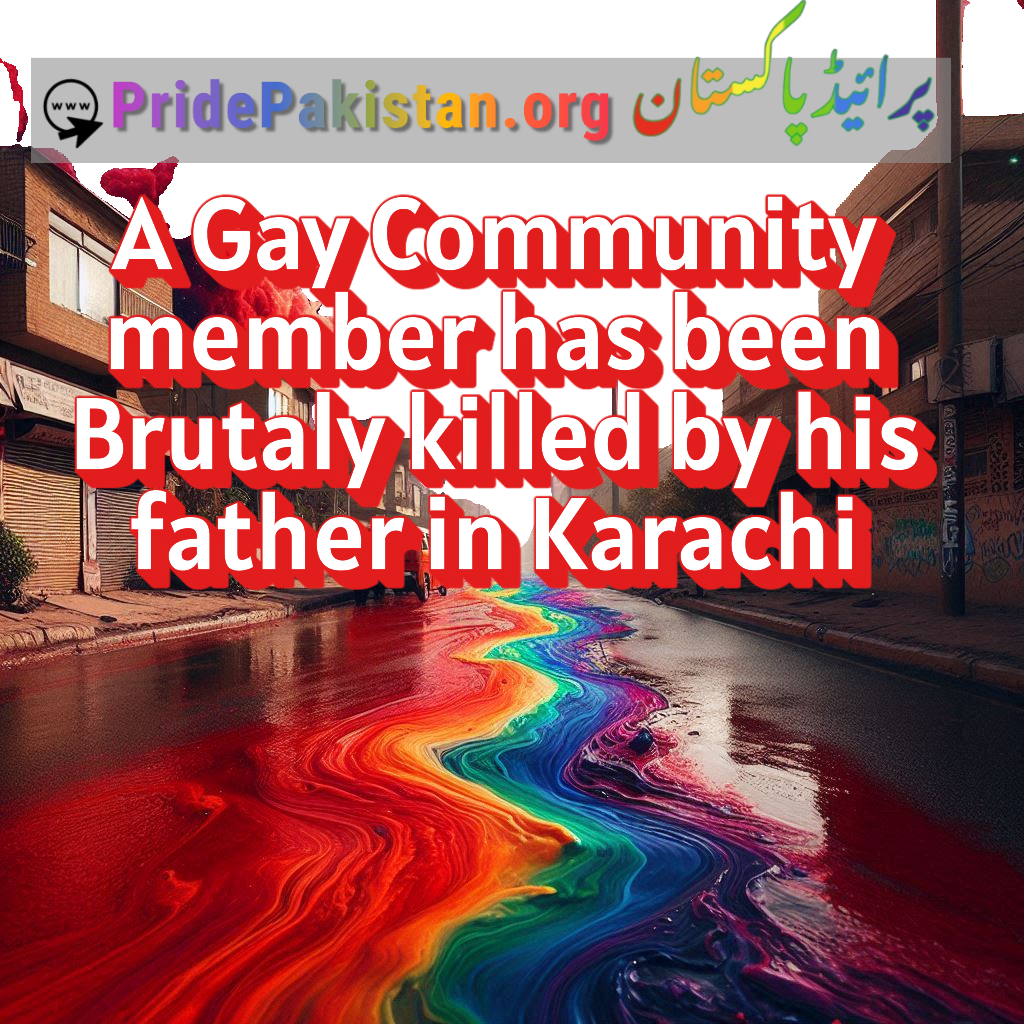
    Karachi, July 3, 2025 – Today, our hearts are heavy with unspeakable grief and profound outrage. News has reached us of the brutal killing of a young gay man in Karachi, allegedly at the hands of his own father. This horrific act serves as a chilling, stark reminder of the perilous reality faced by LGBTQ+ individuals in Pakistan, where the very act of existing as a queer person can be a death sentence.

    We are further distressed to learn that, as of this moment, no First Information Report (FIR) has even been registered by the family or the police. This shocking lack of official action speaks volumes about the systemic apathy and deep-seated prejudice that allows such atrocities to go unpunished and, often, undocumented.

    This is not an isolated incident. The story of this young man, whose life was so cruelly cut short, is a tragedy that echoes in countless untold stories across Pakistan. How many more queer individuals suffer violence, harassment, and even death, their cases never reaching the public eye, never making it into official records? How many families, driven by misplaced notions of “honor” and societal pressure, silence their own, erasing their existence from every register?

    In Pakistan, homosexuality remains criminalized under laws inherited from the colonial era, with penalties ranging from fines to life imprisonment. While convictions under these laws are rare, they provide a legal basis for societal discrimination, extortion, and violence. Sharia law, though rarely enforced with the death penalty due to high proof requirements, casts a long shadow of fear.

    Beyond the legal framework, a pervasive culture of homophobia, fueled by conservative religious and societal norms, creates an environment where violence against LGBTQ+ individuals is not only tolerated but often justified. “Honor” killings, forced heterosexual marriages, corrective rapes, and severe societal ostracization are grim realities. Many queer individuals are forced to live in constant fear, hiding their identities even from their closest relatives, their lives a perpetual tightrope walk between self-preservation and the yearning for authenticity.

    The failure of law enforcement to register FIRs in cases like this – or to even acknowledge the true nature of these crimes – is a devastating blow to justice. It not only denies victims and their families the right to legal recourse but also perpetuates a cycle of impunity that further emboldens perpetrators. Without official recognition, the true scale of the violence against LGBTQ+ people in Pakistan remains hidden, making it even harder for human rights organizations to advocate for change and provide support to those in need.

    PridePakistan.org condemns this heinous act in the strongest possible terms. We mourn the loss of this young life and stand in solidarity with all LGBTQ+ individuals in Pakistan who live under the shadow of fear and violence. We call upon the authorities to immediately register an FIR in this case and ensure a thorough and transparent investigation, bringing the perpetrator(s) to justice. We urge civil society, media, and international human rights bodies to shine a light on these silent tragedies and demand accountability.

    The time for silence is over. We must speak out, amplify the voices of the unheard, and continue to fight for a Pakistan where every individual, regardless of their sexual orientation or gender identity, can live with dignity, safety, and freedom. Our collective conscience demands nothing less.

    Sources:

    Father kills son over friendship with transgender persons

    https://thecurrent.pk/remorseless-father-kills-son-for-befriending-transgender-community

    https://gnnhd.tv/news/48588/father-murders-son-over-association-with-transgender-individuals-in-karachi