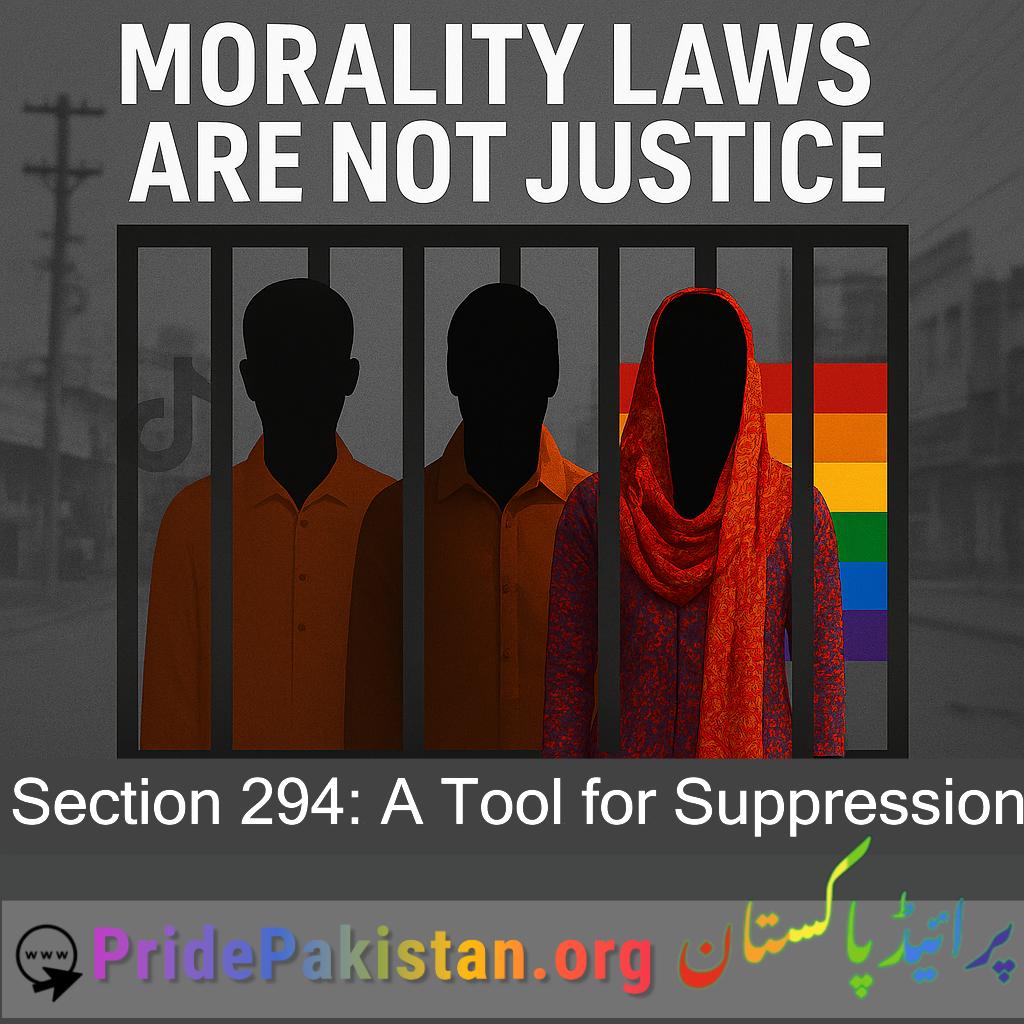
In yet another troubling example of state‑enabled harassment of queer Pakistanis, police in Swabi, Khyber Pakhtunkhwa, have arrested Abdul Mughiz, a resident of Bamkhel, for nothing more than expressing himself through clothing on TikTok.
According to police statements, Mughiz wore women’s clothing, posed for videos, and posted them online. Authorities claim these acts were “indecent” and “sparked public resentment”. He was charged under Section 294 of the Pakistan Penal Code, a provision that criminalises “obscene acts” in public places , a vague and subjective law that has repeatedly been weaponised against LGBTQI individuals in Pakistan, particularly in KPK.
📜 Section 294: A Tool for Suppression
Section 294 PPC states:
“Whoever, to the annoyance of others, does any obscene act in any public place… shall be punished with imprisonment… or with fine, or with both.”
Human rights observers note that this law is often applied selectively, targeting transgender women, queer men, and Khawaja Sira communities for their gender expression, while similar acts by cisgender, heterosexual individuals are ignored.
🚨 A Pattern of Persecution in KPK
Khyber Pakhtunkhwa has seen repeated incidents of harassment, violence, and even killings of LGBTQI people:
Harassment & Arbitrary Arrests: Transgender women in Peshawar and Mardan have reported being detained under morality laws for wearing “inappropriate” clothing or performing at private events.
Targeted Killings: Activists have documented multiple murders of trans women in KPK over the past decade, often after threats from extremist groups. In many cases, perpetrators were never brought to justice.
Police Extortion: Reports indicate that police have used the threat of Section 294 charges to extort money or sexual favours from queer individuals, particularly those working as dancers or in informal economies.
These abuses occur despite the Transgender Persons (Protection of Rights) Act 2018, which legally recognises gender identity and prohibits discrimination, a law whose protections are routinely undermined by societal prejudice and selective enforcement of morality provisions.
🌈 Why Abdul Mughiz’s Case Matters
Mughiz’s arrest is not an isolated incident , it is part of a systemic pattern where queer expression is criminalised under the guise of “public morality.” This policing of identity not only violates Pakistan’s constitutional guarantees of equality but also fuels a climate of fear for LGBTQI people, especially in conservative regions like KPK.
📢 Pride Pakistan’s Call to Action
We demand:
An immediate review of Section 294 to prevent its misuse against marginalised communities.
Accountability for police harassment of LGBTQI individuals.
Public education campaigns to challenge prejudice and promote acceptance of gender diversity.
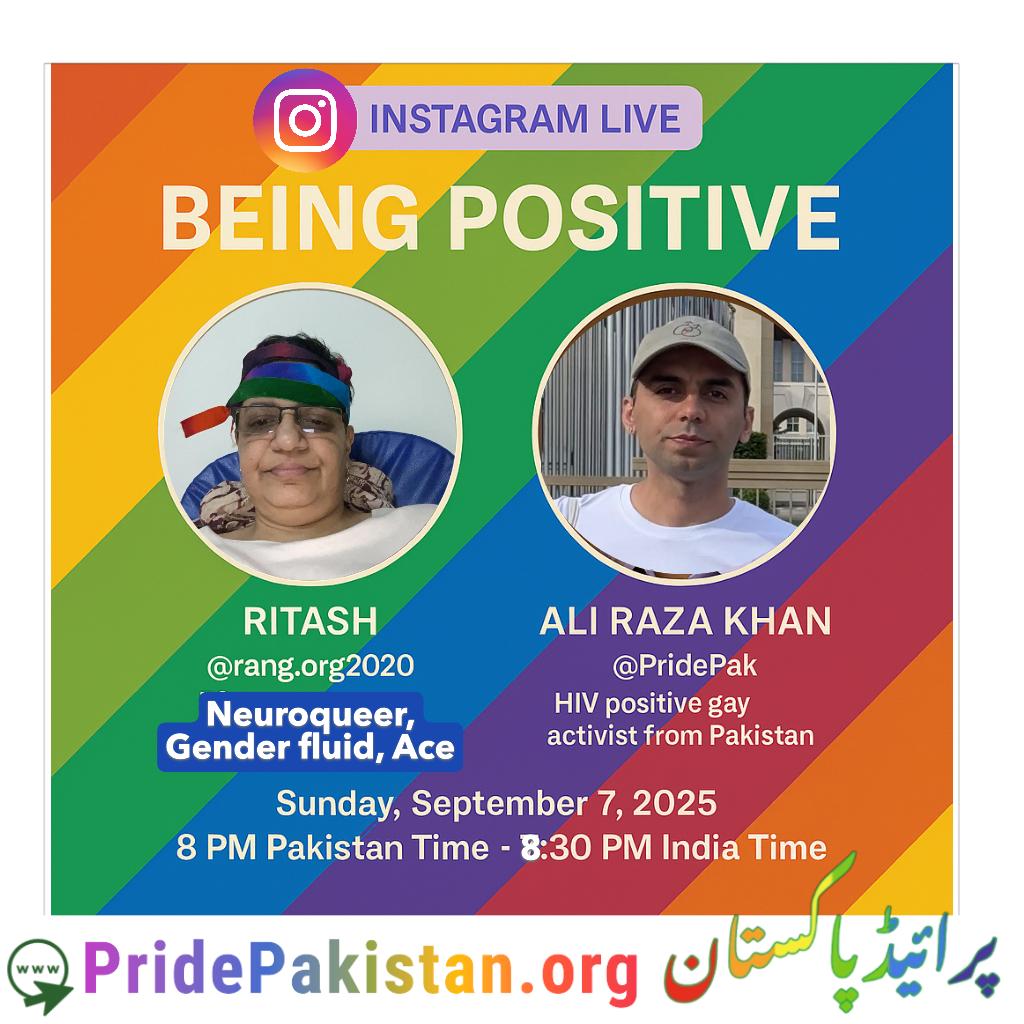
On Sunday, September 7, 2025, Pride Pakistan and Rang are coming together for a powerful and heartfelt Instagram Live session titled “Being Positive.” This cross-border collaboration will bring together voices from Pakistan and beyond to share lived experiences, challenge stigma, and celebrate resilience within the Hum Jins (LGBTQI) community.
About the Event
“Being Positive” is more than just a conversation, it’s a space for truth, empathy, and solidarity. The session will explore what it means to live authentically while navigating personal and societal challenges, with a focus on HIV awareness, mental health, and intersectional identities.
Meet the Speakers
From Rang:Ritash A 52 year old neuroqueer, gender-fluid ACE individual with invisibilized disabilities and chronic illnesses. Ritash has journeyed from writing and testing software to chronicling the stories of people and places. They are an LGBTIQAP+ peer counsellor, gender and intersectionality trainer, and research advisor, bringing a wealth of lived experience and professional insight.
From Pride Pakistan:Ali Raza Khan An HIV positive gay activist from Pakistan, Ali has been a steadfast voice for the Hum Jins community, advocating for visibility, acceptance, and the dismantling of stigma surrounding HIV and queer identities.
When & Where
📅 Date: Sunday, September 7, 2025 🕗 Time: 8:00 PM Pakistan Time | 8:30 PM India Time 📍 Platform: Instagram Live Follow @rang.org2020 and @PridePak to join the session.
Why You Should Join
This live session is an opportunity to:
Hear personal stories of resilience and hope.
Learn about HIV realities and the importance of breaking stigma.
Connect with a supportive, inclusive community across borders.
Whether you are part of the Hum Jins community, an ally, or simply someone who believes in equality and compassion, your presence matters. Together, we can create a world where every identity is celebrated and every voice is heard.
We hear your pain. Every message we receive about the unbearable psychological pressure, the fear of family honor, the forced marriages, and the deep emotional toll of living in the closet, breaks our hearts. We know that behind every message is a story of immense courage and silent suffering. We understand the despair that leads to thoughts of suicide and the tragic reality that too many of our community members have been lost to this battle.
At PridePakistan.org, we want you to know you are not alone. Your identity is not a disease. Your feelings are valid.
While our organization does not have the funds to provide free, professional psychological services, what we can do is empower you with the knowledge and tools to seek the help you need, safely and discreetly. This page is a guide to finding mental health support, both in Pakistan and globally, with a focus on your well-being and security.
Navigating Mental Health Care in Pakistan
We know that finding a supportive mental health professional in Pakistan can be a challenge. The fear of being judged, facing religious sermons, or being told that your identity is a “disease” is a very real and terrifying barrier. We have heard your stories, and we acknowledge the deep wounds caused by such encounters.
When seeking help in Pakistan, your first priority is your safety and privacy.
We advise you to approach mental health professionals with a focus on your symptoms and well-being, without necessarily disclosing your sexual orientation or gender identity upfront. You are the expert on your own life. You have the right to seek help for the mental health issues you’re facing—be it anxiety, depression, stress, or trauma—without having to justify or explain who you are.
Check for Professional Ethics: Look for professionals who are registered with reputable psychological associations. They are bound by professional ethics that prioritize patient care over personal beliefs.
Focus on Symptoms, Not Identity: Instead of saying, “I am depressed because I am gay,” you can say, “I am struggling with deep depression and anxiety. I feel immense pressure from my family and society, and it’s making it hard to function.”
Build Trust Gradually: If you find a professional who is supportive and empathetic, you may choose to reveal more of your identity later, but you are never obligated to do so. Your mental health is the priority.
Pakistan-based mental health services
Below are options grouped by government, private platforms/directories, and associations/NGOs. We’ve highlighted how to access them, what they offer, and general cost notes. Verify current fees and hours on the official pages.
Counselling via university services (online/in-person)
Low/varies
Academic setting; ask about availability, sliding-scale fees, and privacy.
Private platforms and directories in Pakistan
Sehat Kahani (Online Doctors): While not exclusively for mental health, this platform connects patients with doctors, including psychologists, via video consultations.
Services: Online consultations, with the option to speak to a psychiatrist.
These can be accessed from Pakistan subject to connectivity. If speaking with LGBTQIA-informed peers feels safer, consider these. If you prefer not to disclose identity, you can still describe symptoms and stress.
Ask for sliding-scale fees: Many private clinicians reduce fees based on need.
Prefer telehealth: Often cheaper than in-person and safer for privacy.
Short-term, skills-focused therapy: Request CBT/DBT tools for immediate coping over fewer sessions.
Medication consults: A psychiatrist can discuss options; ask about generics and follow-up spacing to reduce cost.
If you face discrimination or “conversion” attempts
No one has the right to shame you, preach at you, or deny evidence-based care. “Conversion therapy” is harmful and not a medical treatment. If a clinician discriminates, preachifies, or refuses proper care:
Set a boundary: “I’m here for mental health treatment, not religious counseling.”
Ask for referral: “Please refer me to a different clinician.”
Document details: Note date, time, name, what was said.
Report it: Share what happened so we can help track and act.
Temperature shift: Wash your face with cool water; it can reduce acute panic.
Name five things: 5 things you see, 4 you feel, 3 you hear, 2 you smell, 1 you taste.
Delay the impulse: Commit to waiting 24 hours before taking any harmful action and connect with one resource above.
Safety plan: Write 3 warning signs, 3 coping actions, and 3 people/lines you can contact.
You are worthy of care, respect, and a life without fear. If you want, tell me what would feel most helpful right now, a script to text a doctor, a shortlist of low-cost providers, or help drafting a safety plan.
Report an Incident
If you have used any of these services and faced discrimination or been refused help because of your identity, please let us know. We document these cases to fight for better protections for the LGBTQIA+ community in Pakistan.
Ali Raza Khan is a steering committee member of TheYouthPACT, an HIV-positive gay activist, and lives with PTSD.
There’s a particular kind of silence that haunts you when you live at the intersection of identities the world wishes to erase. As a gay man, as an HIV-positive person, as an activist in Pakistan, I have learned to live with the constant hum of threat. But the silence I hear now, echoing from the global corridors of power, is new. It is the sound of abandonment.
The year 2025 will be remembered by my community as the year the walls truly started to close in. We are facing a crisis that is not merely financial but existential. The announced global funding cuts to development work, NGOs, and UN agencies are not just line items on a budget sheet; they are death sentences for queer people in Pakistan.
The Double-Edged Sword: No Funds, No Diplomacy
For years, we survived on a fragile lifeline. International funding allowed a handful of beleaguered NGOs to provide safe houses, HIV medication, legal aid, and a sliver of hope. This was often coupled with quiet, yet firm, diplomatic pressure. When Western nations funded human rights, they also, occasionally, spoke up for them. Countries would raise our plight within UN human rights bodies, ensuring the violations against us were at least recorded.
That is now gone.
This isn’t just about the money disappearing. It’s about the diplomatic shield vanishing with it. Major donor governments, citing domestic priorities, have slashed their aid budgets. A UN Women survey in March 2025 found that 47% of women’s rights organizations, often our allies and service providers—expect to shut down within six months. The US has terminated over $500 million in grants for programs tackling child labor and human trafficking, issues that disproportionately affect vulnerable LGBTQI+ youth.
This withdrawal creates a vacuum of accountability. When UN bodies are themselves starved of funds, they cannot monitor or report on human rights violations. For the gay community, which already suffers from a severe lack of official data on persecution, this means we are being rendered invisible before we are eradicated. Our pain will not even be a statistic.
The State Tightens Its Noose
The Pakistani government has seized this moment of global indifference to launch a systematic assault. For NGOs, the labyrinth of bureaucracy has become a trap. The Economic Affairs Division (EAD) now demands exhaustive pre- and post-reporting on all foreign funds, effectively paralyzing organizations. Renewing an NGO’s registration or obtaining a No Objection Certificate (NOC) has become an exercise in futility. The result is mass closures, not by decree, but by a slow, deliberate strangulation. We are losing the very infrastructure that kept many of us alive.
Simultaneously, the state is weaponizing the law. The 2025 amendments to the Prevention of Electronic Crimes Act (PECA) have created a vague and powerful tool to crush dissent. The law criminalizes the “intentional” dissemination of “false information,” a charge easily fabricated against any activist. It has also established a new Social Media Protection and Regulatory Authority (SMPRA) with sweeping powers to block any content deemed “unlawful or offensive.”
This is a direct attack on us. The LGBTQI+ community in Pakistan exists primarily online. We cannot register as organizations because our very identities are criminalized under Section 377 of the Pakistan Penal Code, a colonial-era law that prescribes up to life in prison for “carnal intercourse against the order of nature.” The digital world was our last safe-ish space. Now, that space is being burned to the ground.
The government has already banned Grindr and other dating apps. For a time, we used VPNs to circumvent the blocks, but in late 2024, the state began heavily regulating and blocking unregistered VPN services, further isolating us. This isn’t theoretical. The Federal Investigation Agency (FIA) in Faisalabad has actively used dating apps to entrap and arrest gay men. The state is not just censoring us; it is actively hunting us.
The Human Cost of Silence
When the system is designed to crush you, even seeking help is a risk. Activists who dare to speak out are met with the state’s full force. They are placed on travel restriction lists, like many activist who was blocked from traveling to participate in human rights related activities. They are subjected to enforced disappearances. They are slapped with fabricated FIRs that turn them into criminals in the eyes of the very international bodies that once might have helped them.
The message is clear: you are on your own.
The global community, by defunding our protectors and turning a blind eye to our persecution, has become complicit in this assault. They have signaled to the Pakistani government that the lives of queer people are disposable.
As an activist, I am supposed to end with a message of hope. But hope is a luxury we can no longer afford. What we have is a burning, defiant rage. We see the walls closing in, we hear the silence of our former allies, and we know that we have only ourselves to rely on now. We will continue to organize in the shadows, to support each other in secret, to fight for our right to exist. But I ask the world, as you turn your back on us, how many of us have to disappear before you notice we are gone?
یہ ایک خاص قسم کی خاموشی ہے جو آپ کو پریشان کرتی ہے جب آپ ان شناختوں کے چوراہے پر رہتے ہیں جنہیں دنیا مٹانا چاہتی ہے۔ ایک گے آدمی، ایک ایچ آئی وی پازیٹو شخص، پاکستان میں ایک کارکن کے طور پر، میں نے مستقل خطرے کی گونج کے ساتھ رہنا سیکھ لیا ہے۔ لیکن اب جو خاموشی میں سن رہا ہوں، جو عالمی طاقت کے ایوانوں سے گونج رہی ہے، وہ نئی ہے۔ یہ بے بسی کی آواز ہے۔
سن 2025 کو میری کمیونٹی اس سال کے طور پر یاد رکھے گی جب دیواریں واقعی تنگ ہونا شروع ہو گئیں۔ ہم ایک ایسے بحران کا سامنا کر رہے ہیں جو محض مالی نہیں بلکہ وجودی ہے۔ ترقیاتی کاموں، این جی اوز اور اقوام متحدہ کی ایجنسیوں کے لیے اعلان کردہ عالمی فنڈنگ میں کٹوتی صرف بجٹ شیٹ پر لائن آئٹمز نہیں ہیں۔ یہ پاکستان میں کوئیر لوگوں کے لیے موت کی سزائیں ہیں۔
دو دھاری تلوار: فنڈز نہیں، سفارت کاری نہیں
کئی سالوں تک، ہم ایک نازک لائف لائن پر زندہ رہے۔ بین الاقوامی فنڈنگ نے چند پریشان این جی اوز کو پناہ گاہیں، ایچ آئی وی ادویات، قانونی امداد اور امید کی ایک کرن فراہم کرنے کی اجازت دی۔ اس کے ساتھ اکثر خاموش، لیکن مضبوط، سفارتی دباؤ بھی ہوتا تھا۔ جب مغربی اقوام انسانی حقوق کو فنڈ دیتی تھیں، تو وہ کبھی کبھار ان کے لیے آواز بھی اٹھاتی تھیں۔ ممالک اقوام متحدہ کے انسانی حقوق کے اداروں کے اندر ہماری حالت زار اٹھاتے تھے، اس بات کو یقینی بناتے تھے کہ ہمارے خلاف ہونے والی خلاف ورزیاں کم از کم ریکارڈ کی جائیں۔
اب وہ سب ختم ہو چکا ہے۔
یہ صرف پیسے کے غائب ہونے کے بارے میں نہیں ہے۔ یہ اس کے ساتھ سفارتی ڈھال کے غائب ہونے کے بارے میں ہے۔ بڑے امدادی حکومتوں نے، اندرونی ترجیحات کا حوالہ دیتے ہوئے، اپنی امدادی بجٹ میں کٹوتی کی ہے۔ مارچ میں اقوام متحدہ کی ویمن کے ایک سروے میں پایا گیا کہ 47 فیصد خواتین کے حقوق کی تنظیمیں—جو اکثر ہمارے اتحادی اور سروس فراہم کرنے والے ہوتے ہیں—چھ ماہ کے اندر بند ہونے کی توقع رکھتے ہیں۔ امریکہ نے بچوں کی مزدوری اور انسانی اسمگلنگ سے نمٹنے والے پروگراموں کے لیے 500 ملین ڈالر سے زیادہ کی گرانٹ ختم کر دی ہیں، ایسے مسائل جو غیر متناسب طور پر ایل جی بی ٹی کیو آئی+ نوجوانوں کو متاثر کرتے ہیں۔
اس واپسی سے احتساب کا ایک خلا پیدا ہو گیا ہے۔ جب اقوام متحدہ کے ادارے خود فنڈز کی کمی کا شکار ہیں، تو وہ انسانی حقوق کی خلاف ورزیوں کی نگرانی یا رپورٹ نہیں کر سکتے۔ گے ہم جنس کمیونٹی کے لیے، جو پہلے ہی ظلم و ستم پر سرکاری اعداد و شمار کی شدید کمی کا شکار ہے، اس کا مطلب ہے کہ ہمیں ختم کرنے سے پہلے ہی ہمیں پوشیدہ کیا جا رہا ہے۔ ہمارا درد ایک عدد بھی نہیں بن پائے گا۔
ریاست کا گھیرا تنگ ہوتا ہوا
پاکستانی حکومت نے اس عالمی بے حسی کے لمحے کو ایک منظم حملے کے لیے غنیمت جانا ہے۔ این جی اوز کے لیے، بیوروکریسی کا دائرہ ایک جال بن گیا ہے۔ اکانومک افیئرز ڈویژن (ای اے ڈی) اب تمام غیر ملکی فنڈز پر جامع پری اور پوسٹ رپورٹنگ کا مطالبہ کرتا ہے، جس سے تنظیمیں مؤثر طریقے سے مفلوج ہو گئی ہیں۔ ایک این جی او کی رجسٹریشن کی تجدید یا نو آبجیکشن سرٹیفکیٹ (این او سی) حاصل کرنا ایک بے فائدہ مشقت بن گیا ہے۔ اس کا نتیجہ بڑے پیمانے پر بندشیں ہیں، نہ کہ فرمان کے ذریعے، بلکہ ایک سست، جان بوجھ کر گلا گھونٹنے کے ذریعے۔ ہم وہی انفراسٹرکچر کھو رہے ہیں جس نے ہم میں سے بہت سے لوگوں کو زندہ رکھا۔
اسی کے ساتھ ساتھ، ریاست قانون کو ہتھیار بنا رہی ہے۔ الیکٹرانک کرائمز کی روک تھام کے ایکٹ (Act) (پی ای سی اے) میں 2025 کی ترامیم نے اختلاف رائے کو کچلنے کے لیے ایک مبہم اور طاقتور آلہ تیار کیا ہے۔ یہ قانون “جان بوجھ کر” “غلط معلومات” پھیلانے کو جرم قرار دیتا ہے، جو کسی بھی کارکن کے خلاف آسانی سے گھڑا جا سکتا ہے۔ اس نے ایک نئی سوشل میڈیا پروٹیکشن اینڈ ریگولیٹری اتھارٹی (ایس ایم پی آر اے) بھی قائم کی ہے جس کے پاس کسی بھی مواد کو جو “غیر قانونی یا جارحانہ” سمجھا جائے، اسے بلاک کرنے کے وسیع اختیارات ہیں۔
یہ ہم پر ایک براہ راست حملہ ہے۔ پاکستان میں ایل جی بی ٹی کیو آئی+ ہم جنس کمیونٹی بنیادی طور پر آن لائنموجود ہے۔ ہم خود کو تنظیموں کے طور پر رجسٹر نہیں کر سکتے کیونکہ ہماری شناختیں ہی پاکستان پینل کوڈ کی دفعہ 377 کے تحت مجرمانہ ہیں۔ یہ ایک نوآبادیاتی دور کا قانون ہے جو “فطرت کے خلاف جسمانی تعلقات” کے لیے عمر قید تک کی سزا تجویز کرتا ہے۔ ڈیجیٹل دنیا ہماری آخری محفوظ جگہ تھی۔ اب، اس جگہ کو جلایا جا رہا ہے۔
حکومت پہلے ہی گرائنڈر اور دیگر ڈیٹنگ ایپس پر پابندی لگا چکی ہے۔ کچھ عرصے کے لیے، ہم بلاکس کو نظرانداز کرنے کے لیے وی پی این کا استعمال کرتے تھے، لیکن 2024 کے آخر میں، ریاست نے غیر رجسٹرڈ وی پی این خدمات کو سختی سے ریگولیٹ اور بلاک کرنا شروع کر دیا، جس سے ہم مزید الگ تھلگ ہو گئے۔ یہ صرف نظریاتی نہیں ہے۔ فیصل آباد میں فیڈرل انویسٹی گیشن ایجنسی (ایف آئی اے) نے ہم جنس گے مردوں کو پھنسانے اور گرفتار کرنے کے لیے ہم جنس ڈیٹنگ ایپس کا فعال طور پر استعمال کیا ہے۔ ریاست ہمیں صرف سنسر نہیں کر رہی ہے۔ وہ فعال طور پر ہمارا شکار کر رہی ہے۔
خاموشی کا انسانی نقصان
جب نظام آپ کو کچلنے کے لیے بنایا گیا ہو، تو مدد مانگنا بھی ایک خطرہ ہے۔ جو کارکنان آواز اٹھانے کی جرات کرتے ہیں، انہیں ریاست کی پوری طاقت کا سامنا کرنا پڑتا ہے۔ انہیں سفری پابندی کی فہرستوں میں رکھا جاتا ہے، جیسا کہ انسانی حقوق کا کے لیے سفر کرنے سے روک دیا گیا تھا۔ وہ جبری گمشدگیوں کا شکار ہوتے ہیں۔ ان پر من گھڑت ایف آئی آرز لگائی جاتی ہیں جو انہیں ان ہی بین الاقوامی اداروں کی نظر میں مجرم بنا دیتی ہیں جو کبھی ان کی مدد کر سکتے تھے۔
پیغام واضح ہے: آپ اکیلے ہیں۔
عالمی برادری، ہمارے محافظوں کی فنڈنگ ختم کر کے اور ہمارے ظلم و ستم سے آنکھیں چرا کر، اس حملے میں شریک ہو چکی ہے۔ انہوں نے پاکستانی حکومت کو یہ اشارہ دیا ہے کہ کوئیر لوگوں کی زندگیاں قابل استعمال ہیں۔
ایک کارکن کے طور پر، مجھے امید کا پیغام دے کر ختم کرنا چاہیے۔ لیکن امید ایک ایسی عیاشی ہے جو اب ہم برداشت نہیں کر سکتے۔ ہمارے پاس جو ہے وہ ایک جلتا ہوا، سرکش غصہ ہے۔ ہم دیواروں کو تنگ ہوتے دیکھ رہے ہیں، ہم اپنے سابقہ اتحادیوں کی خاموشی سن رہے ہیں، اور ہم جانتے ہیں کہ اب ہمیں صرف اپنے آپ پر بھروسہ کرنا ہے۔ ہم سایوں میں منظم ہوتے رہیں گے، خفیہ طور پر ایک دوسرے کا ساتھ دیتے رہیں گے، اور اپنے وجود کے حق کے لیے لڑتے رہیں گے۔ لیکن میں دنیا سے پوچھتا ہوں، جب آپ ہم سے منہ موڑ رہے ہیں، تو ہم میں سے کتنے لوگ غائب ہو جائیں گے اس سے پہلے کہ آپ محسوس کریں کہ ہم چلے گئے ہیں
حالیہ مہینوں میں پاکستان میں نجی تقریبات پر “فحش پارٹیوں” کا لیبل لگا کر پولیس کی کارروائیوں میں خطرناک حد تک اضافہ ہوا ہے۔ یہ چھاپے، جو اکثر ہم جنس افراد اور دیگر کوئیر افراد کو نشانہ بناتے ہیں، پاکستان پینل کوڈ کی دفعات 292، 292-A، 294 اور ساؤنڈ سسٹم ایکٹ کی دفعہ 6 کے تحت کیے جاتے ہیں۔ اگرچہ ان قوانین کا مقصد عوامی فحاشی اور شور کی روک تھام بتایا جاتا ہے، لیکن اب یہ قوانین اقلیتی کمیونٹیز، خاص طور پر ہم جنس افراد کے خلاف ہتھیار کے طور پر استعمال ہو رہے ہیں۔
📰 خبروں کے پیچھے کی حقیقت
لاہور وائرل پارٹی کیس (اگست 2025)
لاہور میں ایک نجی تقریب کی ویڈیوز فیشن ڈیزائنر ماریا بی کی جانب سے سوشل میڈیا پر پوسٹ کی گئیں، جن میں شرکاء—جن میں سے کئی کوئیر تھے—پر “غیراخلاقی حرکات” کا الزام لگایا گیا۔ تقریباً 60 افراد کو فحاشی اور ساؤنڈ سسٹم قوانین کے تحت گرفتار کیا گیا۔ بعد میں عدالت نے ناکافی شواہد اور قانونی خلاف ورزیوں کی بنیاد پر کیس خارج کر دیا، لیکن نقصان ہو چکا تھا—عزتیں پامال ہوئیں، ذہنی اذیت پہنچی، اور پورے پاکستان میں ہم جنس افراد کی تقریبات کے لیے خوف کی فضا قائم ہو گئی۔
ایک شادی کی تقریب میں رقص کرنے والے کوئیر فرد کو دیگر افراد کے ساتھ گرفتار کیا گیا۔ پولیس نے 20 افراد کے خلاف “فحاشی” اور “عوامی پریشانی” کے الزامات میں مقدمات درج کیے۔
ایک ڈانس پارٹی میں خواجہ سرا افراد کی شرکت کے دوران پولیس چھاپے سے تصادم ہوا، جس میں زخمی اور گرفتاریاں ہوئیں۔ اس واقعے کے بعد پنجاب پولیس نے نئے ایس او پیز جاری کیے، جن کے تحت مرد اہلکاروں کو خواجہ سرا افراد کی تلاشی لینے سے روک دیا گیا۔
کراچی میں 21 خواجہ سرا افراد کو “فساد” اور “منشیات کے استعمال” کے الزامات میں گرفتار کیا گیا، جب ایک رہائشی نے “غیراخلاقی سرگرمیوں” کی شکایت کی۔ واقعہ مزید گرفتاریوں اور پولیس اسٹیشن پر ہنگامہ آرائی میں تبدیل ہو گیا۔
🕯️ وہ سچ جو زبان پر نہیں آتا: ہم جنس پرستوں کی پارٹیاں اور خاموش چھاپے
اگرچہ خواجہ سرا افراد پر چھاپے اکثر خبروں میں آتے ہیں، لیکن ہم جنس پرست مردوں اور ان کی نجی تقریبات بھی اسی طرح نشانہ بنتی ہیں, بس خاموشی سے۔ یہ تقریبات عام طور پر گھروں یا کرائے کے ہالز میں منعقد کی جاتی ہیں، لیکن “فحاشی” اور “شور” کے الزامات کے تحت ان پر بھی چھاپے مارے جاتے ہیں۔
چونکہ ہم جنس پرستی پاکستان میں شدید ممنوع ہے، اس لیے ایسے واقعات سوشل میڈیا یا خبروں میں شاذ و نادر ہی آتے ہیں۔ متاثرہ افراد شرمندگی، بے عزتی، اور قانونی تحفظ کی کمی کی وجہ سے خاموش رہنے پر مجبور ہوتے ہیں۔ پرائیڈ پاکستان کو ملک بھر سے ایسے سینکڑوں واقعات کی اطلاعات موصول ہوئی ہیں، جن میں ہم جنس افراد کی تقریبات پر پولیس نے چھاپے مارے۔
⚖️ قانونی صورتحال: نہ تحفظ، نہ وکیل
پاکستان کا قانونی نظام ہم جنس افراد کو کوئی واضح تحفظ فراہم نہیں کرتا۔ “فحاشی” اور “غیراخلاقی حرکتوں” جیسے مبہم الفاظ کو اکثر ان افراد کے خلاف استعمال کیا جاتا ہے۔ گرفتاری کے بعد متاثرہ افراد کو:
امتیازی سلوک سے بچاؤ کا کوئی قانونی تحفظ نہیں
ہم جنس افراد کے لیے دوستانہ وکیل دستیاب نہیں
پولیس حراست میں رازداری نہیں
میڈیا میں آواز نہیں ملتی، کیونکہ زیادہ تر ادارے کوئیر گرفتاریوں کی رپورٹنگ سے گریز کرتے ہیں
💡 ہماری کمیونٹی کے لیے پیغام: احتیاط کریں اور اپنی شناخت پر فخر کریں
ہم سمجھتے ہیں کہ اپنی شناخت کو منانے اور دوسروں سے جڑنے کی خواہش فطری ہے۔ لیکن موجودہ حالات میں احتیاط بزدلی نہیں، بلکہ بقا ہے۔ اگر آپ کوئی تقریب منعقد کرنے جا رہے ہیں:
✅ حفاظتی تجاویز
تقریب کو چھوٹا اور نجی رکھیں
اونچی آواز یا عوامی نمائش سے گریز کریں
ویڈیوز یا تصاویر سوشل میڈیا پر نہ ڈالیں
مہمانوں کی فہرست احتیاط سے بنائیں
ایمرجنسی رابطے اور قانونی مدد کے نمبر تیار رکھیں
اپنے حقوق جانیں—لیکن خطرات بھی سمجھیں
🧭 پرائیڈ پاکستان کیا کر رہا ہے؟
پرائیڈ پاکستان:
ہم جنس افراد کے لیے دوستانہ وکلاء کا نیٹ ورک بنا رہا ہے
قانونی اصلاحات اور امتیازی سلوک کے خلاف تحفظات کے لیے آواز بلند کر رہا ہے
پولیس ہراسانی کا شکار افراد کے لیے ایمرجنسی سپورٹ فراہم کر رہا ہے
کہانیوں اور رپورٹس کے ذریعے آگاہی پیدا کر رہا ہے
اگر آپ یا آپ کے جاننے والے ایسے کسی واقعے کا شکار ہوئے ہیں، تو ہم سے رازداری کے ساتھ رابطہ کریں یا یہ فارم پُر کریں۔ آپ تنہا نہیں ہیں۔
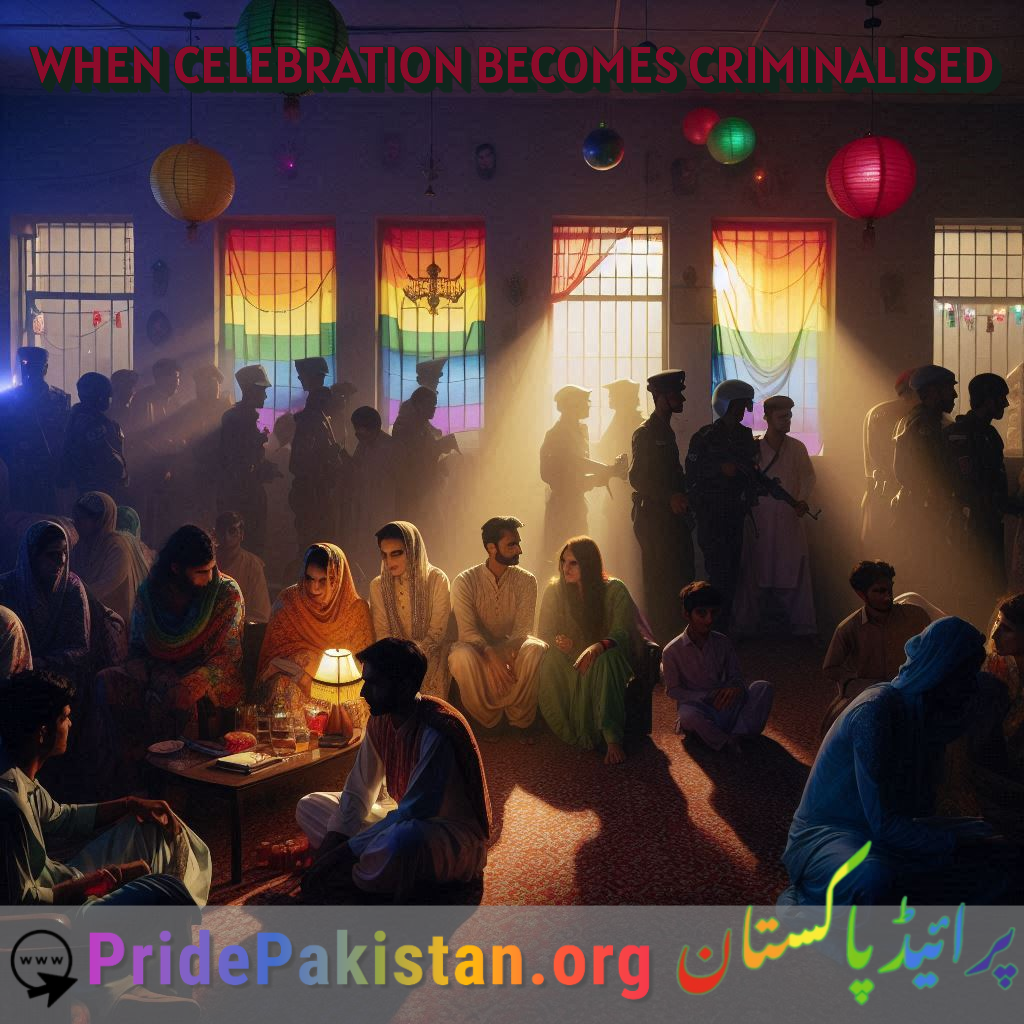
In recent months, Pakistan has witnessed a troubling surge in police crackdowns on private gatherings labeled as “vulgar parties.” These raids often targeting LGBTQI+ individuals and queer participants, are carried out under Sections 292, 292-A, and 294 of the Pakistan Penal Code, alongside Section 6 of the Sound System Act. While these laws ostensibly aim to curb public obscenity and noise pollution, they are increasingly weaponized against marginalized communities, especially gay community members.
The Reality Behind the Headlines
Lahore Viral Party Case (August 2025)
A private gathering in Lahore went viral after fashion designer Maria B posted videos online, accusing attendees, many of whom were queer “immoral conduct.” Nearly 60 individuals were detained under obscenity and sound system laws. The court later dismissed the case due to lack of evidence and procedural violations, but the damage was already done, reputations tarnished, trauma inflicted, and fear instilled for all the queer and gay gatherings across Pakistan.
A queer person dancing at a wedding event was arrested along with others for violating sound system laws. The police registered cases against 20 individuals, citing “vulgarity” and “public nuisance.”
A dance party involving transgender persons turned violent when police attempted a raid. The clash led to injuries and arrests, prompting Punjab Police to issue new SOPs barring male officers from frisking transgender individuals.
Twenty-one transgender persons were arrested for rioting and alleged drug use after a complaint about “streetwalking.” The incident escalated into vandalism and further arrests.
While transgender individuals often bear the brunt of publicized raids, gay men and queer gatherings are also frequently targeted, just less visibly. These events, often held discreetly in private homes or rented venues, are raided under similar obscenity and sound system laws. Yet, due to the deep taboo surrounding homosexuality, these cases rarely make it to social media or news outlets.
Victims are silenced by shame, fear of outing, and lack of legal recourse. Many are denied access to lawyers, and few dare to challenge the charges in court. The absence of public support and the risk of being disowned by families or employers forces most to quietly endure the trauma. Pride Pakistan have been reported of such hundreds of incidents across Pakistan where gay gathering were raided by police.
Legal Landscape: No Protection, No Counsel
Pakistan’s legal system offers no explicit protection for LGBTQI individuals. In fact, vague terms like “obscenity” and “immoral conduct” are routinely used to criminalize queer existence. Once arrested, victims face:
No legal safeguards against discrimination
No access to LGBTQI-friendly lawyers
No privacy in police custody
No media advocacy, as most outlets avoid covering queer-related arrests
A Message to Our Community: Stay Safe and be Proud of your Identity
We understand the need to celebrate, connect, and express your identity. But in today’s climate, caution is not cowardice, it’s survival. If you’re planning a gathering:
✅ Safety Checklist
Keep gatherings small and discreet
Avoid loud music or public visibility
Do not post videos or photos online
Vet your guest list carefully
Have emergency contacts and legal aid numbers ready
Know your rights, but also know the risks
What Pride Pakistan Is Doing
At Pride Pakistan, we are working to:
Build a network of LGBTQI-friendly advocates
Advocate for legal reform and anti-discrimination protections
Provide emergency support for individuals facing police harassment
Raise awareness through storytelling and documentation
If you or someone you know has been affected by such incidents, please reach out to us confidentially or by filling this form. You are not alone.
پرائیڈ پاکستان کی جانب سے امید اور عملی رہنمائی کا پیغام
پیارے دوستو،
پرائیڈ پاکستان میں ہم پاکستان میں ہم جنس افراد افراد کی حیثیت سے آپ کو درپیش بے پناہ چیلنجوں کو سمجھتے ہیں، خاص طور پر مستحکم اور باوقار روزگار حاصل کرنے کے حوالے سے۔ ہم آپ کی مدد کی پکاروں، مالی آزادی کے لیے آپ کی جدوجہد، اور کام کی جگہوں پر آپ کو درپیش امتیازی سلوک اور ہراسانی کے گہرے درد کو سنتے ہیں۔
یہ ہمارے لیے دل توڑنے والا ہے کہ ہم، ایک تنظیم کے طور پر، فوری نوکریاں یا براہ راست مالی امداد فراہم کرنے کے لیے وسیع مالی وسائل یا براہ راست کارپوریٹ روابط نہیں رکھتے۔ ہم تسلیم کرتے ہیں کہ آپ میں سے بہت سے لوگوں کو اپنی کوئیر شناخت کی وجہ سے پہلے ہی کافی بدنامی، تعصب، اور یہاں تک کہ سابقہ ملازمتوں سے بے دخلی کا سامنا کرنا پڑا ہے۔ ایسی مشکلات کے باوجود آپ کا لچک کا مظاہرہ واقعی متاثر کن ہے۔
اگرچہ ہم آپ کو براہ راست نوکریوں پر نہیں رکھ سکتے، لیکن جو کچھ ہم کر سکتے ہیں وہ یہ ہے کہ آپ کو نوکری کے بازار میں زیادہ مؤثر اور محفوظ طریقے سے چلنے کے لیے علم اور حکمت عملیوں سے بااختیار بنائیں۔ یہ صفحہ پاکستان میں نوکریوں کے لیے درخواست دینے کے لیے عملی رہنمائی فراہم کرنے کے لیے وقف ہے، جس میں آپ کی شناخت کے تحفظ کی حکمت عملیوں کے ساتھ ساتھ عالمی پلیٹ فارمز کے بارے میں معلومات بھی شامل ہیں جو ہم جنس افراد شمولیت کی حمایت کرتے ہیں۔
پاکستانی نوکری کے بازار میں کام یاب سفر: محفوظ درخواست کی حکمت عملی
پاکستان میں حقیقت یہ ہے کہ جنسی رجحان کی بنیاد پر امتیازی سلوک کے خلاف واضح قانونی تحفظات بڑی حد تک غیر موجود ہیں۔ اگرچہ خواجہ سرا افراد (حقوق کا تحفظ) ایکٹ، 2018، خواجہ سرا اور بین الجنس افراد کے لیے کچھ تحفظات فراہم کرتا ہے، لیکن وسیع تر ہم جنس افراد کمیونٹی کے لیے عام امتیازی سلوک مخالف قوانین ابھی تک قائم نہیں ہوئے ہیں۔ یہ نوکری کی درخواستوں کے لیے ایک محتاط اور حکمت عملی پر مبنی نقطہ نظر کو ضروری بناتا ہے۔
پاکستانی کارپوریٹ اور سرکاری نوکریوں کے لیے درخواست دینے کے لیے ہماری بنیادی نصیحت یہ ہے کہ آپ اپنی اہلیت، مہارتوں، اور تجربے پر مکمل توجہ دیں، اور درخواست یا ابتدائی انٹرویو کے عمل کے دوران اپنی کوئیر شناخت کا ذکر یا وضاحت نہ کریں۔
اس پر عمل کرنے کا طریقہ یہ ہے:
پیشہ ورانہ مہارت پر توجہ دیں: آپ کا ریزومے، کور لیٹر، اور انٹرویو کے جوابات آپ کی پیشہ ورانہ خوبیوں، کامیابیوں، اور آپ کس طرح آجر کی کامیابی میں حصہ ڈال سکتے ہیں، اسے اجاگر کریں۔
رازداری برقرار رکھیں:
ریزومے/سی وی: کوئی بھی ایسی معلومات شامل نہ کریں جو آپ کے جنسی رجحان یا صنفی شناخت کی طرف اشارہ کر سکتی ہو (جب تک کہ یہ کسی خاص کردار سے براہ راست متعلق نہ ہو، جو کہ نادر ہے، اور پھر بھی، احتیاط کی جاتی ہے)۔
کور لیٹر: اپنے کور لیٹر کو سختی سے پیشہ ورانہ رکھیں، اور کردار کے لیے اپنی موزونیت کو حل کریں۔
آن لائن موجودگی: اپنی عوامی سوشل میڈیا پروفائلز کا خیال رکھیں۔ اگرچہ ذاتی اظہار ضروری ہے، غور کریں کہ آپ کی عوامی آن لائن موجودگی کو ممکنہ آجر کیسے سمجھ سکتے ہیں۔ اگر آپ کے ایسے پروفائلز ہیں جو واضح طور پر آپ کی کوئیر شناخت سے منسلک ہیں، تو یقینی بنائیں کہ آپ کی پرائیویسی سیٹنگز مضبوط ہیں، یا اگر ممکن ہو تو ایک الگ پیشہ ورانہ آن لائن شخصیت رکھنے پر غور کریں۔
انٹرویوز: اگر ایسے ذاتی سوالات پوچھے جائیں جو نوکری سے متعلق نہیں ہیں، تو آپ شائستگی سے یہ کہہ کر بات کو موڑ سکتے ہیں کہ آپ اپنی ذاتی زندگی کو اپنی پیشہ ورانہ زندگی سے الگ رکھنا پسند کرتے ہیں۔ کردار کے لیے اپنی مہارتوں اور جوش کو دہرانے پر توجہ دیں۔
نیٹ ورکنگ (احتیاط سے): اگرچہ نیٹ ورکنگ بہت ضروری ہے، پاکستان میں پیشہ ورانہ حلقوں میں آپ کس کو اپنی شناخت ظاہر کرتے ہیں اس بارے میں محتاط رہیں۔ آہستہ آہستہ اعتماد پیدا کریں اور کھلنے سے پہلے ماحول کا اندازہ لگائیں۔
کمپنی کلچر پر تحقیق (اگر ممکن ہو): اگرچہ پاکستان میں مشکل ہے، اگر آپ کے کوئی بالواسطہ رابطے ہیں یا آن لائن معلومات مل سکتی ہے، تو کسی کمپنی کے تنوع اور شمولیت کے بارے میں عمومی رویہ کا اندازہ لگانے کی کوشش کریں۔ تاہم، آگاہ رہیں کہ عوامی طور پر بیان کردہ پالیسیاں ہمیشہ کام کی جگہ کے اندر کے تجربے کی عکاسی نہیں کرتیں۔
پاکستان میں سرکاری نوکریوں کے لنکس
یہ کچھ سرکاری اور معتبر پلیٹ فارمز ہیں جہاں آپ پاکستان میں نوکریاں تلاش کر سکتے ہیں:
پنجاب پبلک سروس کمیشن (PPSC)، سندھ پبلک سروس کمیشن (SPSC)، بلوچستان پبلک سروس کمیشن (BPSC)، خیبر پختونخوا پبلک سروس کمیشن (KPPSC): ہر صوبے کا اپنا پبلک سروس کمیشن صوبائی سرکاری نوکریوں کے لیے ہوتا ہے۔ آپ کو ان کی انفرادی ویب سائٹس کو دیکھنا ہوگا۔
اگرچہ پاکستان میں صورتحال پیچیدہ ہے، لیکن ہم جنس افراد پیشہ ور افراد کو دنیا بھر میں شامل آجروں سے جوڑنے کے لیے وقف عالمی پلیٹ فارمز موجود ہیں۔ یہ ریموٹ کام کے مواقع کے لیے یا اگر آپ بیرون ملک مواقع پر غور کر رہے ہیں تو قیمتی وسائل ہو سکتے ہیں۔ ان پلیٹ فارمز پر بہت سی کمپنیاں فعال طور پر تنوع اور شمولیت کی حمایت کرتی ہیں، جو ممکنہ طور پر ایک محفوظ اور زیادہ خوش آئند کام کا ماحول فراہم کرتی ہیں۔
myGwork: ہم جنس افراد پیشہ ور افراد اور طلباء کے لیے ایک عالمی نیٹ ورکنگ ہب اور جاب بورڈ۔ وہ ہم جنس افراد -شمولیت والی تنظیموں کے ساتھ شراکت کرتے ہیں۔
Out In Tech Qorporate Job Board: ٹیک انڈسٹری پر توجہ مرکوز کرتا ہے اور ہم جنس افراد افراد کے لیے کیریئر کو آگے بڑھانا چاہتا ہے۔ ان کی ایک معاون سلیک کمیونٹی بھی ہے۔
ہم جانتے ہیں کہ انتہائی محتاط انداز کے باوجود، بدقسمتی سے پاکستان میں کام کی جگہ پر آپ کی کوئیر شناخت کی وجہ سے امتیازی سلوک اور ہراسانی ہو سکتی ہے۔ یہ ایک انتہائی تکلیف دہ اور غیر منصفانہ تجربہ ہے، اور آپ اکیلے نہیں ہیں۔
اگرچہ جنسی رجحان کے امتیازی سلوک کے لیے قانونی راستے محدود ہیں، مخصوص قانونی تحفظات سے قطع نظر، ہمارا ماننا ہے کہ ایسے واقعات کو دستاویزی شکل دینا اور رپورٹ کرنا بہت ضروری ہے۔ یہ معلومات ہمیں تبدیلی کی وکالت کرنے، مسئلے کے دائرہ کار کو سمجھنے، اور جہاں ممکن ہو، مدد یا رہنمائی فراہم کرنے میں مدد کرتی ہے۔
اگر آپ کو اپنی کوئیر شناخت کی وجہ سے امتیازی سلوک، ہراسانی، یا ملازمت سے بے دخلی کا سامنا کرنا پڑا ہے، تو براہ کرم ہمیں رپورٹ کریں۔ آپ کی رپورٹ کو انتہائی رازداری اور ہمدردی کے ساتھ نمٹا جائے گا۔
یاد رکھیں، آپ کی حفاظت اور فلاح و بہبود سب سے اہم ہے۔ اگر آپ کو لگتا ہے کہ آپ کی جسمانی حفاظت خطرے میں ہے، تو براہ کرم سب سے پہلے اسے ترجیح دیں۔
ہم آپ کے لیے یہاں ہیں
پاکستان میں ہم جنس افراد کے لیے مالی آزادی اور ایک مکمل کیریئر کا سفر غیر معمولی طور پر چیلنجنگ ہو سکتا ہے۔ پرائیڈ پاکستان پرائیڈ پاکستان میں ہم آپ کے ساتھ کھڑے ہیں۔ اپنی مہارتیں بناتے رہیں، مواقع تلاش کرتے رہیں، اور یاد رکھیں کہ آپ کی قدر دوسروں کے تنگ نظری سے طے نہیں ہوتی۔ ہم ایک ایسے پاکستان کو فروغ دینے کے لیے پرعزم ہیں جہاں ہر کوئی، اپنی شناخت سے قطع نظر، وقار اور احترام کے ساتھ ترقی کر سکے۔
A Message of Hope and Practical Guidance from Pride Pakistan
Dear Friends,
We at PridePakistan.org understand the immense challenges you face as LGBTQI individuals in Pakistan, especially when it comes to securing stable and respectable employment. We hear your calls for support, your struggles with financial independence, and the profound pain of discrimination and harassment you experience in workplaces.
It breaks our hearts that we, as an organization, do not have the extensive financial resources or direct corporate ties to offer immediate jobs or direct financial aid. We recognize that many of you have already endured significant stigma, prejudice, and even expulsion from previous employment due to your queer identity. Your resilience in the face of such adversity is truly inspiring.
While we cannot directly place you in jobs, what we can do is empower you with knowledge and strategies to navigate the job market more effectively and safely. This page is dedicated to providing practical guidance on applying for jobs in Pakistan, with strategies to protect your identity, alongside information on global platforms that champion LGBTQI inclusion.
Navigating the Pakistani Job Market: Strategies for Safe Application
The reality in Pakistan is that explicit legal protections against discrimination based on sexual orientation are largely absent. While the Transgender Persons (Protection of Rights) Act, 2018, offers some safeguards for trans and intersex individuals, general anti-discrimination laws for the broader LGBTQI community are not yet established. This makes a careful and strategic approach to job applications essential.
Our primary advice for applying to Pakistani corporate and government jobs is to focus solely on your qualifications, skills, and experience, without disclosing or describing your queer identity during the application or initial interview process.
Here’s how to approach this:
Focus on Professionalism: Your resume, cover letter, and interview responses should highlight your professional strengths, accomplishments, and how you can contribute to the employer’s success.
Maintain Privacy:
Resume/CV: Do not include any information that could hint at your sexual orientation or gender identity (unless it’s directly relevant to a specific role, which is rare, and even then, discretion is advised).
Cover Letter: Keep your cover letter strictly professional, addressing your suitability for the role.
Online Presence: Be mindful of your public social media profiles. While personal expression is vital, consider how your public online presence might be perceived by potential employers. If you have profiles that explicitly link to your queer identity, ensure your privacy settings are robust, or consider having a separate professional online persona if possible.
Interviews: If asked personal questions that are not related to the job, you can politely redirect by stating you prefer to keep your personal life separate from your professional life. Focus on reiterating your skills and enthusiasm for the role.
Networking (Cautiously): While networking is crucial, be cautious about whom you disclose your identity to within professional circles in Pakistan. Build trust gradually and assess the environment before opening up.
Research Company Culture (if possible): While difficult in Pakistan, if you have any indirect connections or can find information online, try to gauge a company’s general attitude towards diversity and inclusion. However, be aware that publicly stated policies may not always reflect the lived experience within the workplace.
Official Job Links in Pakistan
Here are some official and reputable platforms where you can search for jobs in Pakistan:
Pakistan Public Service Commission (PPSC), Sindh Public Service Commission (SPSC), Balochistan Public Service Commission (BPSC), Khyber Pakhtunkhwa Public Service Commission (KPPSC): Each province has its own Public Service Commission for provincial government jobs. You will need to check their individual websites.
While the situation in Pakistan is complex, there are global platforms dedicated to connecting LGBTQI+ professionals with inclusive employers worldwide. These can be valuable resources for remote work opportunities or if you are considering opportunities abroad. Many companies on these platforms actively champion diversity and inclusion, providing a potentially safer and more welcoming work environment.
myGwork: A global networking hub and job board for LGBTQ+ professionals and students. They partner with LGBTQ+-inclusive organizations.
Out In Tech Qorporate Job Board: Focuses on the tech industry and aims to advance careers for LGBTQ+ individuals. They also have a supportive Slack community.
We know that even with the most careful approach, discrimination and harassment due to your queer identity can unfortunately occur in the workplace in Pakistan. It is a deeply painful and unjust experience, and you are not alone.
While legal avenues for sexual orientation discrimination are limited, Regardless of specific legal protections, we believe it is crucial to document and report such incidents. This information helps us advocate for change, understand the scope of the problem, and, where possible, offer support or guidance.
If you have faced discrimination, harassment, or expulsion from employment because of your queer identity, please report it to us. Your report will be treated with the utmost confidentiality and empathy.
Remember, your safety and well-being are paramount. If you feel your physical safety is at risk, please prioritize that above all else.
We Are Here for You
The journey to financial independence and a fulfilling career can be exceptionally challenging for LGBTQI individuals in Pakistan. We at PridePakistan.org stand with you. Keep building your skills, keep seeking opportunities, and remember that your worth is not defined by the narrow views of others. We are committed to fostering a Pakistan where everyone, regardless of their identity, can thrive with dignity and respect.
Today, we at PridePakistan.org are celebrating a truly momentous occasion that sends a powerful message of hope and determination across the globe. The United Nations Human Rights Council has officially renewed the mandate of the Independent Expert on protection against violence and discrimination based on sexual orientation and gender identity (IE SOGI) for another three years!
This is a victory that cannot be overstated. The IE SOGI is the only position within the entire UN system solely dedicated to addressing the human rights of LGBTQIA+ and gender-diverse people worldwide. Since its creation in 2016, this Independent Expert has been an absolutely vital voice for our communities – diligently documenting human rights violations, offering support to victims and survivors, engaging directly with governments, and providing crucial advice on international law and inclusive public policy.
The importance of this renewal is underscored by the current global climate. As highlighted in the current Independent Expert’s 2024 report, LGBTQIA+ people around the world are facing intensifying waves of violence, disinformation, and political scapegoating. These threats are often fueled by well-coordinated anti-rights movements, making the continuation of this mandate crucial for sustaining international pressure, visibility, and accountability when our communities most urgently need protection.
This incredible achievement was not a given; it was the result of an extraordinary, tireless campaign led by civil society. An astounding 1,259 non-governmental organizations from 157 countries and territories, including Pride Pakistan, stood united in defense of LGBTQIA+ rights. In past Pride Pakistan has visited the UN Human Rights office to submit a comprehensive report and data on behalf of Pride Pakistan. This significant contribution was made to the Independent Expert on Sexual Orientation and Gender Identity (SOGI) in preparation for the 59th session of the UN Human Rights Council. Our report addresses the critical issue of protection against violence and discrimination based on sexual orientation and gender identity, particularly in relation to forced displacement. This marks a pivotal step in amplifying the voices and experiences of the LGBTQI+ community in Pakistan on a global platform.
Pride Pakistan’s Milestone Moment at the United Nations 🌈
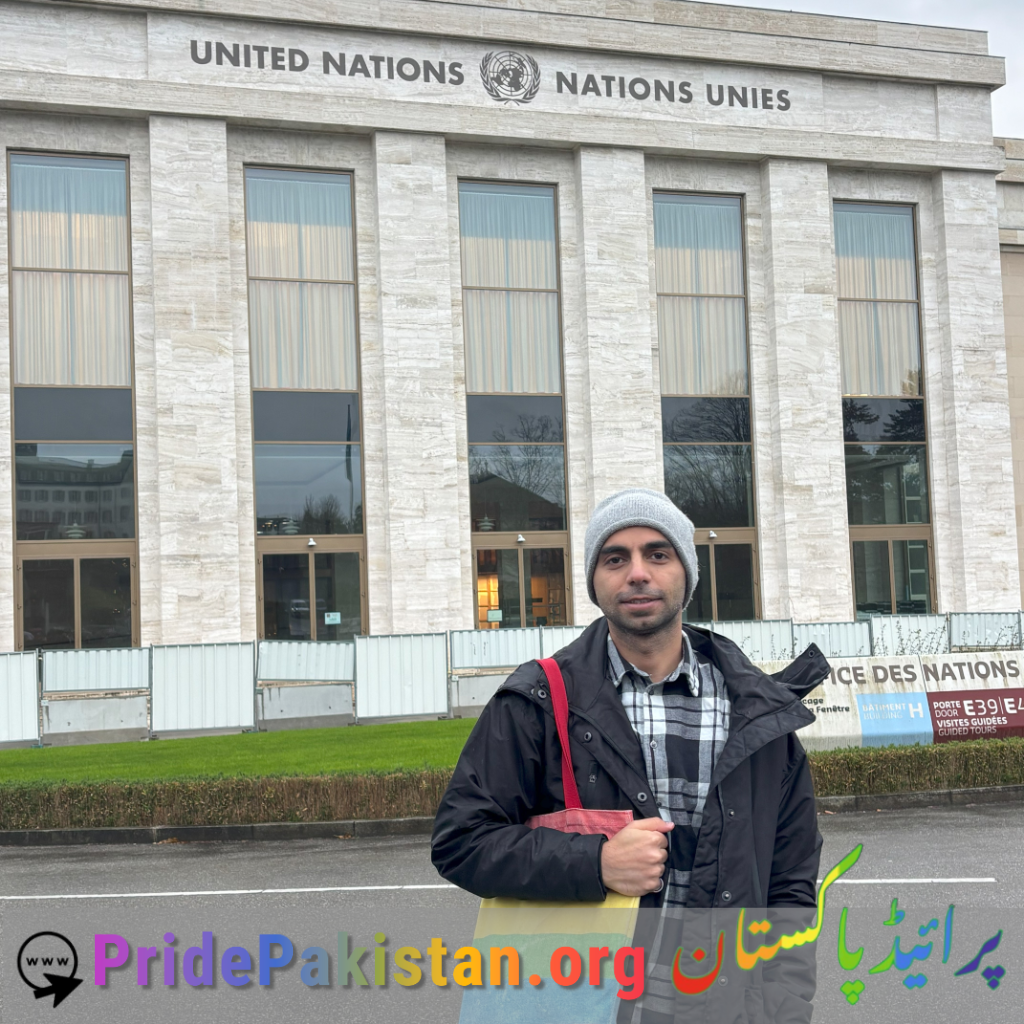
We are beyond thrilled to share that our founder, Ali Raza Khan, recently visited the UN Human Rights office to submit a comprehensive report and data on behalf of Pride Pakistan. This significant contribution was made to the Independent Expert on Sexual Orientation and Gender Identity (SOGI) in preparation for the 59th session of the UN Human Rights Council. Our report addresses the critical issue of protection against violence and discrimination based on sexual orientation and gender identity, particularly in relation to forced displacement. This marks a pivotal step in amplifying the voices and experiences of the LGBTQI+ community in Pakistan on a global platform. Ali Raza Khan’s dedication and unwavering commitment to human rights and equality continue to inspire us all. Let’s come together to support this incredible achievement and work towards a world free from discrimination and violence.
This momentous renewal fills us with renewed resolve. At PridePakistan.org, we join LGBTQIA+ communities, civil society, and allies across the globe in celebrating this vital mandate, and we recommit to the shared struggle for safety, dignity, and equality for all. This is a powerful step forward, reminding us all that through solidarity and unwavering advocacy, we can and will continue to make progress towards a more just and inclusive world.
آج، ہم پرایڈ پاکستان پر ایک واقعی اہم موقع کا جشن منا رہے ہیں جو دنیا بھر میں امید اور عزم کا ایک طاقتور پیغام بھیجتا ہے۔ اقوام متحدہ کی انسانی حقوق کونسل نے جنسی رجحان اور صنفی شناخت (IE SOGI) کی بنیاد پر تشدد اور امتیازی سلوک کے خلاف تحفظ کے لیے آزاد ماہر کے مینڈیٹ کی باضابطہ طور پر مزید تین سال کے لیے تجدید کر دی ہے!
یہ ایک ایسی فتح ہے جسے بڑھا چڑھا کر پیش نہیں کیا جا سکتا۔ IE SOGI اقوام متحدہ کے پورے نظام میں واحد عہدہ ہے جو خصوصی طور پر دنیا بھر میں ایل جی بی ٹی کیو آئی+ اور صنفی طور پر متنوع افراد کے انسانی حقوق سے متعلق ہے۔ 2016 میں اپنے قیام کے بعد سے، یہ آزاد ماہر ہماری کمیونٹیز کے لیے ایک انتہائی اہم آواز رہا ہے – انسانی حقوق کی خلاف ورزیوں کی دستاویزات تیار کرتا ہے، متاثرین اور بچ جانے والوں کی مدد کرتا ہے، حکومتوں کے ساتھ مشغول ہوتا ہے، اور بین الاقوامی قانون اور جامع عوامی پالیسی پر اہم مشورے فراہم کرتا ہے۔
اس تجدید کی اہمیت موجودہ عالمی صورتحال سے مزید اجاگر ہوتی ہے۔ جیسا کہ موجودہ آزاد ماہر کی 2024 کی رپورٹ میں نمایاں کیا گیا ہے، دنیا بھر میں ایل جی بی ٹی کیو آئی+ افراد تشدد، غلط معلومات، اور سیاسی قربانیوں کی بڑھتی ہوئی لہروں کا سامنا کر رہے ہیں۔ یہ خطرات اکثر مربوط مخالف حقوق کی تحریکوں سے پیدا ہوتے ہیں، جس سے ہمارے کمیونٹیز کو سب سے زیادہ تحفظ کی ضرورت کے وقت بین الاقوامی دباؤ، مرئیت، اور احتساب کو برقرار رکھنے کے لیے اس مینڈیٹ کا تسلسل انتہائی ضروری ہو جاتا ہے۔
یہ ناقابل یقین کامیابی کوئی معمولی بات نہیں تھی؛ یہ سول سوسائٹی کی قیادت میں ایک غیر معمولی، انتھک مہم کا نتیجہ تھی۔ 157 ممالک اور علاقوں سے تعلق رکھنے والی 1,259 غیر سرکاری تنظیموں، بشمول پرائیڈ پاکستان، ایل جی بی ٹی کیو آئی+ حقوق کے دفاع میں متحد ہوئیں۔ ماضی میں پرائیڈ پاکستان نے اقوام متحدہ کے انسانی حقوق کے دفتر کا دورہ کیا تھا تاکہ پرائیڈ پاکستان کی جانب سے ایک جامع رپورٹ اور ڈیٹا جمع کرایا جا سکے۔ یہ اہم شراکت جنسی رجحان اور صنفی شناخت (SOGI) پر آزاد ماہر کو اقوام متحدہ کی انسانی حقوق کونسل کے 59ویں اجلاس کی تیاری میں پیش کی گئی۔ ہماری رپورٹ جنسی رجحان اور صنفی شناخت کی بنیاد پر تشدد اور امتیازی سلوک کے خلاف تحفظ کے اہم مسئلے کو حل کرتی ہے، خاص طور پر جبری نقل مکانی کے سلسلے میں۔ یہ پاکستان میں ایل جی بی ٹی کیو آئی+ کمیونٹی کی آوازوں اور تجربات کو عالمی سطح پر بلند کرنے میں ایک اہم قدم ہے۔