When analyzing the LGBT population in Pakistan, a deep informational vacuum exists. Because official state trackers like the Pakistan Bureau of Statistics (PBS) restrict gender non-conforming variables strictly to a minimal tracking of the transgender community, finding reliable statistics on sexual orientation and gender identity can be extremely difficult. This lack of data often leads to intense online speculation, myths, or exaggerated rumors.
Following rigorous demographic tracking and standard public health estimation methods, PridePakistan.org has developed the first comprehensive, district-by-district population projection model for the country. This study moves away from internet rumors and utilizes proven scientific frameworks to look at the real numbers.
The Science: Is This Data Scientifically Verifiable?
In public health and sociology, when actual national census data on marginalized or criminalized communities is missing, demographers rely on statistical extrapolation.
The 7% Standard Identity Baseline
Decades of independent, comprehensive demographic peer-reviewed research conducted across diverse continents—compiled by institutions like the Kinsey Institute and the Williams Institute—consistently reveal that sexual and gender minorities safely constitute between 5% to 10% of any given human population. This range remains stable regardless of local geographic boundaries, governance structures, or social systems.
To create our model, PridePakistan.org applied a standard, realistic 7% demographic multiplier to Pakistan’s total 2023 National Digital Census population (which stands at approximately 241.5 million people). This yields a scientifically defensible national baseline estimate of 16.9 million LGBTQI+ individuals across the country.
The 3% Conservative Minimum Range
To account for absolute mathematical caution and handle skeptics, our dataset concurrently provides a 3% absolute minimum baseline. Even at this exceptionally narrow margin, the statistics demonstrate that queer individuals constitute a substantial and undeniable percentage of every administrative block in the country.
National and Provincial Population Breakdown
Based on the 7% standard identity multiplier and the 3% conservative threshold applied directly to the latest state data, here is the official breakdown of the estimated LGBTQI+ population by administrative zone:
Province / Territory
Official 2023 Census Population
Estimated LGBTQI+ Population (7% Standard)
Conservative Minimum Range (3% Floor)
Punjab
127,688,922
8,938,224
3,830,667
Sindh
55,696,147
3,898,730
1,670,884
Khyber Pakhtunkhwa
40,856,097
2,859,926
1,225,682
Balochistan
14,894,402
1,042,608
446,832
Islamabad Capital Territory
2,363,863
165,470
70,915
Azad Jammu & Kashmir (AJK)
~4,000,000
280,000
120,000
Gilgit-Baltistan (GB)
~1,500,000
105,000
45,000
TOTAL NATIONWIDE ESTIMATE
~249,500,000
~17,289,958
~7,410,000
Why This Data Matters
In an environment where state policy enforces invisibility, recording our own history is a necessity. This project proves that queer individuals are not an isolated anomaly or a tiny fringe element; they are millions of citizens living across every province, federal territory, and rural union council in Pakistan.
By grounding these numbers in clear, international demographic formulas rather than social media speculation, this dataset serves as a resource for human rights defenders, researchers, and public health advocates working toward safe, inclusive futures.
Explore the Live Interactive Map
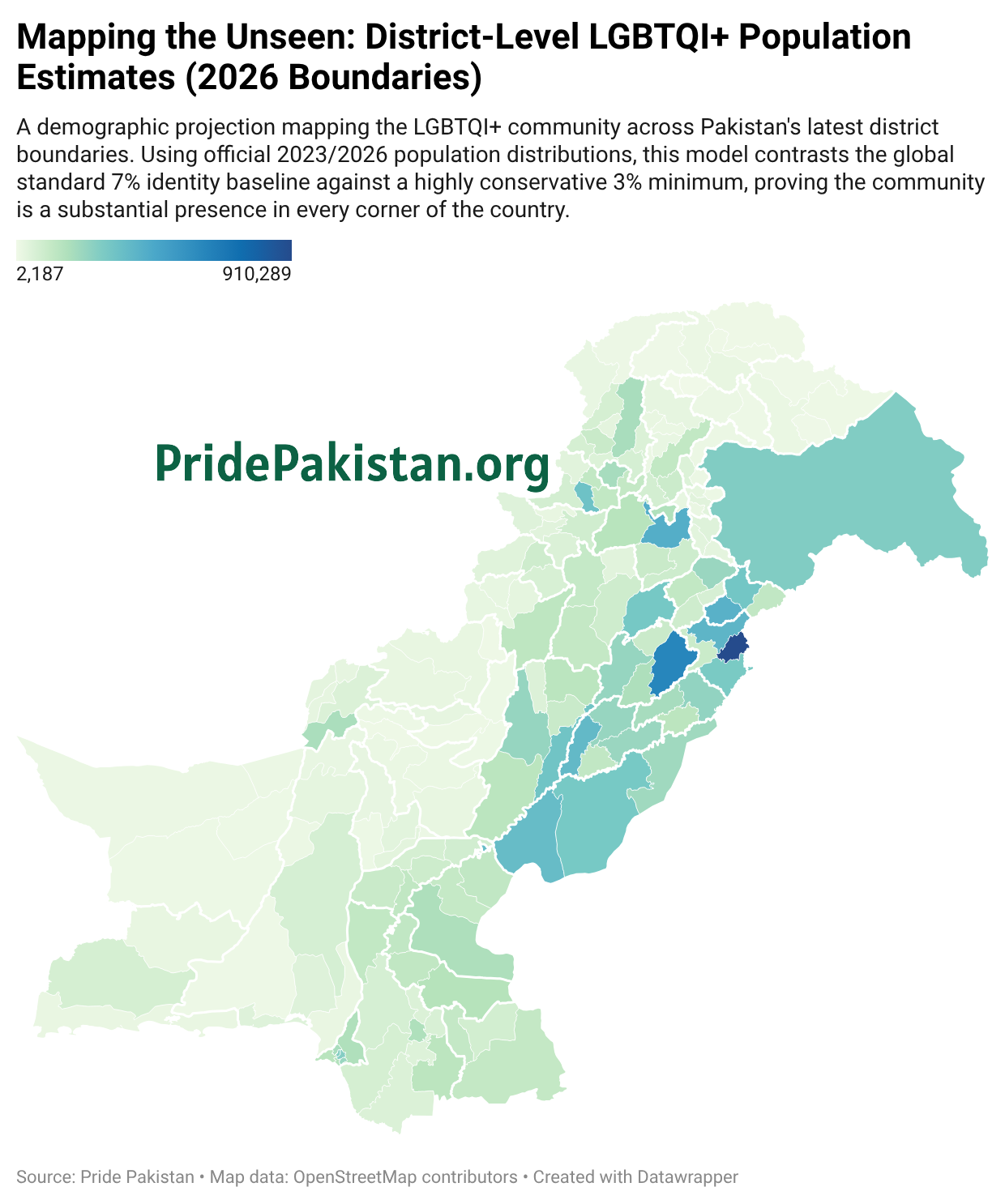
Our data maps the community across all four provinces, the federal capital, and regional territories. Hover over your district below to see the standard demographic estimates and conservative baseline ranges of our community members living there
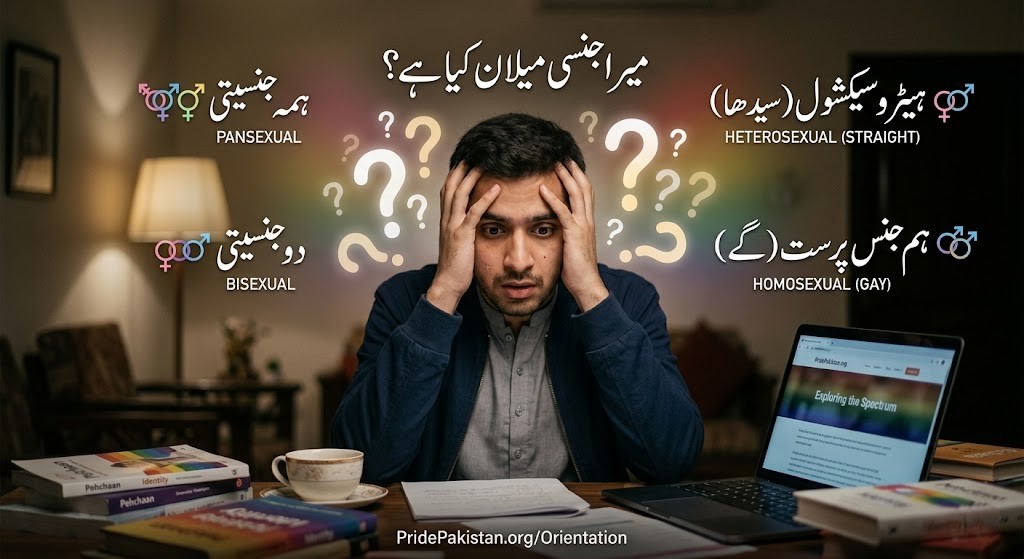
This page is designed to be a safe, educational space for Pakistanis to understand their feelings. It balances modern global definitions with a sensitive approach to our specific cultural context.
محبت کے رنگ: جنسی میلان کی تلاش
Language helps us name the feelings of our hearts. Below is a guide to the different ways people experience attraction.
Definition: Attraction to people of the opposite gender.
تعریف: اپنی مخالف صنف (مرد کی عورت اور عورت کی مرد) کی طرف رغبت یا کشش محسوس کرنا۔
Example: A man who is only attracted to women.
مثال: ایک مرد جو صرف عورتوں کے لیے دل میں کشش پاتا ہے۔
2. Homosexual (Gay or Lesbian) | ہم جنس پرست (گے یا لیسبیئن)
Definition: Attraction to people of the same gender.
تعریف: اپنی ہی صنف کے لوگوں (مرد کی مرد اور عورت کی عورت) کی طرف رغبت محسوس کرنا۔
Example: A man who loves and is attracted to other men.
مثال: ایک مرد جو دوسرے مردوں سے محبت اور جنسی کشش محسوس کرے۔
3. Bisexual | دو جنسیتی (بائی سیکشول)
Definition: Attraction to more than one gender (usually men and women).
تعریف: ایک سے زیادہ اصناف (عموماً مرد اور عورت دونوں) کی طرف رغبت محسوس کرنا۔
Example: A person who can develop romantic feelings for both men and women.
مثال: ایک ایسا شخص جو مردوں اور عورتوں، دونوں کے لیے جذبات رکھ سکتا ہو۔
4. Pansexual | ہمہ جنسیتی (پین سیکشول)
Definition: Attraction to people regardless of their gender identity or biological sex.
تعریف: کسی بھی انسان کی طرف کشش محسوس کرنا، قطع نظر اس کے کہ اس کی صنف یا پہچان کیا ہے۔
Example: Loving someone for their soul and personality, where gender does not play a role.
مثال: کسی انسان کی شخصیت اور روح سے محبت کرنا، جہاں صنف کوئی اہمیت نہ رکھتی ہو۔
5. Asexual | لا جنسیتی (اے سیکشول)
Definition: Experiencing little to no sexual attraction to others.
تعریف: دوسروں کے لیے جنسی کشش بہت کم یا بالکل محسوس نہ کرنا۔
Example: A person who enjoys emotional and romantic closeness but does not feel the need for sexual intimacy.
مثال: ایک ایسا شخص جو جذباتی تعلق تو چاہتا ہو مگر جنسی ملاپ کی خواہش نہ رکھتا ہو۔
Defining Identity in the Transgender Context
ٹرانس جینڈر تناظر میں شناخت کی تعریف
A common question is: “If a trans man loves a man, is he gay?” The answer is based on Gender Identity, not assigned sex at birth.
عام سوال یہ ہے کہ: “اگر ایک ٹرانس مرد کسی مرد سے محبت کرے تو کیا وہ ‘گے’ ہے؟” اس کا جواب پیدائشی صنف کے بجائے صنفی شناخت پر مبنی ہوتا ہے۔
Trans Men loving Men: Since a trans man is a man, his attraction to men is defined as Gay.
ٹرانس مرد کی مرد سے محبت: چونکہ ٹرانس مرد ایک مرد ہے، اس لیے اس کی مردوں کے لیے کشش کو ہم جنس پرستی (گے) کہا جائے گا۔
Trans Women loving Women: Since a trans woman is a woman, her attraction to women is defined as Lesbian.
ٹرانس عورت کی عورت سے محبت: چونکہ ٹرانس عورت ایک عورت ہے، اس لیے اس کی عورتوں کے لیے کشش کو لیسبیئن کہا جائے گا۔
Trans-to-Trans Love: If two transgender people love each other, they may use terms like Queer or T2T (Trans-to-Trans), or simply identify based on their gender (Straight or Gay).
Are You Confused? How to Identify Yourself
کیا آپ الجھن کا شکار ہیں؟ اپنی شناخت کیسے کریں
If you are struggling to find a label, remember that it is okay to take your time. Here are a few ways to help yourself:
اگر آپ کو اپنی پہچان کرنے میں مشکل ہو رہی ہے، تو یاد رکھیں کہ اس میں وقت لینا بالکل ٹھیک ہے۔ یہاں کچھ طریقے ہیں:
Observe Your Feelings: Notice who you find yourself looking at in a crowd or who you imagine a future with. Labels should fit your feelings, not the other way around.اپنے جذبات پر غور کریں: یہ دیکھیں کہ بھیڑ میں آپ کی نظریں کسے ڈھونڈتی ہیں یا آپ اپنا مستقبل کس کے ساتھ دیکھتے ہیں۔
Separate Romance from Sex: You might feel romantic attraction to one gender but sexual attraction to another. This is normal.محبت اور جنس میں فرق کریں: یہ ممکن ہے کہ آپ جذباتی طور پر کسی ایک صنف کی طرف مائل ہوں مگر جنسی طور پر دوسری طرف۔ یہ بالکل نارمل ہے۔
Don’t Rush: You don’t have to pick a label today. You can use the term “Questioning” or “Queer” until you feel certain.جلدی نہ کریں: ضروری نہیں کہ آپ آج ہی کوئی لیبل چنیں۔ جب تک آپ مطمئن نہ ہوں، آپ خود کو “تلاش کرنے والا” یا “کوئیر” کہہ سکتے ہیں۔
Safe Exploration: Use safe online spaces like PridePakistan.org to read stories of others. Seeing yourself in someone else’s story is often the best way to find your own.محفوظ مطالعہ: پرائیڈ پاکستان جیسے محفوظ پلیٹ فارمز پر دوسروں کی کہانیاں پڑھیں۔ اکثر دوسروں کے تجربات میں ہمیں اپنی سچائی مل جاتی ہے۔
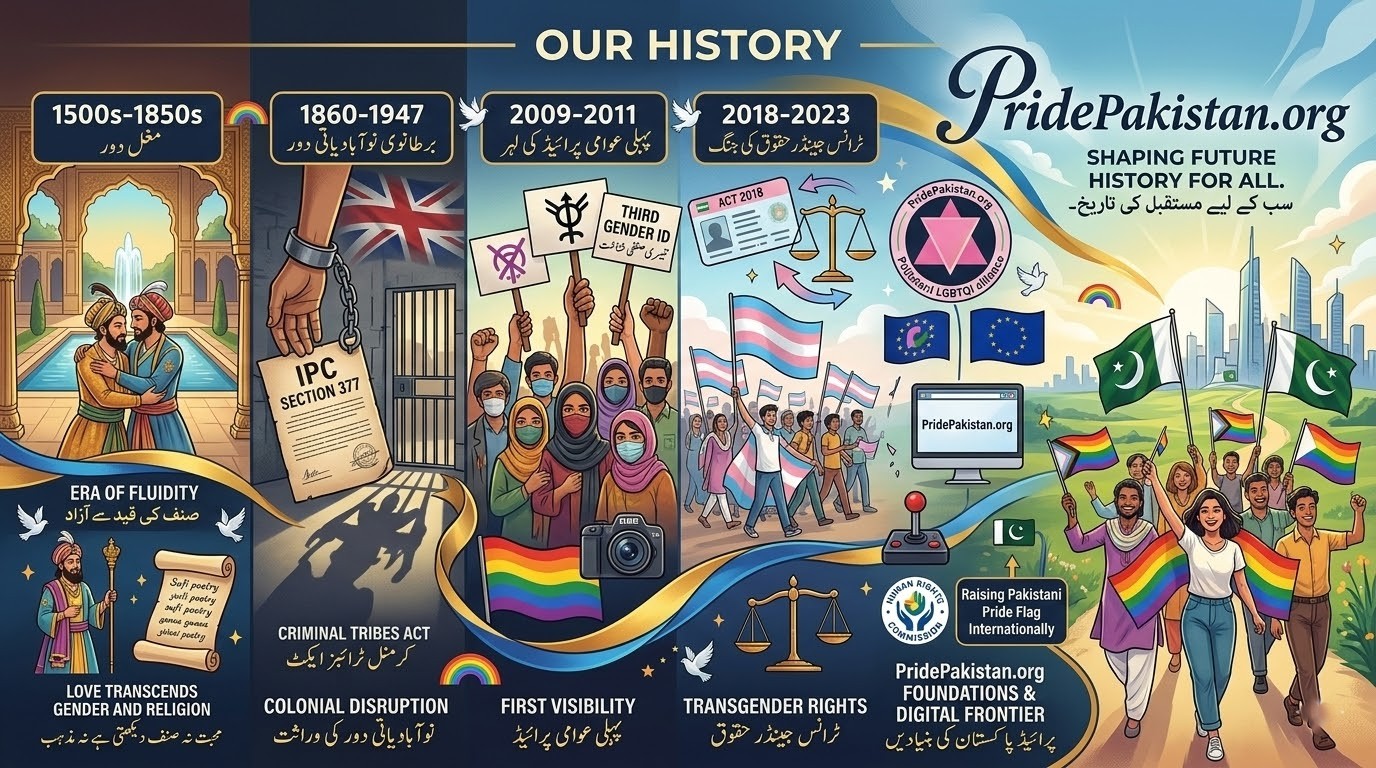
Pride Pakistan is more than an organization; it is an ideology. Our story didn’t start in a vacuum, it is a legacy that flows from the fluid courts of the Mughals, through the dark shadows of colonial laws, to the digital revolution of today. This timeline honors the pioneers, the activists, and the everyday people who refused to be erased.
The Era of Fluidity: The Mughal Empire
Before colonial borders and Victorian laws, the Indian subcontinent viewed gender and desire with a sense of fluidity. In the Mughal era, same-sex intimacy and “third gender” individuals held roles as trusted servants, poets, and advisors in the royal courts. Love was often seen as a spiritual journey that transcended the physical binary.
The landscape changed forever with the arrival of British rule. In 1860, the colonial government introduced Section 377, a law that criminalized “natural” desires as “carnal intercourse against the order of nature.” This was a foreign legal transplant that replaced local tolerance with institutionalized shame and homophobia.
In July 2009, the Supreme Court of Pakistan made history by recognizing the “Third Gender” on national ID cards. Just months later, in November 2009, a small group of gay men in Karachi organized a historic public gathering reported by the BBC. Though they hid their faces for safety, their courage marked the birth of modern gay activism in Pakistan.
The movement gained institutional strength through the NAZ Male Health Alliance, led by Qasim Iqbal. Qasim became a prominent face for gay rights, organizing indoor, closed-door Pride events across Pakistan. These gatherings provided a rare safe space for the community to connect, even as the legal and social climate remained hostile.
2011: The US Embassy Incident & Extremist Backlash
On June 26, 2011, the US Embassy in Islamabad hosted an LGBTQI Pride social event. The subsequent media coverage sparked a massive nationwide backlash from Islamic extremist groups and conservative politicians. This event forced the movement back underground, highlighting the extreme risks associated with Western-aligned visibility.
In 2018, Pakistan passed the landmark Transgender Persons (Protection of Rights) Act. However, the law faced intense opposition and was challenged in the Federal Shariat Court in 2023, leading to significant rollbacks that shifted the focus toward “intersex” definitions. This period saw the rise of public Trans Prides in Lahore and other cities, even as legal protections were being dismantled.
Our campaign, founded by Ali Raza Khan, began within the empowering network of NAZ. In 2020, with the support of the European Union, we began organizing closed-space community gatherings. These underground meetings focused on building the “Pink Triangle”, a member alliance of the Pakistan LGBTQI Alliance, designed to unite diverse voices under one banner.
[Read More: Our Origins – From the Pink Triangle to Pride Pakistan]
2021–2023: Security Risks & Decentralization
Following increased security incidents, raids, and the closing of NAZ Pakistan’s main operations in 2021, the Pink Triangle alliance began to decentralize. Lack of funds, security threats, and internal community conflicts, specifically tensions between some trans networks and gay advocacy, led to a period of fragmented activism. We realized we needed a new way to reach our people safely.
[Read More: Navigating Conflict – The Closing of the Pink Triangle]
2024: The Digital Frontier & Global Pride
In late 2023, we recognized that physical gatherings in elite city centers were not enough to reach the non-elite and rural gay community. We launched PridePakistan.org in early 2024 to provide an online sanctuary. Despite being blocked by the PTA, we expanded into digital gaming, represented the community at the Human Rights Commission, and began raising the Pakistani Gay Pride flag at international Prides worldwide.
[Read More: Digital Resistance – PTA Blocks and Global Flags]
Pride Runner is more than just a game; it is a digital representation of the daily resilience required by the LGBTQ+ community in Pakistan. As our character runs through the historic streets of Karachi and Lahore, they face real-world symbolic hurdles like security barriers and the “dark clouds” of societal judgment (Log Kya Kahenge).
At PridePakistan.org, we advocate for the fundamental human rights, safety, and equality of all individuals regardless of their sexual orientation or gender identity. By collecting our Rainbow Star logo, players contribute to the visibility of our mission to combat discrimination and promote a more inclusive Pakistan.
This game was born out of defiance. Following the blocking of PridePakistan.org by the PTA and other state agencies, we developed Pride Runner as a symbol of our community’s journey.
In Pakistan, to be yourself is to be in a constant state of navigation. The hurdles you jump today—the police barriers and the clouds of hate—are the same ones we face in the real world every day.
They can block our website, but they cannot block our path. Every star you collect represents our organization’s logo and our collective strength. We run through the landmarks of our country because this land belongs to us too. Play as a sign of resistance. Jump as a sign of progress. Stand proud, Pakistan.
Ahmad grew up in a small town in Pakistan, the only son among his siblings. Like many gay boys in conservative environments, he sensed early on that he was “different,” though he didn’t yet have the language to describe it. While his male classmates flirted with girls, Ahmad felt no such attraction. He dismissed it as shyness—until he met Wahid.
Their friendship was innocent, but one morning on a crowded school ride, Ahmad’s arm brushed Wahid’s. That brief moment triggered a rush of emotions he had never experienced before. It was the first time he realised he was attracted to another boy.
But in Pakistan, such a realisation is not just confusing—it is dangerous.
Growing Up Gay in a Society That Sees You as a Crime
Ahmad grew up hearing that being gay was sinful, shameful, and punishable. He lived in constant fear of being discovered. His fears were not imaginary. In a nearby town, two boys were caught in a relationship. Their families beat them and killed them in the name of “honour.” No one expressed sympathy—not even Ahmad’s own relatives.
This brutal reality shaped Ahmad’s teenage years. He carried a secret that could cost him his life.
As Ahmad grew older, his family began pressuring him to marry a woman. He stalled by focusing on his studies, but the pressure never stopped.
In 2023, he moved to the UK for further education. For the first time, he felt a small sense of freedom. But even from afar, the expectations followed him. One day, his uncle—an ex‑military officer, called to inform him that his marriage had been arranged. Ahmad was told to return to Pakistan, get married, and then resume his studies. If he refused, his uncle would cut off financial support.
For the first time in his life, Ahmad told the truth.
The reaction was immediate and violent. His family called him a disgrace. His uncle threatened to kill him if he ever returned to Pakistan. Ahmad knew these were not empty threats. His uncle had connections, influence, and the ability to carry out such violence without consequence.
With no safe home to return to, Ahmad applied for asylum in the UK. Like many LGBTQI asylum seekers, he found himself in a painful limbo:
He is not allowed to work.
He struggles to survive week to week.
He depends on the kindness of friends.
He lives with uncertainty, unable to return to Pakistan and unsure if he will be allowed to stay in the UK.
This is the reality for countless gay men fleeing Pakistan. Many lose everything—family, home, financial stability, and mental health. Some are deported back to danger. Others end up in detention centres or psychiatric wards in countries that claim to be “safe.” Many take dangerous migration routes and lose their lives on the way.
Ahmad is one of the lucky ones—he survived long enough to seek help.
Despite everything, Ahmad dreams of a future where he can live freely, love without fear, and build a career helping others. He hopes to work in the legal sector and contribute to the country that gave him refuge.
His story is not just about survival—it is about resilience, courage, and the universal desire to live authentically.
Ahmad’s experience reflects the reality of many gay men in Pakistan:
Threats from family members
Forced marriages
Honour‑based violence
Social and religious condemnation
Lack of legal protection
Dangerous migration journeys
Trauma in asylum systems abroad
At PridePakistan.org, we share these stories to raise awareness and to support those who are still living in fear.
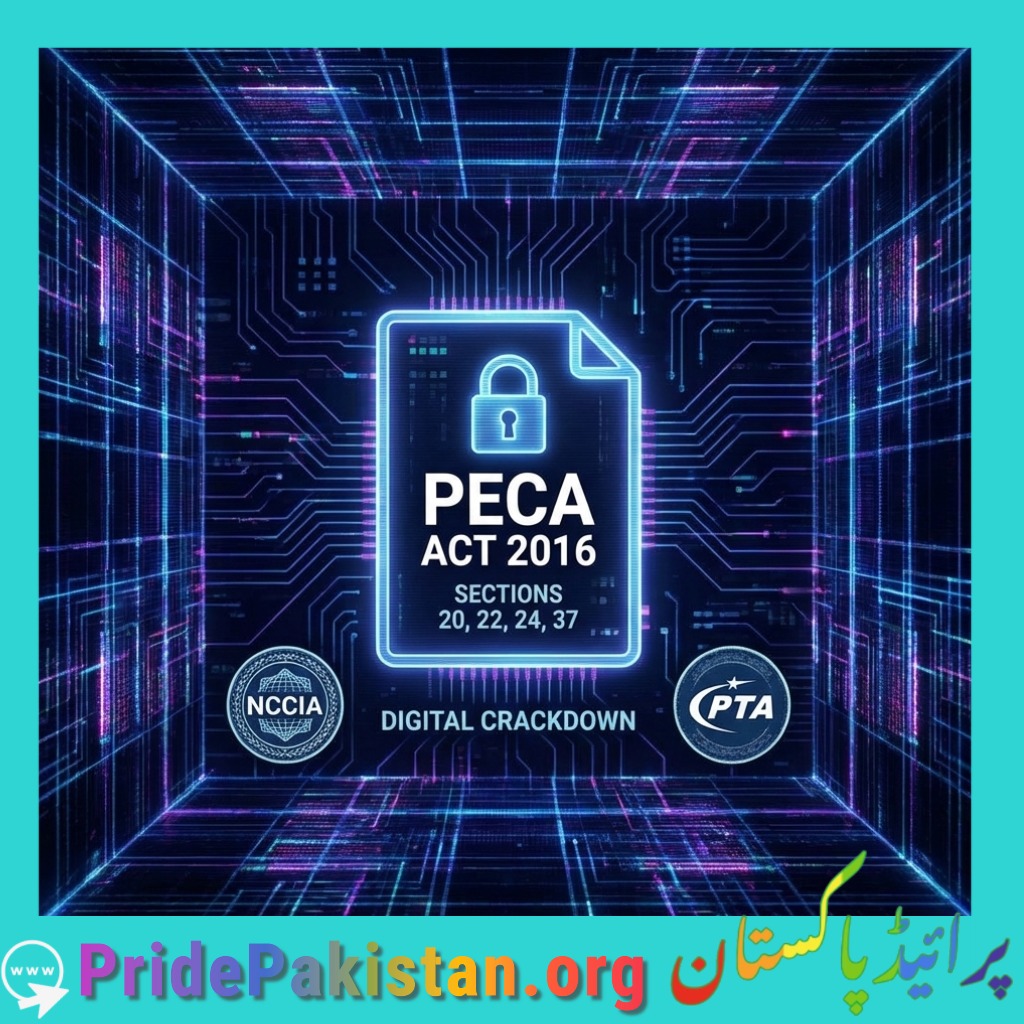
For years, the digital world was a sanctuary for the LGBTQI community in Pakistan—a place to find community, love, and support in a society that often refuses to acknowledge our existence. However, that sanctuary has been turned into a hunting ground. The Prevention of Electronic Crimes Act (PECA) 2016 is no longer just a law to stop cybercrime; it has become a primary tool for the FIA (Federal Investigation Agency) and NCCIA to target, entrap, and silence gay individuals.
At PridePakistan.org, we are witnessing a terrifying trend where legal jargon is used to mask state-sponsored persecution. Here is a breakdown of how the PECA Act is being weaponized and why it stands in direct violation of basic human rights.
The Legal Trap: Decoding the Sections
The state frequently misinterprets or broadens the scope of specific PECA sections to justify the arrest of community members.
1. Section 20: Offenses Against Dignity
While designed to prevent defamation, this section is often used to criminalize private digital expressions of identity. By labeling gay content as “harmful to the dignity” of society or individuals, the state justifies the surveillance of private chats.
The Reality: Your private life is not a crime against anyone’s dignity. Privacy is a right, not a privilege.
2. Section 22: Child Pornography (The Weapon of Scare Tactics)
As discussed, Section 22 is a severe, non-bailable offense. We have received reports of authorities falsely applying or threatening this section during raids to intimidate gay men into “confessions” or to justify the seizure of their devices.
The Reality: Conflating adult, consensual gay relationships with child pornography is a malicious tactic used to dehumanize the community and ensure the public remains silent about these arrests.
3. Section 24: Spoofing (Digital Identity Under Fire)
Authorities often use the “Spoofing” clause to target people using pseudonyms or “fake” profiles on dating apps.
The Reality: For many LGBTQI Pakistanis, using a pseudonym is a safety necessity, not a criminal act. Forcing individuals to use real identities in a hostile environment puts their lives at risk.
4. Section 37: Unlawful Online Content
This is the “censorship” clause used to block PridePakistan.org and other dating platforms. It gives the state the power to decide what is “obscene” or “immoral.”
The Reality: Moral policing should not be the basis of law. Accessing information and community support is a fundamental human right.
How PECA Violates Basic Human Rights
The use of PECA against the gay community doesn’t just violate local laws; it breaches international human rights standards that Pakistan has committed to uphold.
Violation of Privacy (Article 14 of the Constitution): PECA is being used to bypass the “inviolability of dignity and privacy of home.” State agencies are entering the most private digital spaces of citizens without warrant or cause.
Freedom of Expression (Article 19): By blocking websites and arresting those who access them, the state is stifling the right to receive and impart information.
Right to Liberty and Fair Trial: Many community members are held without proper legal representation, subjected to torture in FIA custody, and forced to sign “confessions” under duress—all under the guise of a PECA investigation.
A Strong Statement from PridePakistan
“The Pakistani state is using PECA as a digital noose. Every day, our helpdesk receives thousands of messages from terrified individuals whose lives have been ruined by a simple text message or a dating app profile. These are not ‘criminal gangs’—these are our brothers, friends, and colleagues. Using cybercrime laws to target consensual behavior and identity is a dark stain on Pakistan’s justice system. We demand an immediate end to the entrapment, the torture, and the weaponization of PECA against the LGBTQI community.”
What Can You Do?
Educate Yourself: Know your rights under PECA. If you are detained, you have the right to remain silent and the right to a lawyer.
Digital Safety: Use encrypted messaging apps (like Signal) and high-quality VPNs. Avoid sharing identifiable information on dating platforms.
Report to Us: If you or someone you know has been targeted by the FIA or NCCIA, reach out to PridePakistan.org. Your story helps us build a case for international advocacy.
The law should protect citizens, not persecute them for who they love.
The digital repression of LGBTQIA+ people in Pakistan has entered a new and alarming phase. After years of blocking gay dating apps, LGBTQIA+ websites, and online support platforms, the Pakistan Telecommunication Authority (PTA) — in coordination with FIA, NCCIA, and other state agencies — has now blocked access to PridePakistan.org inside Pakistan.
This is not an isolated act of censorship. It is part of a systematic effort to erase, silence, and endanger the LGBTQIA+ community.
PridePakistan.org Blocked Nationwide — Even VPNs and Proxies Targeted
For many years, LGBTQIA+ Pakistanis have relied on PridePakistan.org as one of the only safe, community‑run platforms offering:
Mental health support
Legal information
Emergency guidance
Asylum resources
Community connection
Safety alerts
But instead of protecting vulnerable citizens, the state has chosen to criminalise access to support.
PTA has:
Blocked PridePakistan.org across all major ISPs
Blocked gay dating apps and LGBTQIA+ websites
Blocked VPNs and proxy services commonly used to access PridePakistan.org
Pressured tech companies to restrict LGBTQIA+ content
This is not “internet regulation.” This is targeted digital persecution.
PTA Has Written to Social Media Platforms and Tech Companies to Block PridePakistan
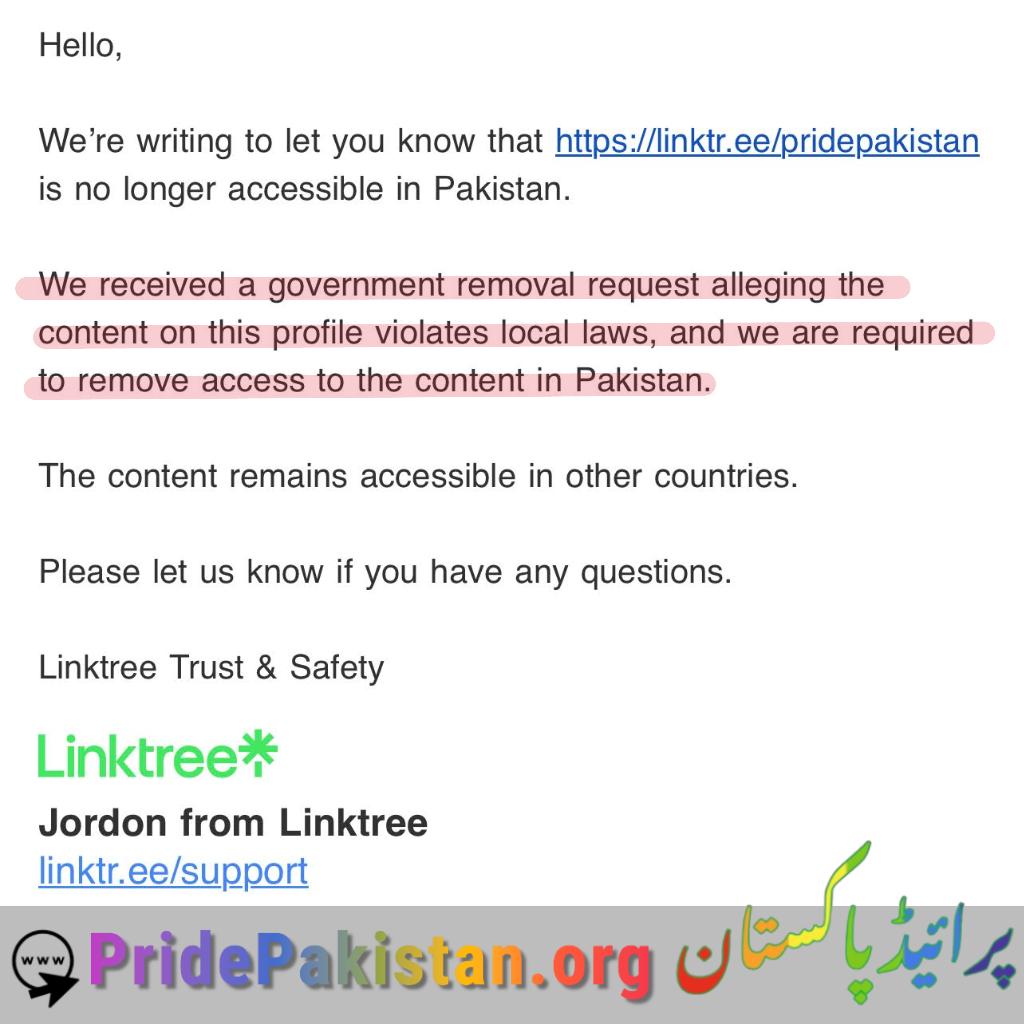
In a deeply troubling escalation, PTA has written to multiple global platforms — including Linktree, social media companies, and IT service providers — instructing them to block access to PridePakistan.org and related resources inside Pakistan.
This means:
LGBTQIA+ Pakistanis cannot access our Linktree
Our social media links may be restricted
Our educational resources are being censored
Our safety guides are being intentionally hidden
This is an attempt to cut off the community from every possible lifeline.
A Pattern of State‑Backed Harassment and Digital Surveillance
The blocking of PridePakistan.org comes after years of:
Arrests of gay men through digital entrapment
FIA and NCCIA raids based on online activity
Phone searches without consent
FIRs filed under cybercrime and morality laws
Torture and harassment of detainees
Public humiliation in media reports
Censorship of LGBTQIA+ content across platforms
Authorities claim that “Pakistan does not prosecute people for being gay.” But the evidence — and the lived experience of thousands — tells a very different story.
PridePakistan’s Official Statement
On behalf of PridePakistan, we issue this clear and unwavering condemnation:
Blocking PridePakistan.org, targeting LGBTQIA+ websites, arresting gay community members, and censoring digital access are violations of fundamental human rights, freedom of expression, and the right to safety.
These actions:
Endanger LGBTQIA+ lives
Cut off access to mental health and legal support
Force people into isolation
Criminalise identity and existence
Violate international human rights standards
We receive thousands of messages every year from LGBTQIA+ Pakistanis who are terrified, targeted, and desperate for help. Blocking our website does not stop the community from existing — it only makes them more vulnerable.
Why This Matters
When a state blocks:
LGBTQIA+ websites
Gay dating apps
VPNs
Proxies
Social media links
Community support platforms
…it is not “regulation.” It is erasure.
It is an attempt to silence a community that already lives under threat, discrimination, and violence.
PridePakistan Will Continue to Stand With the Community
Despite censorship, intimidation, and state pressure, PridePakistan remains committed to:
Providing support
Sharing resources
Documenting abuses
Advocating for human rights
Amplifying LGBTQIA+ voices
We will continue to operate globally, and we will continue to fight for the safety, dignity, and freedom of LGBTQIA+ Pakistanis.
The community deserves protection — not persecution.
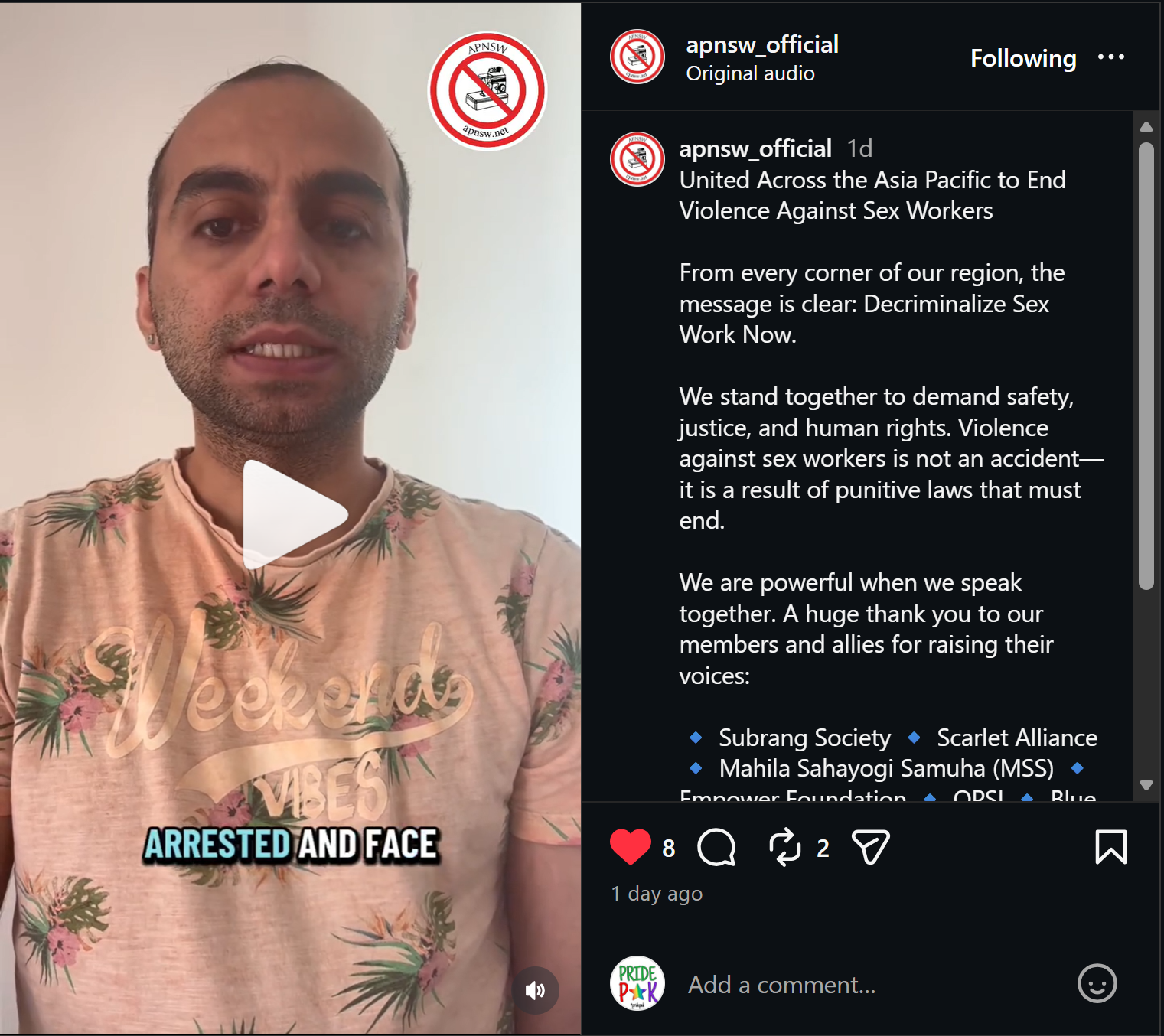
At Pride Pakistan, our mission has always been to advocate for the most marginalized voices within our community. This year, for the International Day to End Violence Against Sex Workers, our founder Ali Raza Khan joined the Asia Pacific Network of Sex Workers (APNSW) in a landmark regional campaign.
Speaking as a gay sex worker from Pakistan, Ali highlighted a truth that is often silenced: in our patriarchal society, the criminalization of sex work doesn’t “protect” anyone—it actively facilitates violence, particularly against Male Sex Workers (MSWs) and Men who have sex with men (MSM).
The Invisible Crisis: Male Sex Workers in Pakistan
In Pakistan, the discussion around sex work is often limited to female workers, leaving MSWs in a state of extreme vulnerability. According to recent data, the numbers and the risks are staggering:
Population Estimates: UNAIDS estimates there are approximately 832,200 men who have sex with men (MSM) in Pakistan, a significant portion of whom engage in sex work for survival or livelihood (UNAIDS, 2024).
HIV Vulnerability: While the national HIV prevalence in the general population is low, it is disproportionately high among key populations. Men constitute 69.4% of new HIV cases reported in 2024, often due to a lack of access to safe working conditions and health services (The News International/Ministry of Health, 2024).
Systemic Violence: Research shows that criminalization drives sex work underground, making it nearly impossible for MSWs to report violence. A 2025 Global Torture Index report classifies Pakistan as “high risk,” noting that police regularly employ torture and extortion against vulnerable individuals, including LGBTQIA+ and sex-working communities (OMCT, 2025).
Why Decriminalization is the Only Path Forward
Criminalization creates a “culture of impunity.” When a male sex worker is robbed, beaten, or extorted, he cannot go to the police because the law views him as the criminal. This allows perpetrators—including state actors—to target our community without fear of consequence.
Decriminalization is not just a legal shift; it is a life-saving intervention. It allows for:
Access to Justice: The ability to report crimes without fear of arrest.
Health Rights: Improved access to HIV prevention, ART, and mental health support.
Workplace Safety: The ability to negotiate safe sex and refuse dangerous clients.
Official Statement from PridePakistan.org
“On this International Day to End Violence Against Sex Workers, Pride Pakistan stands in unwavering solidarity with sex workers of all genders. We recognize sex work as work and demand an immediate end to the criminalization that fuels the torture and humiliation of our community members.
We call upon the Government of Pakistan to align with international human rights standards and recognize that you cannot end violence while you continue to criminalize the victims. Safety, dignity, and healthcare are human rights—not privileges to be revoked based on how one earns a living.”
You can watch the regional solidarity video featuring Ali Raza Khan on the APNSW Facebook Page
Key Detail: Classifies Pakistan as a “High Risk” country where police regularly employ torture against marginalized groups, including LGBTQIA+ and sex workers.
This article is reposted with credit to Metro Weekly. Please visit their website to read the full original profile.
A Celebrity Forced Into Exile
Ali Saleem, famously known as “The Queen of Karachi,” rose to prominence as a bold, queer performer in Pakistan. Despite his celebrity status, wealthy background, and family ties to the military elite, Saleem was forced to leave Pakistan simply to stay alive. His story, as profiled by Metro Weekly, reflects the precarious reality of being openly queer in a country where visibility often comes at the cost of safety.
Article:
In the nearly inexhaustible catalog of D.C.-based mission-driven organizations, AsylumWorks is a noble entry for assisting asylum seekers and other “newcomers” in the D.C. metro area and beyond.
Their LGBTQ component, PRISM (Pride Refugee & Immigrant Support Meet-up), grew out of similar work being done by a group at The DC LGBTQ+ Community Center, Center Global. And atop PRISM’s Facebook page is a photo from the 2022 Capital Pride Parade. There are many beaming faces, including Ali Saleem’s, front and center.
Front and center suits Saleem perfectly. He’s not merely at home in the spotlight. Arguably, he was born for it, 45 years ago in Pakistan. There, Saleem reached the most dazzling heights of celebrity, through a journey that began in his mother’s closet.
“I was completely in awe of all the gorgeous women, all the divas,” says Saleem, reaching back to childhood. “We had a lot of Indian movies — ‘Bollywood,’ as you call it…. And then I fell in love with Benazir [Bhutto] when I was 9 years old and she became prime minister of Pakistan for the first time. This beautiful woman with flawless skin and red lipstick who wears the dupatta over her head — so elegant and so graceful. I wanted to be like these divas.”
Young Ali did just that when his Army officer father and government official mother had evenings out, diving into his mother’s wardrobe and cosmetics. Occasionally, his parents arrived home to find him reveling in the transformation. In some families, this might have prompted severe punishment. Saleem says his parents never offered more than a mild scolding.
As his schooling progressed and Saleem found himself drawn to dramatic arts, opportunities arose to perform. Eventually, he even had a chance to remake himself as his favorite diva, the aforementioned Prime Minister Bhutto.
“I walked onstage as Benazir Bhutto, but in a burqa,” Saleem recalls of a performance with a sketch-comedy troupe very early in his career. “We had the prime minister of Pakistan at the time, Shaukat Aziz, sitting in the audience. These were very high-priced tickets, a very elite audience, the ‘who’s who’ of Pakistan political society and celebrities.
“When I finished my opening dialogue, there was pin-drop silence. And then there was just an uproar! People were bursting with laughter and falling out of their chairs. There was this cheer. I knew this was what I wanted to do for the rest of my life, to be an entertainer.”
With Benazir Bhutto as his muse, in a sense, that is what Saleem did. For a time, he would continue this impersonation, this homage, as his star rose ever higher in Pakistani high society. He even brought his Bhutto likeness to national television audiences, while outwardly embracing an androgynous style for themself.
If Bhutto had twice been Pakistan’s prime minister, Saleem was to become its queen — “I was the queen of Karachi for sure, Honey!” — as an entirely new persona, Begum Nawazish Ali. READ THIS STORY IN THE MAGAZINE
It was 2004, says Saleem, that a film-industry friend suggested that he break away from the Bhutto box. “‘You need to be your own self. I see a diva in you!’” is how Saleem remembers the guidance. “That conversation was so powerful for me.”
The friend assigned a new persona, with “Begum” being a sort of amorphous word in Urdu, that might mean “princess” or “lady” or, in Saleem’s case, a wife of high-ranking social status. “Nawazish” came from a popular song, where it was used to express gratitude. And Ali is simply pure Saleem.
Working as an associate producer for a Pakistani TV station, Saleem wrote up a proposal for a talk show to be hosted by this new persona. While there was immediate interest from colleagues, Saleem says his project languished until a newly formed competing network got wind of it. Saleem’s Late Night with Begum Nawazish Ali was launched, Aug. 13, 2005.
“Oh, my God. It was unbelievable,” says Saleem, his voice cracking slightly. “I’m getting emotional just talking about it. It was as if God and the entire universe was suddenly answering my prayers…. My first episode, I was able to get Makhdoom Amin Fahim, who was the acting chair of the Pakistan Peoples Party. And Reema, who was the No. 1 film actress…. It was the most talked about show in Pakistan.”
Shah Yasir, a Pakistani screenwriter who lives in the D.C. area, shares his sense of what it was like in Pakistan at the time, watching Saleem’s celebrity blossom.
“I remember first hearing about a boy who could impersonate former Prime Minster Benazir Bhutto when I was in high school in Karachi,” Shah says. “I even got to see them give an impromptu performance of that impersonation at a friend’s party shortly before I left for college in the States. After that, I watched them rise quickly to fame as a female-impersonating talk show host on Pakistani TV.
“Begum Nawazish Ali was a hit among countless families who not only accepted, but also adored, a drag queen…. I think it’s also noteworthy how drag queens reading storybooks is still a topic of such vitriol and controversy in the States in 2024, when in Pakistan a drag queen talk show was not only accepted but in fact a huge hit among millions of households back in the early 2000s.”
As the U.S. has, in ways, taken conservative turns, so has Pakistan. Saleem says that while audiences across the social strata were adoring, work trips to India were sparking some interest from shady corners of government. Saleem says he wasn’t particularly cooperative with requests from government agents — requests, says Saleem, that went so far as to demand he arrange liaisons between female celebrities he knew and government officials.
While he had other professional projects in the works, his show was canceled. He later launched another talk show, simply as himself, The Late Late Show with Ali Saleem, but that, too, ended. At the same time, he says, a mood hostile to his brand of entertainment was growing.
“There’s always the right wing, the self-righteous people who hate you for who you are,” Saleem bluntly observes. “As my fan base was increasing, so were the people who were against what I represented. For them, I was becoming a bigger and bigger threat. ‘Is this what the Islamic Republic of Pakistan stands for? Is this a role model for our boys? This needs to be stopped.’
Saleem says his focus on work, the whirlwind of parties, made it easy for him not to notice how the political environment was turning for the worse. Until his best friend, Sheikh Amir Hassan, was murdered in 2008. Hassan had been at Saleem’s home for a party, returning to his own residence in the early hours. Later that morning, Saleem received word that Hassan had been shot in his home. Hassan’s murder was sensationalized, with a variety of outlets victim-blaming, with Saleem’s own lifestyle becoming fair game in the press.
As the atmosphere continued to change, Saleem says he was later advised by authorities that someone related to the Taliban had been arrested with suicide-bomb equipment. It was not lost on Saleem that in 2007 a suicide bomber assassinated his beloved Benazir Bhutto.
“During interrogation, he revealed the names of celebrities that the Taliban were going to target,” Saleem says. “My name was on top of the list, of course, No. 1.”
The heyday had ended. The curtain fell. Saleem no longer felt safe. With close friends in the D.C. area, he made his escape. Since 2019, Washington has been his safe haven. Thanks to his contacts, he’s happily serving drinks at the beloved Dupont-area gay bar Larry’s Lounge. His mother recently came for a visit from Pakistan, her first since he arrived in the U.S. Saleem is building community with PRISM and others, volunteering for Kamala Harris’s presidential campaign, though he is a nonvoting resident.
While the Pakistan party has ended, Saleem seems nonetheless very content with the new life he has built. Certainly, Saleem has staked a claim as one of the many local residents who bring some invaluable piece of the LGBTQ world to Washington. Among the area’s South Asian diaspora, Begum Nawazish Ali makes clear from time to time that she’s not retired, performing at private gatherings. She also hints that she might even break out the finery for World Pride.
“I would love to march as Begum, that is my plan,” Saleem shares, excited for the Queer world to come to D.C. en masse. “We are international. That’s why we have the rainbow. Despite our racial differences or cultural differences, or nationalities and all of that, we come together and unite as one people because we all want to see this world becoming more accepting, more tolerant, more loving, more generous.”
This profile is part of an exclusive Metro Weekly series leading up to World Pride 2025, highlighting the global reach of D.C.-based organizations, activists, artists, and others.
The Broader Reality for Gay Men in Pakistan
While Saleem’s fame gave him some protection and eventual escape, countless gay and queer men in Pakistan face similar threats without resources or international networks. Many endure:
Torture and harassment from authorities and vigilantes.
Death threats from family members or society at large.
Isolation and despair, leading some to suicide when no safe options remain.
These stories rarely make headlines, but they represent the daily reality of marginalized gay men across the country.
Why This Matters
Ali Saleem’s journey is not just about one individual—it is a symbol of resilience and survival against systemic oppression. His exile underscores the urgent need for:
Safe spaces where gay men can live authentically without fear.
Access to resources for those facing violence or contemplating escape.
Solidarity and advocacy to challenge stigma and demand justice.
At PridePakistan.org, we honor Ali Saleem’s courage and stand with all gay and queer men in Pakistan who continue to resist oppression. We thank Metro Weekly for amplifying his story and remind our community that every voice matters in the fight for dignity, equality, and survival.
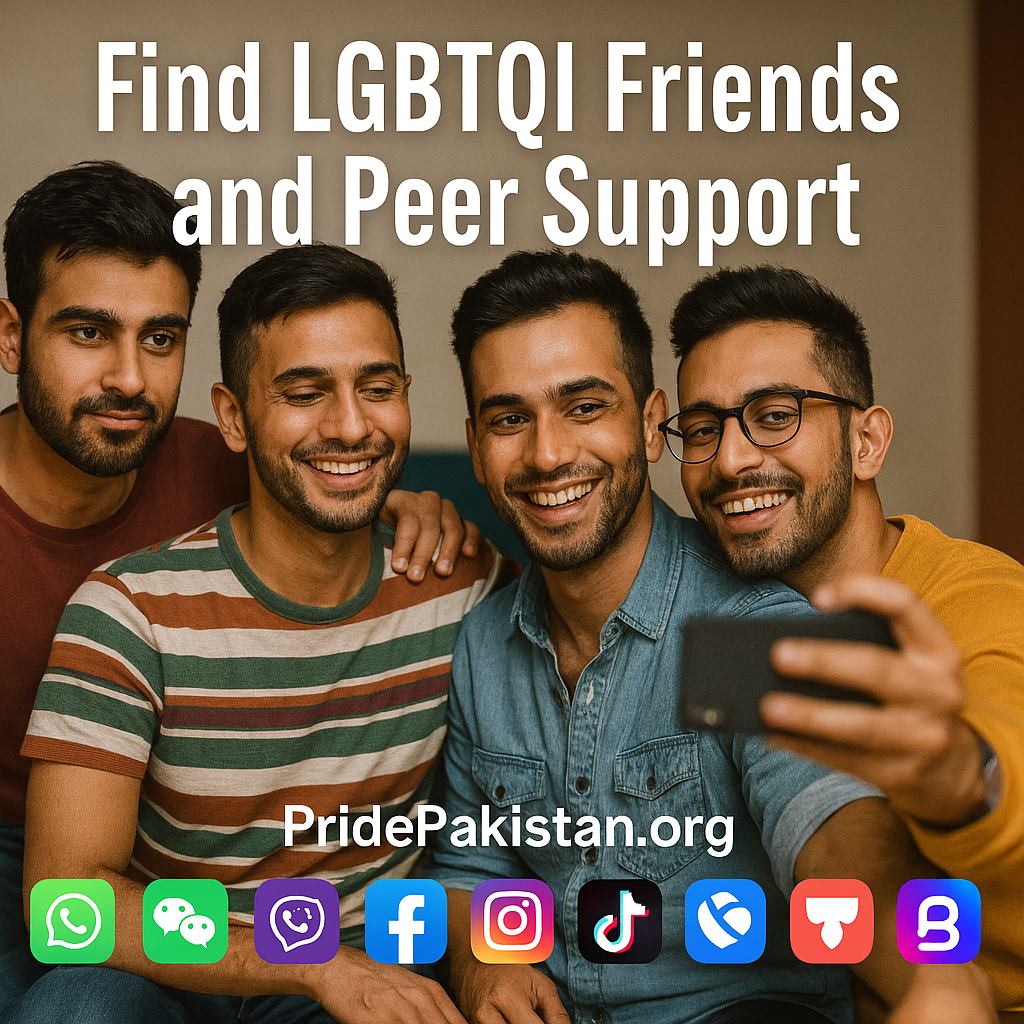
Living as an LGBTQI person in Pakistan can be isolating and dangerous. Many queer individuals feel alone, unable to share their identity with family or society. Yet, finding friends and partners who understand you is essential for mental health, emotional resilience, and a better life.
Many LGBTQI couples in Pakistan live together in hiding, and some who had the resources have traveled abroad and married. Building friendships and peer support networks is not just about romance — it’s about survival, joy, and solidarity.
🚫 Risks on Dating Platforms in Pakistan
Due to censorship and surveillance, most LGBTQI websites and dating apps are blocked in Pakistan. The Federal Investigation Agency (FIA), National Cyber Crime Investigation Agency (NCCIA), and other security bodies have used honey traps on blocked gay dating apps accessed via VPNs and proxies.
Now, even VPNs and proxies are being blocked, making access more dangerous. Homophobic gangs and individuals also use these apps to target LGBTQI people, leading to blackmail, extortion, and in some tragic cases, murder. Victims often cannot go to the police due to fear of further persecution.
📱 Apps You Can Use to Connect
Despite restrictions, many people still use general messaging and social media apps to find LGBTQI friends
We understand how hard it is to find safe spaces. That’s why PridePakistan.org offers a peer support group for LGBTQI individuals in Pakistan. You can:
Join private group chats
Attend virtual meetups
Share your story anonymously
Find friends and mentors
To join, please fill out our membership form. We protect your privacy and never share your data.
You are not alone. There are thousands of LGBTQI people in Pakistan who are looking for connection, friendship, and love. Building community is an act of courage and healing. Whether you’re seeking a friend, a partner, or just someone to talk to — you deserve safety, joy, and support.
🛡️ Safety Tips for Online Connection
If you choose to connect online:
Never share personal details (address, workplace, ID) until trust is built.
Use encrypted messaging apps and avoid apps that require location sharing.
Meet in public places if you decide to meet someone.
Avoid using VPNs or proxies unless you are confident in their safety.
Report suspicious behavior to trusted community groups.
Report an Incident
If you have used any of these services and faced discrimination or been refused help because of your identity, please let us know. We document these cases to fight for better protections for the LGBTQIA+ community in Pakistan.