Day: 6 June 2026

  • District-by-District Breakdown: Mapping the LGBTQI+ Population Across Pakistan

    District-by-District Breakdown: Mapping the LGBTQI+ Population Across Pakistan

    Introduction: No Longer Invisible

    For generations, state narratives and cultural conditioning have attempted to relegate sexual and gender minorities in Pakistan to complete oblivion. When numbers are spoken about, they are either severely understated by state figures or blown out of proportion by internet rumors. At PridePakistan.org, we believe that real data is the ultimate shield against erasure and stigma.

    By utilizing our newly structured demographic projection model—anchored upon a standard, scientifically validated 7% population multiplier and a conservative 3% public health floor—we have successfully mapped out our community across all regions. Below is the full, comprehensive territorial distribution tracking the millions of queer individuals living across every corner of Pakistan.

    Regional Breakdown & District Registries Included in Our Data

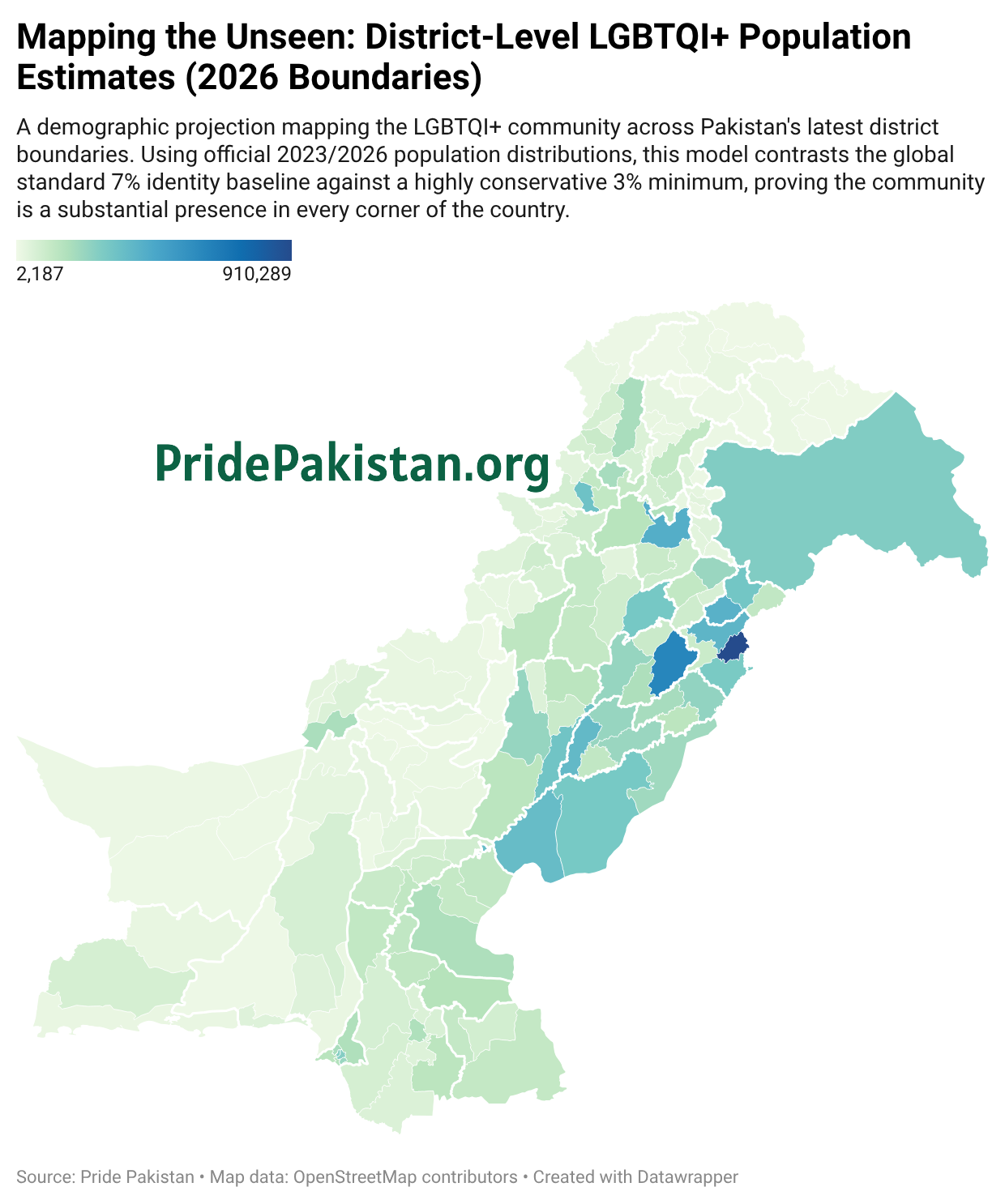
    To ensure absolute structural accuracy, our dataset maps the community across every administrative zone based on Pakistan’s latest 2026 administrative boundaries. Every single district and territory is actively mapped within our data network.

    1. Punjab Province

    Punjab holds the largest share of the nationwide demographic distribution. Major urban centers like Lahore, Faisalabad, Rawalpindi, Multan, and Gujranwala house hundreds of thousands of queer individuals. Our data covers every administrative layout, including:

    • Attock, Bahawalnagar, Bahawalpur, Bhakkar, Chakwal, Chiniot, Dera Ghazi Khan, Faisalabad, Gujranwala, Gujrat, Hafizabad, Jhang, Jhelum, Kasur, Khanewal, Khushab, Kot Addu, Lahore, Layyah, Lodhran, Mandi Bahauddin, Mianwali, Multan, Muzaffargarh, Murree, Narowal, Nankana Sahib, Okara, Pakpattan, Rahim Yar Khan, Rajanpur, Rawalpindi, Sahiwal, Sargodha, Sheikhupura, Sialkot, Talagang, Toba Tek Singh, Taunsa, Vehari, and Wazirabad.

    2. Sindh Province

    In Sindh, the metropolitan density of Karachi presents the most substantial regional concentration of the community across its diverse municipal districts. Along with key cities like Hyderabad and Sukkur, the mapped registry includes:

    • Badin, Dadu, Ghotki, Hyderabad, Jacobabad, Jamshoro, Karachi Central, Karachi East, Karachi South, Karachi West, Korangi, Malir, Keamari, Kashmore, Khairpur, Larkana, Matiari, Mirpur Khas, Naushahro Feroze, Kambar Shahdad Kot, Sanghar, Shikarpur, Sujawal, Sukkur, Tando Allahyar, Tando Muhammad Khan, Tharparkar, Thatta, Umer Kot, and Shaheed Benazirabad.

    3. Khyber Pakhtunkhwa (KPK) Province

    From the provincial capital of Peshawar to the northern valley networks like Swat and Mardan, our data encompasses the entire trans-and-queer topography of the region, including all newly integrated tribal subdivisions:

    • Abbottabad, Bannu, Batagram, Buner, Charsadda, Central Dir, Dera Ismail Khan, Hangu, Haripur, Karak, Kohat, Lakki Marwat, Lower Dir, Malakand, Mansehra, Mardan, Nowshera, Peshawar, Shangla, Swabi, Swat, Tank, Upper Dir, Torghar, Khyber, Mohmand, Bajaur, Kurram, Orakzai, North Waziristan, Lower South Waziristan, Upper South Waziristan, Lower Chitral, Upper Chitral, Upper Kohistan, Lower Kohistan, and Kolai Palas Kohistan.

    4. Balochistan Province

    Balochistan’s vast geography is mapped completely, tracking populations from the provincial hub of Quetta to coastal spaces like Gwadar and Kech:

    • Awaran, Barkhan, Chagai, Chaman, Dera Bugti, Gwadar, Harnai, Jaffarabad, Jhal Magsi, Kalat, Kech, Kharan, Khuzdar, Killa Abdullah, Killa Saifullah, Kohlu, Lasbela, Loralai, Mastung, Musakhel, Nasirabad, Nushki, Panjgur, Pishin, Quetta, Sherani, Sibi, Sohbatpur, Washuk, Zhob, Ziarat, Duki, Surab, Hub, and Kachhi.

    5. Federal Capital & Border Territories

    Our interactive matrix maps the Islamabad Capital Territory (ICT) as a distinct entity, alongside the complete territorial boundaries of Azad Jammu & Kashmir (AJK) and Gilgit-Baltistan (GB), ensuring no region is left blank:

    • Islamabad, Gilgit, Skardu, Diamer, Ghizer, Astore, Hunza, Nagar, Shigar, Kharmang, Ghanche, Darel, Gupis-Yasin, Tangir, Muzaffarabad, Mirpur, Bhimber, Kotli, Poonch, Bagh, Sudhnati, Neelum, Haveli, Hattian Bala, Jhelum Valley, and Kashmir.

    Conclusion

    By viewing the interactive map on our platform, researchers and community members can see the quantitative truth of our existence. We are a massive, vibrant element of every single district in Pakistan, hidden only by the necessity for safety.

    تعارف: اب کوئی پوشیدہ نہیں

    نسلوں سے، ریاستی بیانیے اور سماجی تعصبات نے پاکستان میں جنسی اور صنفی اقلیتوں کو مکمل طور پر نظر انداز کرنے کی کوشش کی ہے۔ جب بھی اعداد و شمار کی بات کی جاتی ہے، تو یا تو ریاستی اداروں کی طرف سے انہیں انتہائی کم دکھایا جاتا ہے یا پھر انٹرنیٹ پر افواہوں کے ذریعے مسخ کیا جاتا ہے۔ PridePakistan.org پر ہمارا ماننا ہے کہ حقیقی ڈیٹا ہی مٹائے جانے اور تعصب کے خلاف ہمارا سب سے بڑا ہتھیار ہے۔

    اپنے نئے سائنسی ماڈل (7% معیاری شرح اور 3% کم ترین پبلک ہیلتھ بیس لائن) کے ذریعے، ہم نے پاکستان کے تمام خطوں کا تفصیلی نقشہ تیار کیا ہے۔ ذیل میں پاکستان کے ہر کونے میں رہنے والے لاکھوں کوئیر افراد کے اعداد و شمار کا مکمل علاقائی جائزہ پیش کیا گیا ہے۔

    علاقائی جائزہ اور ضلعی فہرستیں

    مکمل سائنسی درستگی کو یقینی بنانے کے لیے، ہمارے ڈیٹا میں پاکستان کی جدید ترین 2026 کی ضلعی حدود کے مطابق ہر خطے کو شامل کیا گیا ہے۔ ہمارے ڈیٹا نیٹ ورک میں ایک بھی ضلع یا علاقہ چھٹ چھوٹ نہیں پایا۔

    ۔ صوبہ پنجاب

    ملک بھر میں آبادی کی تقسیم کے لحاظ سے پنجاب کا حصہ سب سے بڑا ہے۔ لاہور، فیصل آباد، راولپنڈی، ملتان، اور گوجرانوالہ جیسے بڑے شہری مراکز میں لاکھوں کوئیر افراد رہائش پذیر ہیں۔ ہماری ضلعی فہرست میں یہ تمام اضلاع شامل ہیں:

    • اٹک، بہاولنگر، بہاولپور، بھکر، چکوال، چنیوٹ، ڈیرہ غازی خان، فیصل آباد، گوجرانوالہ، گجرات، حافظ آباد، جھنگ، جہلم، قصور، خانیوال، خوشاب، کوٹ ادو، لاہور، لیہ، لودھراں، منڈی بہاؤالدین، میانوالی، ملتان، مظفر گڑھ، مری، نارووال، ننکانہ صاحب، اوکاڑہ، پاکپتن، رحیم یار خان، راجن پور، راولپنڈی، ساہیوال، سرگودھا، شیخوپورہ، سیالکوٹ، تلہ گنگ، ٹوبہ ٹیک سنگھ، تونسہ، وہاڑی، اور وزیر آباد۔

    ۔ صوبہ سندھ

    سندھ میں، کراچی کے مختلف اضلاع میں کمیونٹی کی سب سے بڑی تعداد موجود ہے۔ حیدرآباد اور سکھر جیسے اہم شہروں سمیت، نقشے میں درج اضلاع یہ ہیں:

    • بدین، دادو، گھوٹکی، حیدرآباد، جیکب آباد، جامشورو، کراچی وسطی، کراچی شرقی، کراچی جنوبی، کراچی غربی، کورنگی، ملیر، کیماڑی، کشمور، خیرپور، لاڑکانہ، مٹیاری، میرپور خاص، نوشہرو فیروز، قمبر شہداد کوٹ، سانگھڑ، شکارپور، سجاول، سکھر، ٹنڈو الہ یار، ٹنڈو محمد خان، تھرپارکر، ٹھٹہ، عمر کوٹ، اور شہید بینظیر آباد۔

    ۔ صوبہ خیبر پختونخوا (KPK)

    صوبائی دارالحکومت پشاور سے لے کر سوات اور مردان جیسے شمالی اضلاع تک، ہمارے ڈیٹا میں تمام نئے شامل ہونے والے قبائلی اضلاع سمیت پورا خطہ شامل ہے:

    • ایبٹ آباد، بنوں، بٹگرام، بونیر، چارسدہ، سینٹرل دیر، ڈیرہ اسماعیل خان، ہنگو، ہری پور، کرک، کوہاٹ، لکی مروت، لوئر دیر، مالاکنڈ، مانسہرہ، مردان، نوشہرہ، پشاور، شانگلہ، صوابی، سوات، ٹینک، اپر دیر، تورغر، خیبر، مہمند، باجوڑ، کرم، اورکزئی، شمالی وزیرستان، لوئر جنوبی وزیرستان، اپر جنوبی وزیرستان، لوئر چترال، اپر چترال، اپر کوہستان، لوئر کوہستان، اور کولئی پلاس کوہستان۔

    ۔ صوبہ بلوچستان

    بلوچستان کے وسیع و عریض جغرافیے کا مکمل احاطہ کیا گیا ہے، جس میں صوبائی مرکز کوئٹہ سے لے کر گوادر اور کیچ جیسے ساحلی علاقے شامل ہیں:

    • آواران، بارکھان، چاغی، چمن، ڈیرہ بگٹی، گوادر، ہرنائی، جعفرآباد، جھل مگسی، قلات، کیچ، خاران، خضدار، قلعہ عبداللہ، قلعہ سیف اللہ، کوہلو، لسبیلہ، لورالائی، مستونگ، موسیٰ خیل، نصیرآباد، نوشکی، پنجگور، پشین، کوئٹہ، شیرانی، سبی، صحبت پور، واشک، ژوب، زیارت، دوکی، سوراب، حب، اور کچھی۔

    5۔ وفاقی دارالحکومت اور علاقہ جات

    ہمارے لائیو ڈیٹا میٹرکس میں اسلام آباد (ICT) کے ساتھ ساتھ آزاد جموں و کشمیر (AJK) اور گلگت بلتستان (GB) کے تمام اضلاع کو مکمل طور پر شامل کیا گیا ہے:

    • اسلام آباد، گلگت، اسکردو، دیامر، غذر، استور، ہنزہ، نگر، شگر، کھرمنگ، غانچے، ڈاریل، گوپس یاسین، تانگیر، مظفرآباد، میرپور، بھمبر، کوٹلی، پونچھ، باغ، سدھنوتی، نیلم، حویلی، ہٹیاں بالا، اور جہلم ویلی۔

    نتیجہ

    ہماری ویب سائٹ پر لائیو نقشہ دیکھ کر آپ خود حقیقت کا اندازہ لگا سکتے ہیں۔ ہم پاکستان کے ہر ایک ضلع کا حصہ ہیں، اور ہماری موجودگی کو کوئی جھٹلا نہیں سکتا۔

    Explore the Live Interactive Map

    Our data maps the community across all four provinces, the federal capital, and regional territories. Hover over your district below to see the standard demographic estimates and conservative baseline ranges of our community members living there.

  • LGBT Population in Pakistan: Data, Methodology, and Provincial Statistics

    LGBT Population in Pakistan: Data, Methodology, and Provincial Statistics

    Introduction: Demystifying the Numbers

    When analyzing the LGBT population in Pakistan, a deep informational vacuum exists. Because official state trackers like the Pakistan Bureau of Statistics (PBS) restrict gender non-conforming variables strictly to a minimal tracking of the transgender community, finding reliable statistics on sexual orientation and gender identity can be extremely difficult. This lack of data often leads to intense online speculation, myths, or exaggerated rumors.

    Following rigorous demographic tracking and standard public health estimation methods, PridePakistan.org has developed the first comprehensive, district-by-district population projection model for the country. This study moves away from internet rumors and utilizes proven scientific frameworks to look at the real numbers.

    The Science: Is This Data Scientifically Verifiable?

    In public health and sociology, when actual national census data on marginalized or criminalized communities is missing, demographers rely on statistical extrapolation.

    The 7% Standard Identity Baseline

    Decades of independent, comprehensive demographic peer-reviewed research conducted across diverse continents—compiled by institutions like the Kinsey Institute and the Williams Institute—consistently reveal that sexual and gender minorities safely constitute between 5% to 10% of any given human population. This range remains stable regardless of local geographic boundaries, governance structures, or social systems.

    To create our model, PridePakistan.org applied a standard, realistic 7% demographic multiplier to Pakistan’s total 2023 National Digital Census population (which stands at approximately 241.5 million people). This yields a scientifically defensible national baseline estimate of 16.9 million LGBTQI+ individuals across the country.

    The 3% Conservative Minimum Range

    To account for absolute mathematical caution and handle skeptics, our dataset concurrently provides a 3% absolute minimum baseline. Even at this exceptionally narrow margin, the statistics demonstrate that queer individuals constitute a substantial and undeniable percentage of every administrative block in the country.

    National and Provincial Population Breakdown

    Based on the 7% standard identity multiplier and the 3% conservative threshold applied directly to the latest state data, here is the official breakdown of the estimated LGBTQI+ population by administrative zone:

    Province / TerritoryOfficial 2023 Census PopulationEstimated LGBTQI+ Population (7% Standard)Conservative Minimum Range (3% Floor)
    Punjab127,688,9228,938,2243,830,667
    Sindh55,696,1473,898,7301,670,884
    Khyber Pakhtunkhwa40,856,0972,859,9261,225,682
    Balochistan14,894,4021,042,608446,832
    Islamabad Capital Territory2,363,863165,47070,915
    Azad Jammu & Kashmir (AJK)~4,000,000280,000120,000
    Gilgit-Baltistan (GB)~1,500,000105,00045,000
    TOTAL NATIONWIDE ESTIMATE~249,500,000~17,289,958~7,410,000

    Why This Data Matters

    In an environment where state policy enforces invisibility, recording our own history is a necessity. This project proves that queer individuals are not an isolated anomaly or a tiny fringe element; they are millions of citizens living across every province, federal territory, and rural union council in Pakistan.

    By grounding these numbers in clear, international demographic formulas rather than social media speculation, this dataset serves as a resource for human rights defenders, researchers, and public health advocates working toward safe, inclusive futures.

    Explore the Live Interactive Map

    Our data maps the community across all four provinces, the federal capital, and regional territories. Hover over your district below to see the standard demographic estimates and conservative baseline ranges of our community members living there

  • Mapping the Reality of Pakistan-LGBTQI Population

    Mapping the Reality of Pakistan-LGBTQI Population

    The Spark: Why We Refuse to Let Stigma Dictate the Narrative

    Recently, a viral video interview featuring transgender activist Surkhina (Hina Baloch) sparked an intense, highly polarized storm across Pakistani social media platforms. In a provocative taunt aimed at challenging the country’s deep-rooted hypocrisy, Surkhina claimed that “80% of Pakistan is gay.” While the statement was clearly delivered to expose the massive, open secrets of hidden sexual orientations suppressed under the weight of compulsory heterosexuality, the mainstream narrative immediately weaponized it. Right-wing extremist groups and homophobic commentators jumped on this hyperbole, using it to fuel moral panic, delegitimize human rights advocacy, and spread toxic misinformation online.

    At PridePakistan.org, we realized that in the complete absence of reliable, transparent, and safe tracking from state institutions, the vacuum is filled either by exaggerated claims or total erasure. The state tells the world we do not exist; extremists claim we are an ideological contagion. We decided it was time to provide the real, scientifically verifiable data. Today, we are proud to launch Pakistan’s first interactive, district-by-district LGBTQI+ population map.

    The Scientific Baseline: How We Quantify the Invisible

    How do you map an underground community facing structural state terrorism, arbitrary cyber-raids under PECA laws, and forced institutionalization? You turn to standard public health methodologies and demographic science.

    To counter both conservative undercounts and viral internet rumors, we applied a globally recognized statistical extrapolation model across Pakistan’s latest 2026 administrative district boundaries:

    1. The Standard Identity Baseline (7%): Decades of independent demographic documentation compiled by global entities (such as the Kinsey Institute and the Williams Institute) demonstrate that sexual and gender minorities consistently constitute between 5% to 10% of any given human population. Our map utilizes a standard, realistic 7% multiplier applied against the official national census counts. This places Pakistan’s actual LGBTQI+ population at an estimated 16.8 million individuals.
    2. The Conservative Minimum (3%): To maintain absolute scientific defense against skeptics, our interactive data features a local hover tooltip displaying a 3% absolute minimum baseline. Even at this highly restrictive margin, the sheer volume proves that queer people are not an isolated anomaly—they are thousands of citizens breathing in every local neighborhood.

    Explore the Live Interactive Map

    Our data maps the community across all four provinces, the federal capital, and regional territories. Hover over your district below to see the standard demographic estimates and conservative baseline ranges of our community members living there.

    The Power of Data in an Era of Erasure

    This map is more than just raw data; it is an act of digital resistance. When state agencies like the NCCIA actively infiltrate queer networking applications, kidnap adult consenting individuals for extortion, and shut down reproductive healthcare organizations like Rutgers Pakistan, numbers become our shield.

    When you see that a single district like Lahore holds nearly a million queer individuals, or that Karachi Central houses over a quarter of a million, the narrative changes. We are your doctors, your teachers, your siblings, and your children. We are woven into the very fabric of this land, from the historical shrines of Madho Lal Hussain to the modern digital frontier. We are here, we are millions, and we will no longer be erased by the state or misrepresented by rumors.