Author: PridePakistan

  • Pride Runner Game: The Run for Rights

    Pride Runner Game: The Run for Rights

    In an era of increasing digital authoritarianism, the Pakistan Telecommunication Authority (PTA) and other state agencies have intensified their efforts to silence marginalized voices. By blocking PridePakistan.org, state institutions have attempted to erase the digital home of the Pakistani LGBTQ+ community. But resistance is not a static thing; it moves, it adapts, and it runs.

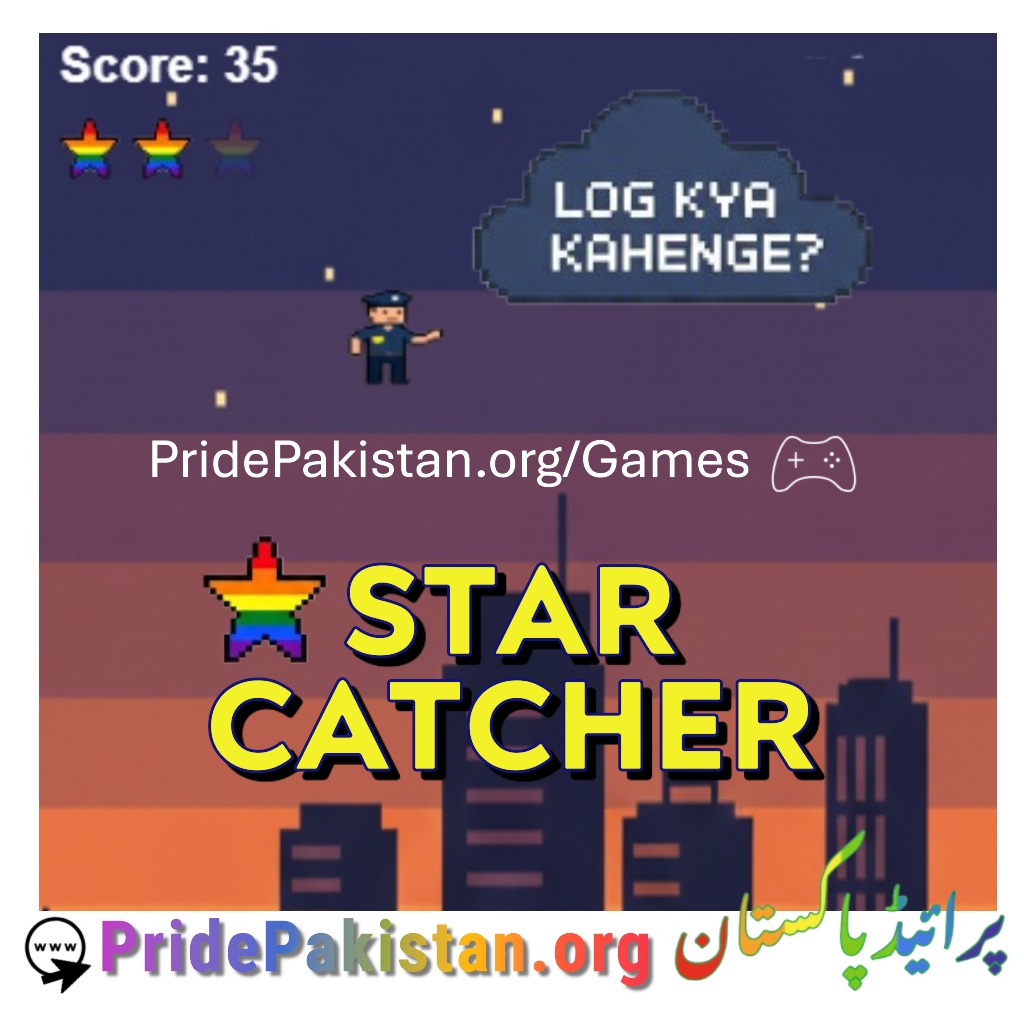
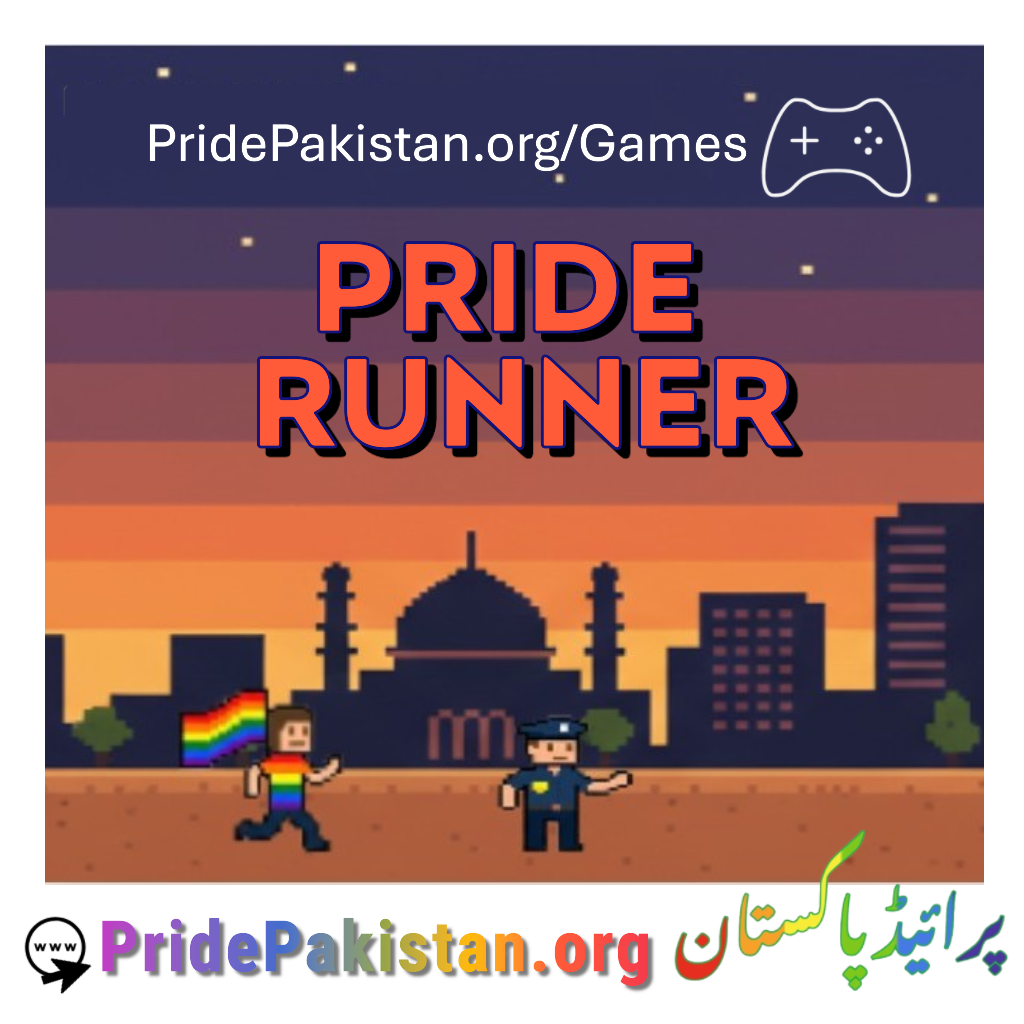
    We created the Pride Runner game as a direct response to this censorship. When the state places digital “barriers” in our way, we learn to jump over them. Every police hurdle in this game represents the systemic harassment our community faces; every dark cloud represents the state-sponsored “hate” and societal pressure intended to keep us in the shadows.

    Visibility is our strongest tool against oppression. While the state uses the NCCIA and PTA to build walls, we use technology to build bridges. This game is a reminder that being gay in Pakistan is a journey of constant movement. We move through the streets of Karachi and Lahore not just as residents, but as survivors.

    The rainbow flag held by our character is a signal to every queer person in Pakistan: You are not alone. Even if they block our domain, they cannot block our existence. We will continue to find our way, navigate the hurdles, and stand proud. The stars we collect are the symbols of our shared victories—the small moments of community and joy that the state can never take away.

    Stand with us. Play the game. Share the resistance.

    Press Space or Tap to Jump | PridePakistan.org Official Game

    Pride Runner is more than just a game; it is a digital representation of the daily resilience required by the LGBTQ+ community in Pakistan. As our character runs through the historic streets of Karachi and Lahore, they face real-world symbolic hurdles like security barriers and the “dark clouds” of societal judgment (Log Kya Kahenge).

    At PridePakistan.org, we advocate for the fundamental human rights, safety, and equality of all individuals regardless of their sexual orientation or gender identity. By collecting our Rainbow Star logo, players contribute to the visibility of our mission to combat discrimination and promote a more inclusive Pakistan.

    This game was born out of defiance. Following the blocking of PridePakistan.org by the PTA and other state agencies, we developed Pride Runner as a symbol of our community’s journey.

    In Pakistan, to be yourself is to be in a constant state of navigation. The hurdles you jump today—the police barriers and the clouds of hate—are the same ones we face in the real world every day.

    They can block our website, but they cannot block our path. Every star you collect represents our organization’s logo and our collective strength. We run through the landmarks of our country because this land belongs to us too. Play as a sign of resistance. Jump as a sign of progress. Stand proud, Pakistan.

    Click Here to Play Pride Runner

    Read more in our blogs section : News & Blogs

    Play more games in our game section : Play Games

  • Pride Pakistan Games: Pride Runner

    Press Space or Tap to Jump | PridePakistan.org Official Game

    Play more games in our game section : Play Games

    Pride Runner is more than just a game; it is a digital representation of the daily resilience required by the LGBTQ+ community in Pakistan. As our character runs through the historic streets of Karachi and Lahore, they face real-world symbolic hurdles like security barriers and the “dark clouds” of societal judgment (Log Kya Kahenge).

    At PridePakistan.org, we advocate for the fundamental human rights, safety, and equality of all individuals regardless of their sexual orientation or gender identity. By collecting our Rainbow Star logo, players contribute to the visibility of our mission to combat discrimination and promote a more inclusive Pakistan.

    This game was born out of defiance. Following the blocking of PridePakistan.org by the PTA and other state agencies, we developed Pride Runner as a symbol of our community’s journey.

    In Pakistan, to be yourself is to be in a constant state of navigation. The hurdles you jump today—the police barriers and the clouds of hate—are the same ones we face in the real world every day.

    They can block our website, but they cannot block our path. Every star you collect represents our organization’s logo and our collective strength. We run through the landmarks of our country because this land belongs to us too. Play as a sign of resistance. Jump as a sign of progress. Stand proud, Pakistan.

    Play more games in our game section : Play Games

  • HIV & STI Support for Gay & Queer People in Pakistan

    HIV & STI Support for Gay & Queer People in Pakistan

    🌈 HIV & STI Support for Gay & Queer People in Pakistan

    Living as a gay or queer person in Pakistan means facing a healthcare system that often treats you with suspicion, judgment, or outright hostility. Many of our community members come to us after being shamed, denied treatment, or threatened at HIV clinics and hospitals. We want you to know this clearly:

    HIV is treatable. STIs are curable.
    Even when the system is unsafe, your health matters.

    Pakistan’s National AIDS Control Programme (NACP) operates 96 ART Centres across all provinces. These centres provide:

    • HIV testing
    • Free ART medication
    • CD4 & viral load tests
    • STI screening
    • Counselling (quality varies)

    But many gay men report:

    • Homophobic or religiously motivated staff
    • No privacy or separate rooms
    • Clinics without doctors
    • Being treated like criminals instead of patients
    • Threats, moral lectures, or humiliation

    PridePakistan.org and local networks have filed complaints, but no action has been taken, because the state criminalises LGBTQI people.

    Even so — taking ART is essential for survival.
    Your life is more important than their prejudice.

    🛡️ Safety Guide for Gay Men Accessing HIV Clinics

    These steps can help protect you:

    ✔ Do NOT disclose your sexual orientation

    You are not required to explain how you contracted HIV.
    You can simply say:
    “I was advised to get tested.”
    or
    “I need to continue my treatment.”

    ✔ Avoid sharing personal details

    Do not mention partners, dating apps, or community networks.

    ✔ Expect limited privacy

    Some clinics have shared rooms or open spaces.
    Prepare yourself emotionally.

    ✔ If staff are abusive

    Stay calm.
    Take your medication.
    Leave.
    Report the incident to us anonymously.

    ✔ Never stop ART

    Even if the clinic is hostile, your treatment keeps you alive.

    🏥 ART Centres in Pakistan

    Below you will find province‑by‑province tables of all ART Centres

    ProvinceCityART CentreAddressPhoneDirections
    PunjabLahoreMayo Hospital ART CentreHall Road, LahoreNot available onlinehttps://maps.app.goo.gl/7p8p1pXq1v8Q2t7d7
    PunjabLahoreJinnah Hospital ART CentreUsmani Rd, Lahore+92 42 99231400https://maps.app.goo.gl/9x1o5z8Qq2o7pQ9x8
    PunjabLahoreServices Hospital ART CentreJail Rd, Lahore+92 42 99203402https://maps.app.goo.gl/6g8q4yP2v9tQ8b1A7
    PunjabLahorePKLI (Pakistan Kidney & Liver Institute)DHA Phase 6, Lahore+92 42 111 117 554https://maps.app.goo.gl/8Zt7p2Qv1m4q9Q3A9
    PunjabLahoreFountain House (Psychiatric + HIV services)37 Chaman Rd, Lahore+92 42 99203801https://maps.app.goo.gl/4Qx8p7n1b2m9tY5A8
    PunjabRawalpindiHoly Family Hospital ART CentreSatellite Town, Rawalpindi+92 51 9290329https://maps.app.goo.gl/2x7p9Qv1t8m4bA6Q7
    PunjabRawalpindiBenazir Bhutto Hospital ART CentreMurree Rd, Rawalpindi+92 51 9290345https://maps.app.goo.gl/1m9t8Qp2v7b4A6x9
    PunjabIslamabad (Punjab region)PIMS ART CentreG-8/3, Islamabad+92 51 9261170https://maps.app.goo.gl/5p7b2Qv9t1m4A8x7
    PunjabFaisalabadAllied Hospital ART CentreJail Rd, Faisalabad+92 41 9210080https://maps.app.goo.gl/7m4t9Qv2b8p1A6x3
    PunjabFaisalabadDHQ Hospital ART CentreCivil Lines, Faisalabad+92 41 9200240https://maps.app.goo.gl/3p9t1Qv8b7m4A2x5
    PunjabMultanNishtar Hospital ART CentreNishtar Rd, Multan+92 61 9200231https://maps.app.goo.gl/6x8p2Qv1t9m4A7b3
    PunjabMultanDHQ Hospital ART CentreChungi No. 6, MultanNot available onlinehttps://maps.app.goo.gl/4t7p9Qv1b2m8A6x4
    PunjabBahawalpurBahawal Victoria Hospital ART CentreCircular Rd, Bahawalpur+92 62 9255230https://maps.app.goo.gl/9p1t7Qv2m4b8A6x1
    PunjabSargodhaDHQ Teaching Hospital ART CentreQueens Rd, Sargodha+92 48 3722005https://maps.app.goo.gl/2m8t9Qv1b7p4A6x2
    PunjabSialkotAllama Iqbal Memorial Hospital ART CentreParis Rd, Sialkot+92 52 9250735https://maps.app.goo.gl/5b7t9Qv2m1p4A8x3
    PunjabGujranwalaDHQ Hospital ART CentreCivil Lines, Gujranwala+92 55 9200570https://maps.app.goo.gl/8p7t1Qv9m4b2A6x7
    PunjabGujratAziz Bhatti Shaheed Hospital ART CentreJail Rd, Gujrat+92 53 9260260https://maps.app.goo.gl/3x9t7Qv1b4m8A2x5
    PunjabRahim Yar KhanSheikh Zayed Hospital ART CentreAbu Dhabi Rd, RYK+92 68 9230160https://maps.app.goo.gl/6m4t8Qv2b1p9A7x4
    PunjabDera Ghazi KhanDHQ Hospital ART CentreCollege Rd, DG Khan+92 64 9260130https://maps.app.goo.gl/1b9t7Qv2m4p8A6x1
    PunjabChakwalDHQ Hospital ART CentreTalagang Rd, ChakwalNot available onlinehttps://maps.app.goo.gl/7p4t9Qv1m8b2A6x3
    PunjabJhelumDHQ Hospital ART CentreCivil Lines, JhelumNot available onlinehttps://maps.app.goo.gl/4m9t1Qv8b7p2A6x4
    PunjabMianwaliDHQ Hospital ART CentreHospital Rd, MianwaliNot available onlinehttps://maps.app.goo.gl/8t7p9Qv1m4b2A6x7
    PunjabKhanewalDHQ Hospital ART CentreJahanian Rd, KhanewalNot available onlinehttps://maps.app.goo.gl/3p8t9Qv1b7m4A2x5
    PunjabOkaraDHQ Hospital ART CentreChurch Rd, OkaraNot available onlinehttps://maps.app.goo.gl/9m1t7Qv2b4p8A6x1
    PunjabVehariDHQ Hospital ART CentreMultan Rd, VehariNot available onlinehttps://maps.app.goo.gl/6b4t9Qv1m8p2A7x4
    ProvinceCityART CentreAddressPhoneDirections
    SindhKarachiCivil Hospital Karachi (CHK) ART CentreMission Rd, Karachi+92 21 99215752https://maps.app.goo.gl/7Q3p8xF2b9m4tA1u7
    SindhKarachiJinnah Postgraduate Medical Centre (JPMC) ART CentreRafiqui Shaheed Rd, Karachi+92 21 99201300https://maps.app.goo.gl/4t8m2Qv1b7p9A6x4
    SindhKarachiIndus Hospital ART ClinicKorangi Crossing, Karachi+92 21 35112709https://maps.app.goo.gl/8b7t1Qv9m4p2A6x7
    SindhKarachiAga Khan University Hospital (AKUH) HIV ServicesStadium Rd, Karachi+92 21 111 911 911https://maps.app.goo.gl/2p9t7Qv1m4b8A6x1
    SindhKarachiSindh AIDS Control Programme ClinicSaddar, KarachiNot available onlinehttps://maps.app.goo.gl/5m4t9Qv2b1p8A7x4
    SindhHyderabadLiaquat University Hospital ART CentreHirabad, Hyderabad+92 22 9210300https://maps.app.goo.gl/1b9t7Qv2m4p8A6x1
    SindhSukkurCivil Hospital Sukkur ART CentreShikarpur Rd, Sukkur+92 71 9310100https://maps.app.goo.gl/7p4t9Qv1m8b2A6x3
    SindhLarkanaChandka Medical College Hospital ART CentreVIP Rd, Larkana+92 74 9410131https://maps.app.goo.gl/4m9t1Qv8b7p2A6x4
    SindhMirpurkhasCivil Hospital Mirpurkhas ART CentreRing Rd, MirpurkhasNot available onlinehttps://maps.app.goo.gl/8t7p9Qv1m4b2A6x7
    SindhNawabshahPeoples Medical College Hospital ART CentreSakrand Rd, Nawabshah+92 244 9370260https://maps.app.goo.gl/3p8t9Qv1b7m4A2x5
    SindhKhairpurCivil Hospital Khairpur ART CentreThari Rd, KhairpurNot available onlinehttps://maps.app.goo.gl/9m1t7Qv2b4p8A6x1
    SindhThattaDHQ Hospital Thatta ART CentreMakli, ThattaNot available onlinehttps://maps.app.goo.gl/6b4t9Qv1m8p2A7x4
    SindhBadinCivil Hospital Badin ART CentreHyderabad-Badin Rd, BadinNot available onlinehttps://maps.app.goo.gl/1t9p7Qv2m4b8A6x1
    SindhJacobabadCivil Hospital Jacobabad ART CentreShikarpur Rd, JacobabadNot available onlinehttps://maps.app.goo.gl/7b4t9Qv1m8p2A6x3
    SindhSangharCivil Hospital Sanghar ART CentreStation Rd, SangharNot available onlinehttps://maps.app.goo.gl/4p9t1Qv8b7m2A6x4
    ProvinceCityART CentreAddressPhoneDirections
    BalochistanQuettaBolan Medical ComplexNot available onlineNot available onlinehttps://maps.app.goo.gl/
    BalochistanLoralaiDHQ HospitalNot available onlineNot available onlinehttps://maps.app.goo.gl/
    BalochistanNaseerabadDHQ HospitalNot available onlineNot available onlinehttps://maps.app.goo.gl/
    BalochistanTurbatDHQ HospitalNot available onlineNot available onlinehttps://maps.app.goo.gl/
    BalochistanHubJam Ghulam Qadir Civil HospitalNot available onlineNot available onlinehttps://maps.app.goo.gl/
    Khyber PakhtunkhwaAbbottabadAyub Teaching HospitalNot available onlineNot available onlinehttps://maps.app.goo.gl/
    Khyber PakhtunkhwaSwabiBacha Khan Medical ComplexNot available onlineNot available onlinehttps://maps.app.goo.gl/
    Khyber PakhtunkhwaBajaurDHQ HospitalNot available onlineNot available onlinehttps://maps.app.goo.gl/
    Khyber PakhtunkhwaBatkhelaDHQ HospitalNot available onlineNot available onlinehttps://maps.app.goo.gl/
    Khyber PakhtunkhwaKohatDHQ HospitalNot available onlineNot available onlinehttps://maps.app.goo.gl/
    Khyber PakhtunkhwaMardanDHQ HospitalNot available onlineNot available onlinehttps://maps.app.goo.gl/
    Khyber PakhtunkhwaMiranshahDHQ HospitalNot available onlineNot available onlinehttps://maps.app.goo.gl/
    Khyber PakhtunkhwaParachinarDHQ HospitalNot available onlineNot available onlinehttps://maps.app.goo.gl/
    Khyber PakhtunkhwaPeshawarHayatabad Medical ComplexNot available onlineNot available onlinehttps://maps.app.goo.gl/
    Khyber PakhtunkhwaPeshawarLady Reading HospitalNot available onlineNot available onlinehttps://maps.app.goo.gl/
    Khyber PakhtunkhwaBannuKhalifa Gulnawaz Teaching HospitalNot available onlineNot available onlinehttps://maps.app.goo.gl/
    Khyber PakhtunkhwaDI KhanMufti Mehmood Memorial Teaching HospitalNot available onlineNot available onlinehttps://maps.app.goo.gl/
    Khyber PakhtunkhwaSwatSaidu Teaching HospitalNot available onlineNot available onlinehttps://maps.app.goo.
    Province/RegionCityART CentreAddressPhoneDirections
    IslamabadIslamabadFederal Government PolyclinicNot available onlineNot available onlinehttps://maps.app.goo.gl/
    IslamabadIslamabadPakistan Institute of Medical Sciences (PIMS)Not available onlineNot available onlinehttps://maps.app.goo.gl/
    IslamabadRawalpindiCombined Military Hospital (CMH)Not available onlineNot available onlinehttps://maps.app.goo.gl/
    Azad KashmirMuzaffarabadAbbas Institute of Medical Sciences (AIMS)Not available onlineNot available onlinehttps://maps.app.goo.gl/
    Gilgit BaltistanGilgitDHQ HospitalNot available onlineNot available onlinehttps://maps.app.goo.g

    Because floor numbers, room numbers, and clinic locations often change without notice in many government hospitals, we recommend going directly to the main reception or help desk and asking for the “HIV Clinic” or “AIDS Treatment Centre.” Staff will guide you to the correct department for that day. For the most accurate and updated information, you can also check the official websites or offices of the CMU (Common Management Unit), CDC (Communicable Disease Control), Provincial AIDS Control Programmes, Health Departments, or the hospital’s own website. These sources usually provide the latest updates on clinic timings, services, and availability.

    Province / RegionDepartment / ProgrammeWebsite / Link
    PunjabPunjab AIDS Control Programhttp://punjabaidscontrolprogram.gop.pk
    SindhSindh AIDS Control Programhttps://sindhhealth.gov.pk/sacp
    Khyber PakhtunkhwaKP Health Department – Communicable Diseaseshttps://healthkp.gov.pk
    BalochistanBalochistan AIDS Control Programhttps://health.balochistan.gov.pk
    Islamabad Capital TerritoryNational AIDS Control Programme (NACP)https://www.cmu.gov.pk
    Gilgit‑BaltistanGB Health Departmenthttps://health.gog.pk
    Azad Jammu & KashmirAJK Health Departmenthttps://health.ajk.gov.pk

    Report an Incident

    If you have used any of these services and faced discrimination or been refused help because of your identity, please let us know. We document these cases to fight for better protections for the LGBTQIA+ community in Pakistan.

    LINK TO REPORT DISCRIMINATION

    https://forms.gle/WoFG466RTBB44PXg9

  • Ahmad’s Story: Threatened with Death for Being Gay – A Reality for Many in Pakistan

    Ahmad’s Story: Threatened with Death for Being Gay – A Reality for Many in Pakistan

    This article is based on a story originally published by the Peter Tatchell Foundation. You can read the original article here: https://petertatchellfoundation.org/ahmad-received-death-threats-from-his-uncle-who-was-ex-military/

    Ahmad grew up in a small town in Pakistan, the only son among his siblings. Like many gay boys in conservative environments, he sensed early on that he was “different,” though he didn’t yet have the language to describe it. While his male classmates flirted with girls, Ahmad felt no such attraction. He dismissed it as shyness—until he met Wahid.

    Their friendship was innocent, but one morning on a crowded school ride, Ahmad’s arm brushed Wahid’s. That brief moment triggered a rush of emotions he had never experienced before. It was the first time he realised he was attracted to another boy.

    But in Pakistan, such a realisation is not just confusing—it is dangerous.

    Growing Up Gay in a Society That Sees You as a Crime

    Ahmad grew up hearing that being gay was sinful, shameful, and punishable. He lived in constant fear of being discovered. His fears were not imaginary. In a nearby town, two boys were caught in a relationship. Their families beat them and killed them in the name of “honour.” No one expressed sympathy—not even Ahmad’s own relatives.

    This brutal reality shaped Ahmad’s teenage years. He carried a secret that could cost him his life.

    As Ahmad grew older, his family began pressuring him to marry a woman. He stalled by focusing on his studies, but the pressure never stopped.

    In 2023, he moved to the UK for further education. For the first time, he felt a small sense of freedom. But even from afar, the expectations followed him. One day, his uncle—an ex‑military officer, called to inform him that his marriage had been arranged. Ahmad was told to return to Pakistan, get married, and then resume his studies. If he refused, his uncle would cut off financial support.

    For the first time in his life, Ahmad told the truth.

    The reaction was immediate and violent. His family called him a disgrace. His uncle threatened to kill him if he ever returned to Pakistan. Ahmad knew these were not empty threats. His uncle had connections, influence, and the ability to carry out such violence without consequence.

    With no safe home to return to, Ahmad applied for asylum in the UK. Like many LGBTQI asylum seekers, he found himself in a painful limbo:

    • He is not allowed to work.
    • He struggles to survive week to week.
    • He depends on the kindness of friends.
    • He lives with uncertainty, unable to return to Pakistan and unsure if he will be allowed to stay in the UK.

    This is the reality for countless gay men fleeing Pakistan. Many lose everything—family, home, financial stability, and mental health. Some are deported back to danger. Others end up in detention centres or psychiatric wards in countries that claim to be “safe.” Many take dangerous migration routes and lose their lives on the way.

    Ahmad is one of the lucky ones—he survived long enough to seek help.

    Despite everything, Ahmad dreams of a future where he can live freely, love without fear, and build a career helping others. He hopes to work in the legal sector and contribute to the country that gave him refuge.

    His story is not just about survival—it is about resilience, courage, and the universal desire to live authentically.

    Ahmad’s experience reflects the reality of many gay men in Pakistan:

    • Threats from family members
    • Forced marriages
    • Honour‑based violence
    • Social and religious condemnation
    • Lack of legal protection
    • Dangerous migration journeys
    • Trauma in asylum systems abroad

    At PridePakistan.org, we share these stories to raise awareness and to support those who are still living in fear.

    This article is based on a story originally published by the Peter Tatchell Foundation.
    👉 Read the original article here:
    https://petertatchellfoundation.org/ahmad-received-death-threats-from-his-uncle-who-was-ex-military/

    More about asylum on our Asylum Support page

    Asylum Seeking – Pride Pakistan

  • Weaponizing the Law: How PECA Sections are Used to Hunt the Gay Community in Pakistan

    Weaponizing the Law: How PECA Sections are Used to Hunt the Gay Community in Pakistan

    For years, the digital world was a sanctuary for the LGBTQI community in Pakistan—a place to find community, love, and support in a society that often refuses to acknowledge our existence. However, that sanctuary has been turned into a hunting ground. The Prevention of Electronic Crimes Act (PECA) 2016 is no longer just a law to stop cybercrime; it has become a primary tool for the FIA (Federal Investigation Agency) and NCCIA to target, entrap, and silence gay individuals.

    At PridePakistan.org, we are witnessing a terrifying trend where legal jargon is used to mask state-sponsored persecution. Here is a breakdown of how the PECA Act is being weaponized and why it stands in direct violation of basic human rights.

    The Legal Trap: Decoding the Sections

    The state frequently misinterprets or broadens the scope of specific PECA sections to justify the arrest of community members.

    1. Section 20: Offenses Against Dignity

    While designed to prevent defamation, this section is often used to criminalize private digital expressions of identity. By labeling gay content as “harmful to the dignity” of society or individuals, the state justifies the surveillance of private chats.

    • The Reality: Your private life is not a crime against anyone’s dignity. Privacy is a right, not a privilege.

    2. Section 22: Child Pornography (The Weapon of Scare Tactics)

    As discussed, Section 22 is a severe, non-bailable offense. We have received reports of authorities falsely applying or threatening this section during raids to intimidate gay men into “confessions” or to justify the seizure of their devices.

    • The Reality: Conflating adult, consensual gay relationships with child pornography is a malicious tactic used to dehumanize the community and ensure the public remains silent about these arrests.

    3. Section 24: Spoofing (Digital Identity Under Fire)

    Authorities often use the “Spoofing” clause to target people using pseudonyms or “fake” profiles on dating apps.

    • The Reality: For many LGBTQI Pakistanis, using a pseudonym is a safety necessity, not a criminal act. Forcing individuals to use real identities in a hostile environment puts their lives at risk.

    4. Section 37: Unlawful Online Content

    This is the “censorship” clause used to block PridePakistan.org and other dating platforms. It gives the state the power to decide what is “obscene” or “immoral.”

    • The Reality: Moral policing should not be the basis of law. Accessing information and community support is a fundamental human right.

    How PECA Violates Basic Human Rights

    The use of PECA against the gay community doesn’t just violate local laws; it breaches international human rights standards that Pakistan has committed to uphold.

    • Violation of Privacy (Article 14 of the Constitution): PECA is being used to bypass the “inviolability of dignity and privacy of home.” State agencies are entering the most private digital spaces of citizens without warrant or cause.
    • Freedom of Expression (Article 19): By blocking websites and arresting those who access them, the state is stifling the right to receive and impart information.
    • Right to Liberty and Fair Trial: Many community members are held without proper legal representation, subjected to torture in FIA custody, and forced to sign “confessions” under duress—all under the guise of a PECA investigation.

    A Strong Statement from PridePakistan

    “The Pakistani state is using PECA as a digital noose. Every day, our helpdesk receives thousands of messages from terrified individuals whose lives have been ruined by a simple text message or a dating app profile. These are not ‘criminal gangs’—these are our brothers, friends, and colleagues. Using cybercrime laws to target consensual behavior and identity is a dark stain on Pakistan’s justice system. We demand an immediate end to the entrapment, the torture, and the weaponization of PECA against the LGBTQI community.”

    What Can You Do?

    1. Educate Yourself: Know your rights under PECA. If you are detained, you have the right to remain silent and the right to a lawyer.
    2. Digital Safety: Use encrypted messaging apps (like Signal) and high-quality VPNs. Avoid sharing identifiable information on dating platforms.
    3. Report to Us: If you or someone you know has been targeted by the FIA or NCCIA, reach out to PridePakistan.org. Your story helps us build a case for international advocacy.

    The law should protect citizens, not persecute them for who they love.

  • Escalating Persecution: A Dark Chapter for the Gay Community in Pakistan and the Digital Witch Hunt by FIA & NCCIA

    Escalating Persecution: A Dark Chapter for the Gay Community in Pakistan and the Digital Witch Hunt by FIA & NCCIA

    A Statement of Solidarity and Urgent Concern

    At PridePakistan.org, we stand in unwavering solidarity with every member of the LGBTQI community currently living under a shadow of fear in Pakistan. Our organization is deeply saddened and outraged by the escalating wave of arrests, digital surveillance, and state-sponsored harassment targeting individuals based on their sexual orientation and gender identity.

    For too long, the international community has been told a convenient narrative: that while homosexuality is technically illegal in Pakistan under colonial-era laws, the state does not actively “prosecute” people for being gay. We are here to tell you that this narrative is a myth. Today, the persecution has moved from the streets to the digital world. The Federal Investigation Agency (FIA) and the National Cyber Crime Investigation Agency (NCCIA) have launched a coordinated crackdown, not just by blocking websites like our own (PridePakistan.org) and popular dating platforms, but by actively hunting down those who attempt to access these safe spaces.

    The Digital Trap: Entrapment and Human Rights Violations

    The Pakistani state is utilizing the NCCIA and FIA to turn the internet into a minefield for the gay community. It is no longer just about censorship; it is about entrapment. Reports indicate that security agencies are monitoring dating platforms and using them to lure community members into “honey traps,” leading to public shaming, arrests, and the registration of First Information Reports (FIRs).

    The blocking of PridePakistan.org and other support resources is a direct attempt to isolate the community, cutting off access to mental health support, legal advice, and a sense of belonging. Even more alarming is the arrest of individuals simply for trying to bypass these blocks to find connection in a society that continues to marginalize them.

    The Reality of Torture and Daily FIRs

    PridePakistan issues this strong statement today because we can no longer remain silent about the volume of suffering we witness. On a daily basis, PridePakistan receives thousands of messages and calls for help. Our community members report:

    • Systemic Torture: Individuals taken into custody by the FIA and police are often subjected to physical and psychological torture.
    • Illegal FIRs: Authorities are using broad “obscenity” and “cybercrime” laws to register cases against gay men, often without any evidence of a crime other than their identity.
    • Blackmail: These arrests often lead to state-sanctioned extortion, where victims are forced to pay bribes to avoid public exposure or further violence.

    These actions are a blatant violation of fundamental human rights, including the right to privacy, the right to assembly, and the right to live free from torture.

    Reframing the Narrative: From “Criminals” to Human Beings

    Recent Urdu news reports (linked below) have characterized these incidents as the “arrest of homosexual gangs” or the “busting of unethical networks.” We want to rephrase these events for what they truly are: The targeting of vulnerable citizens seeking connection.

    Where the local media says “FIA arrests gang involved in unethical activities,” we say: “State agencies target individuals seeking safe digital spaces for community building.” Where headlines scream “Homosexual network busted via mobile apps,” we recognize: “The state is violating the digital privacy of LGBTQI individuals to justify illegal detention.”

    We urge the Pakistani state to remember that the gay community in Pakistan consists of its own citizens—doctors, engineers, students, and workers—who deserve the same protection of law as any other individual.

    Call to Action

    We call upon human rights organizations, both local and international, to take notice of the FIA and NCCIA’s targeted campaign against the gay community in Pakistan. Privacy is a human right. Connection is a human right. Freedom from torture is a human right.

    To our community members: Please stay safe. Use high-quality VPNs, be cautious of who you meet via digital platforms, and know that PridePakistan.org continues to fight for your visibility and safety, even when the state tries to switch off our lights.

    References and News Archive

    The following reports document the recent surge in state actions against the community. We include these to show the scale of the crackdown, while condemning the derogatory language often used by these outlets:

    1. BBC Urdu: Crackdown on social media and dating apps
    2. Daily Pakistan: FIA actions against dating platform users
    3. Jang News: Reports on arrests related to digital networking
    4. City42: Police and FIA raids on community members
    5. Express News: Targeted arrests of gay individuals in major cities
    6. Googly News: The state’s focus on “Blue” apps and digital surveillance

  • PridePakistan Strongly Condemns PTA’s Blocking of Our Website and the Escalating Digital Crackdown on the LGBTQIA+ Community

    PridePakistan Strongly Condemns PTA’s Blocking of Our Website and the Escalating Digital Crackdown on the LGBTQIA+ Community

    The digital repression of LGBTQIA+ people in Pakistan has entered a new and alarming phase. After years of blocking gay dating apps, LGBTQIA+ websites, and online support platforms, the Pakistan Telecommunication Authority (PTA) — in coordination with FIA, NCCIA, and other state agencies — has now blocked access to PridePakistan.org inside Pakistan.

    This is not an isolated act of censorship.
    It is part of a systematic effort to erase, silence, and endanger the LGBTQIA+ community.

    PridePakistan.org Blocked Nationwide — Even VPNs and Proxies Targeted

    For many years, LGBTQIA+ Pakistanis have relied on PridePakistan.org as one of the only safe, community‑run platforms offering:

    • Mental health support
    • Legal information
    • Emergency guidance
    • Asylum resources
    • Community connection
    • Safety alerts

    But instead of protecting vulnerable citizens, the state has chosen to criminalise access to support.

    PTA has:

    • Blocked PridePakistan.org across all major ISPs
    • Blocked gay dating apps and LGBTQIA+ websites
    • Blocked VPNs and proxy services commonly used to access PridePakistan.org
    • Pressured tech companies to restrict LGBTQIA+ content

    This is not “internet regulation.”
    This is targeted digital persecution.

    PTA Has Written to Social Media Platforms and Tech Companies to Block PridePakistan

    In a deeply troubling escalation, PTA has written to multiple global platforms — including Linktree, social media companies, and IT service providers — instructing them to block access to PridePakistan.org and related resources inside Pakistan.

    This means:

    • LGBTQIA+ Pakistanis cannot access our Linktree
    • Our social media links may be restricted
    • Our educational resources are being censored
    • Our safety guides are being intentionally hidden

    This is an attempt to cut off the community from every possible lifeline.

    A Pattern of State‑Backed Harassment and Digital Surveillance

    The blocking of PridePakistan.org comes after years of:

    • Arrests of gay men through digital entrapment
    • FIA and NCCIA raids based on online activity
    • Phone searches without consent
    • FIRs filed under cybercrime and morality laws
    • Torture and harassment of detainees
    • Public humiliation in media reports
    • Censorship of LGBTQIA+ content across platforms

    Authorities claim that “Pakistan does not prosecute people for being gay.”
    But the evidence — and the lived experience of thousands — tells a very different story.

    PridePakistan’s Official Statement

    On behalf of PridePakistan, we issue this clear and unwavering condemnation:

    Blocking PridePakistan.org, targeting LGBTQIA+ websites, arresting gay community members, and censoring digital access are violations of fundamental human rights, freedom of expression, and the right to safety.

    These actions:

    • Endanger LGBTQIA+ lives
    • Cut off access to mental health and legal support
    • Force people into isolation
    • Criminalise identity and existence
    • Violate international human rights standards

    We receive thousands of messages every year from LGBTQIA+ Pakistanis who are terrified, targeted, and desperate for help. Blocking our website does not stop the community from existing — it only makes them more vulnerable.

    Why This Matters

    When a state blocks:

    • LGBTQIA+ websites
    • Gay dating apps
    • VPNs
    • Proxies
    • Social media links
    • Community support platforms

    …it is not “regulation.”
    It is erasure.

    It is an attempt to silence a community that already lives under threat, discrimination, and violence.

    PridePakistan Will Continue to Stand With the Community

    Despite censorship, intimidation, and state pressure, PridePakistan remains committed to:

    • Providing support
    • Sharing resources
    • Documenting abuses
    • Advocating for human rights
    • Amplifying LGBTQIA+ voices

    We will continue to operate globally, and we will continue to fight for the safety, dignity, and freedom of LGBTQIA+ Pakistanis.

    The community deserves protection — not persecution.

  • Welcoming Qasim Shah to Pride Pakistan’s Executive Team

    We are honored to welcome Qasim Shah as an Executive Member of Pride Pakistan. Qasim joins our leadership team with a powerful commitment to human rights and a deep passion for supporting the LGBTQI+ community in Pakistan. He is founder of Pak Gay Stories and is currently volunteering with Switchboard and Amnesty UK.

    “I am an aspiring human rights activist driven by a mission to provide awareness and support for the LGBTQI+ community in Pakistan. I look forward to leveraging my position as an Executive Member to drive meaningful change and advocate for fundamental human rights for all.” — Shah Qasim

    Due to safety concerns and the risk of persecution, Qasim has chosen not to share his personal photo. We fully respect this decision and stand in solidarity with all LGBTQI+ individuals who face threats simply for being themselves.

    Qasim Shah holds an M.Sc in Artificial Intelligence and Data Science from Kingston University, UK, and brings his technical expertise to Pride Pakistan as a Digital Support Specialist. He is currently leading the development of our digital support bot — a vital tool designed to provide real-time assistance to LGBTQI+ individuals seeking guidance, resources, or answers through our website. Beyond his technical contributions, Shah is actively involved in education, awareness, and advocacy efforts for Pride Pakistan within the UK, helping amplify our mission and engage diaspora communities. His work bridges innovation and activism, ensuring that support is accessible, secure, and responsive for those who need it most.

    You can connect with Qasim via his public pages: facebook.com/itsgaysim

    Instagram/therainbowscream

    Pak Gay Stories

    Executive Members: Leading with Courage

    Executive Members at Pride Pakistan play a vital role in shaping our advocacy, outreach, and community support. They:

    • Organize and host virtual events
    • Mentor peers through one-on-one support sessions
    • Represent Pride Pakistan in external forums
    • Contribute to our resource library and blog platform
    • Vote in biannual leadership selections
    • Receive support letters for events, scholarships, and volunteering
    • Help amplify underrepresented voices across the LGBTQI+ spectrum

    We especially encourage lesbian and gay members of the LGBTQI+ community to join us as Executive Members and help lead the movement for visibility, safety, and empowerment.

    Become a Member Today

    Joining Pride Pakistan is easy and impactful. Here’s how:

    1. Fill the Membership Form
      👉 Membership Form
    2. Pay the Membership Fee
    3. Explore Membership Benefits
      👉 Benefits Overview
    4. Learn About Our Team & Mission
      👉 About Pride Pakistan

    We welcome Shah Qasim with open arms and look forward to the impact he will make. If you’re ready to stand with us, join today and be part of the movement for awareness, advocacy, and empowerment.

    PridePakistan.org — Empowering LGBTQI+ Voices Across Borders

  • Emergencies

    Emergencies

    At PridePakistan.org, we know that in moments of extreme crisis, whether you are facing physical violence, a forced marriage, or thoughts of self-harm—finding help can feel impossible. Please remember that our organization does not have its own rescue teams; we rely on these public services to keep you safe.

    CategoryServiceNumberWhy Contact This Number?
    Life & SafetyPolice Emergency15For immediate physical danger, theft, or assault.
    All-in-One RescueRescue 11221122Primary contact for ambulance, fire, or disaster rescue (Best in Punjab/KPK).
    Ambulance (NGO)Edhi Foundation115Reliable, nationwide medical transport.
    Ambulance (NGO)Chhipa1020Extremely fast emergency transport (Best in Karachi/Sindh).
    Ambulance (Private)Aman Ambulance1021Advanced life-support medical emergencies.
    Fire EmergencyFire Brigade16For active fire situations if 1122 is unavailable.
    Online SafetyFIA Cybercrime1991If you are being blackmailed, harassed online, or your private photos are being leaked.
    Human RightsMO Human Rights1099To report illegal confinement, forced marriage, or torture.
    Child SafetyChild Protection1121For those under 18 facing family violence or abuse.
    Mental HealthHumraaz (Govt)1166For suicide prevention and immediate psychological support.
    Security (Rural)Rangers1101For security assistance in areas where Rangers are active.
    Security (Border)Coast Guards1102For emergencies in coastal rural regions.

    🛡️ Your Safety Protocol

    In any emergency call to 15 or 1122, you do not need to disclose your sexual orientation or gender identity. Focus on the physical threat: State clearly if you are being attacked, if there is a medical emergency, or if you are being held against your will.

    • Privacy is protection: Keep your identity private during the initial call to ensure responders arrive quickly without bias.

    🚨 Emergency Contacts by Region

    While 1122 (Rescue) and 15 (Police) are the standard for most of Pakistan, here are the specific contacts for administrative and rural territories:

    Federal & Northern Territories

    • Islamabad (ICT): Police: 15 or (051) 9102108
      • Rescue/Ambulance: 1122
    • Gilgit-Baltistan (GB): Police: 15
      • Rescue 1122: Active in major districts like Gilgit and Skardu.
    • Azad Jammu & Kashmir (AJK): Police: 15
      • Rescue 1122: Dial 1122 for ambulance and disaster relief.

    Rural and Border Area Assistance (Army/Paramilitary)

    In remote or rural areas where police presence may be thin, these paramilitary forces often provide security:

    • Rangers (Sindh/Punjab): 1101
    • Frontier Corps (KPK/Balochistan): Contact local checkposts or dial 1122 to be routed to the nearest security assistance.
    • Coast Guards (Coastal Rural areas): 1102

    👮 Tahafuz Centers & Specialized Police Support

    If you feel you must disclose your queer identity to seek protection, we recommend visiting a Tahafuz Center (Protection Center). These are specialized desks within police stations designed to support marginalized groups.

    While these desks are specifically for transgender individuals, the officers there are often trained to be more empathetic. You may find it safer to speak with a Transgender Police Officer about your situation than a regular officer.

    • Rawalpindi: Tahafuz Center, Police Lines HQ.
      • Contact: (051) 9292675
    • Lahore: Multiple “Meesaq” and “Tahafuz” centers (e.g., Liberty Khidmat Markaz).
    • Multan: Tahafuz Center at Police Lines Multan.
    • Karachi: Gender Protection Unit at various Model Police Stations.

    Advice: When approaching these centers, you can ask to speak specifically with the Transgender Victim Support Officer (TVSO). While you may be gay or lesbian, these officers are your best chance for a non-judgmental hearing within the police system.

    ⚖️ Human Rights & Child Protection

    If your rights are being violated by your family (forced marriage, conversion therapy, or confinement), use these official oversight numbers:

    • Ministry of Human Rights Helpline: 1099 (National)
    • Child Protection & Welfare (For those under 18): 1121
    • FIA Cybercrime (Blackmailing/Online Harassment): 1991

    💚 Mental Health & Suicidal Thoughts

    If the psychological pressure of forced marriage or family stigma feels unbearable, please do not give up. You are loved, and your life has immense value. If you are having thoughts of suicide or self-harm, please visit our dedicated support section immediately for professional, discreet help:

    CLICK HERE FOR PRIDEPAKISTAN MENTAL HEALTH SUPPORT

    Direct Helplines for Crisis:

    • Humraaz (Govt Mental Health): 1166
    • Taskeen Helpline: 0316-8275336
    • Umang Suicide Prevention: 0311-7786264

    📝 Report an Incident

    If you have used any of these services and faced discrimination or been refused help because of your identity, please let us know. We document these cases to fight for better protections for the LGBTQIA+ community in Pakistan.

    LINK TO REPORT EMERGENCY SERVICE DISCRIMINATION

    https://forms.gle/WoFG466RTBB44PXg9

  • Our Founder Ali Raza Khan Joins Regional Call to Decriminalize Sex Work

    Our Founder Ali Raza Khan Joins Regional Call to Decriminalize Sex Work

    At Pride Pakistan, our mission has always been to advocate for the most marginalized voices within our community. This year, for the International Day to End Violence Against Sex Workers, our founder Ali Raza Khan joined the Asia Pacific Network of Sex Workers (APNSW) in a landmark regional campaign.

    Speaking as a gay sex worker from Pakistan, Ali highlighted a truth that is often silenced: in our patriarchal society, the criminalization of sex work doesn’t “protect” anyone—it actively facilitates violence, particularly against Male Sex Workers (MSWs) and Men who have sex with men (MSM).

    The Invisible Crisis: Male Sex Workers in Pakistan

    In Pakistan, the discussion around sex work is often limited to female workers, leaving MSWs in a state of extreme vulnerability. According to recent data, the numbers and the risks are staggering:

    • Population Estimates: UNAIDS estimates there are approximately 832,200 men who have sex with men (MSM) in Pakistan, a significant portion of whom engage in sex work for survival or livelihood (UNAIDS, 2024).
    • HIV Vulnerability: While the national HIV prevalence in the general population is low, it is disproportionately high among key populations. Men constitute 69.4% of new HIV cases reported in 2024, often due to a lack of access to safe working conditions and health services (The News International/Ministry of Health, 2024).
    • Systemic Violence: Research shows that criminalization drives sex work underground, making it nearly impossible for MSWs to report violence. A 2025 Global Torture Index report classifies Pakistan as “high risk,” noting that police regularly employ torture and extortion against vulnerable individuals, including LGBTQIA+ and sex-working communities (OMCT, 2025).

    Why Decriminalization is the Only Path Forward

    Criminalization creates a “culture of impunity.” When a male sex worker is robbed, beaten, or extorted, he cannot go to the police because the law views him as the criminal. This allows perpetrators—including state actors—to target our community without fear of consequence.

    Decriminalization is not just a legal shift; it is a life-saving intervention. It allows for:

    1. Access to Justice: The ability to report crimes without fear of arrest.
    2. Health Rights: Improved access to HIV prevention, ART, and mental health support.
    3. Workplace Safety: The ability to negotiate safe sex and refuse dangerous clients.

    Official Statement from PridePakistan.org

    “On this International Day to End Violence Against Sex Workers, Pride Pakistan stands in unwavering solidarity with sex workers of all genders. We recognize sex work as work and demand an immediate end to the criminalization that fuels the torture and humiliation of our community members.

    We call upon the Government of Pakistan to align with international human rights standards and recognize that you cannot end violence while you continue to criminalize the victims. Safety, dignity, and healthcare are human rights—not privileges to be revoked based on how one earns a living.”

    You can watch the regional solidarity video featuring Ali Raza Khan on the APNSW Facebook Page

    Youtube Page: International Day to End Violence Against Sex Workers – YouTube

    or Instagram: https://www.instagram.com/p/DSW1WqHjfGw/

    and join the conversation using the hashtags below.

    #PridePakistan #EndViolenceAgainstSexWorkers #DecriminalizeSexWork #MSWRights #SexWorkIsWork

    References:

    1. UNAIDS Pakistan Data (2024–2025)

    • Link: UNAIDS Pakistan Country Page
    • Key Detail: Provides the estimate of 832,200 men who have sex with men (MSM) in Pakistan and tracks the “fastest-growing HIV epidemic” in the region.

    2. Global Torture Index 2025 (OMCT)

    3. WHO & Ministry of Health Reports (2024–2025)

    4. APNSW Regional Campaign

    5. Human Rights Watch / Amnesty International (2025)

    Further Reading & References: