Author: PridePakistan

  • Under the Lens: State Violence and the LGBTQI+ Struggle in Pakistan

    Under the Lens: State Violence and the LGBTQI+ Struggle in Pakistan

    A Critical Journalism Initiative by Asian Dispatch

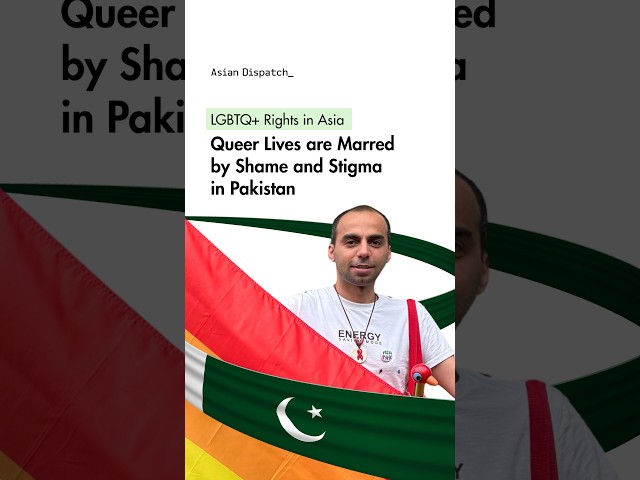
    We extend our deepest gratitude and professional credit to Asian Dispatch, a premier independent journalistic platform dedicated to uncovering overlooked human rights narratives across Asia. Their team has produced a groundbreaking, deeply necessary video investigative series exploring the destructive legacy of colonial-era laws, specifically Section 377. By providing a platform for raw, uncensored testimonies, Asian Dispatch has highlighted the systemic challenges faced by marginalized communities in South Asia, breaking international silences on structural oppression.

    At PridePakistan.org, our mission has always been to document the real, unvarnished pain of our community and challenge state-sponsored erasure with hard evidence. In this vital collaboration, our founder, Ali Raza Khan, alongside community members like Sumair, stepped forward to outline how colonial legal frameworks have evolved into modern systems of digital terrorism, illegal extortion, and forced institutionalization.

    Video Transcript & Accessibility Hub

    For differently-abled individuals, visually impaired community members using screen readers, or those unable to view the video content, we have provided the full, verbatim text script below.

    Narrator / Text on Screen: That’s a clip from the 2022 Pakistani film Joyland. The film explores the issues of gender and sexuality in Pakistan—subjects that are still considered taboo. It depicts the societal discrimination that the queer community faces on a daily basis in the country. The film was initially banned for showing “objectionable content” but was eventually passed with cuts. What was shown on the big screen is the reality of the queer community in Pakistan.

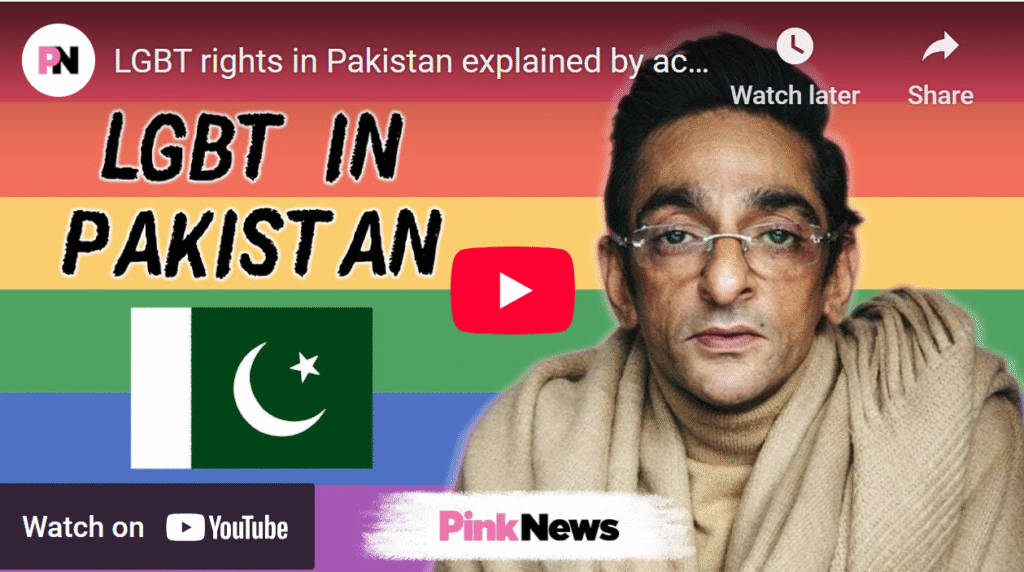
    Ali Raza Khan, an activist who works to support the LGBTQ+ community in Pakistan, says that before Section 377, queer love and gender diversity existed openly in the country’s cultural and spiritual traditions.

    Ali Raza Khan: “Before the British arrived with their penal codes, our society deeply understood and accepted homosexual love as a valid emotional and spiritual reality. Look at the famous 16th-century Sufi poet Shah Hussain and his male lover Madhu Lal. Two men whose deep devotional and romantic bond was so celebrated that they are buried together in a single shrine in Lahore. Look at Bulleh Shah, who broke all gender norms, writing intense poetry of same-sex longing. Colonial rule destroyed this understanding.”

    Narrator / Text on Screen: Under British rule, Section 377 criminalized same-sex relations and its legacy continued shaping public morality and social attitudes in Pakistan even after independence. But the impact of Section 377 goes beyond the law itself. Ali says digital surveillance, censorship, and police crackdowns have pushed queer communities away from public spaces.

    Ali Raza Khan: “The modern state digital censorship apparatus did not stop at blocking pornographic websites; they systematically expanded their plan to target dating applications and more recently clamped down heavily on VPN services to completely cut off our community’s access to the outside world. State authorities maintain an active, malicious presence directly inside gay community platforms, hiding behind fake profiles exclusively to entrap, stalk, and target gay individuals.”

    Narrator / Text on Screen: Ali says that the authorities often rely on morality laws to arrest individuals.

    Ali Raza Khan: “This crackdown doesn’t just hit large organized networks like Naz; authorities actively hunt down all independent groups and private individuals attempting to coordinate underground gatherings across Pakistan. Take the horrific, definitive example of Preetum Giani in Abbottabad. He attempted to legally register an indoor safe space and a gay club—an act that violated no written statute. Yet, the state authorities arrested him and forcefully committed him to a mental health asylum in Peshawar.”

    Narrator / Text on Screen: In 2024, 75-year-old Giani was arrested and sent to a mental asylum. His whereabouts remain unknown. For many queer Pakistanis, this fear exists not just in law or online spaces, but even inside their homes and workplaces. Sumair, a queer person from Karachi, says everyday life itself becomes a struggle.

    Sumair: “LGBTQI+ people face teasing, insults, harassment, and sometimes physical violence. People judge them because of their appearance and identity. At home, family members often taunt them, emotionally harass them, and even tell them to leave the house—they make them feel like they do not belong. Many people also connect LGBTQI+ identity with religion in a negative way and say it is wrong in Islam.”

    Narrator / Text on Screen: Sumair also highlights the lack of legal and institutional support for the community in the country, which leaves them vulnerable to abuse and exploitation. However, community-led organizations work silently and in hiding to create support systems, especially around mental health.

    Sumair: “I connected with a local organization. He is making a safe space and working… first of all on mental health because all LGBTQI+ people are suffering from mental health situations like trauma, stress, and emotional struggling. They have therapists and they arrange many sessions about mental health, and I am a part of this organization and these mental health trainings also.”

    Narrator / Text on Screen: But even within the broader queer movement, divisions remain. Ali says transgender groups are often forced to publicly distance themselves from the larger LGBTQ+ spectrum for survival.

    Ali Raza Khan: “If transgender activists publicly associate with gay, lesbian, and bisexual groups, their own fragile legal protections are completely stripped away by the right-wing extremists. They are forced to refuse any public association with the broader spectrum purely as a desperate survival tactic. This state-crafted polarization has made it impossible for intersectional leaders to survive.”

    Narrator / Text on Screen: Several other organizations that Asian Dispatch spoke to relayed this fear. And despite criminalization, censorship, violence, and isolation, queer Pakistanis continue to search for dignity, community, and the right to exist freely.

    Sumair: “I want at least basic human rights for everyone. Every person deserves the right to live safely and with dignity.”

    Watch the Full Investigation

    To see the full visual reporting, analytical graphics, and cinematic presentation prepared by the Asian Dispatch team, watch the official release here:

    https://www.instagram.com/p/DZMrTXix3Wn

  • District-by-District Breakdown: Mapping the LGBTQI+ Population Across Pakistan

    District-by-District Breakdown: Mapping the LGBTQI+ Population Across Pakistan

    Introduction: No Longer Invisible

    For generations, state narratives and cultural conditioning have attempted to relegate sexual and gender minorities in Pakistan to complete oblivion. When numbers are spoken about, they are either severely understated by state figures or blown out of proportion by internet rumors. At PridePakistan.org, we believe that real data is the ultimate shield against erasure and stigma.

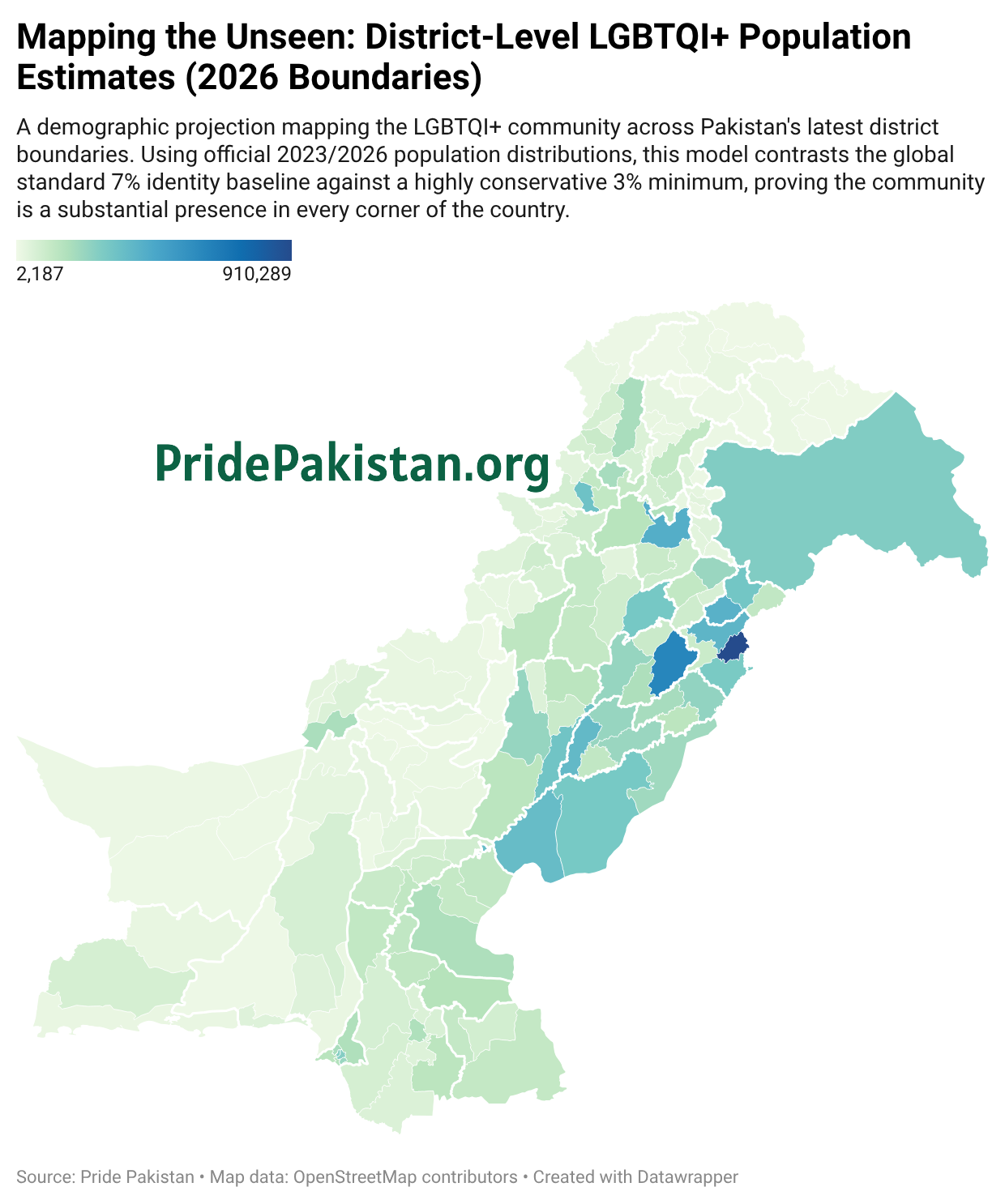
    By utilizing our newly structured demographic projection model—anchored upon a standard, scientifically validated 7% population multiplier and a conservative 3% public health floor—we have successfully mapped out our community across all regions. Below is the full, comprehensive territorial distribution tracking the millions of queer individuals living across every corner of Pakistan.

    Regional Breakdown & District Registries Included in Our Data

    To ensure absolute structural accuracy, our dataset maps the community across every administrative zone based on Pakistan’s latest 2026 administrative boundaries. Every single district and territory is actively mapped within our data network.

    1. Punjab Province

    Punjab holds the largest share of the nationwide demographic distribution. Major urban centers like Lahore, Faisalabad, Rawalpindi, Multan, and Gujranwala house hundreds of thousands of queer individuals. Our data covers every administrative layout, including:

    • Attock, Bahawalnagar, Bahawalpur, Bhakkar, Chakwal, Chiniot, Dera Ghazi Khan, Faisalabad, Gujranwala, Gujrat, Hafizabad, Jhang, Jhelum, Kasur, Khanewal, Khushab, Kot Addu, Lahore, Layyah, Lodhran, Mandi Bahauddin, Mianwali, Multan, Muzaffargarh, Murree, Narowal, Nankana Sahib, Okara, Pakpattan, Rahim Yar Khan, Rajanpur, Rawalpindi, Sahiwal, Sargodha, Sheikhupura, Sialkot, Talagang, Toba Tek Singh, Taunsa, Vehari, and Wazirabad.

    2. Sindh Province

    In Sindh, the metropolitan density of Karachi presents the most substantial regional concentration of the community across its diverse municipal districts. Along with key cities like Hyderabad and Sukkur, the mapped registry includes:

    • Badin, Dadu, Ghotki, Hyderabad, Jacobabad, Jamshoro, Karachi Central, Karachi East, Karachi South, Karachi West, Korangi, Malir, Keamari, Kashmore, Khairpur, Larkana, Matiari, Mirpur Khas, Naushahro Feroze, Kambar Shahdad Kot, Sanghar, Shikarpur, Sujawal, Sukkur, Tando Allahyar, Tando Muhammad Khan, Tharparkar, Thatta, Umer Kot, and Shaheed Benazirabad.

    3. Khyber Pakhtunkhwa (KPK) Province

    From the provincial capital of Peshawar to the northern valley networks like Swat and Mardan, our data encompasses the entire trans-and-queer topography of the region, including all newly integrated tribal subdivisions:

    • Abbottabad, Bannu, Batagram, Buner, Charsadda, Central Dir, Dera Ismail Khan, Hangu, Haripur, Karak, Kohat, Lakki Marwat, Lower Dir, Malakand, Mansehra, Mardan, Nowshera, Peshawar, Shangla, Swabi, Swat, Tank, Upper Dir, Torghar, Khyber, Mohmand, Bajaur, Kurram, Orakzai, North Waziristan, Lower South Waziristan, Upper South Waziristan, Lower Chitral, Upper Chitral, Upper Kohistan, Lower Kohistan, and Kolai Palas Kohistan.

    4. Balochistan Province

    Balochistan’s vast geography is mapped completely, tracking populations from the provincial hub of Quetta to coastal spaces like Gwadar and Kech:

    • Awaran, Barkhan, Chagai, Chaman, Dera Bugti, Gwadar, Harnai, Jaffarabad, Jhal Magsi, Kalat, Kech, Kharan, Khuzdar, Killa Abdullah, Killa Saifullah, Kohlu, Lasbela, Loralai, Mastung, Musakhel, Nasirabad, Nushki, Panjgur, Pishin, Quetta, Sherani, Sibi, Sohbatpur, Washuk, Zhob, Ziarat, Duki, Surab, Hub, and Kachhi.

    5. Federal Capital & Border Territories

    Our interactive matrix maps the Islamabad Capital Territory (ICT) as a distinct entity, alongside the complete territorial boundaries of Azad Jammu & Kashmir (AJK) and Gilgit-Baltistan (GB), ensuring no region is left blank:

    • Islamabad, Gilgit, Skardu, Diamer, Ghizer, Astore, Hunza, Nagar, Shigar, Kharmang, Ghanche, Darel, Gupis-Yasin, Tangir, Muzaffarabad, Mirpur, Bhimber, Kotli, Poonch, Bagh, Sudhnati, Neelum, Haveli, Hattian Bala, Jhelum Valley, and Kashmir.

    Conclusion

    By viewing the interactive map on our platform, researchers and community members can see the quantitative truth of our existence. We are a massive, vibrant element of every single district in Pakistan, hidden only by the necessity for safety.

    تعارف: اب کوئی پوشیدہ نہیں

    نسلوں سے، ریاستی بیانیے اور سماجی تعصبات نے پاکستان میں جنسی اور صنفی اقلیتوں کو مکمل طور پر نظر انداز کرنے کی کوشش کی ہے۔ جب بھی اعداد و شمار کی بات کی جاتی ہے، تو یا تو ریاستی اداروں کی طرف سے انہیں انتہائی کم دکھایا جاتا ہے یا پھر انٹرنیٹ پر افواہوں کے ذریعے مسخ کیا جاتا ہے۔ PridePakistan.org پر ہمارا ماننا ہے کہ حقیقی ڈیٹا ہی مٹائے جانے اور تعصب کے خلاف ہمارا سب سے بڑا ہتھیار ہے۔

    اپنے نئے سائنسی ماڈل (7% معیاری شرح اور 3% کم ترین پبلک ہیلتھ بیس لائن) کے ذریعے، ہم نے پاکستان کے تمام خطوں کا تفصیلی نقشہ تیار کیا ہے۔ ذیل میں پاکستان کے ہر کونے میں رہنے والے لاکھوں کوئیر افراد کے اعداد و شمار کا مکمل علاقائی جائزہ پیش کیا گیا ہے۔

    علاقائی جائزہ اور ضلعی فہرستیں

    مکمل سائنسی درستگی کو یقینی بنانے کے لیے، ہمارے ڈیٹا میں پاکستان کی جدید ترین 2026 کی ضلعی حدود کے مطابق ہر خطے کو شامل کیا گیا ہے۔ ہمارے ڈیٹا نیٹ ورک میں ایک بھی ضلع یا علاقہ چھٹ چھوٹ نہیں پایا۔

    ۔ صوبہ پنجاب

    ملک بھر میں آبادی کی تقسیم کے لحاظ سے پنجاب کا حصہ سب سے بڑا ہے۔ لاہور، فیصل آباد، راولپنڈی، ملتان، اور گوجرانوالہ جیسے بڑے شہری مراکز میں لاکھوں کوئیر افراد رہائش پذیر ہیں۔ ہماری ضلعی فہرست میں یہ تمام اضلاع شامل ہیں:

    • اٹک، بہاولنگر، بہاولپور، بھکر، چکوال، چنیوٹ، ڈیرہ غازی خان، فیصل آباد، گوجرانوالہ، گجرات، حافظ آباد، جھنگ، جہلم، قصور، خانیوال، خوشاب، کوٹ ادو، لاہور، لیہ، لودھراں، منڈی بہاؤالدین، میانوالی، ملتان، مظفر گڑھ، مری، نارووال، ننکانہ صاحب، اوکاڑہ، پاکپتن، رحیم یار خان، راجن پور، راولپنڈی، ساہیوال، سرگودھا، شیخوپورہ، سیالکوٹ، تلہ گنگ، ٹوبہ ٹیک سنگھ، تونسہ، وہاڑی، اور وزیر آباد۔

    ۔ صوبہ سندھ

    سندھ میں، کراچی کے مختلف اضلاع میں کمیونٹی کی سب سے بڑی تعداد موجود ہے۔ حیدرآباد اور سکھر جیسے اہم شہروں سمیت، نقشے میں درج اضلاع یہ ہیں:

    • بدین، دادو، گھوٹکی، حیدرآباد، جیکب آباد، جامشورو، کراچی وسطی، کراچی شرقی، کراچی جنوبی، کراچی غربی، کورنگی، ملیر، کیماڑی، کشمور، خیرپور، لاڑکانہ، مٹیاری، میرپور خاص، نوشہرو فیروز، قمبر شہداد کوٹ، سانگھڑ، شکارپور، سجاول، سکھر، ٹنڈو الہ یار، ٹنڈو محمد خان، تھرپارکر، ٹھٹہ، عمر کوٹ، اور شہید بینظیر آباد۔

    ۔ صوبہ خیبر پختونخوا (KPK)

    صوبائی دارالحکومت پشاور سے لے کر سوات اور مردان جیسے شمالی اضلاع تک، ہمارے ڈیٹا میں تمام نئے شامل ہونے والے قبائلی اضلاع سمیت پورا خطہ شامل ہے:

    • ایبٹ آباد، بنوں، بٹگرام، بونیر، چارسدہ، سینٹرل دیر، ڈیرہ اسماعیل خان، ہنگو، ہری پور، کرک، کوہاٹ، لکی مروت، لوئر دیر، مالاکنڈ، مانسہرہ، مردان، نوشہرہ، پشاور، شانگلہ، صوابی، سوات، ٹینک، اپر دیر، تورغر، خیبر، مہمند، باجوڑ، کرم، اورکزئی، شمالی وزیرستان، لوئر جنوبی وزیرستان، اپر جنوبی وزیرستان، لوئر چترال، اپر چترال، اپر کوہستان، لوئر کوہستان، اور کولئی پلاس کوہستان۔

    ۔ صوبہ بلوچستان

    بلوچستان کے وسیع و عریض جغرافیے کا مکمل احاطہ کیا گیا ہے، جس میں صوبائی مرکز کوئٹہ سے لے کر گوادر اور کیچ جیسے ساحلی علاقے شامل ہیں:

    • آواران، بارکھان، چاغی، چمن، ڈیرہ بگٹی، گوادر، ہرنائی، جعفرآباد، جھل مگسی، قلات، کیچ، خاران، خضدار، قلعہ عبداللہ، قلعہ سیف اللہ، کوہلو، لسبیلہ، لورالائی، مستونگ، موسیٰ خیل، نصیرآباد، نوشکی، پنجگور، پشین، کوئٹہ، شیرانی، سبی، صحبت پور، واشک، ژوب، زیارت، دوکی، سوراب، حب، اور کچھی۔

    5۔ وفاقی دارالحکومت اور علاقہ جات

    ہمارے لائیو ڈیٹا میٹرکس میں اسلام آباد (ICT) کے ساتھ ساتھ آزاد جموں و کشمیر (AJK) اور گلگت بلتستان (GB) کے تمام اضلاع کو مکمل طور پر شامل کیا گیا ہے:

    • اسلام آباد، گلگت، اسکردو، دیامر، غذر، استور، ہنزہ، نگر، شگر، کھرمنگ، غانچے، ڈاریل، گوپس یاسین، تانگیر، مظفرآباد، میرپور، بھمبر، کوٹلی، پونچھ، باغ، سدھنوتی، نیلم، حویلی، ہٹیاں بالا، اور جہلم ویلی۔

    نتیجہ

    ہماری ویب سائٹ پر لائیو نقشہ دیکھ کر آپ خود حقیقت کا اندازہ لگا سکتے ہیں۔ ہم پاکستان کے ہر ایک ضلع کا حصہ ہیں، اور ہماری موجودگی کو کوئی جھٹلا نہیں سکتا۔

    Explore the Live Interactive Map

    Our data maps the community across all four provinces, the federal capital, and regional territories. Hover over your district below to see the standard demographic estimates and conservative baseline ranges of our community members living there.

  • LGBT Population in Pakistan: Data, Methodology, and Provincial Statistics

    LGBT Population in Pakistan: Data, Methodology, and Provincial Statistics

    Introduction: Demystifying the Numbers

    When analyzing the LGBT population in Pakistan, a deep informational vacuum exists. Because official state trackers like the Pakistan Bureau of Statistics (PBS) restrict gender non-conforming variables strictly to a minimal tracking of the transgender community, finding reliable statistics on sexual orientation and gender identity can be extremely difficult. This lack of data often leads to intense online speculation, myths, or exaggerated rumors.

    Following rigorous demographic tracking and standard public health estimation methods, PridePakistan.org has developed the first comprehensive, district-by-district population projection model for the country. This study moves away from internet rumors and utilizes proven scientific frameworks to look at the real numbers.

    The Science: Is This Data Scientifically Verifiable?

    In public health and sociology, when actual national census data on marginalized or criminalized communities is missing, demographers rely on statistical extrapolation.

    The 7% Standard Identity Baseline

    Decades of independent, comprehensive demographic peer-reviewed research conducted across diverse continents—compiled by institutions like the Kinsey Institute and the Williams Institute—consistently reveal that sexual and gender minorities safely constitute between 5% to 10% of any given human population. This range remains stable regardless of local geographic boundaries, governance structures, or social systems.

    To create our model, PridePakistan.org applied a standard, realistic 7% demographic multiplier to Pakistan’s total 2023 National Digital Census population (which stands at approximately 241.5 million people). This yields a scientifically defensible national baseline estimate of 16.9 million LGBTQI+ individuals across the country.

    The 3% Conservative Minimum Range

    To account for absolute mathematical caution and handle skeptics, our dataset concurrently provides a 3% absolute minimum baseline. Even at this exceptionally narrow margin, the statistics demonstrate that queer individuals constitute a substantial and undeniable percentage of every administrative block in the country.

    National and Provincial Population Breakdown

    Based on the 7% standard identity multiplier and the 3% conservative threshold applied directly to the latest state data, here is the official breakdown of the estimated LGBTQI+ population by administrative zone:

    Province / TerritoryOfficial 2023 Census PopulationEstimated LGBTQI+ Population (7% Standard)Conservative Minimum Range (3% Floor)
    Punjab127,688,9228,938,2243,830,667
    Sindh55,696,1473,898,7301,670,884
    Khyber Pakhtunkhwa40,856,0972,859,9261,225,682
    Balochistan14,894,4021,042,608446,832
    Islamabad Capital Territory2,363,863165,47070,915
    Azad Jammu & Kashmir (AJK)~4,000,000280,000120,000
    Gilgit-Baltistan (GB)~1,500,000105,00045,000
    TOTAL NATIONWIDE ESTIMATE~249,500,000~17,289,958~7,410,000

    Why This Data Matters

    In an environment where state policy enforces invisibility, recording our own history is a necessity. This project proves that queer individuals are not an isolated anomaly or a tiny fringe element; they are millions of citizens living across every province, federal territory, and rural union council in Pakistan.

    By grounding these numbers in clear, international demographic formulas rather than social media speculation, this dataset serves as a resource for human rights defenders, researchers, and public health advocates working toward safe, inclusive futures.

    Explore the Live Interactive Map

    Our data maps the community across all four provinces, the federal capital, and regional territories. Hover over your district below to see the standard demographic estimates and conservative baseline ranges of our community members living there

  • Mapping the Reality of Pakistan-LGBTQI Population

    Mapping the Reality of Pakistan-LGBTQI Population

    The Spark: Why We Refuse to Let Stigma Dictate the Narrative

    Recently, a viral video interview featuring transgender activist Surkhina (Hina Baloch) sparked an intense, highly polarized storm across Pakistani social media platforms. In a provocative taunt aimed at challenging the country’s deep-rooted hypocrisy, Surkhina claimed that “80% of Pakistan is gay.” While the statement was clearly delivered to expose the massive, open secrets of hidden sexual orientations suppressed under the weight of compulsory heterosexuality, the mainstream narrative immediately weaponized it. Right-wing extremist groups and homophobic commentators jumped on this hyperbole, using it to fuel moral panic, delegitimize human rights advocacy, and spread toxic misinformation online.

    At PridePakistan.org, we realized that in the complete absence of reliable, transparent, and safe tracking from state institutions, the vacuum is filled either by exaggerated claims or total erasure. The state tells the world we do not exist; extremists claim we are an ideological contagion. We decided it was time to provide the real, scientifically verifiable data. Today, we are proud to launch Pakistan’s first interactive, district-by-district LGBTQI+ population map.

    The Scientific Baseline: How We Quantify the Invisible

    How do you map an underground community facing structural state terrorism, arbitrary cyber-raids under PECA laws, and forced institutionalization? You turn to standard public health methodologies and demographic science.

    To counter both conservative undercounts and viral internet rumors, we applied a globally recognized statistical extrapolation model across Pakistan’s latest 2026 administrative district boundaries:

    1. The Standard Identity Baseline (7%): Decades of independent demographic documentation compiled by global entities (such as the Kinsey Institute and the Williams Institute) demonstrate that sexual and gender minorities consistently constitute between 5% to 10% of any given human population. Our map utilizes a standard, realistic 7% multiplier applied against the official national census counts. This places Pakistan’s actual LGBTQI+ population at an estimated 16.8 million individuals.
    2. The Conservative Minimum (3%): To maintain absolute scientific defense against skeptics, our interactive data features a local hover tooltip displaying a 3% absolute minimum baseline. Even at this highly restrictive margin, the sheer volume proves that queer people are not an isolated anomaly—they are thousands of citizens breathing in every local neighborhood.

    Explore the Live Interactive Map

    Our data maps the community across all four provinces, the federal capital, and regional territories. Hover over your district below to see the standard demographic estimates and conservative baseline ranges of our community members living there.

    The Power of Data in an Era of Erasure

    This map is more than just raw data; it is an act of digital resistance. When state agencies like the NCCIA actively infiltrate queer networking applications, kidnap adult consenting individuals for extortion, and shut down reproductive healthcare organizations like Rutgers Pakistan, numbers become our shield.

    When you see that a single district like Lahore holds nearly a million queer individuals, or that Karachi Central houses over a quarter of a million, the narrative changes. We are your doctors, your teachers, your siblings, and your children. We are woven into the very fabric of this land, from the historical shrines of Madho Lal Hussain to the modern digital frontier. We are here, we are millions, and we will no longer be erased by the state or misrepresented by rumors.

  • Legal Support & State Prosecution Advice

    Legal Support & State Prosecution Advice

    At PridePakistan.org, it deeply saddens us that you are in a position where you need to look for legal support. Facing state authorities, arbitrary arrests, or fraudulent cases (fake FIRs) is one of the most terrifying experiences an individual can face in Pakistan. We see your struggle, we understand your fear, and you are not alone.

    Please Note Our Limitations: Pride Pakistan is a grassroots, volunteer-led group. We do not have the financial resources or permanent legal staff to hire lawyers, pay bail, or represent you directly in court. If you would like to be kept informed about future direct legal aid programs or resource updates, please fill out our official Membership Form.

    The Harsh Legal Reality in Pakistan

    In Pakistan, there are zero laws protecting gay, lesbian, or queer individuals from state prosecution or discriminatory authorities. In fact, homosexual activity remains explicitly criminalized under Article 377 of the Pakistan Penal Code (PPC). Furthermore, the state frequently weaponizes laws like the Prevention of Electronic Crimes Act (PECA) to target individuals for the digital content they view or share.

    Because of this systemic prejudice, authorities and corrupt officers often use “fake FIRs” or manufactured charges to extort, blackmail, or imprison members of our community.

    Critical Crisis Guide: What to Do If You Are Arrested

    If you find yourself detained by the police or are being threatened with a fake FIR, your immediate actions are vital to your defense. Most authorities look to gather information quickly under duress to build a case against you.

    1. Exercise Your Right to Stay Silent

    • Do not confess and do not provide details: You are not legally required to incriminate yourself. Politely but firmly state that you will not give a formal statement or answer specific questions until you have a lawyer present.
    • Do not reveal your identity or community connections: Avoid sharing details about your personal life, your orientation, or your friends. Any name or number you give can be used to target other vulnerable individuals.

    2. The Danger of Forced Video Confessions and Torture

    • It is a common practice for local police to use physical or psychological torture to force individuals to record video confessions or sign blank papers. They might threaten you with brutal violence if you do not admit to a crime.
    • They may also fabricate evidence, such as claiming the “recovery of drugs” that you did not possess, or planting adult/pornographic content onto your mobile phone during an illegal search.
    • Important Legal Defense: If you are forced to make a statement or video confession under police influence, torture, or threat of violence, this can be legally challenged in court. A confession made to a police officer while in custody is generally not admissible as primary evidence under Article 38 of the Qanun-e-Shahadat Order, 1984. Tell your lawyer immediately if any statement or video was forced out of you.

    3. Access to a Lawyer and Free Legal Aid

    • Under Article 10 of the Constitution of Pakistan, every arrested person has the right to consult and be defended by a legal practitioner of their choice.
    • The Reality of State Counsel: While international standards demand that the state provide a lawyer if you cannot afford one, the local public defender system is heavily underfunded and deeply flawed. In Pakistan, state authorities can and do prosecute individuals without functional representation.
    • according to reports by the World Organisation Against Torture (OMCT), approximately 70 percent of individuals in Pakistani prisons are held without proper or complete trials, often trapped in the judicial system simply because they lack legal counsel.

    How to Choose a Safe Lawyer

    When seeking representation, do not randomly select a lawyer from the court gates, as many hold deeply homophobic views.

    • Look for Gender-Affirming Allies: Seek out lawyers who have an established history of working on human rights, women’s rights, or transgender issues. These professionals are far more likely to understand bodily autonomy, privacy, and systemic police misconduct.
    • Transgender Representation: Look to pioneers like Advocate Nisha Rao in Karachi, a professional transgender lawyer who deeply understands gender-related laws and local police vulnerabilities.
    • Consult Protective Desks: In major cities, you can reach out to dedicated Protection Centers (such as the Tahaffuz Centers in Punjab or Gender Protection Units) to connect with vetted, friendly legal professionals.

    Nationwide Legal Aid and Human Rights Resource Table

    The table below lists established legal aid clinics, human rights organizations, and support groups across different regions of Pakistan. These organizations provide pro-bono representation, legal advice, or protection tracking for marginalized communities.

    Region / CityOrganization NameOffice Location / Address DetailsHelpline / Contact NumberNature of Services & Focus Area
    National / DigitalPeace & Justice Network (PJN)Nationwide Networks / Mobile App: Haqq0800-46723 (Safeguarding Helpline)Legal empowerment, legal literacy, digital rights tracking, and legal aid referral networks.
    National / DigitalGender Rights Watch (GRW)Active online network with legal advocatesinfo@genderrightswatch.orgHuman rights defense, tracking vulnerabilities, and linking marginalized youth to safe advocates. Member of ILGA Asia.
    National / PolicyHuman Rights Watch (HRW)Global Network (Pakistan Monitoring)via website portalsStrategic documentation of state atrocities and advocacy for structural transitions.
    Karachi / SindhAdvocate Nisha Rao’s ChambersDefence View Market Road, BB16, Karachi+92 21 3234 5678Direct criminal defense, bail requests, and specialized gender-expert legal representation.
    Karachi / SindhLegal Aid Society (LAS)Main Office: Karachi, Sindh0800-70806 (Toll-Free) / +92 21 3563 4112 / info@las.org.pkPro-bono legal aid clinics, child and gender security advocacy, and representation for marginalized populations.
    Karachi / SindhGender Interactive Alliance (GIA)Karachi, Sindhvia public social portalsGrassroots documentation, crisis intervention, and localized protection support for gender-diverse communities.
    Lahore / PunjabAGHS Legal Aid Cell (Asma Jahangir Cell)Main Chambers: Lahore, Punjab0800-00123 (UAN) / aghslaw.netFree, high-quality legal representation for victims of human rights abuses, unlawful detentions, and state overreach.
    Lahore / PunjabJustice Project Pakistan (JPP)Lahore, Punjabjpp.org.pkStrategic litigation, fighting systemic judicial errors, and representation for vulnerable prisoners facing harsh sentences.
    Lahore / PunjabDastak Charitable TrustLahore, Punjabvia primary human rights desksEmergency shelter protection, crisis intervention, and associated legal advisory for victims of systemic violence.
    Lahore / PunjabKhawaja Sira Society (KSS)Lahore, Punjabvia local community centersLocalized peer support, discrimination tracking, and referrals to friendly lawyers for local police disputes.
    Multan / South PunjabLegal Aid Services (LAS Network)Serving South Punjab and lower regions0800-70806Connecting rural and regional victims of fake FIRs with urban human rights defense networks.
    Peshawar / KPKBlue VeinsPeshawar, Khyber Pakhtunkhwavia provincial civil society linksLocalized advocacy for vulnerable groups, tracking police misconduct, and human rights legal counseling.
    Islamabad / NorthPODA PakistanIslamabad Capital Territory / Regional Desksvia main NGO portalRural development, legal literacy training, and localized rights defense infrastructure.
    Islamabad / RegionalForum for Dignity Initiatives (FDI)Islamabad, Pakistanvia advocacy networksResearch, structural transition monitoring, and capacity building for marginalized groups facing systemic oppression.

    We are actively working to expand our connections with independent, gender-expert defense attorneys across less-represented regions like Quetta and Gilgit. Stay safe, understand your rights, and secure your digital communications.

  • Share Your Voice: Pride Pakistan Story Submission

    Share Your Voice: Pride Pakistan Story Submission

    اپنی آواز بلند کریں: پرائیڈ پاکستان کہانی جمع کروانے کا عمل

    Every journey is a testament to resilience. In a society where our voices are often silenced, sharing your story is an act of courage. PridePakistan.org is launching a dedicated initiative to archive the lived experiences of the gay, lesbian, and queer community in Pakistan.

    ہماری کمیونٹی کا ہر فرد ہمت اور بہادری کی ایک زندہ مثال ہے۔ ایک ایسے معاشرے میں جہاں ہماری آوازوں کو دبایا جاتا ہے، اپنی کہانی بیان کرنا دراصل ایک انقلابی قدم ہے۔ پرائیڈ پاکستان نے ایک خاص مہم کا آغاز کیا ہے تاکہ پاکستان میں موجود ہم جنسی پرست اور کوئیر کمیونٹی کے حقیقی تجربات کو محفوظ کیا جا سکے۔

    Why Share Your Story? / کہانی کیوں شیئر کریں؟

    Your story can be a lifeline for someone else. Whether it is a story of struggle, a moment of joy, or a reflection on daily life, your words help build a community where no one feels truly alone.

    آپ کی کہانی کسی دوسرے کے لیے جینے کی امید بن سکتی ہے۔ چاہے وہ جدوجہد کی داستان ہو، خوشی کا کوئی لمحہ ہو، یا روزمرہ کی زندگی کا کوئی واقعہ، آپ کے الفاظ ایک ایسی کمیونٹی بنانے میں مدد کرتے ہیں جہاں کوئی بھی خود کو تنہا محسوس نہ کرے۔

    How to Submit / جمع کروانے کا طریقہ

    We have made the process simple and safe. You can submit your story through our secure Google Form:

    ہم نے اس عمل کو سادہ اور محفوظ بنایا ہے۔ آپ اپنی کہانی ہمارے محفوظ گوگل فارم کے ذریعے بھیج سکتے ہیں:

    👉 Submit Your Story Here / اپنی کہانی یہاں جمع کروائیں https://forms.gle/sh2j1weUQoktFX6G9

    Submission Guidelines / ضروری ہدایات

    • Languages: You can write in English, Urdu, or Roman Urdu.
    • Privacy: You can use your real name, a pen name (nickname), or remain completely anonymous.
    • Images: You can upload up to two images. These can be photos of yourself or symbolic images that represent your feelings.
    • Safety: If you are accessing this from Pakistan, please remember to use a VPN.
    • زبان: آپ انگریزی، اردو، یا رومن اردو میں لکھ سکتے ہیں۔
    • پرائیویسی: آپ اپنا اصل نام، فرضی نام استعمال کر سکتے ہیں یا مکمل طور پر گمنام رہ سکتے ہیں۔
    • تصاویر: آپ زیادہ سے زیادہ دو تصاویر اپ لوڈ کر سکتے ہیں۔ یہ آپ کی اپنی تصاویر ہو سکتی ہیں یا ایسی تصاویر جو آپ کے جذبات کی عکاسی کریں۔
    • حفاظت: اگر آپ پاکستان سے یہ فارم کھول رہے ہیں تو براہ کرم وی پی این کا استعمال کرنا نہ بھولیں۔

    Your identity is your strength. We look forward to reading your stories and sharing them with the world.

    آپ کی شناخت آپ کی طاقت ہے۔ ہمیں آپ کی کہانیوں کا انتظار رہے گا۔

    The Pride Pakistan Team

    www.pridepakistan.org

  • I was tired of hiding – My journey as a Pakistani bisexual asylum-seeking mother

    I was tired of hiding – My journey as a Pakistani bisexual asylum-seeking mother

    I’m from Pakistan — a place where the word “bisexual” doesn’t even exist in most conversations. Growing up as a girl, I was always told how to behave: don’t speak to boys, don’t question elders, and one day, marry the man your parents choose for you. But what nobody knew was that while I was told to fear boys, I was quietly developing feelings for girls. I didn’t have a name for it. I just knew I felt something different when I hugged a close friend, or when I imagined a future — it wasn’t always with a man. 

    In my culture, talking about sexuality is like lighting a fire in a dry field — it burns everything. So I stayed quiet. I obeyed. And eventually, I was married off in an arranged marriage. I met my husband for the first time after the wedding. There was no connection. There was no love. Only expectations, and soon after, violence. I told him once, half-joking, that I sometimes had feelings for women. He laughed it off. But when I moved to the UK later and began studying, I met LGBTQ+ groups for the first time — people who lived freely and loved openly. For the first time in my life, I started to understand myself. I learned the word “bisexual,” and more importantly, I finally accepted myself. 

    That’s when everything began to unravel. 

    When I told my husband again — this time seriously — he became aggressive. He told me it was sinful, disgusting, a disgrace to his family. The emotional abuse became physical. When he assaulted me, I went to the police. I had finally found the courage to speak out. But I didn’t know that reporting him would lead him to expose me to my family in Pakistan. From that point, the threats became real. My family told me I had no shame. That a woman like me shouldn’t be allowed to raise a daughter. That I would bring dishonour on them all. They said if I returned to Pakistan, I would be dealt with — for them, that meant punishment, even death, to “make an example.” 

    At that moment, I knew I couldn’t go back. Not for myself, and not for my child. 

    In my culture, talking about sexuality is like lighting a fire in a dry field.

    I applied for asylum in the UK as a bisexual woman in 2022, after trying to manage everything quietly for so long. I didn’t know at first that I could claim asylum based on my sexuality — it wasn’t something people talk about. I was scared, ashamed, and alone. But eventually I found out through others, and I began the process. My interviews took time — months of waiting, preparing, and trying to stay emotionally strong. The process itself was heavy. In my main interview, I had to talk about parts of my life I had buried deep. I had to explain trauma, abuse, and fear to strangers — and try to stay composed, because I knew they were watching closely to see if I was “credible enough.” 

    Being a person seeking asylum is not easy. Emotionally, it’s isolating. Financially, I have worked hard, starting from a team member job to now becoming an assistant manager. I pay taxes. I never took benefits. I’m doing my best, not just to survive, but to give my child a normal, peaceful life — something I never had. But mentally, the weight is always there: will they believe me? Will they send me back? 

    I live every day knowing that if I were forced to return, I could lose my child — or worse. That fear never leaves. 

    Rainbow Migration came into my life like a quiet light. I was referred to them by someone I met through a support circle. I reached out nervously, unsure if anyone would care or understand. But from the beginning, they were kind, welcoming, and respectful. They helped me understand the asylum process, offered emotional support, and gave me a sense of community I hadn’t felt in years. Without Rainbow Migration, I would have felt truly alone in this journey. They reminded me that I’m not the only one — and that my life, my voice, and my truth matter. 

    I haven’t been detained, but I’ve heard stories from others, and I live with the constant anxiety that something could go wrong. For women like me — bisexual, South Asian, single mothers — the fear is always layered: fear of violence, of judgment, of being forgotten. 

    But I’m still here. I’m still standing. And I want others to know that no matter how broken you feel, no matter how unsafe the world has made you feel — you are not wrong for being who you are. 

    I used to hide everything about myself, even from myself. Now, even in fear, I choose to live truthfully. Not just for me, but for my child — to  grow up in a world where there my child never has to hide who they are.

    The original post is written by a Rainbow Migration UK user and published in DIVA magazine.

    Read the original article on Rainbow Migration UK site here

    Read the original article on DIVA magazine site here

  • Murtaza’s story

    Murtaza’s story

    My name is Murtaza* and I am a gay man from Pakistan. My boyfriend Ali* and I were in a relationship for 7 years before we left Pakistan. We always wanted to live as a couple, but it was never possible there. Before we left, I was the director of my own company where he worked as a manager. We were able to travel to different countries for business, but also spend quality time together which was only possible abroad. 

    When his extended family found out he was travelling with me, they became very suspicious. After we came back from a long trip, they started questioning why I was spending so much money and giving these opportunities to my boyfriend but not any of the other managers. They started harming Ali and his family. 

    When I had a chance to come to the UK for a meeting a few months later, I wanted to take Ali with me as usual. His family stopped him and told him that people were talking about us and it would give a bad impression for him to go with me. Ali didn’t listen to them and told them he was going with a different director instead. When we were in the UK, his family found out that he lied and he was here with me, his boyfriend. They started threatening us, saying “If you come back, we will not spare you. We will kill you. We’ll make an example of you because you are giving a bad name to the family, the country and the religion.” 

    “When we were in the UK, his family found out that he lied and he was here with me, his boyfriend. They started threatening us, saying “If you come back, we will not spare you. We will kill you.””

    I had already known about Rainbow Migration because I used to search online for organisations who may be able to help, even when I was still in Pakistan. When we started receiving the threats and knew that we could not go back to Pakistan, I emailed Rainbow Migration for information and they replied straight away. Within a couple of hours, the Legal Services Manager called me and guided me through the entire process, what’s going to happen and how to apply for asylum if we’re in fear of persecution, and encouraged us to apply if we think our life is in danger. We followed her advice exactly and called the Home Office, who arranged the initial interview after 3-4 days. 

    My boyfriend had a substantive interview just over a year after we first claimed asylum, while I had to wait about 18 months. We were both granted status shortly after the interviews. We had a lot of evidence because we had already been in a relationship for 7 years by the time we applied for asylum. We had pictures together throughout our relationship, back in Pakistan and in different countries, and evidence that we travelled together. Since coming to the UK, we have been living together. We were out and always looked after each other.  

    It was very frustrating having to prove my sexuality. In the final interview, the immigration officer asked my why it’s important for me to live as gay. I asked her why it’s important for her or anyone else to live as straight. If it’s important for a straight couple to live openly, then it’s our right to live as an open couple as well. These questions should not be there in the first place – they would never ask a straight person this.

    Rainbow Migration was very helpful because they referred us to pro bono lawyers. Amina* kept following everything that was happening, and Farah* was very nice and helpful as well. She used to run the online Asylum Advice Sessions and reply to my emails. I had a very good experience with Rainbow Migration. If Rainbow Migration was not there, [getting refugee status] would not have been possible in our case. 

    Before Rainbow Migration referred us to pro bono lawyers, I spoke to a couple of lawyers but they were not interested in the case. They were only after money. The only people who were willing to help were asking for £7,000 which we could not afford, and it was very hard to find legal aid. I left everything back in Pakistan, I had no money and we were only surviving because our family and friends were supporting us for basic necessities. 

    “It was very frustrating having to prove my sexuality. In the final interview, the immigration officer asked my why it’s important for me to live as gay. I asked her why it’s important for her or anyone else to live as straight.”

    It was very frustrating waiting over a year while we were not allowed to work. We are really lucky that we had some savings and family and friends who supported us, so we did not live in government accommodation. I’m very grateful to them for helping us, but I feel guilty that they had to spend the money. I had no other choice. People seeking asylum should be given decisions faster and allowed to work and support themselves. Many people don’t come from wealthy backgrounds and don’t have people to support them, so they have to survive off less than £200 a month, which is not enough to do anything. 

    It’s really frustrating to hear the comments about people seeking asylum. People come here for protection, when they are not safe in their countries. Personally, I had a very well-off life in Pakistan, and we only came to the UK to live as a couple. I didn’t even tell anyone here was seeking asylum. I’m sure many others are in the same situation.   

    Now that I have refugee status, I am doing some online work and my partner is learning English and working as a delivery driver. I have a lot of experience but I have not been able to find a job yet, as everywhere I apply says I am overqualified or I need experience in the UK. The other difficulty that we are facing is that we are limited in the countries we can travel to, and their different rules for people with travel documents than passports.  

    I’m glad that I’m in a safer environment and that Ali and I can live as a couple – that’s the most important thing. Still, even though it’s very safe here, I still see that some people are unhappy or annoyed when they see us together, but not when they see straight couples. We came all this way, but if there are a lot of people, I hesitate to show affection to my boyfriend. I hope that will change soon. 

    *Names have been changed to protect the identities of the interviewee and his partner.

    This article is being shared from RainbowMigration UK page. Read the original article on Rainbow Migration UK site here

  • Understanding Gender: Who We Are

    Understanding Gender: Who We Are

    This page is designed to help our community understand the difference between who they are (Gender Identity) and how they choose to express that identity, while addressing specific lived experiences and queries common in our context.

    صنفی شناخت: ہم کون ہیں

    Gender identity is your internal sense of being. It is about how you feel inside, which may or may not match the sex you were assigned at birth.


    1. Cisgender | سس جینڈر (روایتی صنفی شناخت)

    Definition: Someone whose gender identity matches the sex they were assigned at birth.

    تعریف: ایسا شخص جس کی صنفی شناخت وہی ہو جو پیدائش کے وقت اسے دی گئی تھی (مثلاً مرد پیدا ہوا اور خود کو مرد ہی مانتا ہے)۔

    • Example: A person born male who feels completely comfortable identifying as a man.
    • مثال: ایک شخص جو مرد پیدا ہوا اور وہ مرد کی حیثیت میں خود کو مکمل طور پر درست محسوس کرتا ہے۔

    2. Transgender | ٹرانس جینڈر (تبدیل شدہ صنفی شناخت)

    Definition: An umbrella term for people whose gender identity differs from their birth sex.

    تعریف: ان لوگوں کے لیے ایک وسیع اصطلاح جن کی صنفی شناخت ان کی پیدائش کے وقت کی صنف سے مختلف ہو۔

    • Example: A person assigned female at birth who identifies and lives as a man (Trans man).
    • مثال: ایک شخص جسے پیدائش پر عورت قرار دیا گیا مگر وہ اپنی پہچان ایک مرد کے طور پر کرتا ہے (ٹرانس مرد)۔

    3. Non-Binary / Genderqueer | غیر بائنری / جینڈر کوئیر

    Definition: Someone who does not identify strictly as a man or a woman. They may feel like both, neither, or something else entirely.

    تعریف: وہ شخص جو خود کو صرف مرد یا عورت کے روایتی خانوں میں محدود نہیں پاتا۔ وہ دونوں محسوس کر سکتا ہے یا ان سے الگ بھی۔

    • Example: A person who expresses their gender through a mix of masculine and feminine traits.
    • مثال: ایک ایسا شخص جو اپنی پہچان میں مردانہ اور زنانہ دونوں خصوصیات رکھتا ہو۔

    4. Gender Fluid | جینڈر فلوئیڈ (متغیر صنف)

    Definition: A person whose gender identity changes over time. They may feel like one gender at one stage of their life or day, and another gender at another time.

    تعریف: ایسا شخص جس کی صنفی شناخت وقت کے ساتھ بدلتی رہتی ہے۔ وہ زندگی کے کسی حصے میں خود کو ایک صنف اور دوسرے حصے میں دوسری صنف محسوس کر سکتا ہے۔

    • Example: Someone who lives as a man in professional life but identifies with their feminine side in private or at different stages of their journey.
    • مثال: ایک ایسا شخص جو کام کی جگہ پر مرد کے طور پر رہتا ہے لیکن نجی زندگی یا زندگی کے مختلف ادوار میں اپنی زنانہ شناخت کے ساتھ جڑ جاتا ہے۔

    Complex Situations & Gender Expression

    پیچیدہ حالات اور صنفی اظہار

    It is important to distinguish between who you are (Gender) and what you do or wear (Expression/Role).

    یہ سمجھنا ضروری ہے کہ آپ کون ہیں (صنف) اور آپ کیا پہنتے یا کرتے ہیں (اظہار) دو الگ چیزیں ہیں۔

    • Cross-Dressing in Marriage: A married man who enjoys wearing female clothes does not necessarily mean he is a trans woman. This can be a form of Gender Expression or a fetish. If he still identifies as a man, his gender remains male.
    • شادی شدہ زندگی میں کراس ڈریسنگ: ایک شادی شدہ مرد اگر زنانہ کپڑے پہننا پسند کرتا ہے تو اس کا مطلب لازمی طور پر یہ نہیں کہ وہ ٹرانس عورت ہے۔ یہ صنفی اظہار کی ایک قسم ہو سکتی ہے۔ اگر وہ اب بھی خود کو مرد ہی مانتا ہے تو اس کی صنف مرد ہی رہے گی۔
    • Role Reversal in Partners: If a male wants his female partner to act or dress like a male, this is often related to Sexual Dynamics or roles rather than a change in gender identity.
    • ساتھی کا مردانہ روپ: اگر کوئی مرد اپنی خاتون ساتھی سے یہ چاہے کہ وہ مردوں کی طرح رہے یا لباس پہنے، تو اس کا تعلق عموماً جنسی ترجیحات یا کرداروں سے ہوتا ہے، صنفی شناخت سے نہیں۔
    • Sexual Desires & Trans-Attraction: A man who wishes to be dominated or penetrated by a transgender woman (with male genitals) is exploring a Sexual Role. This does not change his identity as a man, nor does it define the trans woman’s gender—she is a woman regardless of her genitals or her role in bed (Top/Bottom).
    • جنسی خواہشات اور ٹرانس کشش: اگر کوئی مرد کسی ٹرانس خاتون سے جنسی تعلق (دبنا یا دخول) رکھنا چاہتا ہے، تو یہ اس کا جنسی کردار ہے۔ اس سے اس مرد کی شناخت نہیں بدلتی۔ اسی طرح، ایک ٹرانس عورت اپنی جسمانی ساخت کے باوجود جنسی عمل میں فعال (Top) یا مغلوب (Dominated) دونوں ہو سکتی ہے، اس سے اس کی عورت ہونے کی پہچان پر فرق نہیں پڑتا۔

    Confused About Your Gender?

    کیا آپ اپنی صنف کے بارے میں الجھن کا شکار ہیں؟

    If you feel like your gender changes or you are unsure, remember:

    اگر آپ کو لگتا ہے کہ آپ کی صنف بدلتی رہتی ہے یا آپ غیر یقینی کا شکار ہیں، تو یاد رکھیں:

    1. Identity vs. Action: Wanting to wear certain clothes or having specific sexual fantasies doesn’t always mean your gender has changed. Look at how you want the world to see you daily.پہچان بمقابلہ عمل: مخصوص لباس پہننے یا جنسی خیالات رکھنے کا مطلب ہمیشہ یہ نہیں ہوتا کہ آپ کی صنف بدل گئی ہے۔ یہ دیکھیں کہ آپ روزمرہ زندگی میں دنیا کے سامنے اپنی پہچان کیا چاہتے ہیں۔
    2. Fluidity is Valid: It is okay to feel like a man today and more feminine tomorrow. You don’t have to choose a side immediately.تبدیلی نارمل ہے: اگر آپ آج خود کو مرد اور کل زنانہ محسوس کرتے ہیں، تو یہ ٹھیک ہے۔ آپ کو فوری طور پر کسی ایک طرف کا انتخاب کرنے کی ضرورت نہیں۔
    3. Explore Roles vs. Identity: If your queries are more about who is the “Top” or “Bottom” in bed, or about specific attractions, please refer to our [Sexual Roles & Orientation Section]. Gender is about Internal Self, not just sexual acts.کردار بمقابلہ شناخت: اگر آپ کے سوالات جنسی ملاپ کے کرداروں (تپ یا بوتم) کے بارے میں ہیں، تو براہ کرم ہمارا [جنسی کردار اور میلان کا سیکشن] دیکھیں۔ صنف کا تعلق آپ کی اندرونی ذات سے ہے، صرف جنسی عمل سے نہیں۔
  • Exploring the Spectrum: Who We Love

    Exploring the Spectrum: Who We Love

    This page is designed to be a safe, educational space for Pakistanis to understand their feelings. It balances modern global definitions with a sensitive approach to our specific cultural context.

    محبت کے رنگ: جنسی میلان کی تلاش

    Language helps us name the feelings of our hearts. Below is a guide to the different ways people experience attraction.


    1. Heterosexual (Straight) | ہیٹرو سیکشول (سیدھا/روایتی)

    Definition: Attraction to people of the opposite gender.

    تعریف: اپنی مخالف صنف (مرد کی عورت اور عورت کی مرد) کی طرف رغبت یا کشش محسوس کرنا۔

    • Example: A man who is only attracted to women.
    • مثال: ایک مرد جو صرف عورتوں کے لیے دل میں کشش پاتا ہے۔

    2. Homosexual (Gay or Lesbian) | ہم جنس پرست (گے یا لیسبیئن)

    Definition: Attraction to people of the same gender.

    تعریف: اپنی ہی صنف کے لوگوں (مرد کی مرد اور عورت کی عورت) کی طرف رغبت محسوس کرنا۔

    • Example: A man who loves and is attracted to other men.
    • مثال: ایک مرد جو دوسرے مردوں سے محبت اور جنسی کشش محسوس کرے۔

    3. Bisexual | دو جنسیتی (بائی سیکشول)

    Definition: Attraction to more than one gender (usually men and women).

    تعریف: ایک سے زیادہ اصناف (عموماً مرد اور عورت دونوں) کی طرف رغبت محسوس کرنا۔

    • Example: A person who can develop romantic feelings for both men and women.
    • مثال: ایک ایسا شخص جو مردوں اور عورتوں، دونوں کے لیے جذبات رکھ سکتا ہو۔

    4. Pansexual | ہمہ جنسیتی (پین سیکشول)

    Definition: Attraction to people regardless of their gender identity or biological sex.

    تعریف: کسی بھی انسان کی طرف کشش محسوس کرنا، قطع نظر اس کے کہ اس کی صنف یا پہچان کیا ہے۔

    • Example: Loving someone for their soul and personality, where gender does not play a role.
    • مثال: کسی انسان کی شخصیت اور روح سے محبت کرنا، جہاں صنف کوئی اہمیت نہ رکھتی ہو۔

    5. Asexual | لا جنسیتی (اے سیکشول)

    Definition: Experiencing little to no sexual attraction to others.

    تعریف: دوسروں کے لیے جنسی کشش بہت کم یا بالکل محسوس نہ کرنا۔

    • Example: A person who enjoys emotional and romantic closeness but does not feel the need for sexual intimacy.
    • مثال: ایک ایسا شخص جو جذباتی تعلق تو چاہتا ہو مگر جنسی ملاپ کی خواہش نہ رکھتا ہو۔

    Defining Identity in the Transgender Context

    ٹرانس جینڈر تناظر میں شناخت کی تعریف

    A common question is: “If a trans man loves a man, is he gay?” The answer is based on Gender Identity, not assigned sex at birth.

    عام سوال یہ ہے کہ: “اگر ایک ٹرانس مرد کسی مرد سے محبت کرے تو کیا وہ ‘گے’ ہے؟” اس کا جواب پیدائشی صنف کے بجائے صنفی شناخت پر مبنی ہوتا ہے۔

    • Trans Men loving Men: Since a trans man is a man, his attraction to men is defined as Gay.
    • ٹرانس مرد کی مرد سے محبت: چونکہ ٹرانس مرد ایک مرد ہے، اس لیے اس کی مردوں کے لیے کشش کو ہم جنس پرستی (گے) کہا جائے گا۔
    • Trans Women loving Women: Since a trans woman is a woman, her attraction to women is defined as Lesbian.
    • ٹرانس عورت کی عورت سے محبت: چونکہ ٹرانس عورت ایک عورت ہے، اس لیے اس کی عورتوں کے لیے کشش کو لیسبیئن کہا جائے گا۔
    • Trans-to-Trans Love: If two transgender people love each other, they may use terms like Queer or T2T (Trans-to-Trans), or simply identify based on their gender (Straight or Gay).

    Are You Confused? How to Identify Yourself

    کیا آپ الجھن کا شکار ہیں؟ اپنی شناخت کیسے کریں

    If you are struggling to find a label, remember that it is okay to take your time. Here are a few ways to help yourself:

    اگر آپ کو اپنی پہچان کرنے میں مشکل ہو رہی ہے، تو یاد رکھیں کہ اس میں وقت لینا بالکل ٹھیک ہے۔ یہاں کچھ طریقے ہیں:

    1. Observe Your Feelings: Notice who you find yourself looking at in a crowd or who you imagine a future with. Labels should fit your feelings, not the other way around.اپنے جذبات پر غور کریں: یہ دیکھیں کہ بھیڑ میں آپ کی نظریں کسے ڈھونڈتی ہیں یا آپ اپنا مستقبل کس کے ساتھ دیکھتے ہیں۔
    2. Separate Romance from Sex: You might feel romantic attraction to one gender but sexual attraction to another. This is normal.محبت اور جنس میں فرق کریں: یہ ممکن ہے کہ آپ جذباتی طور پر کسی ایک صنف کی طرف مائل ہوں مگر جنسی طور پر دوسری طرف۔ یہ بالکل نارمل ہے۔
    3. Don’t Rush: You don’t have to pick a label today. You can use the term “Questioning” or “Queer” until you feel certain.جلدی نہ کریں: ضروری نہیں کہ آپ آج ہی کوئی لیبل چنیں۔ جب تک آپ مطمئن نہ ہوں، آپ خود کو “تلاش کرنے والا” یا “کوئیر” کہہ سکتے ہیں۔
    4. Safe Exploration: Use safe online spaces like PridePakistan.org to read stories of others. Seeing yourself in someone else’s story is often the best way to find your own.محفوظ مطالعہ: پرائیڈ پاکستان جیسے محفوظ پلیٹ فارمز پر دوسروں کی کہانیاں پڑھیں۔ اکثر دوسروں کے تجربات میں ہمیں اپنی سچائی مل جاتی ہے۔