Pakistani and South Asian & Traditional Terms
جنوبی ایشیائی اور روایتی اصطلاحات
Introduction / تعارف
Language is a reflection of history, culture, and power. For decades, the authentic vocabulary used to describe sexual orientation, gender expression, and intimacy in the Indus Valley has been systematically erased or twisted. Colonial legal frameworks and modern digital platforms have weaponized traditional words, turning beautiful, historically validated identities into derogatory slurs or associating them with criminal behavior.
At PridePakistan.org, we are reclaiming our linguistic heritage. By breaking down these terms through classical literature, regional etymology (Urdu, Punjabi, Sindhi), and historical contexts, we deconstruct the taboos manufactured by mainstream society. This dictionary serves as a guide to understanding how our ancestors viewed love, gender, and desire before colonial enforcement altered public morality.
اردو
زبان تاریخ، ثقافت اور طاقت کا عکس ہوتی ہے۔ دہائیوں سے وادیِ سندھ میں جنسی رجحان، صنفی اظہار اور انسیت کو بیان کرنے والے حقیقی الفاظ کو باقاعدہ منصوبہ بندی کے تحت مٹانے یا مسخ کرنے کی کوشش کی گئی ہے۔ نوآبادیاتی دور کے قوانین اور موجودہ ڈیجیٹل پلیٹ فارمز نے روایتی الفاظ کو ایک ہتھیار کے طور پر استعمال کیا ہے، جس کی وجہ سے خوبصورت اور تاریخی طور پر ثابت شدہ پہچانوں کو گالیوں میں تبدیل کر دیا گیا یا انہیں مجرمانہ سرگرمیوں سے جوڑ دیا گیا۔
پرائیڈ پاکستان میں ہم اپنے لسانی ورثے کو دوبارہ حاصل کر رہے ہیں۔ کلاسیکی ادب، علاقائی لسانیات (اردو، پنجابی، سندھی) اور تاریخی سیاق و سباق کے ذریعے ان الفاظ کا تجزیہ کر کے ہم معاشرے کے بنائے ہوئے ممنوعات کو ختم کر رہے ہیں۔ یہ لغت اس بات کو سمجھنے کے لیے ایک رہنما ہے کہ ہمارے اسلاف نوآبادیاتی نظام سے پہلے محبت، صنف اور خواہش کو کس نظر سے دیکھتے تھے۔
1. Core Identity & Expression Terms / بنیادی پہچان اور صنفی اظہار
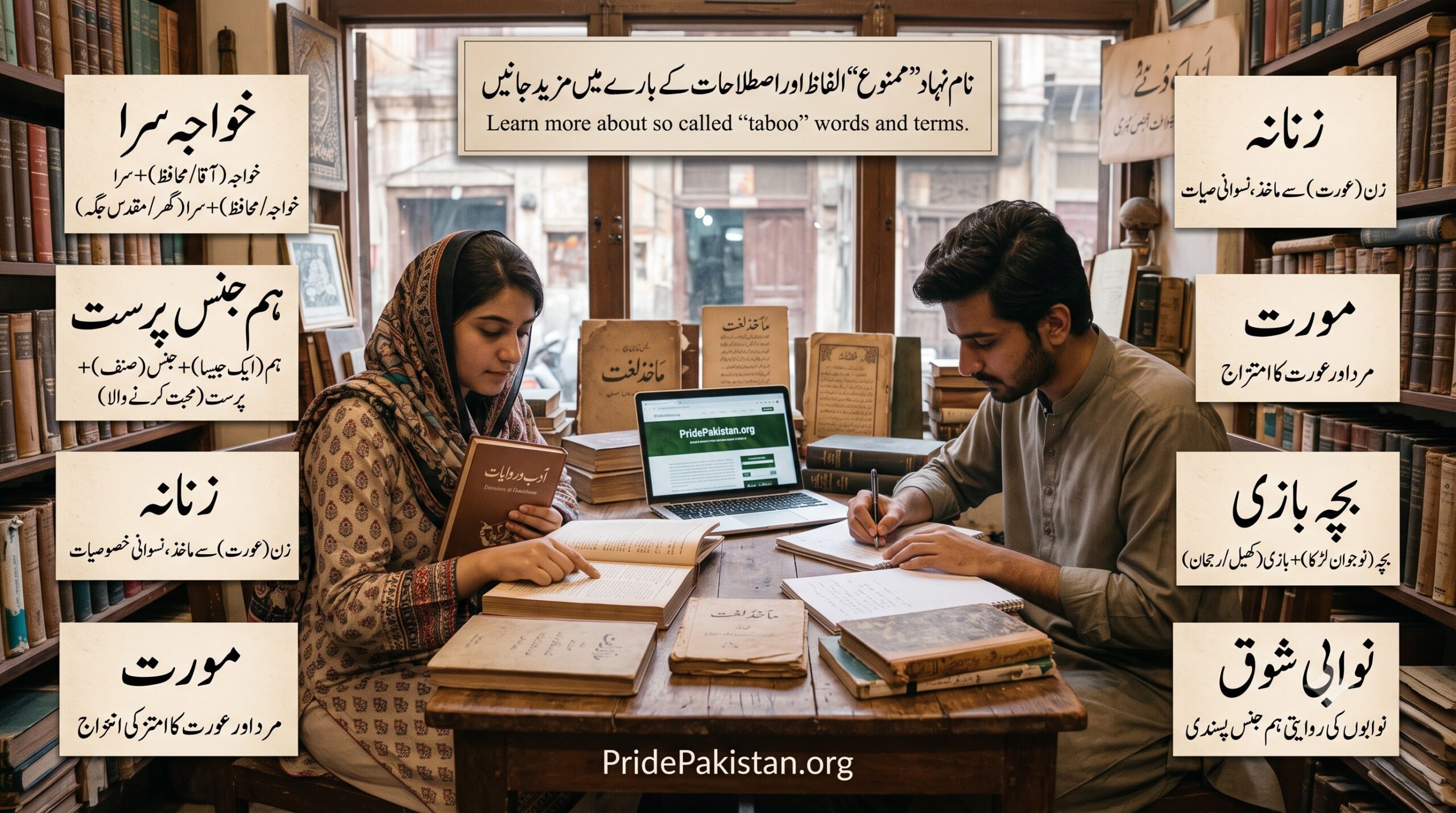
Khawaja Sira / خواجہ سرا
- English: A historic, respected South Asian identity encompassing transgender, intersex, and non-binary individuals. Historically holding positions of high governance, royal security, and spiritual guardianship in the Mughal era, it represents a distinct cultural institution that transcends Western binary frameworks.
- Urdu: جنوبی ایشیا کی ایک تاریخی اور معزز پہچان جس میں ٹرانس جینڈر، انٹرسیکس اور نان بائنری افراد شامل ہیں۔ مغلیہ دور میں اعلیٰ حکومتی عہدوں، شاہی سیکیورٹی اور روحانی سرپرستی پر فائز رہنے والی یہ شناخت ایک الگ ثقافتی ادارے کی نمائندگی کرتی ہے جو مغربی صنفی نظام سے بالکل مختلف ہے۔
Zanana & Mardana / زنانہ اور مردانہ
- English: Zanana (derived from Zan, meaning woman) refers to a male or female individual who naturally embodies, expresses, or prefers feminine traits, behaviors, and styles. Conversely, Mardana (derived from Mard, meaning man) denotes a person exhibiting masculine traits. In traditional queer culture, these terms validate internal expressions rather than biological assignments.
- Urdu: زنانہ (جس کا ماخذ ‘زن’ یعنی عورت ہے) سے مراد ایسا مرد یا عورت ہے جو فطری طور پر نسوانی خصوصیات، رویوں اور انداز کا اظہار کرے یا اسے ترجیح دے۔ اس کے برعکس، مردانہ (‘مرد’ سے ماخذ) سے مراد وہ شخص ہے جو مردانہ خصوصیات کا اظہار کرے۔ روایتی کوئیر ثقافت میں یہ الفاظ حیاتیاتی صنف کے بجائے اندرونی اظہار کی تصدیق کرتے ہیں۔
Moorat / مورت
- English: Etymologically a blend of Mard (man) and Aurat (woman), or derived from the classical word for an idol or reflection. It designates a queer person whose expression fluidly combines both masculine and feminine energies, or exists entirely outside the gender binary.
- Urdu: لسانی طور پر یہ لفظ ‘مرد’ اور ‘عورت’ کا مجموعہ ہے، یا کسی عکس یا مورتی کے کلاسیکی مفہوم سے ماخوذ ہے۔ یہ ایک ایسے کوئیر فرد کو ظاہر کرتا ہے جس کا اظہار مردانہ اور نسوانی دونوں توانائیوں کا امتزاج ہو، یا جو صنف کے روایتی نظام سے بالکل باہر وجود رکھتا ہو۔
2. Reclaiming Desire & Affection / محبت اور جنسی رجحان کی بحالی
Humjins & Humjins Parast / ہم جنس اور ہم جنس پرست
- English: A direct and beautiful translation for same-sex attraction. Humjins combines Hum (same) and Jins (sex/gender). Parast is a classical Persian/Urdu suffix denoting deep devotion, adoration, or love (found in positive terms like Khuda-Parast—devoted to God, or Muhabbat-Parast—devoted to love). While online homophobia tries to paint Humjins Parast as a negative label, it is a highly dignified, positive term for the gay and lesbian community, meaning “one who adores and loves their own gender.”
- Urdu: ہم جنس پرستی کا ایک خوبصورت اور براہِ راست ترجمہ۔ ‘ہم جنس’ دو الفاظ ‘ہم’ (ایک جیسا) اور ‘جنس’ کا مجموعہ ہے۔ ‘پرست’ فارسی اور اردو کا ایک کلاسیکی لاحقہ ہے جو گہری عقیدت، محبت یا وابستگی کو ظاہر کرتا ہے (جیسے مثبت الفاظ ‘خدا پرست’ یا ‘محبت پرست’ میں استعمال ہوتا ہے)۔ اگرچہ آن لائن نفرت انگیز مواد میں اسے منفی رنگ دینے کی کوشش کی جاتی ہے، لیکن یہ گے اور لیزبین کمیونٹی کے لیے ایک انتہائی باوقار اور مثبت اصطلاح ہے، جس کا مطلب ہے “اپنی جنس سے محبت اور عقیدت رکھنے والا۔”
Bacha Bazi & Bachi Bazi / بچہ بازی اور بچی بازی
- English: In classical Urdu and regional Persian, the word Bacha historically means a young man or guy, not a child. Bacha Bazi culturally meant a man who is romantically or physically attracted to young men. Homophobic actors online have deliberately twisted this into a synonym for pedophilia to criminalize gay men. In authentic language, it simply means being attracted to guys. A similar cross-cultural concept exists in French with the phrase amour avec garçon (romance with a young man/boy), which represents historic same-sex attraction, not a criminal act. Its feminine equivalent, Bachi Bazi, properly describes a lesbian individual who loves and is attracted to other women.
- Urdu: کلاسیکی اردو اور علاقائی زبانوں میں ‘بچہ’ کا لفظ تاریخی طور پر ایک نوجوان مرد یا لڑکے کے لیے استعمال ہوتا رہا ہے، کسی معصوم بچے کے لیے نہیں۔ ثقافتی طور پر ‘بچہ بازی’ سے مراد ایسا مرد تھا جو نوجوان مردوں کی طرف رومانوی یا جنسی رجحان رکھتا ہو۔ انٹرنیٹ پر کچھ عناصر نے گے مردوں کو نشانہ بنانے کے لیے اسے جان بوجھ کر بچوں کے استحصال سے جوڑ دیا۔ حقیقی زبان میں اس کا مطلب صرف لڑکوں کی طرف راغب ہونا ہے۔ اسی طرح کی ایک مثال فرانسیسی زبان میں ملتی ہے جہاں ایک اصطلاح استعمال ہوتی ہے جس کا مطلب نوجوان لڑکے سے محبت ہے، جو کہ ایک تاریخی جنسی رجحان کی علامت ہے نہ کہ کسی جرم کی۔ اس کی نسوانی شکل ‘بچی بازی’ ہے، جو لیزبین خواتین کے لیے استعمال ہوتی ہے جو دوسری خواتین سے محبت کرتی ہیں۔
LondayBaz & LondiBaz / لونڈے باز اور لونڈی باز
- English: LondayBaz breaks down into Londay (young men/guys) and Baz (one who plays, engages, or is oriented toward). It defines a man who is exclusively attracted to other men. Mainstream media has often used it as a derogatory online slang, but its core etymology is a direct behavioral identifier for gay men. The feminine counterpart is LondiBaz (derived from Londi, meaning female/girl), describing a female who is romantically and sexually attracted to other females.
- Urdu: ‘لونڈے باز’ کا لفظ دو حصوں ‘لونڈے’ (نوجوان مرد) اور ‘باز’ (شوق رکھنے والا یا رجحان رکھنے والا) سے مل کر بنا ہے۔ یہ ایسے مرد کی نشاندہی کرتا ہے جو دوسرے مردوں کی طرف جنسی یا رومانوی رجحان رکھتا ہو۔ اگرچہ میڈیا میں اسے ایک منفی لفظ کے طور پر استعمال کیا گیا، لیکن اس کا اصل لسانی ماخذ گے مردوں کی پہچان ہے۔ اس کے برعکس خواتین کے لیے ‘لونڈی باز’ (‘لونڈی’ یعنی لڑکی سے ماخذ) استعمال ہوتا ہے، جو دوسری خواتین میں دلچسپی رکھنے والی لیزبین خاتون کو ظاہر کرتا ہے۔
Nawabi Shook / نوابی شوق
- English: Originating from the historical practices of the Nawabs and rulers of the Indus Valley and surrounding regions, who openly maintained male consorts and celebrated same-sex desire in royal courts. Today, young people and online queer subcultures have adapted Nawabi Shook as a trendy, localized term to describe a guy having an interest in boys, or a female interested in females, honoring a royal history of fluid sexuality.
- Urdu: اس اصطلاح کا آغاز وادیِ سندھ اور ارد گرد کے علاقوں کے نوابوں اور حکمرانوں کے تاریخی احوال سے ہوتا ہے، جو شاہی درباروں میں مرد ساتھیوں کو اپنے ساتھ رکھتے تھے اور ہم جنس پسندی کو قبول کرتے تھے۔ آج کل کی نوجوان نسل اور آن لائن کوئیر حلقوں نے ‘نوابی شوق’ کو ایک جدید روایتی اصطلاح کے طور پر اپنایا ہے، جو مردوں کی مردوں میں یا خواتین کی خواتین میں جنسی دلچسپی کو ظاہر کرتا ہے۔
3. Anatomy, Identity & Erotic Roles / اعضاء، پہچان اور جنسی کردار
Anatomical Reclamation: Lun, Bund, and Chut / لُن، بُنڈ اور چُھوت
- English: In formal medical or legal Urdu literature, bodily organs are referred to by rigid terms like Azu-e-Tanasul (penis) or Andam-e-Nehani (vagina). However, the new generation of queer advocates and local subcultures uses direct, unfiltered language to talk about their bodies. Lun translates directly to penis, Bund refers to the rear/anus, and Chut refers to the vagina. Reclaiming these words strips away the shame imposed on human anatomy by conservative taboos.
- Urdu: رسمی یا قانونی اردو ادب میں انسانی اعضاء کے لیے ‘عضوِ تناسل’ یا ‘اندامِ نہانی’ جیسے پیچیدہ الفاظ استعمال کیے جاتے ہیں۔ تاہم، کوئیر وکلاء اور نئی نسل کی مقامی کمیونٹی اپنے جسم کے بارے میں بات کرنے کے لیے براہِ راست اور واضح الفاظ کا استعمال کرتی ہے۔ ‘لُن’ سے مراد مردانہ عضو، ‘بُنڈ’ سے مراد کولہے یا مقعد، اور ‘چُھوت’ سے مراد زنانہ عضو ہے۔ ان الفاظ کا عام استعمال انسانی جسم کے گرد قائم کردہ روایتی شرم اور ممنوعات کو ختم کرتا ہے۔
Chutu & Boundu / چُوتو اور بُنڈو
- English: Derived directly from the anatomical words Chuut and Bund, these terms are utilized within local underground spaces to describe sexual roles. A Chutu or Boundu refers to an individual who plays the bottom/receptive role during sexual intercourse or utilizes their rear for intimacy. While historically used as a crude street insult by the straight community, within the queer spectrum, it is an authentic descriptor of sexual preference and identity.
- Urdu: یہ الفاظ براہِ راست جسمانی اعضاء ‘چُھوت’ اور ‘بُنڈ’ سے ماخوذ ہیں اور مقامی خفیہ حلقوں میں جنسی کرداروں کو بیان کرنے کے لیے استعمال ہوتے ہیں۔ ‘چُوتو’ یا ‘بُنڈو’ سے مراد وہ فرد ہے جو جنسی تعلق کے دوران وصول کنندہ (باٹم) کا کردار ادا کرتا ہے۔ اگرچہ ماضی میں عام معاشرے نے اسے ایک توہین آمیز لفظ کے طور پر استعمال کیا، لیکن کوئیر حلقوں میں یہ جنسی ترجیح کو بیان کرنے کا ایک حقیقی ذریعہ ہے۔
Khassi / خصی
- English: Literally meaning castrated or possessing lower testosterone producing organs, this term has been historically used as an online slur to de-masculinize gay men or individuals who do not conform to toxic hyper-masculinity. In historical and veterinary literature, it is a simple physiological state, and its weaponization as an insult is countered by embracing physical diversity.
- Urdu: لغوی معنی کے لحاظ سے اس سے مراد وہ شخص ہے جس کے ٹیسٹوسٹیرون پیدا کرنے والے اعضاء کو ناکارہ کر دیا گیا ہو یا وہ پیدائشی طور پر ایسے ہوں۔ انٹرنیٹ پر اس لفظ کو اکثر گے مردوں کی مردانگی کو کم تر دکھانے کے لیے ایک طعنے کے طور پر استعمال کیا جاتا ہے، جبکہ تاریخی طور پر یہ صرف ایک جسمانی کیفیت کو ظاہر کرتا ہے۔
4. Historically Exploited Terms / تاریخی طور پر مسخ کیے گئے الفاظ
Tharki & Tharak / تھرکی اور تھرک
- English: Mainstream society uses Tharki as a highly negative label for a pervert. However, in classical regional linguistics, Tharak means a deep, unyielding passion, obsession, or intense desire for something beautiful. We break down this word to show that having an intense sexual or romantic longing (Tharak) is a normal human trait, not a moral failure.
- Urdu: عام معاشرہ ‘تھرکی’ کا لفظ کسی ہوس پرست شخص کے لیے انتہائی منفی معنوں میں استعمال کرتا ہے۔ لیکن کلاسیکی علاقائی لسانیات میں ‘تھرک’ کا مطلب کسی خوبصورت چیز کے لیے گہرا جنون، شدید لگن یا گہری خواہش ہے۔ ہم اس لفظ کا تجزیہ اس لیے کرتے ہیں تاکہ واضح ہو سکے کہ شدید رومانوی یا جنسی خواہش رکھنا ایک عام انسانی جبلت ہے، کوئی اخلاقی برائی نہیں۔
Randi & Rakhail / رنڈی اور رکھیل
- English: In ancient Urdu literature, Randi simply meant a woman or a widow. Over time, patriarchal and moralistic shifts turned it into a severe insult used exclusively against female sex workers or women who assert bodily autonomy. Similarly, Rakhail historically defined a female partner kept outside formal state-recognized marriage networks, often representing women bought or sustained through financial contracts. Understanding these histories exposes how language is manipulated to control women and sexual behavior.
- Urdu: قدیم اردو ادب میں ‘رنڈی’ کا لفظ صرف ایک عورت یا بیوہ کے لیے استعمال ہوتا تھا۔ وقت گزرنے کے ساتھ، پدرشاہی اور اخلاقی تبدیلیوں نے اسے ایک سخت گالی بنا دیا جو اب جنسی کارکن خواتین یا اپنی مرضی سے زندگی گزارنے والی عورتوں کے خلاف استعمال ہوتا ہے۔ اسی طرح ‘رکھیل’ تاریخی طور پر اس خاتون کو کہا جاتا تھا جو باقاعدہ شادی کے نظام سے باہر کسی مرد کے ساتھ مالی معاہدے کے تحت رہتی تھی۔ ان تاریخوں کو سمجھنا یہ ظاہر کرتا ہے کہ کس طرح عورتوں اور ان کے جنسی رویوں کو کنٹرول کرنے کے لیے زبان کا غلط استعمال کیا گیا۔
5. Hijra Farsi: Transgender Subculture Lexicon / ہجڑا فارسی: ٹرانس جینڈر ثقافت کے خفیہ الفاظ
In Pakistan, the transgender and Khawaja Sira communities developed a secret, highly protected dialect known as Hijra Farsi or Koti Lingo to communicate safely in hostile environments. Here are key terms from their authentic cultural vocabulary:
Giriya / گریا
- English: A deeply important term within the transgender culture meaning a cisgender boyfriend, partner, or husband. It represents the emotional and protective anchor for a Khawaja Sira individual in a hostile society.
- Urdu: ٹرانس جینڈر ثقافت کا ایک انتہائی اہم لفظ جس کا مطلب کمیونٹی سے باہر کا کوئی بوائے فرینڈ، پارٹنر یا شوہر ہے۔ یہ معاشرتی دباؤ کے خلاف ایک خواجہ سرا کے رومانوی اور حفاظتی سہارے کی نمائندگی کرتا ہے۔
Joban / جوبن
- English: While in classical Urdu Joban means youth or prime beauty, in local queer and trans language, it is used as an adjective to describe something as excellent, perfect, beautiful, or high-quality.
- Urdu: اگرچہ کلاسیکی اردو میں ‘جوبن’ کا مطلب جوانی یا حسن کا عروج ہے، لیکن مقامی کوئیر اور ٹرانس ثقافت میں یہ کسی چیز کو بہترین، خوبصورت، یا شاندار قرار دینے کے لیے استعمال ہوتا ہے۔
Patawa / پتاوا
- English: The specific subcultural word used to define semen or sperm. It is part of the secret vocabulary used to discuss sexual health, intimacy, and biological realities safely without outsiders understanding.
- Urdu: ٹرانس جینڈر برادری کا ایک مخصوص خفیہ لفظ جو مادۂ منویہ یا سپرم کے لیے استعمال ہوتا ہے۔ یہ بیرونی لوگوں سے چھپ کر اپنی جنسی صحت اور نجی زندگی کے بارے میں بات کرنے کا ایک ذریعہ ہے۔
Beely & Dera / بیلی اور ڈیرہ
- English: Beely is used within the subculture to describe gangs, hostile operators, or bad guys who pose a physical threat to the community. Dera refers to the collective home, sanctuary, or commune run by a Guru, serving as a safe space for marginalized individuals.
- Urdu: ‘بیلی’ کا لفظ برادری کے خفیہ حلقوں میں ان گروہوں یا برے لوگوں کے لیے استعمال ہوتا ہے جو کمیونٹی کے لیے جسمانی خطرہ بنتے ہیں۔ ‘ڈیرہ’ سے مراد وہ مشترکہ گھر یا پناہ گاہ ہے جسے کوئی گرو چلاتا ہے، جو بے سہارا کوئیر افراد کے لیے ایک محفوظ جگہ کا کام کرتا ہے۔
Practical Context Examples / عملی زندگی سے مثالیں
Context 1: Reclaiming “Humjins Parast” from Online Stigma
- English Mistreatment: A right-wing blog post writes: “These Humjins Parast networks are destroying our traditional fabric.” (Attempting to use the word as an unnatural, ideological accusation).
- Pride Pakistan Correction: We reclaim the beauty of the prefix. When someone says they are a Humjins Parast, they are stating they are a devotee of love within their own gender, carrying the same linguistic dignity as a Muhabbat Parast (a devotee of love).
- Urdu Example: جب کوئی انتہا پسند ویب سائٹ لکھتی ہے کہ “یہ ہم جنس پرست لوگ معاشرہ خراب کر رہے ہیں” تو وہ اسے ایک جرم بنا کر پیش کرتے ہیں۔ لیکن ہم اس کے لاحقے کی خوبصورتی کو بحال کرتے ہیں۔ جب کوئی خود کو ‘ہم جنس پرست’ کہتا ہے، تو اس کا مطلب ہے کہ وہ اپنی صنف میں محبت کا عقیدت مند ہے، بالکل ویسے ہی جیسے کوئی ‘محبت پرست’ ہوتا ہے۔
Context 2: Differentiating Identity from Criminality in “Bacha Bazi”
- English Mistreatment: A mainstream talk show host claims: “Bacha bazi is a dangerous threat to our children.” (Confusing a historical terms for adult same-sex attraction with child abuse).
- Pride Pakistan Correction: We clarify the etymology. In pure Urdu literature, a Bacha is an attractive young guy. Bacha Bazi is historically the attraction toward young men. Concurrently, if a lesbian woman expresses love for other females, she engages in Bachi Bazi. Neither term involves minors; they are traditional expressions of adult same-sex love.
- Urdu Example: جب ٹی وی چینلز پر کہا جاتا ہے کہ “بچہ بازی بچوں کے لیے خطرہ ہے” تو وہ ایک تاریخی رومانوی اصطلاح کو بچوں کے استحصال کے ساتھ خلط ملط کر دیتے ہیں۔ ہم واضح کرتے ہیں کہ کلاسیکی اردو میں ‘بچہ’ سے مراد نوجوان لڑکا ہے۔ بچہ بازی نوجوان مردوں کی آپسی محبت ہے، اور اسی طرح جب کوئی لیزبین خاتون دوسری خاتون سے محبت کرتی ہے تو اسے ‘بچی بازی’ کہا جاتا ہے۔ ان کا بچوں کے ساتھ کوئی تعلق نہیں، یہ بالغ افراد کی ہم جنس پسندی کا روایتی اظہار ہیں۔
Leave a Reply