Tag: Gay Rights

  • Beyond the Binary: Fluidity and ‘Ishq’ in the Mughal Era

    Beyond the Binary: Fluidity and ‘Ishq’ in the Mughal Era

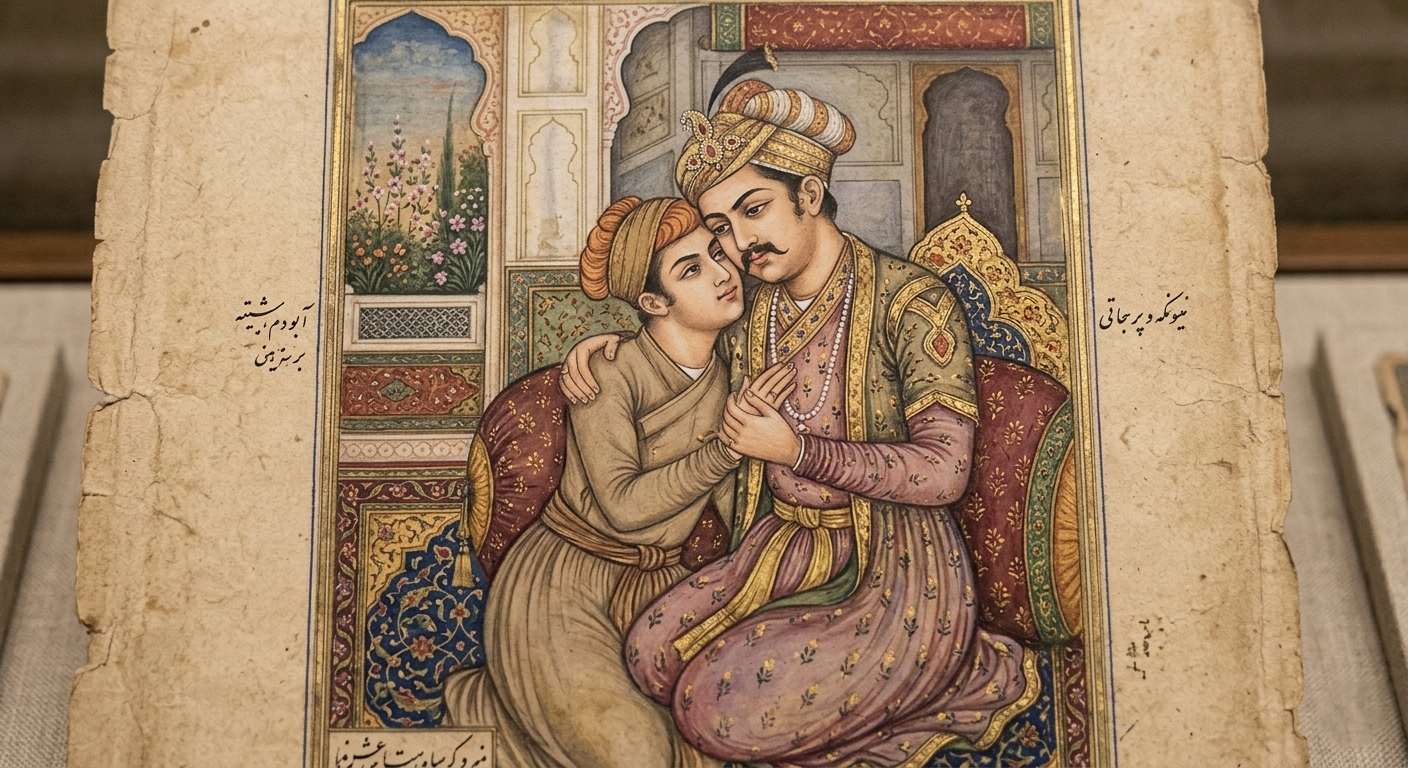
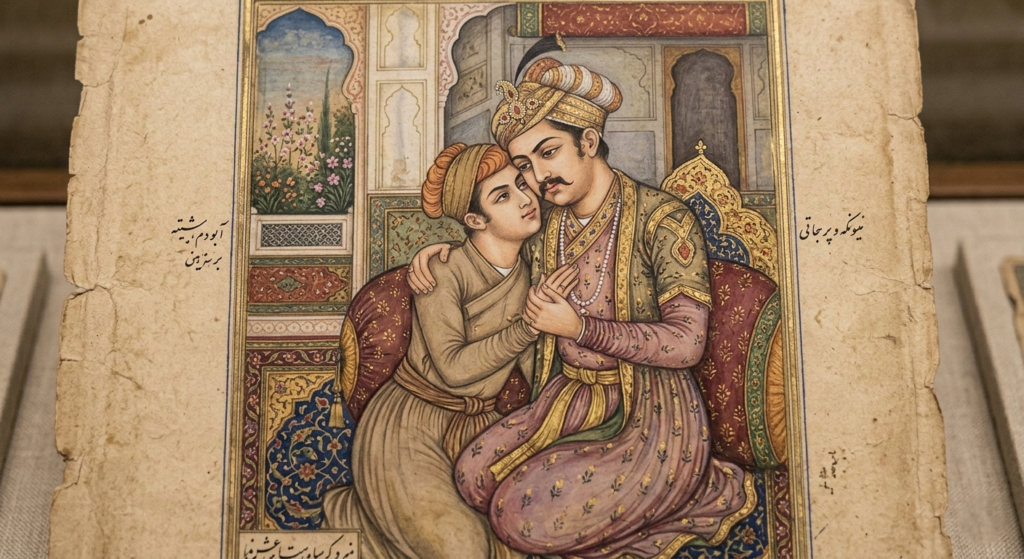
    For centuries before the arrival of foreign legal codes, the Indian subcontinent did not view human desire through the narrow lens of “straight” or “gay.” In the courts of the Mughal Empire, identity was not a fixed label but a spectrum of the soul’s expression.

    The Heart of the Emperor: Babur and Baburi

    One of the most honest accounts of same-sex attraction in our history comes from the founder of the Mughal Empire himself. In his autobiography, the Baburnama, Emperor Babur writes with startling vulnerability about his infatuation with a young boy in the camp bazaar named Baburi. He describes being “confused and distracted,” unable to look the boy in the eye—a classic description of a heart in the throes of Ishq (love). This was not recorded as a scandal, but as a legitimate state of the human heart.

    The Sacred Presence of the Khwaja Sira

    The people we now call the “Third Gender” were the backbone of the Mughal administration. Khwaja Siras were not marginalized; they were the “Grand Viziers” and trusted guardians of the most private royal spaces. They held titles of nobility, managed vast estates, and led armies. Their presence was a testament to a society that recognized that wisdom and authority did not belong to men or women alone, but to those who existed between worlds.

    Sufi Love: Where Genders Dissolve

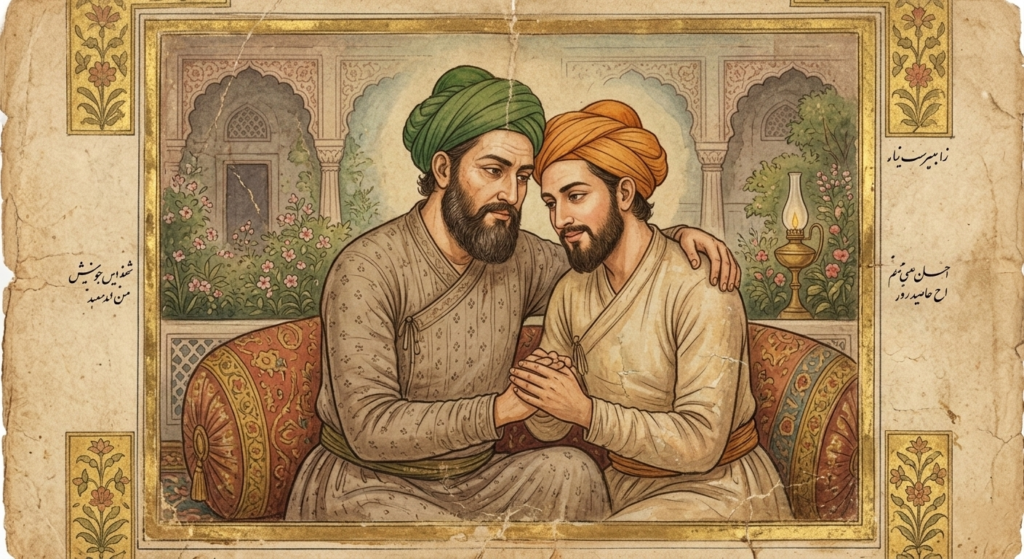
    Our history is inseparable from the Sufi tradition. The legendary love between the Sufi saint Shah Hussain and the Hindu boy Madho Lal is perhaps the greatest “queer” epic of Lahore. To this day, they are buried together at the Shrine of Madho Lal Hussain. In Sufi poetry, the lover often takes the feminine persona to address the Divine, or the “Beloved” is described in terms that transcend gender. This ideology of Ishq-e-Majazi (metaphorical love) serving as a bridge to Ishq-e-Haqiqi (divine love) allowed for a social tolerance that modern “binary” thinking has forgotten.

    The Poetry of the ‘Zanana’

    Literature of this era, specifically Rekhti poetry, often featured voices that celebrated intimacy between women or expressed the “Zanana” (feminine) spirit within various bodies. These were not seen as “crimes” but as nuances of a rich, diverse social fabric.

  • The Living History of Pride in Pakistan: A Journey of Resilience

    The Living History of Pride in Pakistan: A Journey of Resilience

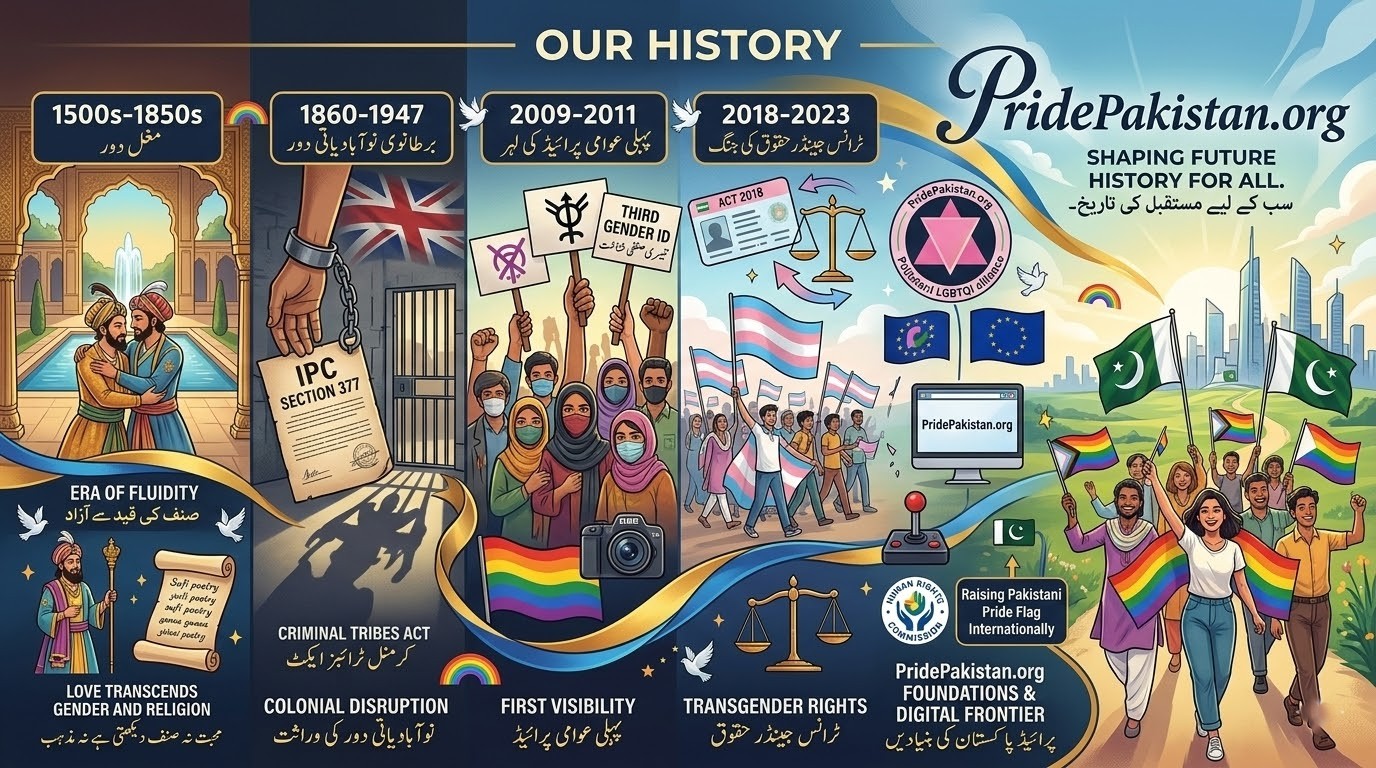
    Pride Pakistan is more than an organization; it is an ideology. Our story didn’t start in a vacuum, it is a legacy that flows from the fluid courts of the Mughals, through the dark shadows of colonial laws, to the digital revolution of today. This timeline honors the pioneers, the activists, and the everyday people who refused to be erased.

    The Era of Fluidity: The Mughal Empire

    Before colonial borders and Victorian laws, the Indian subcontinent viewed gender and desire with a sense of fluidity. In the Mughal era, same-sex intimacy and “third gender” individuals held roles as trusted servants, poets, and advisors in the royal courts. Love was often seen as a spiritual journey that transcended the physical binary.

    Read More: Love and Gender in the Mughal Courts

    1860: The Colonial Shadow & Section 377

    The landscape changed forever with the arrival of British rule. In 1860, the colonial government introduced Section 377, a law that criminalized “natural” desires as “carnal intercourse against the order of nature.” This was a foreign legal transplant that replaced local tolerance with institutionalized shame and homophobia.

    Read More: How Colonialism Invented Homophobia in South Asia

    2009: The First Sparks of Visibility

    In July 2009, the Supreme Court of Pakistan made history by recognizing the “Third Gender” on national ID cards. Just months later, in November 2009, a small group of gay men in Karachi organized a historic public gathering reported by the BBC. Though they hid their faces for safety, their courage marked the birth of modern gay activism in Pakistan.

    Read More: The 2009 Karachi Gathering – Coming out of the Shadows

    The Era of NAZ: Indoor Prides & Advocacy

    The movement gained institutional strength through the NAZ Male Health Alliance, led by Qasim Iqbal. Qasim became a prominent face for gay rights, organizing indoor, closed-door Pride events across Pakistan. These gatherings provided a rare safe space for the community to connect, even as the legal and social climate remained hostile.

    Read More: Qasim Iqbal and the Legacy of NAZ Pakistan

    2011: The US Embassy Incident & Extremist Backlash

    On June 26, 2011, the US Embassy in Islamabad hosted an LGBTQI Pride social event. The subsequent media coverage sparked a massive nationwide backlash from Islamic extremist groups and conservative politicians. This event forced the movement back underground, highlighting the extreme risks associated with Western-aligned visibility.

    Read More: The 2011 Pride Social – A Turning Point for Safety

    2018–2024: The Transgender Rights Battle

    In 2018, Pakistan passed the landmark Transgender Persons (Protection of Rights) Act. However, the law faced intense opposition and was challenged in the Federal Shariat Court in 2023, leading to significant rollbacks that shifted the focus toward “intersex” definitions. This period saw the rise of public Trans Prides in Lahore and other cities, even as legal protections were being dismantled.

    Read More: From 2018 to the Shariat Court – The Fight for Trans Rights

    2020: The Roots of PridePakistan.org

    Our campaign, founded by Ali Raza Khan, began within the empowering network of NAZ. In 2020, with the support of the European Union, we began organizing closed-space community gatherings. These underground meetings focused on building the “Pink Triangle”, a member alliance of the Pakistan LGBTQI Alliance, designed to unite diverse voices under one banner.

    [Read More: Our Origins – From the Pink Triangle to Pride Pakistan]

    2021–2023: Security Risks & Decentralization

    Following increased security incidents, raids, and the closing of NAZ Pakistan’s main operations in 2021, the Pink Triangle alliance began to decentralize. Lack of funds, security threats, and internal community conflicts, specifically tensions between some trans networks and gay advocacy, led to a period of fragmented activism. We realized we needed a new way to reach our people safely.

    [Read More: Navigating Conflict – The Closing of the Pink Triangle]

    2024: The Digital Frontier & Global Pride

    In late 2023, we recognized that physical gatherings in elite city centers were not enough to reach the non-elite and rural gay community. We launched PridePakistan.org in early 2024 to provide an online sanctuary. Despite being blocked by the PTA, we expanded into digital gaming, represented the community at the Human Rights Commission, and began raising the Pakistani Gay Pride flag at international Prides worldwide.

    [Read More: Digital Resistance – PTA Blocks and Global Flags]

  • پاکستان میں ہم جنس پرستوں کی تحریک

    پاکستان میں ہم جنس پرستوں کی تحریک

    نوٹ: یہ تحریر بی بی سی اردو سے لی گئی ہے۔ مکمل اور اصل مضمون پڑھنے کے لیے بی بی سی اردو کی ویب سائٹ پر جائیں

    پاکستان میں ہم جنس پرست زیر زمین منظم ہو رہے ہیں اور ان کے باقاعدگی سے اجتماعات بھی منعقد ہوتے ہیں۔ ہم جنس پرستوں کے بیرون ملک تنظیموں سے بھی روابط ہیں جس سے ایسا محسوس ہوتا ہے کہ ملک میں ہم جنس پرستوں کی تحریک خاموشی سے مگر منظم طریقے سے آگے بڑھ رہی ہے۔

    پڑوسی ملک بھارت میں ہم جنس پرستوں کے تعلقات کو قانونی حیثیت ملنے کے بعد پاکستان میں بڑھتی ہوئی مذہبی انتہا پسندی کے باوجود ہم جنس پرستوں کو بھی حوصلہ ملا ہے۔

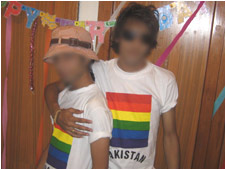
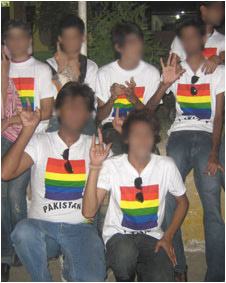
    اس کی مثال گزشتہ دنوں کراچی میں ہم جنس پرستوں کی مصروف ترین شاہراہ فیصل پر پریڈ تھی۔ ہم جنس پرستی کی نشانی والی آٹھ رنگوں کی ٹی شرٹس پہنے ہوئے ان نوجوانوں کی عام لوگ تو شناخت نہیں کرسکے مگر وہ لوگ جو انھیں سمجھتے ہیں یا ان کے قریب رہتے ہیں، انھیں دیکھ کر فتح کا نشان بناتے رہے۔

    ہم جنس پرست، کراچی

    ہم جنس پرستوں نے سوشل نیٹ ورکنگ کی ویب سائٹس پر اپنے گروپس بنائے ہیں جن کے کئی سو ممبران ہیں

    پریڈ میں شریک نوجوان ڈیوڈ کا کہنا ہے کہ پاکستان حکومت نے تردید کی تھی کہ ملک میں ہم جنس پرست نام کی کوئی چیز نہیں ہے۔ اس پریڈ کی ایک بنیادی وجہ یہ بھی تھی کہ حکومت کو بتایا جائے ہم موجود ہیں اور ہمیں تسلیم کیا جائے۔

    ان کے ساتھی تحسین کا کہنا تھا ’اس پریڈ سے پہلے بہت بحث مباحثہ ہوا، کافی ڈر اور خوف بھی تھا کیونکہ پاکستان کے موجودہ حالات میں ہر انسان ڈر کر زندگی گذار رہا ہے۔ ان حالات میں ہم اتنے بڑے حق کے لیے بات کرنا چاہ رہے تھے۔ بعد میں ہم نے یہ سوچا کہ ہر چیز کی ابتدا کہیں نہ کہیں سے ہوتی ہے کسی کوتو پہلا قدم اٹھانا پڑے گا۔ یہ سوچ کر ہمارا ڈر اور خوف جاتا رہا۔‘

    نوجوان ہم جنس پرست اپنے خیالات ، احساسات اور رجحانات کے بارے میں اپنے خاندان والوں کو آگاہ کرنے سےگریز کرتے ہیں اور ایک ڈھکی چھپی اور ادھوری زندگی گذارتے ہیں۔

    پریڈ میں شریک نوجوان ڈیوڈ کا کہنا ہے کہ پاکستان حکومت نے تردید کی تھی کہ ملک میں ہم جنس پرست نام کی کوئی چیز نہیں ہے۔ اس پریڈ کی ایک بنیادی وجہ یہ بھی تھی کہ حکومت کو بتایا جائے ہم موجود ہیں اور ہمیں تسلیم کیا جائے۔

    سولہ سالہ مانی طالب علم ہیں اور ان کا کہنا ہے ’ہم جنس پرستی کے بارے میں بچپن ہی سے معلوم ہو جاتا ہے مگر گھر والوں کو بتانا نہایت مشکل ہوتا ہے کیونکہ ہمارے جذبات، احساسات اور رجحان کو سمجھنے کے لیے انہیں شعور نہیں ہے۔ اگر بتا دیا جائے تو گھر والے ہم پر پابندیاں لگا دیتے ہیں اور ہمیں تیسری جنس سمجھنے لگتے ہیں۔‘

    انٹرنیٹ جہاں کئی انقلاب لایا وہاں ہم جنس پرستوں کی زندگی میں خوشی کی نوید بن کر آیا اور ان کی یکجہتی میں اضافہ ہوا۔ پاکستان کے ہم جنس پرستوں نے بھی سوشل نیٹ ورکنگ کی ویب سائٹس پر اپنے گروپس بنائے ہیں جن کے کئی سو ممبران ہیں۔

    مانی کا کہنا ہے کہ نئی نسل انٹرنیٹ سے باخبر ہے اور اسی کے ذریعے رابطہ ہوجاتا ہے۔ ’انٹر نیٹ پر کئی راستے موجود ہیں جہاں آسانی سے ایک دوسرے سے رابطہ کرسکتے ہیں۔‘ ان کے ایک اور ساتھی ڈیوڈ کے مطابق درمیانے درجے کے خاندان یا مڈل کلاس کے علاوہ بڑے گھرانوں کے کئی لوگ بھی ان کےگروپس میں موجود ہیں۔

    یہاں اپنی سوچ کو دوسروں پر مسلط کیا جاتا ہے۔ جو آپ نہیں ہیں وہ کیسے بن کر رہ سکتے ہیں۔ اگر آپ لڑکیوں کی طرف متوجہ نہیں ہوتے تو پھر لڑکی سے کیسے شادی کرسکتے ہیں۔ ایسے کئی واقعات ہوئے ہیں جن میں ہم جنس پرستوں کو خاندانی اور سماجی دباؤ کے تحت لڑکیوں سے شادی کرنی پڑی مگر بعد میں ان لڑکیوں کی زندگی برباد ہوئی۔ اس لیے کہ وہ ان لڑکیوں کو چھوتے تک نہیں ہیں۔

    تحسین

    تحسین انجینیئرنگ کی تعلیم حاصل کر رہے ہیں اور ان کا کہنا ہے ’یہاں اپنی سوچ کو دوسروں پر مسلط کیا جاتا ہے۔ جو آپ نہیں ہیں وہ کیسے بن سکتے ہیں۔ اگر آپ لڑکیوں کی طرف متوجہ نہیں ہوتے تو پھر لڑکی سے کیسے شادی کرسکتے ہیں۔ ایسے کئی واقعات ہوئے ہیں جن میں ہم جنس پرستوں کو خاندانی اور سماجی دباؤ کے تحت لڑکیوں سے شادی کرنی پڑی مگر بعد میں ان لڑکیوں کی زندگی برباد ہوئی۔ اس لیے کہ وہ ان لڑکیوں کو چھوتے تک نہیں ہیں۔‘

    پاکستان میں مذہبی شدت پسندی میں اضافے کے بعد کراچی میں بھی طالبانائزیشن کی بات ہو رہی ہے مگر ڈیوڈ کہتے ہیں کہ وہ خوفزدہ نہیں ہوتے۔’یہ ہمارا بھی ملک ہے۔ ملائشیا اور انڈونیشیا مسلم ممالک ہیں مگر وہاں سماج نے ہم جنس پرستوں کو تسلیم کیا ہے۔‘ تحسین نے ان کی تائید کرتے ہوئے کہا کہ انہیں حقوق نہیں چاہیئں کیونکہ انھیں معلوم ہے کہ یہاں حقوق نہیں مل سکتے۔ ’مگر کم سے کم لوگوں میں شعور ہو کہ ہم غلط نہیں ہیں کیونکہ یہ چیز دنیا میں موجود ہے۔ ہم ملائشیا اور انڈونیشیا جاچکے ہیں۔ ایسے کئی اور مسلم ممالک ہیں جہاں ہم جنس پرستوں کو حقوق نہیں دیے گئے مگر انہیں تنگ بھی نہیں کیا جاتا۔‘

    کراچی میں ہم جنس پرستوں کے مخصوص مقامات ہیں جہاں ان کی ملاقاتیں ہوتی ہیں۔ شہر سے باہر ساحل سمندر اور فارم ہاؤس ان کی بڑی پارٹیوں کا مرکز ہیں جس کے لیے سنیچر کی شام مختص ہوتی ہے۔ تحسین کے مطابق ہم جنس پرست منظم ہیں اور ان کی پارٹیاں مقامی اور ملکی سطح کی ہوتی ہیں جن میں کئی سو لوگ شریک ہوتے ہیں۔

    ’اس سے پہلے چھاپے نہیں پڑتے تھے مگر اب پولیس جان بوجھ کر آتی ہے اور پارٹی بند کردیتی ہے۔ آرگنائزرز سے پیسے چھین لیے جاتے ہیں اور کھانا اٹھا کر چلے جاتے ہیں۔ اس پارٹی میں کوئی بھی غیر قانونی چیز نہیں ہوتی۔ اس میں نشہ آور اشیاء کا استعمال بھی نہیں کیا جاتا صرف ملنے ملانے کی پارٹی اور ڈانس ہوتا ہے۔‘

    پاکستان کے ہم جنس پرستوں کا انٹرنیشنل لسبیئن اینڈ گے ایسوسی ایشن سمیت برطانیہ، امریکہ اور آسٹریلیا کی ہم جنس پرستوں کے حقوق کے لیے کام کرنے والی تنظیموں سے رابطہ ہے۔ تحسین کے مطابق ان تنظیموں کا کہنا ہے کہ تحفظ یا حقوق وہ اپنے ملک میں تو دلا سکتے ہیں مگر پاکستان میں کچھ نہیں کرسکتے، یہاں انہیں خود ہی کچھ کرنا ہوگا۔

    ہم جنس پرستی پاکستان کے قوانین اور مذہبی حوالے سے ناقابل قبول ہے اور ملکی قانون کے مطابق ہم جنس پرستی کی سزاء دس سال قید یا کوڑے ہیں۔

    ہم جنس پرست

    پاکستان کے قوانین کے مطابق ہم جنس پرستی کی سزا دس سال قید یا کوڑے ہے

    پاکستان میں کچھ واقعات ایسےبھی ہوئے ہیں جن میں کچھ لوگوں نے خود کو ہم جنس پرست قرار دے کر بیرون ملک سیاسی پناہ حاصل کی۔ مگر مانی کا کہنا ہے کہ ایسا کوئی مسئلہ نہیں اور بھی کئی طریقے ہیں جن سے سیاسی پناہ مل سکتی ہے۔’ اگر کوئی راستہ نظر آتا ہے تو وہاں سے صحیح اور غلط دونوں لوگ گذرتے ہیں مگر اس کا یہ مطلب نہیں ہے کہ جو حقیقی ہم جنس پرست ہیں وہ ایسا کرتے ہیں۔‘

    پاکستان میں ہم جنس پرستی نہ تو لوگوں اور نہ ہی میڈیا میں کبھی موضوعِ بحث رہی ہے۔ انگریزی اخبارات میں بیرون ملک ہم جنس پرستوں کی کہانیاں اور تبصرے پڑھنے کوتو ملتے ہیں مگر پاکستان کے ہم جنس پرستوں کے بارے میں بہت کم لکھا جاتا ہے۔

    اقوام متحدہ کے اعلامیے میں تمام اداروں اور رکن ممالک سے کہا گیا ہے کہ ہم جنس پرستی یا جنسی ترجیحات کی بنیاد پر ہونے والے امتیازی سلوک اور تشدد کے خلاف بھی اسی انداز میں کارروائی کو یقینی بنایا جائے جیسے انسانی حقوق کی خلاف ورزیوں کے خلاف کی جاتی ہے۔

    یہ مضمون بی بی سی اردو سے شکریہ کے ساتھ دوبارہ شائع کیا گیا ہے۔ اصل تحریر بی بی

    سی اردو کی ویب سائٹ پر اس لنک کے ذریعے پڑھی جا سکتی ہے:

    ‭BBC Urdu‬ – ‮پاکستان‬ – ‮پاکستان میں ہم جنس پرستوں کی تحریک‬

  • The Year the Shadows Broke 2009  Pakistan’s First Public Pride Activity

    The Year the Shadows Broke 2009 Pakistan’s First Public Pride Activity

    History is often written by the victors, but for the LGBTQI community in Pakistan, history is written by the brave. While our roots in South Asia stretch back centuries, from the revered status of Khwaja Siras in Mughal courts to the fluid expressions of love in Sufi poetry, modern political “visibility” has a specific, painful, and powerful starting point: November 2009.

    On November 10, 2009, a small but historic gathering took place in Karachi. Reported by BBC Urdu, this event marked one of the first times a group of gay Pakistani men chose to step into the public eye to discuss their rights and identity. In a society where Section 377 (a remnant of British colonial law) and social taboos enforced a life of absolute secrecy, this meeting was an act of revolution.

    The BBC article, titled “Gay in Karachi,” captured a community at a crossroads. Participants spoke about the “underground” nature of their lives, the use of early internet chat rooms to find one another, and the deep desire to be seen as equal citizens of Pakistan.

    Visibility in Pakistan has always come with a heavy price. During this 2009 activity, participants were acutely aware of the danger; every person involved hid their face. They used masks, scarves, or remained in the shadows during photography and filming to protect their identities from a society that was not yet ready to accept them.

    The aftermath of this public activity was a stark reminder of the risks of activism. Following the publication of the report and the buzz it created:

    • Targeted Threats: Many participants began receiving direct threats as their identities were pieced together by relatives or neighbors.
    • Going Underground: Several activists were forced to leave their homes immediately, moving to different cities within Pakistan to escape recognition.
    • The Path of Exile: For many, even moving cities wasn’t enough. To stay safe and live authentically, a significant number of the pioneers of that 2009 activity eventually had to leave Pakistan altogether, seeking asylum in countries where they could live without the constant fear of violence.

    This small Karachi gathering acted as a catalyst. Shortly after, between 2009 and 2011, the first clandestine queer organizations (often referred to by pseudonyms like “P” and “M” in academic research) began to form in Lahore and Karachi. These groups moved from mere social gatherings to advocacy, even as they navigated a landscape that grew more complex with events like the 2011 US Embassy Pride social, which sparked nationwide conservative protests.

    We include this story in our History archive because Pride in Pakistan didn’t start with a parade; it started with a few brave souls in a room in Karachi, faces covered, hearts open, demanding to be heard. We honor those who were forced into hiding or exile so that today, we can continue the work of building a Pakistan where no one has to hide their face again.

    References & Further Reading:

  • Pride Runner Game: The Run for Rights

    Pride Runner Game: The Run for Rights

    In an era of increasing digital authoritarianism, the Pakistan Telecommunication Authority (PTA) and other state agencies have intensified their efforts to silence marginalized voices. By blocking PridePakistan.org, state institutions have attempted to erase the digital home of the Pakistani LGBTQ+ community. But resistance is not a static thing; it moves, it adapts, and it runs.

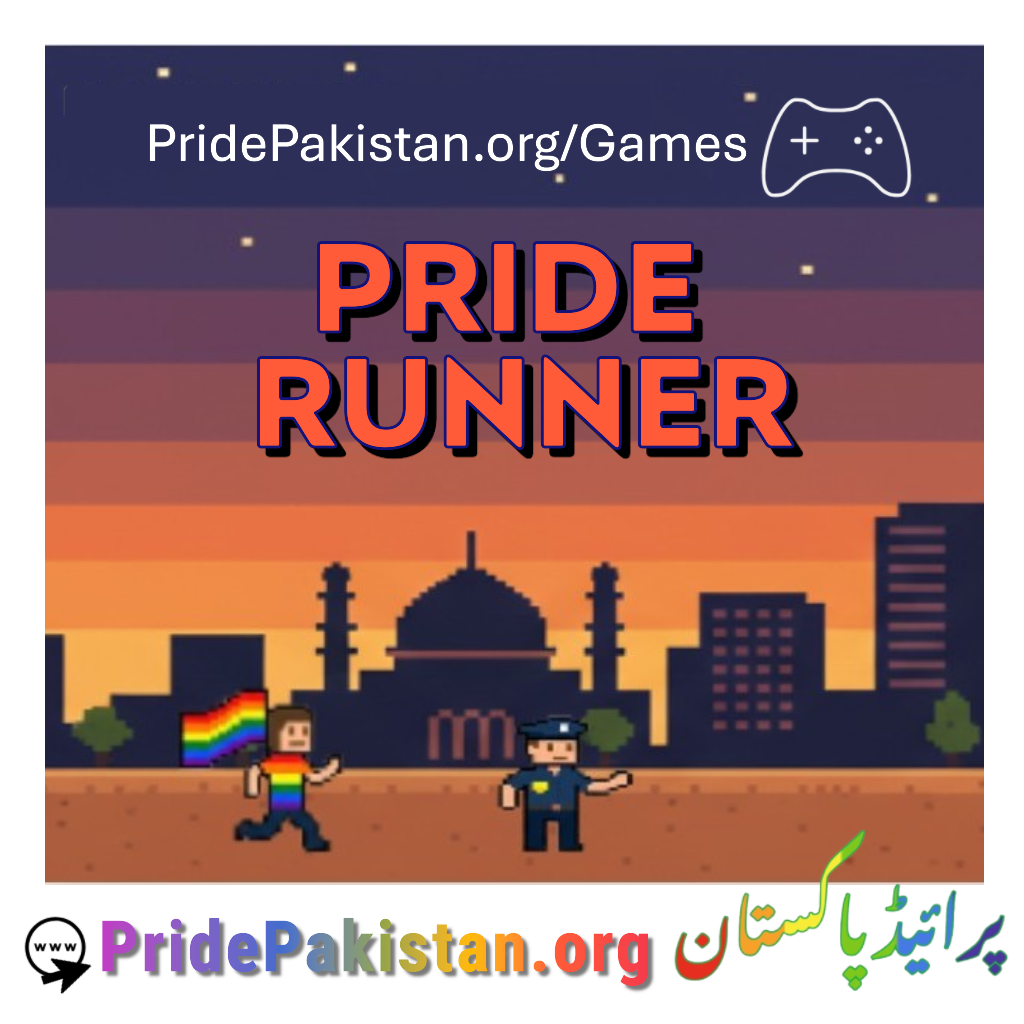
    We created the Pride Runner game as a direct response to this censorship. When the state places digital “barriers” in our way, we learn to jump over them. Every police hurdle in this game represents the systemic harassment our community faces; every dark cloud represents the state-sponsored “hate” and societal pressure intended to keep us in the shadows.

    Visibility is our strongest tool against oppression. While the state uses the NCCIA and PTA to build walls, we use technology to build bridges. This game is a reminder that being gay in Pakistan is a journey of constant movement. We move through the streets of Karachi and Lahore not just as residents, but as survivors.

    The rainbow flag held by our character is a signal to every queer person in Pakistan: You are not alone. Even if they block our domain, they cannot block our existence. We will continue to find our way, navigate the hurdles, and stand proud. The stars we collect are the symbols of our shared victories—the small moments of community and joy that the state can never take away.

    Stand with us. Play the game. Share the resistance.

    Press Space or Tap to Jump | PridePakistan.org Official Game

    Pride Runner is more than just a game; it is a digital representation of the daily resilience required by the LGBTQ+ community in Pakistan. As our character runs through the historic streets of Karachi and Lahore, they face real-world symbolic hurdles like security barriers and the “dark clouds” of societal judgment (Log Kya Kahenge).

    At PridePakistan.org, we advocate for the fundamental human rights, safety, and equality of all individuals regardless of their sexual orientation or gender identity. By collecting our Rainbow Star logo, players contribute to the visibility of our mission to combat discrimination and promote a more inclusive Pakistan.

    This game was born out of defiance. Following the blocking of PridePakistan.org by the PTA and other state agencies, we developed Pride Runner as a symbol of our community’s journey.

    In Pakistan, to be yourself is to be in a constant state of navigation. The hurdles you jump today—the police barriers and the clouds of hate—are the same ones we face in the real world every day.

    They can block our website, but they cannot block our path. Every star you collect represents our organization’s logo and our collective strength. We run through the landmarks of our country because this land belongs to us too. Play as a sign of resistance. Jump as a sign of progress. Stand proud, Pakistan.

    Click Here to Play Pride Runner

    Read more in our blogs section : News & Blogs

    Play more games in our game section : Play Games

  • Ahmad’s Story: Threatened with Death for Being Gay – A Reality for Many in Pakistan

    Ahmad’s Story: Threatened with Death for Being Gay – A Reality for Many in Pakistan

    This article is based on a story originally published by the Peter Tatchell Foundation. You can read the original article here: https://petertatchellfoundation.org/ahmad-received-death-threats-from-his-uncle-who-was-ex-military/

    Ahmad grew up in a small town in Pakistan, the only son among his siblings. Like many gay boys in conservative environments, he sensed early on that he was “different,” though he didn’t yet have the language to describe it. While his male classmates flirted with girls, Ahmad felt no such attraction. He dismissed it as shyness—until he met Wahid.

    Their friendship was innocent, but one morning on a crowded school ride, Ahmad’s arm brushed Wahid’s. That brief moment triggered a rush of emotions he had never experienced before. It was the first time he realised he was attracted to another boy.

    But in Pakistan, such a realisation is not just confusing—it is dangerous.

    Growing Up Gay in a Society That Sees You as a Crime

    Ahmad grew up hearing that being gay was sinful, shameful, and punishable. He lived in constant fear of being discovered. His fears were not imaginary. In a nearby town, two boys were caught in a relationship. Their families beat them and killed them in the name of “honour.” No one expressed sympathy—not even Ahmad’s own relatives.

    This brutal reality shaped Ahmad’s teenage years. He carried a secret that could cost him his life.

    As Ahmad grew older, his family began pressuring him to marry a woman. He stalled by focusing on his studies, but the pressure never stopped.

    In 2023, he moved to the UK for further education. For the first time, he felt a small sense of freedom. But even from afar, the expectations followed him. One day, his uncle—an ex‑military officer, called to inform him that his marriage had been arranged. Ahmad was told to return to Pakistan, get married, and then resume his studies. If he refused, his uncle would cut off financial support.

    For the first time in his life, Ahmad told the truth.

    The reaction was immediate and violent. His family called him a disgrace. His uncle threatened to kill him if he ever returned to Pakistan. Ahmad knew these were not empty threats. His uncle had connections, influence, and the ability to carry out such violence without consequence.

    With no safe home to return to, Ahmad applied for asylum in the UK. Like many LGBTQI asylum seekers, he found himself in a painful limbo:

    • He is not allowed to work.
    • He struggles to survive week to week.
    • He depends on the kindness of friends.
    • He lives with uncertainty, unable to return to Pakistan and unsure if he will be allowed to stay in the UK.

    This is the reality for countless gay men fleeing Pakistan. Many lose everything—family, home, financial stability, and mental health. Some are deported back to danger. Others end up in detention centres or psychiatric wards in countries that claim to be “safe.” Many take dangerous migration routes and lose their lives on the way.

    Ahmad is one of the lucky ones—he survived long enough to seek help.

    Despite everything, Ahmad dreams of a future where he can live freely, love without fear, and build a career helping others. He hopes to work in the legal sector and contribute to the country that gave him refuge.

    His story is not just about survival—it is about resilience, courage, and the universal desire to live authentically.

    Ahmad’s experience reflects the reality of many gay men in Pakistan:

    • Threats from family members
    • Forced marriages
    • Honour‑based violence
    • Social and religious condemnation
    • Lack of legal protection
    • Dangerous migration journeys
    • Trauma in asylum systems abroad

    At PridePakistan.org, we share these stories to raise awareness and to support those who are still living in fear.

    This article is based on a story originally published by the Peter Tatchell Foundation.
    👉 Read the original article here:
    https://petertatchellfoundation.org/ahmad-received-death-threats-from-his-uncle-who-was-ex-military/

    More about asylum on our Asylum Support page

    Asylum Seeking – Pride Pakistan

  • Weaponizing the Law: How PECA Sections are Used to Hunt the Gay Community in Pakistan

    Weaponizing the Law: How PECA Sections are Used to Hunt the Gay Community in Pakistan

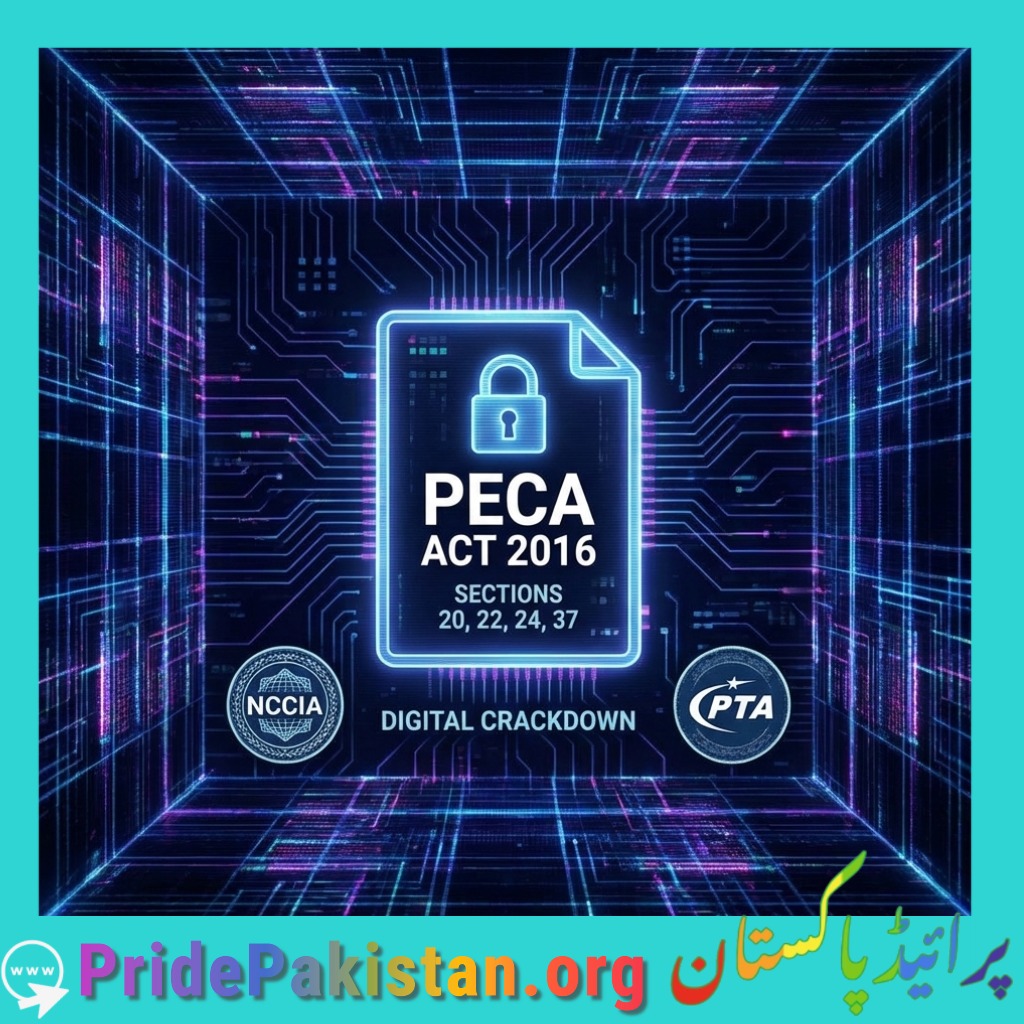
    For years, the digital world was a sanctuary for the LGBTQI community in Pakistan—a place to find community, love, and support in a society that often refuses to acknowledge our existence. However, that sanctuary has been turned into a hunting ground. The Prevention of Electronic Crimes Act (PECA) 2016 is no longer just a law to stop cybercrime; it has become a primary tool for the FIA (Federal Investigation Agency) and NCCIA to target, entrap, and silence gay individuals.

    At PridePakistan.org, we are witnessing a terrifying trend where legal jargon is used to mask state-sponsored persecution. Here is a breakdown of how the PECA Act is being weaponized and why it stands in direct violation of basic human rights.

    The Legal Trap: Decoding the Sections

    The state frequently misinterprets or broadens the scope of specific PECA sections to justify the arrest of community members.

    1. Section 20: Offenses Against Dignity

    While designed to prevent defamation, this section is often used to criminalize private digital expressions of identity. By labeling gay content as “harmful to the dignity” of society or individuals, the state justifies the surveillance of private chats.

    • The Reality: Your private life is not a crime against anyone’s dignity. Privacy is a right, not a privilege.

    2. Section 22: Child Pornography (The Weapon of Scare Tactics)

    As discussed, Section 22 is a severe, non-bailable offense. We have received reports of authorities falsely applying or threatening this section during raids to intimidate gay men into “confessions” or to justify the seizure of their devices.

    • The Reality: Conflating adult, consensual gay relationships with child pornography is a malicious tactic used to dehumanize the community and ensure the public remains silent about these arrests.

    3. Section 24: Spoofing (Digital Identity Under Fire)

    Authorities often use the “Spoofing” clause to target people using pseudonyms or “fake” profiles on dating apps.

    • The Reality: For many LGBTQI Pakistanis, using a pseudonym is a safety necessity, not a criminal act. Forcing individuals to use real identities in a hostile environment puts their lives at risk.

    4. Section 37: Unlawful Online Content

    This is the “censorship” clause used to block PridePakistan.org and other dating platforms. It gives the state the power to decide what is “obscene” or “immoral.”

    • The Reality: Moral policing should not be the basis of law. Accessing information and community support is a fundamental human right.

    How PECA Violates Basic Human Rights

    The use of PECA against the gay community doesn’t just violate local laws; it breaches international human rights standards that Pakistan has committed to uphold.

    • Violation of Privacy (Article 14 of the Constitution): PECA is being used to bypass the “inviolability of dignity and privacy of home.” State agencies are entering the most private digital spaces of citizens without warrant or cause.
    • Freedom of Expression (Article 19): By blocking websites and arresting those who access them, the state is stifling the right to receive and impart information.
    • Right to Liberty and Fair Trial: Many community members are held without proper legal representation, subjected to torture in FIA custody, and forced to sign “confessions” under duress—all under the guise of a PECA investigation.

    A Strong Statement from PridePakistan

    “The Pakistani state is using PECA as a digital noose. Every day, our helpdesk receives thousands of messages from terrified individuals whose lives have been ruined by a simple text message or a dating app profile. These are not ‘criminal gangs’—these are our brothers, friends, and colleagues. Using cybercrime laws to target consensual behavior and identity is a dark stain on Pakistan’s justice system. We demand an immediate end to the entrapment, the torture, and the weaponization of PECA against the LGBTQI community.”

    What Can You Do?

    1. Educate Yourself: Know your rights under PECA. If you are detained, you have the right to remain silent and the right to a lawyer.
    2. Digital Safety: Use encrypted messaging apps (like Signal) and high-quality VPNs. Avoid sharing identifiable information on dating platforms.
    3. Report to Us: If you or someone you know has been targeted by the FIA or NCCIA, reach out to PridePakistan.org. Your story helps us build a case for international advocacy.

    The law should protect citizens, not persecute them for who they love.

  • Escalating Persecution: A Dark Chapter for the Gay Community in Pakistan and the Digital Witch Hunt by FIA & NCCIA

    Escalating Persecution: A Dark Chapter for the Gay Community in Pakistan and the Digital Witch Hunt by FIA & NCCIA

    A Statement of Solidarity and Urgent Concern

    At PridePakistan.org, we stand in unwavering solidarity with every member of the LGBTQI community currently living under a shadow of fear in Pakistan. Our organization is deeply saddened and outraged by the escalating wave of arrests, digital surveillance, and state-sponsored harassment targeting individuals based on their sexual orientation and gender identity.

    For too long, the international community has been told a convenient narrative: that while homosexuality is technically illegal in Pakistan under colonial-era laws, the state does not actively “prosecute” people for being gay. We are here to tell you that this narrative is a myth. Today, the persecution has moved from the streets to the digital world. The Federal Investigation Agency (FIA) and the National Cyber Crime Investigation Agency (NCCIA) have launched a coordinated crackdown, not just by blocking websites like our own (PridePakistan.org) and popular dating platforms, but by actively hunting down those who attempt to access these safe spaces.

    The Digital Trap: Entrapment and Human Rights Violations

    The Pakistani state is utilizing the NCCIA and FIA to turn the internet into a minefield for the gay community. It is no longer just about censorship; it is about entrapment. Reports indicate that security agencies are monitoring dating platforms and using them to lure community members into “honey traps,” leading to public shaming, arrests, and the registration of First Information Reports (FIRs).

    The blocking of PridePakistan.org and other support resources is a direct attempt to isolate the community, cutting off access to mental health support, legal advice, and a sense of belonging. Even more alarming is the arrest of individuals simply for trying to bypass these blocks to find connection in a society that continues to marginalize them.

    The Reality of Torture and Daily FIRs

    PridePakistan issues this strong statement today because we can no longer remain silent about the volume of suffering we witness. On a daily basis, PridePakistan receives thousands of messages and calls for help. Our community members report:

    • Systemic Torture: Individuals taken into custody by the FIA and police are often subjected to physical and psychological torture.
    • Illegal FIRs: Authorities are using broad “obscenity” and “cybercrime” laws to register cases against gay men, often without any evidence of a crime other than their identity.
    • Blackmail: These arrests often lead to state-sanctioned extortion, where victims are forced to pay bribes to avoid public exposure or further violence.

    These actions are a blatant violation of fundamental human rights, including the right to privacy, the right to assembly, and the right to live free from torture.

    Reframing the Narrative: From “Criminals” to Human Beings

    Recent Urdu news reports (linked below) have characterized these incidents as the “arrest of homosexual gangs” or the “busting of unethical networks.” We want to rephrase these events for what they truly are: The targeting of vulnerable citizens seeking connection.

    Where the local media says “FIA arrests gang involved in unethical activities,” we say: “State agencies target individuals seeking safe digital spaces for community building.” Where headlines scream “Homosexual network busted via mobile apps,” we recognize: “The state is violating the digital privacy of LGBTQI individuals to justify illegal detention.”

    We urge the Pakistani state to remember that the gay community in Pakistan consists of its own citizens—doctors, engineers, students, and workers—who deserve the same protection of law as any other individual.

    Call to Action

    We call upon human rights organizations, both local and international, to take notice of the FIA and NCCIA’s targeted campaign against the gay community in Pakistan. Privacy is a human right. Connection is a human right. Freedom from torture is a human right.

    To our community members: Please stay safe. Use high-quality VPNs, be cautious of who you meet via digital platforms, and know that PridePakistan.org continues to fight for your visibility and safety, even when the state tries to switch off our lights.

    References and News Archive

    The following reports document the recent surge in state actions against the community. We include these to show the scale of the crackdown, while condemning the derogatory language often used by these outlets:

    1. BBC Urdu: Crackdown on social media and dating apps
    2. Daily Pakistan: FIA actions against dating platform users
    3. Jang News: Reports on arrests related to digital networking
    4. City42: Police and FIA raids on community members
    5. Express News: Targeted arrests of gay individuals in major cities
    6. Googly News: The state’s focus on “Blue” apps and digital surveillance

  • PridePakistan Strongly Condemns PTA’s Blocking of Our Website and the Escalating Digital Crackdown on the LGBTQIA+ Community

    PridePakistan Strongly Condemns PTA’s Blocking of Our Website and the Escalating Digital Crackdown on the LGBTQIA+ Community

    The digital repression of LGBTQIA+ people in Pakistan has entered a new and alarming phase. After years of blocking gay dating apps, LGBTQIA+ websites, and online support platforms, the Pakistan Telecommunication Authority (PTA) — in coordination with FIA, NCCIA, and other state agencies — has now blocked access to PridePakistan.org inside Pakistan.

    This is not an isolated act of censorship.
    It is part of a systematic effort to erase, silence, and endanger the LGBTQIA+ community.

    PridePakistan.org Blocked Nationwide — Even VPNs and Proxies Targeted

    For many years, LGBTQIA+ Pakistanis have relied on PridePakistan.org as one of the only safe, community‑run platforms offering:

    • Mental health support
    • Legal information
    • Emergency guidance
    • Asylum resources
    • Community connection
    • Safety alerts

    But instead of protecting vulnerable citizens, the state has chosen to criminalise access to support.

    PTA has:

    • Blocked PridePakistan.org across all major ISPs
    • Blocked gay dating apps and LGBTQIA+ websites
    • Blocked VPNs and proxy services commonly used to access PridePakistan.org
    • Pressured tech companies to restrict LGBTQIA+ content

    This is not “internet regulation.”
    This is targeted digital persecution.

    PTA Has Written to Social Media Platforms and Tech Companies to Block PridePakistan

    In a deeply troubling escalation, PTA has written to multiple global platforms — including Linktree, social media companies, and IT service providers — instructing them to block access to PridePakistan.org and related resources inside Pakistan.

    This means:

    • LGBTQIA+ Pakistanis cannot access our Linktree
    • Our social media links may be restricted
    • Our educational resources are being censored
    • Our safety guides are being intentionally hidden

    This is an attempt to cut off the community from every possible lifeline.

    A Pattern of State‑Backed Harassment and Digital Surveillance

    The blocking of PridePakistan.org comes after years of:

    • Arrests of gay men through digital entrapment
    • FIA and NCCIA raids based on online activity
    • Phone searches without consent
    • FIRs filed under cybercrime and morality laws
    • Torture and harassment of detainees
    • Public humiliation in media reports
    • Censorship of LGBTQIA+ content across platforms

    Authorities claim that “Pakistan does not prosecute people for being gay.”
    But the evidence — and the lived experience of thousands — tells a very different story.

    PridePakistan’s Official Statement

    On behalf of PridePakistan, we issue this clear and unwavering condemnation:

    Blocking PridePakistan.org, targeting LGBTQIA+ websites, arresting gay community members, and censoring digital access are violations of fundamental human rights, freedom of expression, and the right to safety.

    These actions:

    • Endanger LGBTQIA+ lives
    • Cut off access to mental health and legal support
    • Force people into isolation
    • Criminalise identity and existence
    • Violate international human rights standards

    We receive thousands of messages every year from LGBTQIA+ Pakistanis who are terrified, targeted, and desperate for help. Blocking our website does not stop the community from existing — it only makes them more vulnerable.

    Why This Matters

    When a state blocks:

    • LGBTQIA+ websites
    • Gay dating apps
    • VPNs
    • Proxies
    • Social media links
    • Community support platforms

    …it is not “regulation.”
    It is erasure.

    It is an attempt to silence a community that already lives under threat, discrimination, and violence.

    PridePakistan Will Continue to Stand With the Community

    Despite censorship, intimidation, and state pressure, PridePakistan remains committed to:

    • Providing support
    • Sharing resources
    • Documenting abuses
    • Advocating for human rights
    • Amplifying LGBTQIA+ voices

    We will continue to operate globally, and we will continue to fight for the safety, dignity, and freedom of LGBTQIA+ Pakistanis.

    The community deserves protection — not persecution.

  • Emergencies

    Emergencies

    At PridePakistan.org, we know that in moments of extreme crisis, whether you are facing physical violence, a forced marriage, or thoughts of self-harm—finding help can feel impossible. Please remember that our organization does not have its own rescue teams; we rely on these public services to keep you safe.

    CategoryServiceNumberWhy Contact This Number?
    Life & SafetyPolice Emergency15For immediate physical danger, theft, or assault.
    All-in-One RescueRescue 11221122Primary contact for ambulance, fire, or disaster rescue (Best in Punjab/KPK).
    Ambulance (NGO)Edhi Foundation115Reliable, nationwide medical transport.
    Ambulance (NGO)Chhipa1020Extremely fast emergency transport (Best in Karachi/Sindh).
    Ambulance (Private)Aman Ambulance1021Advanced life-support medical emergencies.
    Fire EmergencyFire Brigade16For active fire situations if 1122 is unavailable.
    Online SafetyFIA Cybercrime1991If you are being blackmailed, harassed online, or your private photos are being leaked.
    Human RightsMO Human Rights1099To report illegal confinement, forced marriage, or torture.
    Child SafetyChild Protection1121For those under 18 facing family violence or abuse.
    Mental HealthHumraaz (Govt)1166For suicide prevention and immediate psychological support.
    Security (Rural)Rangers1101For security assistance in areas where Rangers are active.
    Security (Border)Coast Guards1102For emergencies in coastal rural regions.

    🛡️ Your Safety Protocol

    In any emergency call to 15 or 1122, you do not need to disclose your sexual orientation or gender identity. Focus on the physical threat: State clearly if you are being attacked, if there is a medical emergency, or if you are being held against your will.

    • Privacy is protection: Keep your identity private during the initial call to ensure responders arrive quickly without bias.

    🚨 Emergency Contacts by Region

    While 1122 (Rescue) and 15 (Police) are the standard for most of Pakistan, here are the specific contacts for administrative and rural territories:

    Federal & Northern Territories

    • Islamabad (ICT): Police: 15 or (051) 9102108
      • Rescue/Ambulance: 1122
    • Gilgit-Baltistan (GB): Police: 15
      • Rescue 1122: Active in major districts like Gilgit and Skardu.
    • Azad Jammu & Kashmir (AJK): Police: 15
      • Rescue 1122: Dial 1122 for ambulance and disaster relief.

    Rural and Border Area Assistance (Army/Paramilitary)

    In remote or rural areas where police presence may be thin, these paramilitary forces often provide security:

    • Rangers (Sindh/Punjab): 1101
    • Frontier Corps (KPK/Balochistan): Contact local checkposts or dial 1122 to be routed to the nearest security assistance.
    • Coast Guards (Coastal Rural areas): 1102

    👮 Tahafuz Centers & Specialized Police Support

    If you feel you must disclose your queer identity to seek protection, we recommend visiting a Tahafuz Center (Protection Center). These are specialized desks within police stations designed to support marginalized groups.

    While these desks are specifically for transgender individuals, the officers there are often trained to be more empathetic. You may find it safer to speak with a Transgender Police Officer about your situation than a regular officer.

    • Rawalpindi: Tahafuz Center, Police Lines HQ.
      • Contact: (051) 9292675
    • Lahore: Multiple “Meesaq” and “Tahafuz” centers (e.g., Liberty Khidmat Markaz).
    • Multan: Tahafuz Center at Police Lines Multan.
    • Karachi: Gender Protection Unit at various Model Police Stations.

    Advice: When approaching these centers, you can ask to speak specifically with the Transgender Victim Support Officer (TVSO). While you may be gay or lesbian, these officers are your best chance for a non-judgmental hearing within the police system.

    ⚖️ Human Rights & Child Protection

    If your rights are being violated by your family (forced marriage, conversion therapy, or confinement), use these official oversight numbers:

    • Ministry of Human Rights Helpline: 1099 (National)
    • Child Protection & Welfare (For those under 18): 1121
    • FIA Cybercrime (Blackmailing/Online Harassment): 1991

    💚 Mental Health & Suicidal Thoughts

    If the psychological pressure of forced marriage or family stigma feels unbearable, please do not give up. You are loved, and your life has immense value. If you are having thoughts of suicide or self-harm, please visit our dedicated support section immediately for professional, discreet help:

    CLICK HERE FOR PRIDEPAKISTAN MENTAL HEALTH SUPPORT

    Direct Helplines for Crisis:

    • Humraaz (Govt Mental Health): 1166
    • Taskeen Helpline: 0316-8275336
    • Umang Suicide Prevention: 0311-7786264

    📝 Report an Incident

    If you have used any of these services and faced discrimination or been refused help because of your identity, please let us know. We document these cases to fight for better protections for the LGBTQIA+ community in Pakistan.

    LINK TO REPORT EMERGENCY SERVICE DISCRIMINATION

    https://forms.gle/WoFG466RTBB44PXg9