Tag: Pride Pakistan

  • گھر کی تقسیم پاکستان کی ہم جنسی پرست اور ٹرانس جینڈر کمیونٹی کے اندرونی خلفشار اور ذہنی دباؤ کی صورتحال

    گھر کی تقسیم پاکستان کی ہم جنسی پرست اور ٹرانس جینڈر کمیونٹی کے اندرونی خلفشار اور ذہنی دباؤ کی صورتحال

    پاکستان میں ایل جی بی ٹی کیو آئی کمیونٹی کو باہر سے دیکھنے والے اسے ایک متحد گروہ سمجھتے ہیں جو ریاست کی ناانصافیوں کے خلاف کھڑا ہے لیکن حقیقت بہت مختلف اور تکلیف دہ ہے پرائیڈ پاکستان نے یہ محسوس کیا ہے کہ ریاست اور سماج کی طرف سے ملنے والی نفرت اب کمیونٹی کے اندر بھی جڑیں پکڑ چکی ہے مسلسل خوف اور قانونی پابندیوں نے ایسا ماحول پیدا کر دیا ہے جہاں لوگ اپنی بقا کی خاطر اپنے ہی ساتھیوں کے خلاف توانائی استعمال کرنے لگے ہیں

    وفاقی شرعی عدالت کا معاملہ اور کمیونٹی کی تقسیم

    اس اندرونی ٹوٹ پھوٹ کی سب سے بڑی مثال دو ہزار تئیس میں ٹرانس جینڈر ایکٹ کے خلاف ہونے والی قانونی جنگ ہے اس وقت صرف مذہبی حلقے ہی اس قانون کے خلاف نہیں تھے بلکہ ٹرانس جینڈر کمیونٹی کے ہی کچھ گروہوں نے اپنے ہی لوگوں کے خلاف عدالت کا دروازہ کھٹکھٹایا انہوں نے یہ موقف اختیار کیا کہ صنفی شناخت کا حق غیر اسلامی ہے ان گروہوں نے صرف مخصوص جسمانی حالت والے افراد کو تسلیم کرنے کی حمایت کی اور ان تمام لوگوں کو کمیونٹی سے بے دخل کرنے کی کوشش کی جو اپنی شناخت کی بنیاد پر زندگی گزارنا چاہتے ہیں یہ قدم سماجی قبولیت حاصل کرنے کی ایک ناکام کوشش تھی جس نے پوری کمیونٹی کو ناقابل تلافی نقصان پہنچایا

    ٹرانس جینڈر اور ہم جنسی پرستوں کے درمیان دوری

    ایک اور بڑا مسئلہ کچھ ٹرانس جینڈر گروہوں کی طرف سے ہم جنسی پرست مردوں اور خواتین کے خلاف نفرت کا پھیلاؤ ہے اپنی بقا کی خاطر یہ گروہ اکثر یہ کہتے نظر آتے ہیں کہ ٹرانس ہونا تو ایک قدرتی حالت ہے جو اسلام میں جائز ہے لیکن ہم جنسی پرستی ایک گناہ ہے یہ بیانیہ ریاست کی طرف سے ہونے والے ظلم کو مزید جواز فراہم کرتا ہے اور کمیونٹی کو حصوں میں تقسیم کر دیتا ہے

    ٹرانس جینڈر مردوں کی محرومیاں

    ہماری کمیونٹی میں ٹرانس جینڈر خواتین کو تو کسی حد تک پہچان ملی ہے لیکن ٹرانس جینڈر مرد اب بھی مکمل طور پر نظر انداز کیے جاتے ہیں ٹرانس جینڈر مردوں کو دوہری مشکلات کا سامنا ہے انہیں گھروں میں خواتین پر لگنے والی پابندیوں کا سامنا کرنا پڑتا ہے اور کمیونٹی کے اندر بھی انہیں وہ مقام اور مدد نہیں ملتی جو دوسروں کو حاصل ہے

    ذہنی صحت اور اندرونی نفرت کی وجوہات

    یہ تمام اختلافات اس لیے نہیں ہیں کہ لوگ برے ہیں بلکہ اس کی اصل وجہ وہ ذہنی دباؤ اور مذہبی خوف ہے جو بچپن سے ان کے ذہنوں میں ڈالا جاتا ہے جب ایک انسان کو مسلسل یہ بتایا جائے کہ اس کا وجود جادو یا بیماری ہے تو وہ خود کو درست ثابت کرنے کے لیے اپنے سے زیادہ کمزور ساتھیوں پر حملہ کرتا ہے مناسب علاج اور ہمدردی نہ ملنے کی وجہ سے یہ غصہ اندرونی نفرت کی شکل اختیار کر لیتا ہے

    پرائیڈ پاکستان کا پیغام واضح ہے کہ جب تک ہم سب متحد نہیں ہوں گے کوئی بھی آزاد نہیں ہو سکے گا ہم جنسی پرست ہوں یا ٹرانس جینڈر سب کا دشمن ایک ہی نظام ہے ہمیں ایک دوسرے کو نیچا دکھانے کے بجائے ایک دوسرے کا سہارا بننا ہو گا ہماری بقا صرف اسی صورت میں ممکن ہے اگر ہم اس تقسیم کو ختم کریں اور ایک دوسرے کے حقوق کے لیے آواز اٹھائیں

  • The House Divided: Internal Conflict and Stigma Within Pakistan’s LGBTQI+ Community

    The House Divided: Internal Conflict and Stigma Within Pakistan’s LGBTQI+ Community

    For those looking at Pakistan from the outside, the LGBTQI+ community is often seen as a single, unified front fighting against a common wall of state-sanctioned discrimination. But the reality inside the community is far more complex and, at times, heartbreaking.

    As an organization, PridePakistan.org has witnessed a growing and dangerous trend: the internalizing of state-sponsored hate. The constant pressure from the state, religious authorities, and social stigma has created a “pressure cooker” effect where community members, driven by trauma and a desperate need for social survival, begin to use their energy against one another.

    1. The “Divide and Rule” of the Federal Shariat Court

    The most prominent example of this internal fracture occurred during the 2023 Federal Shariat Court (FSC) challenge against the Transgender Persons (Protection of Rights) Act of 2018.

    In a shocking turn of events, it was not just conservative religious clerics leading the charge ; it was certain factions of the transgender community itself. These groups argued that the law’s provision for “self-perceived identity” was “un-Islamic.” By advocating for a definition of transgender identity rooted strictly in biological “intersex” conditions, they effectively threw their own community members, those who transitioned socially or medically under the bus.

    This was a calculated move for social survival. By aligning themselves with the “Islamic” definition of identity, these groups sought to gain state legitimacy at the expense of others, successfully convincing the court that their peers were “imposters.”

    2. “Trans is Islamic, Gay is Not”: The War on Sexual Orientation

    Perhaps the most damaging conflict is the growing hostility from some transgender groups toward the gay and lesbian community. In a bid to be accepted by mainstream Pakistani society, many trans activists have begun to publicly distance themselves from “gay rights.”

    We frequently see online rhetoric claiming: “Being transgender is a medical condition recognized by Islam, but being gay is a sin prohibited by the Quran.” This narrative is a survival tactic, but it is a deadly one. It validates the state’s persecution of gay and lesbian people while falsely promising “safety” to the transgender community. In reality, it only weakens the collective voice of all gender and sexual minorities, allowing the state to dismantle our rights piece by piece.

    3. The Invisibility of Trans Men

    Within the gender-diverse movement, space is not shared equally. While trans women (often associated with the historical Khwaja Sira culture) have achieved some level of public visibility, appearing in films, media, and even government roles, trans men remain almost entirely invisible.

    Trans men in Pakistan face a double burden. Because they are often assigned female at birth (AFAB), they are subjected to the extreme restrictions placed on women in Pakistani society, including “honor”-based surveillance and limited mobility. Within the LGBTQI+ movement, they are often sidelined. Trans women’s organizations frequently fail to include the unique needs of trans men in their advocacy, leaving them without a guru system, without a community, and without a voice.

    4. Mental Health: The Root of the Conflict

    Why is this happening? It is not because our community is “hateful.” It is because of Internalized Stigma and Religious Trauma.

    When you are told from birth that your existence is “black magic,” a “spiritual disease,” or an “affront to God,” you develop a deep-seated need to prove you are “one of the good ones.” This leads to:

    • Horizontal Hostility: Attacking those within your community who are “more different” than you to appear more “normal” to the state.
    • Trauma-Induced Aggression: When mental health support is unavailable and you are forced into “conversion” sessions, that suppressed anger often manifests as hate toward your peers.

    At Pride Pakistan, we believe that no one is free until we are all free. Using our energy to fight each other only does the state’s work for them. We must recognize that the “Islamic vs. Un-Islamic” debate is a trap designed to divide us.

    We call for a community that:

    • Centers Trans Men: Recognizing that visibility is a right, not a privilege for one group.
    • Rejects the “Gay vs. Trans” Divide: Understanding that our struggles are linked by the same systemic oppression.
    • Prioritizes Healing: Moving away from religious shaming and toward affirmative, secular support.

    Our survival depends on unity. If we continue to tear each other down to satisfy a state that wants us all gone, we will have no one left to stand with.

  • شناخت کا قطب نما: اصطلاحات، لیبل اور پہچان

    شناخت کا قطب نما: اصطلاحات، لیبل اور پہچان

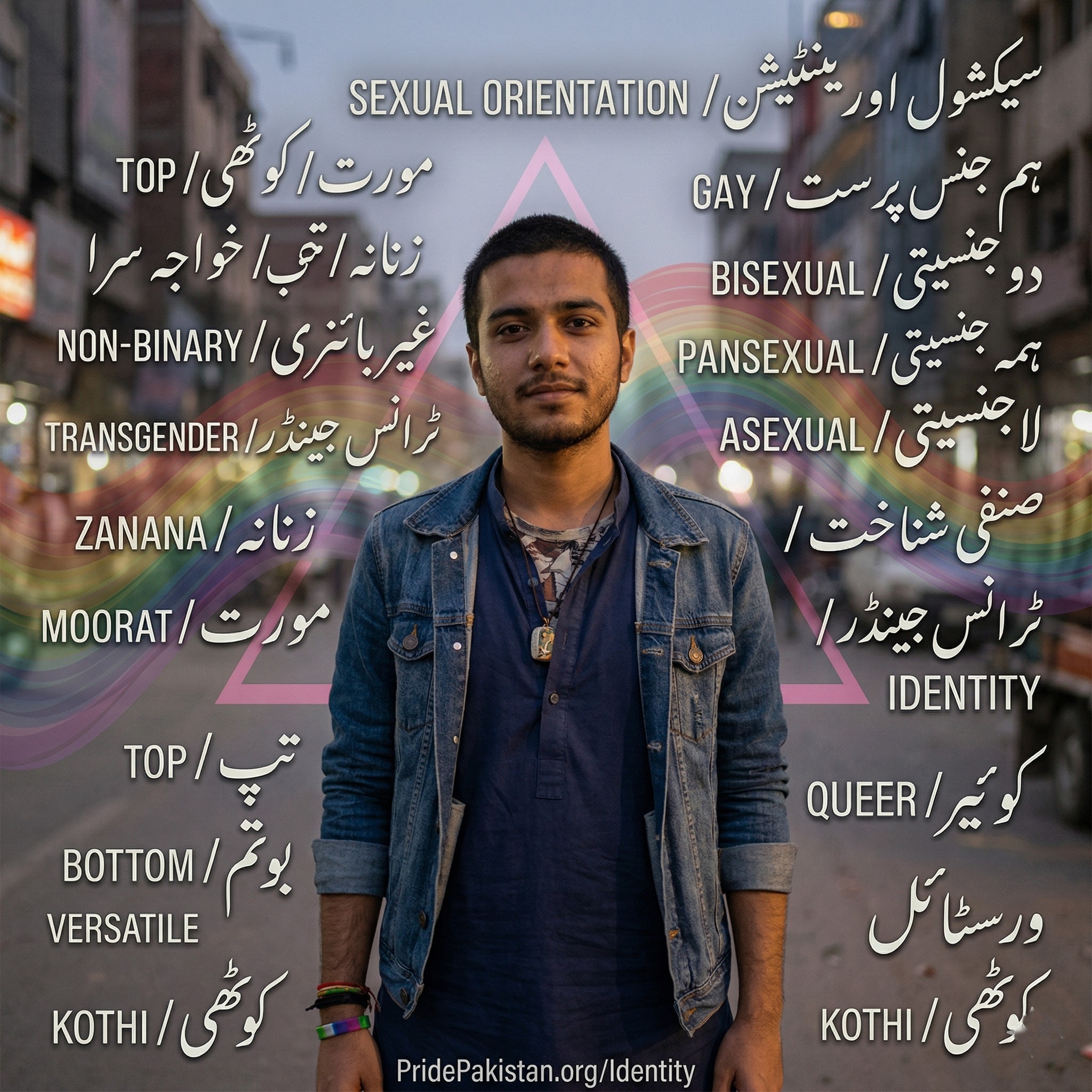
    زبان خود کو سمجھنے کی کلید ہے۔ بہت عرصے سے پاکستان میں ہماری کمیونٹی کو ایسے خانوں میں بند کرنے کی کوشش کی گئی ہے جو ہم پر پورے نہیں اترتے، یا الفاظ کی کمی کی وجہ سے ہمیں خاموش رکھا گیا ہے۔ یہ حصہ ہماری شناختوں کے خوبصورت تنوع کو سمجھنے کے لیے ایک گائیڈ ہے—جو عالمی اصطلاحات اور ہماری اپنی بھرپور جنوبی ایشیائی وراثت کے درمیان ایک پل کا کام کرتا ہے۔

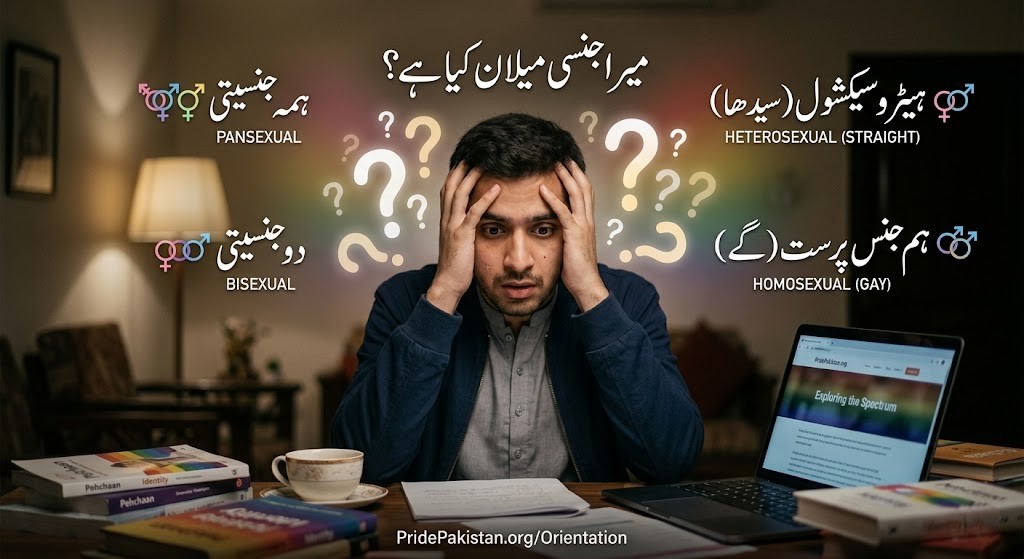
    ا۔ جنسی میلان: ہم کس سے محبت کرتے ہیں

    جنسی میلان آپ کے دل کی کشش کے بارے میں ہے۔ چاہے آپ اپنی ہی صنف کی طرف راغب ہوں، ایک سے زیادہ اصناف کی طرف، یا آپ کو کسی قسم کی کشش محسوس نہ ہوتی ہو، آپ کی حقیقت کے لیے ایک لفظ موجود ہے۔

    ہم جنس پرست: وہ شخص جو بنیادی طور پر اپنی ہی صنف کی طرف کشش محسوس کرے۔

    دو جنسیتی: ایک سے زیادہ اصناف کی طرف کشش۔

    ہمہ جنسیتی: صنف سے قطع نظر لوگوں کی طرف کشش۔

    لا جنسیتی: وہ حالت جہاں جنسی کشش بہت کم یا نہ ہونے کے برابر ہو۔

    [مزید پڑھیں: جنسی میلان کے مختلف رنگوں کی تلاش]

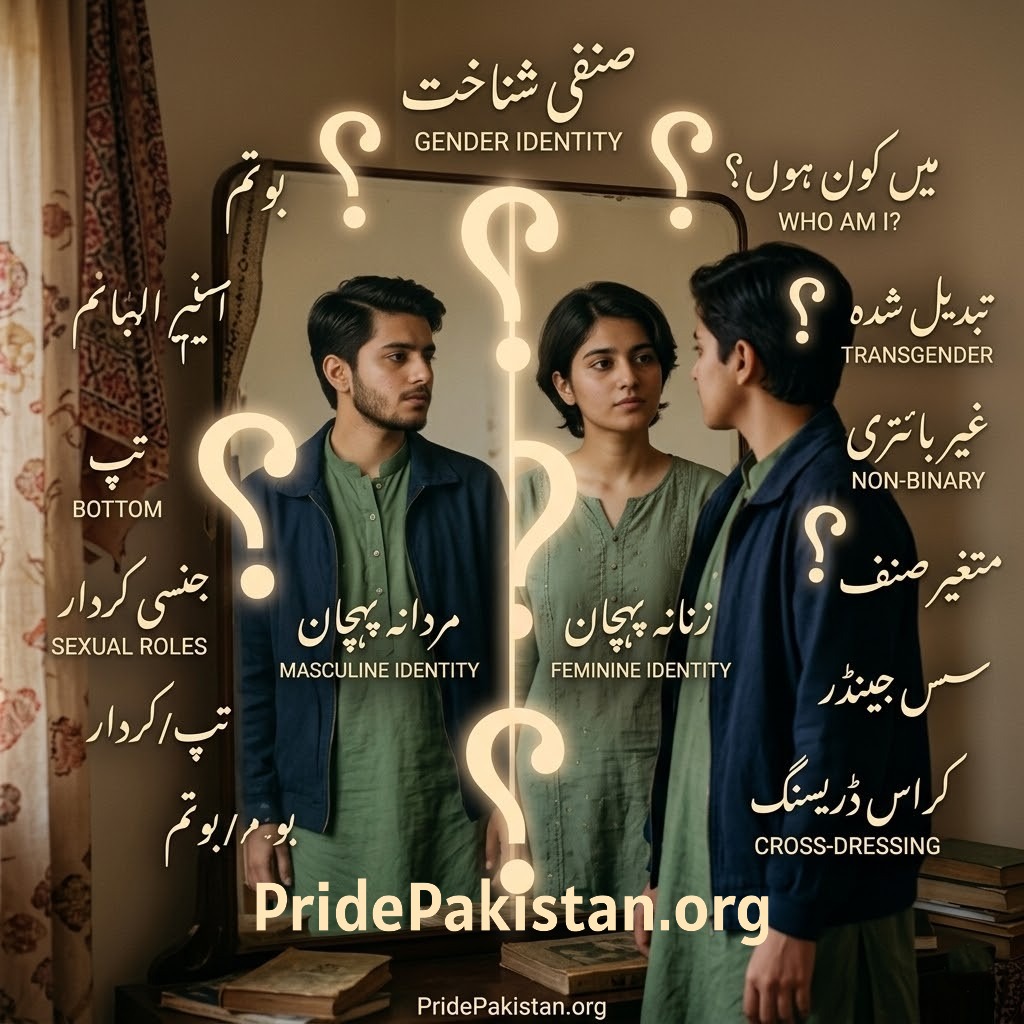
    ۲۔ صنفی شناخت: ہم کون ہیں

    صنفی شناخت آپ کا اپنا اندرونی احساس ہے کہ آپ مرد ہیں، عورت ہیں، دونوں ہیں یا کوئی بھی نہیں ہیں۔ یہ اس صنف سے مختلف ہے جو پیدائش کے وقت آپ کو دی گئی تھی۔

    ٹرانس جینڈر: ان لوگوں کے لیے ایک وسیع اصطلاح جن کی صنفی شناخت ان کی پیدائش کے وقت کی صنف سے مختلف ہو۔

    غیر بائنری: وہ شخص جو خود کو مکمل طور پر صرف مرد یا عورت کے طور پر نہیں پہچانتا۔

    جینڈر کوئیر: صنفی اظہار اور شناخت میں لچک اور تبدیلی۔

    [مزید پڑھیں: مرد اور عورت کی تقسیم سے بالاتر صنف کو سمجھنا]

    ۳۔ ہماری جڑیں: جنوبی ایشیائی اور روایتی اصطلاحات

    مغربی لیبلز کے آنے سے بہت پہلے، ہمارے خطے میں صنف اور خواہش کے لیے اپنے الفاظ موجود تھے۔ ان الفاظ کو دوبارہ اپنانا ہماری اپنی تاریخ سے جڑنے کا ایک طریقہ ہے۔

    خواجہ سرا: جنوبی ایشیا میں ٹرانس جینڈر اور غیر بائنری افراد کے لیے ایک تاریخی اور روحانی شناخت۔

    زنانہ: کمیونٹی کے اندر اکثر ان لوگوں کے لیے استعمال ہونے والی اصطلاح جن کا مزاج یا اظہار نسائی ہو۔

    مورت: کسی شخص کی شکل، صورت یا پہچان کے لیے ایک خوبصورت اور روایتی لفظ۔

    [مزید پڑھیں: اپنی مقامی اور دیسی زبان کو دوبارہ اپنانا]

    ۴۔ کمیونٹی کی زبان: کردار اور سماجی میل جول

    پاکستان میں گے (Gay) اور کوئیر کمیونٹی کے اندر، مخصوص اصطلاحات مختلف کرداروں اور تعلقات کی نوعیت کو بیان کرنے کے لیے استعمال ہوتی ہیں۔ ان کو سمجھنا کمیونٹی میں محفوظ طریقے سے گھلنے ملنے میں مدد دیتا ہے۔

    تپ: عام طور پر تعلق میں زیادہ فعال یا غالب ساتھی کے لیے استعمال ہوتا ہے۔

    بوتم: عام طور پر تعلق میں زیادہ وصول کنندہ یا مغلوب ساتھی کے لیے استعمال ہوتا ہے۔

    ورسٹائل: وہ شخص جو دونوں کرداروں میں خوشی محسوس کرے۔

    کوتھی اور پانتھی: صنفی اور جنسی کرداروں کو بیان کرنے کے لیے استعمال ہونے والی قدیم علاقائی اصطلاحات۔

    [مزید پڑھیں: کمیونٹی کے کرداروں اور مخصوص بول چال کی گائیڈ]

    ۵۔ کوئیر: ایک وسیع پہچان

    کسی زمانے میں “کوئیر” کا لفظ طنز کے طور پر استعمال ہوتا تھا، لیکن اب عالمی سطح پر اور پاکستان میں ہماری کمیونٹی نے اسے فخر کے ساتھ ایک سیاسی اور سماجی شناخت کے طور پر اپنا لیا ہے۔ یہ لفظ ہر اس شخص کے لیے ہے جو خود کو مروجہ خانوں میں بند نہیں کرنا چاہتا اور فخر سے کہتا ہے کہ “میں مختلف ہوں اور مجھے اس پر ناز ہے”۔

    [مزید پڑھیں: ہم لفظ کوئیر کیوں استعمال کرتے ہیں؟]

  • The Identity Compass: Terms, Labels, and Pehchaan

    The Identity Compass: Terms, Labels, and Pehchaan

    Language is the key to understanding who we are. For too long, our community in Pakistan has been forced into boxes that don’t fit, or silenced by a lack of words. This section is a guide to the beautiful diversity of our identities—bridging the gap between global terminology and our rich South Asian heritage.

    1. Sexual Orientation: Who We Love

    Sexual orientation is about your heart’s attraction. Whether you are attracted to the same gender, multiple genders, or experience no attraction, there is a word for your truth.

    • Gay / ہم جنس پرست: A person attracted primarily to the same gender.
    • Bisexual / دو جنسیتی: Attraction to more than one gender.
    • Pansexual / ہمہ جنسیتی: Attraction to people regardless of their gender.
    • Asexual / لاجنسیتی: Experiencing little to no sexual attraction.

    Read More: Exploring the Spectrum of Orientation

    2. Gender Identity: Who We Are

    Gender identity is your internal sense of being male, female, both, or neither. It is different from the sex you were assigned at birth.

    • Transgender / ٹرانس جینڈر: An umbrella term for people whose gender identity differs from their birth sex.
    • Non-Binary / غیر بائنری: Someone who does not identify strictly as a man or a woman.
    • Genderqueer: Fluidity in gender expression and identity.

    Read More: Understanding Gender Beyond the Binary

    3. Our Roots: South Asian & Traditional Terms

    Long before Western labels arrived, our region had its own vocabulary for gender and desire. Reclaiming these terms is an act of decolonization.

    • Khwaja Sira / خواجہ سرا: A historical and spiritual identity in South Asia for trans and non-binary individuals.
    • Zanana / زنانہ: A term often used within the community for those with a feminine spirit or expression.
    • Moorat / مورت: A beautiful, traditional term for a person’s form or identity.

    [Read More: Reclaiming our Indigenous Vocabulary]

    4. Community Language: Roles & Dynamics

    Within the gay and queer community in Pakistan, specific terms are used to describe roles and relationship dynamics. Understanding these helps in navigating the social scene safely.

    • Top / تپ: Usually refers to the more dominant or active partner.
    • Bottom / بوتم: Usually refers to the more receptive partner.
    • Versatile / ورسٹائل: Someone who enjoys both roles.
    • Kothi & Panthi: Traditional regional terms used to describe roles and feminine/masculine dynamics.

    [Read More: A Guide to Community Roles and Slang]

    5. Queer / کوئیر: The Power of the Umbrella

    Once used as a slur, “Queer” has been reclaimed by our community globally and in Pakistan as a political and social identity that rejects rigid boxes. It is a way to say, “I am different, and I am proud.”

    [Read More: Why we use the word Queer]

    شناخت کا قطب نما: اصطلاحات، لیبل اور پہچان

    زبان خود کو سمجھنے کی کلید ہے۔ بہت عرصے سے پاکستان میں ہماری کمیونٹی کو ایسے خانوں میں بند کرنے کی کوشش کی گئی ہے جو ہم پر پورے نہیں اترتے، یا الفاظ کی کمی کی وجہ سے ہمیں خاموش رکھا گیا ہے۔ یہ حصہ ہماری شناختوں کے خوبصورت تنوع کو سمجھنے کے لیے ایک گائیڈ ہے—جو عالمی اصطلاحات اور ہماری اپنی بھرپور جنوبی ایشیائی وراثت کے درمیان ایک پل کا کام کرتا ہے۔

    ا۔ جنسی میلان: ہم کس سے محبت کرتے ہیں

    جنسی میلان آپ کے دل کی کشش کے بارے میں ہے۔ چاہے آپ اپنی ہی صنف کی طرف راغب ہوں، ایک سے زیادہ اصناف کی طرف، یا آپ کو کسی قسم کی کشش محسوس نہ ہوتی ہو، آپ کی حقیقت کے لیے ایک لفظ موجود ہے۔

    ہم جنس پرست: وہ شخص جو بنیادی طور پر اپنی ہی صنف کی طرف کشش محسوس کرے۔

    دو جنسیتی: ایک سے زیادہ اصناف کی طرف کشش۔

    ہمہ جنسیتی: صنف سے قطع نظر لوگوں کی طرف کشش۔

    لا جنسیتی: وہ حالت جہاں جنسی کشش بہت کم یا نہ ہونے کے برابر ہو۔

    [مزید پڑھیں: جنسی میلان کے مختلف رنگوں کی تلاش]

    ۲۔ صنفی شناخت: ہم کون ہیں

    صنفی شناخت آپ کا اپنا اندرونی احساس ہے کہ آپ مرد ہیں، عورت ہیں، دونوں ہیں یا کوئی بھی نہیں ہیں۔ یہ اس صنف سے مختلف ہے جو پیدائش کے وقت آپ کو دی گئی تھی۔

    ٹرانس جینڈر: ان لوگوں کے لیے ایک وسیع اصطلاح جن کی صنفی شناخت ان کی پیدائش کے وقت کی صنف سے مختلف ہو۔

    غیر بائنری: وہ شخص جو خود کو مکمل طور پر صرف مرد یا عورت کے طور پر نہیں پہچانتا۔

    جینڈر کوئیر: صنفی اظہار اور شناخت میں لچک اور تبدیلی۔

    [مزید پڑھیں: مرد اور عورت کی تقسیم سے بالاتر صنف کو سمجھنا]

    ۳۔ ہماری جڑیں: جنوبی ایشیائی اور روایتی اصطلاحات

    مغربی لیبلز کے آنے سے بہت پہلے، ہمارے خطے میں صنف اور خواہش کے لیے اپنے الفاظ موجود تھے۔ ان الفاظ کو دوبارہ اپنانا ہماری اپنی تاریخ سے جڑنے کا ایک طریقہ ہے۔

    خواجہ سرا: جنوبی ایشیا میں ٹرانس جینڈر اور غیر بائنری افراد کے لیے ایک تاریخی اور روحانی شناخت۔

    زنانہ: کمیونٹی کے اندر اکثر ان لوگوں کے لیے استعمال ہونے والی اصطلاح جن کا مزاج یا اظہار نسائی ہو۔

    مورت: کسی شخص کی شکل، صورت یا پہچان کے لیے ایک خوبصورت اور روایتی لفظ۔

    [مزید پڑھیں: اپنی مقامی اور دیسی زبان کو دوبارہ اپنانا]

    ۴۔ کمیونٹی کی زبان: کردار اور سماجی میل جول

    پاکستان میں گے (Gay) اور کوئیر کمیونٹی کے اندر، مخصوص اصطلاحات مختلف کرداروں اور تعلقات کی نوعیت کو بیان کرنے کے لیے استعمال ہوتی ہیں۔ ان کو سمجھنا کمیونٹی میں محفوظ طریقے سے گھلنے ملنے میں مدد دیتا ہے۔

    تپ: عام طور پر تعلق میں زیادہ فعال یا غالب ساتھی کے لیے استعمال ہوتا ہے۔

    بوتم: عام طور پر تعلق میں زیادہ وصول کنندہ یا مغلوب ساتھی کے لیے استعمال ہوتا ہے۔

    ورسٹائل: وہ شخص جو دونوں کرداروں میں خوشی محسوس کرے۔

    کوتھی اور پانتھی: صنفی اور جنسی کرداروں کو بیان کرنے کے لیے استعمال ہونے والی قدیم علاقائی اصطلاحات۔

    [مزید پڑھیں: کمیونٹی کے کرداروں اور مخصوص بول چال کی گائیڈ]

    ۵۔ کوئیر: ایک وسیع پہچان

    کسی زمانے میں “کوئیر” کا لفظ طنز کے طور پر استعمال ہوتا تھا، لیکن اب عالمی سطح پر اور پاکستان میں ہماری کمیونٹی نے اسے فخر کے ساتھ ایک سیاسی اور سماجی شناخت کے طور پر اپنا لیا ہے۔ یہ لفظ ہر اس شخص کے لیے ہے جو خود کو مروجہ خانوں میں بند نہیں کرنا چاہتا اور فخر سے کہتا ہے کہ “میں مختلف ہوں اور مجھے اس پر ناز ہے”۔

    [مزید پڑھیں: ہم لفظ کوئیر کیوں استعمال کرتے ہیں؟]

  • The Khawaja Sira Pride: The Transgender Rights Battle

    The Khawaja Sira Pride: The Transgender Rights Battle

    The period between 2018 and 2024 stands as one of the most historical yet turbulent eras for the Transgender community in Pakistan. It began with a monumental victory: the passing of the Transgender Persons (Protection of Rights) Act in 2018. This law was a beacon of hope, granting transgender individuals the right to self-identify their gender on official documents, providing protections against discrimination in housing and employment, and recognizing their fundamental human rights. It was a rare moment where Pakistan led the way in progressive legislation for marginalized identities.

    Central to this struggle was the tireless work of activists like Jannat Ali. As a prominent transgender rights activist and performer, Jannat Ali was a vital voice in the consultations that led to the 2018 Act. Her activism went beyond the halls of parliament; she was a cultural pioneer who organized the first Transgender Pride (The Khawaja Sira Pride) in Lahore. Through these public marches, she brought the community’s joy, struggle, and resilience into the streets, challenging the status quo and demanding visibility in a society that had long pushed them to the margins.

    However, the victory was short-lived as a massive wave of disinformation and extremist backlash began to target the community. Conservative groups and religious political parties launched a campaign to dismantle the law, claiming it promoted “Western values” and was un-Islamic. This led to the law being challenged in the Federal Shariat Court in 2023, which resulted in significant rollbacks, particularly regarding the right to self-identify. The legal victory was turned into a legal battleground, shifting the focus away from human rights toward a narrow, clinical definition of identity.

    The personal cost of this battle was devastating for those on the front lines. Despite her immense contributions, Jannat Ali faced severe death threats and relentless harassment from extremist elements. The very state that had passed the law often failed to protect its champions. In a heartbreaking turn of events, the person who had organized Prides and fought for the law was forced to leave Pakistan to seek safety in exile. Her departure reflects the tragic reality of many Pakistani LGBTQI activists who find that their own homeland becomes a place of peril for the very courage it once celebrated.

    دو ہزار اٹھارہ سے دو ہزار چوبیس تک کا عرصہ پاکستان میں ٹرانس جینڈر کمیونٹی کے لیے جہاں تاریخی کامیابیوں کا دور تھا وہیں یہ شدید ترین آزمائشوں کا وقت بھی ثابت ہوا۔ اس سفر کا آغاز دو ہزار اٹھارہ میں ٹرانس جینڈر پرسنز پروٹیکشن آف رائٹس ایکٹ کی منظوری سے ہوا جس نے ایک نئی امید پیدا کی۔ اس قانون نے خواجہ سراؤں کو یہ حق دیا کہ وہ اپنی شناخت کا فیصلہ خود کریں اور سرکاری دستاویزات پر اپنی مرضی کی جنس درج کروا سکیں۔ یہ قانون رہائش، روزگار اور تعلیم میں ان کے خلاف امتیازی سلوک کو روکنے اور انہیں بنیادی انسانی حقوق فراہم کرنے کی ایک اہم دستاویز تھی۔

    اس جدوجہد میں جِنت علی جیسی سرگرم کارکنوں کا کردار سنہری حروف سے لکھنے کے قابل ہے۔ جِنت علی نے نہ صرف اس قانون کی منظوری کے لیے پارلیمانی سطح پر مشاورت میں حصہ لیا بلکہ وہ ایک ثقافتی علمبردار بھی ثابت ہوئیں۔ انہوں نے لاہور میں پہلی بار خواجہ سرا پرائیڈ یعنی ٹرانس جینڈر مارچ کا انعقاد کیا جس نے برادری کی خوشی، دکھ اور ہمت کو سڑکوں پر لا کر معاشرے کی تنگ نظری کو چیلنج کیا۔ انہوں نے یہ ثابت کیا کہ خواجہ سرا صرف بھیک مانگنے یا ناچنے کے لیے نہیں بلکہ وہ ایک باوقار شناخت کے حامل شہری ہیں۔

    بدقسمتی سے اس کامیابی کے فوراً بعد انتہا پسند عناصر اور قدامت پسند گروہوں کی جانب سے ایک منظم مہم شروع کر دی گئی۔ غلط معلومات پھیلا کر اس انسانی حقوق کے قانون کو “غیر اسلامی” اور “مغربی ایجنڈا” قرار دے دیا گیا۔ اس مخالفت کا نتیجہ یہ نکلا کہ دو ہزار تئیس میں وفاقی شرعی عدالت میں اس قانون کو چیلنج کر دیا گیا جس کے نتیجے میں اس کی کئی اہم شقیں خاص طور پر اپنی مرضی کی صنفی شناخت کا حق ختم کر دیا گیا۔ یوں ایک قانونی فتح کو قانونی جنگ میں بدل دیا گیا جس سے پوری کمیونٹی عدم تحفظ کا شکار ہو گئی۔

    اس مہم جوئی کی سب سے بھاری قیمت ان کارکنوں کو چکانی پڑی جو اس تحریک کا چہرہ تھے۔ جِنت علی کو ان کی خدمات کے بدلے میں انتہا پسندوں کی جانب سے قتل کی دھمکیاں دی گئیں اور ان کا جینا محال کر دیا گیا۔ وہ ریاست جو قانون پاس کر چکی تھی، اپنے ان ہیروز کو تحفظ فراہم کرنے میں ناکام رہی۔ بالآخر حالات اس حد تک خراب ہو گئے کہ وہ جِنت علی جنہوں نے پرائیڈ مارچ منظم کیے تھے، انہیں اپنی جان بچانے کے لیے پاکستان چھوڑ کر جلاوطنی اختیار کرنی پڑی۔ ان کا جانا اس تلخ حقیقت کو ظاہر کرتا ہے کہ پاکستان میں حقوق کی بات کرنے والوں کو اکثر اپنے ہی وطن میں اجنبی بنا دیا جاتا ہے۔

  • The US Embassy Incident & Extremist Backlash 2011 : A Turning Point for Safety

    The US Embassy Incident & Extremist Backlash 2011 : A Turning Point for Safety

    The 2011 US Embassy Pride incident stands as one of the most polarizing and consequential moments in the modern history of LGBTQI activism in Pakistan.

    On June 26, 2011, the US Embassy in Islamabad hosted its first-ever “Gay, Lesbian, Bisexual, and Transgender (GLBT) Pride Celebration,” an event intended to show solidarity with the local community and promote human rights. While the gathering was private and held within the embassy walls, the subsequent news release triggered a massive and violent wave of backlash from religious extremist groups and conservative political parties. Protests erupted in major cities like Karachi, Lahore, and Islamabad, with demonstrators burning effigies and accusing the organizers of “cultural terrorism” and attempting to impose “Western values” on an Islamic society.

    This backlash was not merely rhetorical; it led to a severe tightening of security and surveillance over local activists. The incident inadvertently created a narrative that linked LGBTQI rights exclusively to foreign intervention, making the lives of grassroots activists even more dangerous. Many organizations were forced to go underground, and the “visibility” gained from the event came at a staggering cost to the safety of ordinary queer Pakistanis who had no diplomatic protection.

    میں امریکی سفارت خانے میں ہونے والی پرائیڈ تقریب پاکستان میں ایل جی بی ٹی کیو آئی (LGBTQI) تحریک کی جدید تاریخ کے سب سے زیادہ متنازعہ اور اثر انداز لمحات میں سے ایک مانی جاتی ہے

    ۔ 26 جون 2011 کو اسلام آباد میں امریکی سفارت خانے نے اپنی پہلی “گے، لیسبیئن، بائی سیکشول، اور ٹرانس جینڈر (GLBT) پرائیڈ” تقریب کی میزبانی کی، جس کا مقصد مقامی کمیونٹی کے ساتھ اظہارِ یکجہتی اور انسانی حقوق کا فروغ تھا۔ اگرچہ یہ ایک نجی تقریب تھی جو سفارت خانے کی دیواروں کے اندر منعقد ہوئی، لیکن اس کی خبر منظرِ عام پر آتے ہی مذہبی انتہا پسند گروہوں اور قدامت پسند سیاسی جماعتوں کی جانب سے شدید ردِعمل اور پرتشدد احتجاج کا سلسلہ شروع ہو گیا۔ کراچی، لاہور اور اسلام آباد جیسے بڑے شہروں میں مظاہرے ہوئے جہاں پتلے جلائے گئے اور منتظمین پر “ثقافتی دہشت گردی” اور اسلامی معاشرے پر “مغربی اقدار” مسلط کرنے کے الزامات لگائے گئے

    ۔ یہ ردِعمل صرف بیان بازی تک محدود نہیں رہا، بلکہ اس کے نتیجے میں مقامی کارکنوں کی نگرانی اور سیکورٹی میں شدید سختی کر دی گئی۔ اس واقعے نے نادانستہ طور پر ایک ایسا بیانیہ پیدا کر دیا جس نے ایل جی بی ٹی کیو آئی حقوق کو مکمل طور پر بیرونی مداخلت سے جوڑ دیا، جس سے عام کارکنوں کی زندگیاں مزید خطرے میں پڑ گئیں۔ کئی تنظیمیں روپوش ہونے پر مجبور ہو گئیں، اور اس تقریب سے حاصل ہونے والی “نمایاں پہچان” کی قیمت ان عام پاکستانیوں کو اپنی حفاظت کی صورت میں چکانی پڑی جنہیں کوئی سفارتی تحفظ حاصل نہیں تھا۔

  • The Era of NAZ: From Empowerment to the Shadows

    The Era of NAZ: From Empowerment to the Shadows

    ناز کا دور: بااختیار ہونے سے سائے تک کا سفر

    English Version Urdu Version
    The Peak of Visibility: Lahore Pride 2019
    Between 2010 and 2019, the NAZ Male Health Alliance stood as a beacon of hope. It empowered thousands, culminating in events like the Lahore Underground Pride of 2019. For a brief moment, behind closed doors, the gay community felt safe, seen, and organized. These gatherings were not just parties; they were acts of resistance and spaces for healing.
    نمایاں ہونے کا عروج: لاہور پرائیڈ 2019
    سے 2019 کے درمیان، ‘ناز میل ہیلتھ الائنس’ امید کی ایک کرن بن کر ابھرا۔ اس نے ہزاروں لوگوں کو بااختیار بنایا، جس کا نتیجہ 2019 کی لاہور انڈر گراؤنڈ پرائیڈ جیسی سرگرمیوں کی صورت میں نکلا۔ بند دروازوں کے پیچھے، گے کمیونٹی نے خود کو محفوظ اور منظم محسوس کیا۔ یہ اجتماعات صرف محفلیں نہیں تھیں، بلکہ یہ مزاحمت اور حوصلہ افزائی کے مراکز تھے۔
    The Brutal Crackdown: Raids and Trauma
    As visibility increased, so did state surveillance. The “safe spaces” were shattered by violent police raids. Officers began beating participants, extorting money, and recording humiliating videos to threaten people with exposure. Many victims were sexually abused during these raids—traumas that remain unspoken due to the fear of further persecution. Most of these incidents never reached the news, leaving the victims to suffer in silence.
    بدترین کریک ڈاؤن: چھاپے اور صدمات
    جیسے جیسے کمیونٹی کی سرگرمیاں بڑھیں، ریاستی نگرانی میں بھی اضافہ ہوا۔ پولیس کے پرتشدد چھاپوں نے “محفوظ مقامات” کو تباہ کر دیا۔ افسران نے شرکاء کو مارنا پیٹنا، پیسے بٹورنا اور لوگوں کی تذلیل کی ویڈیوز بنانا شروع کر دیں تاکہ انہیں بے نقاب کرنے کی دھمکیاں دی جا سکیں۔ ان چھاپوں کے دوران کئی افراد کو جنسی تشدد کا نشانہ بنایا گیا—ایسے صدمات جن پر آج بھی خوف کی وجہ سے خاموشی چھائی ہوئی ہے۔
    Legal Weaponization: Drugs and PECA Laws
    The state moved from physical violence to legal warfare. Activists were jailed under fake FIRs for drug possession or “vulgarity.” Mobile phones were searched, and individuals were charged under pornography and cybercrime laws for simply having private community chats. This systemic targeting forced NAZ to close its doors in 2021, and the “Pink Triangle” alliance became decentralized as leaders fled the country or went into deep hiding.
    قانون کا غلط استعمال: منشیات اور سائبر کرائم قوانین
    ریاست نے جسمانی تشدد سے قانونی جنگ کی طرف رخ کر لیا۔ کارکنوں کو منشیات یا “فحاشی” کی جھوٹی ایف آئی آرز کے تحت جیلوں میں ڈال دیا گیا۔ موبائل فونز کی تلاشی لی گئی اور محض نجی کمیونٹی چیٹس کی بنیاد پر لوگوں پر فحاشی اور سائبر کرائم کے مقدمات درج کیے گئے۔ اس منظم نشانہ دہی نے 2021 میں ناز کو اپنے دفاتر بند کرنے پر مجبور کر دیا، اور بہت سے رہنما ملک چھوڑ کر چلے گئے یا روپوش ہو گئے۔
    2025: A Landscape of Fear
    Today, the climate in Lahore is more dangerous than ever. Religious extremist officers and security agencies actively target any gathering. A recent example is the 2025 Lahore transgender art event by Jane Hasseen and Zanan Khana, which faced severe backlash and legal threats. PridePakistan.org now works to bridge this gap, moving our activism online to ensure that while our physical spaces are under siege, our ideology remains unbreakable.
    2025: خوف کا سماں
    آج لاہور میں حالات پہلے سے کہیں زیادہ خطرناک ہیں۔ مذہبی انتہا پسند افسران اور سیکورٹی ایجنسیوں کے اہلکار کسی بھی اجتماع کو نشانہ بناتے ہیں۔ اس کی تازہ مثال 2025 میں جین حسین اور زنان خانہ کے زیرِ اہتمام ہونے والی ٹرانس جینڈر آرٹ نمائش ہے، جسے شدید مخالفت اور قانونی دھمکیوں کا سامنا کرنا پڑا۔ اب پرائیڈ پاکستان اس فاصلے کو ختم کرنے کے لیے ڈیجیٹل میدان میں کام کر رہا ہے تاکہ ہماری آواز دبنے نہ پائے۔

  • The Great Disruption: How Section 377 Colonized the Pakistani Mind

    The Great Disruption: How Section 377 Colonized the Pakistani Mind

    The homophobia we face in Pakistan today is not an “Islamic” invention; it is a British export. To understand why we are criminalized today, we must look at the year 1860—the year our indigenous fluidity was replaced by Victorian shame.

    1860: The Arrival of Lord Macaulay’s Law

    Before the British Raj, there was no systematic legal “hunt” for same-sex intimacy in the subcontinent. This changed when Lord Thomas Macaulay drafted the Indian Penal Code (IPC). He introduced Section 377, which criminalized “carnal intercourse against the order of nature.”

    The British viewed the subcontinent’s tolerance for diverse genders and desires as “oriental depravity.” They didn’t just bring railroads; they brought a rigid, Christian-Victorian morality that sought to “civilize” us by making us ashamed of our own history.

    1947: A Stolen Independence

    When Pakistan gained independence in 1947, we rightfully celebrated our freedom from the British. However, while the British left, their laws remained. Pakistan inherited the Penal Code almost in its entirety. Section 377—a law written by a man who had never been to Pakistan for a society he didn’t understand—became the law of our new land. Instead of reclaiming our pre-colonial tolerance, the new state kept the colonial tools of policing private lives.

    The Dark Layers of the 1980s

    The situation worsened during the era of Zia-ul-Haq. Under the guise of “Islamization,” the state added the Hudood Ordinances on top of the existing British Section 377. This created a dual-threat legal system where colonial law and a specific, rigid interpretation of Sharia combined to push the LGBTQI community further into the shadows.

    Section 377 Today: More Than Just a Law

    Today, Section 377 is rarely used for actual convictions, but it serves a more sinister purpose: Blackmail and Erasure.

    • Police Harassment: It gives authorities a tool to intimidate, extort, and harass gay men and trans individuals.
    • The War on Ideology: Because “unnatural offenses” are on the books, any attempt to promote “Pride Ideology”—the simple idea that we deserve dignity—is labeled as “promoting obscenity” or “acting against the state.”
    • Digital Targets: Laws like PECA are now being used to target gay dating apps and websites, citing the “unnatural” nature of the community defined by Section 377.

    By keeping this colonial law, we are continuing the work of the British Raj every single day. True independence for Pakistan will only come when we strip away these foreign layers of shame and return to our roots of compassion and diversity.

    نوآبادیاتی دور کی وراثت: دفعہ 377 نے پاکستانی ذہن کو کیسے غلام بنایا

    پاکستان میں آج ہمیں جس نفرت یا ہومو فوبیا کا سامنا ہے، وہ اسلامی نہیں بلکہ برطانوی ایجاد ہے۔ ہماری اصل تاریخ کو 1860 میں اس وقت مسخ کیا گیا جب انگریزوں نے یہاں کے مقامی کلچر پر اپنی اخلاقیات مسلط کیں۔

    1860: لارڈ میکالے کا قانون

    برطانوی راج سے پہلے برصغیر میں نجی زندگیوں پر کوئی باقاعدہ قانونی قدغن نہیں تھی۔ لیکن انگریزوں نے انڈین پینل کوڈ (IPC) کے ذریعے دفعہ 377 متعارف کرائی، جس نے “فطرت کے خلاف” جنسی تعلقات کو جرم قرار دے دیا۔ انگریزوں کی نظر میں جنوبی ایشیا کی صنف اور محبت کے حوالے سے رواداری “پسماندگی” تھی۔ انہوں نے صرف ریلوے نہیں بچھائی، بلکہ ہمیں اپنی ہی تاریخ سے شرمندہ کرنے کے لیے وکٹورین اخلاقیات کا لبادہ پہنا دیا۔

    1947: ایک ادھوری آزادی

    جب 1947 میں پاکستان آزاد ہوا تو ہم نے انگریزوں سے سیاسی آزادی تو حاصل کر لی، لیکن ان کے بنائے ہوئے قوانین کو سینے سے لگائے رکھا۔ دفعہ 377، جو ایک ایسے شخص (لارڈ میکالے) نے لکھی تھی جسے ہماری ثقافت کا علم تک نہیں تھا، ہمارے نئے ملک کا قانون بن گئی۔ ہم نے اپنی قدیم رواداری کو اپنانے کے بجائے نوآبادیاتی دور کے ان اوزاروں کو برقرار رکھا جو لوگوں کی نجی زندگیوں کو کنٹرول کرتے تھے۔

    دفعہ 377 آج کے دور میں

    آج دفعہ 377 کا استعمال سزا دینے سے زیادہ بلیک میلنگ اور ہراساں کرنے کے لیے کیا جاتا ہے:

    پولیس گردی: یہ قانون پولیس کو اختیار دیتا ہے کہ وہ گے (Gay) اور ٹرانس جینڈر افراد کو ڈرائے دھمکائے اور ان سے رقم بٹورے۔

    نظریاتی جنگ: اسی قانون کی وجہ سے “پرائیڈ” یا برابری کی بات کرنے والوں پر “فحاشی” پھیلانے کا الزام لگایا جاتا ہے۔

    ڈیجیٹل سنسرشپ: اب اسی نوآبادیاتی سوچ کے تحت ویب سائٹس اور ایپس کو بلاک کیا جاتا ہے۔

    سچی آزادی تبھی ملے گی جب ہم انگریزوں کے دیے ہوئے ان شرمناک قوانین کو ختم کر کے اپنی اصل تاریخ، یعنی ہمدردی اور تنوع کی طرف لوٹیں گے۔

  • Soutenez Pride Pakistan : Un espoir pour la communauté LGBTQ+ au Pakistan

    Soutenez Pride Pakistan : Un espoir pour la communauté LGBTQ+ au Pakistan

    Vivre authentiquement est un défi majeur au Pakistan. Pride Pakistan travaille sans relâche pour offrir une assistance d’urgence et des conseils juridiques aux membres de notre communauté. Vos dons nous permettent de maintenir nos services de sécurité numérique et de fournir une aide humanitaire directe. Merci de votre solidarité.

    https://gofund.me/0d4a84f64

    How to Help Beyond Donating

    If you cannot contribute financially, you can still make an impact by sharing our mission. Follow Pride Pakistan on social media and spread our link to reach more allies globally.

    پرائیڈ پاکستان کی حمایت کریں: ہم جنس پرست کمیونٹی کے لیے ایک پناہ گاہ

    پاکستان میں اپنی شناخت کے ساتھ جینا ایک بڑی جدوجہد ہے۔ کا مقصد ان لوگوں کی مدد کرنا ہے جنہیں قانونی، طبی یا حفاظتی مسائل کا سامنا ہے۔ آپ کا عطیہ کسی کی زندگی بچا سکتا ہے۔ براہ کرم ہمارے پیج پر جا کر اپنی استطاعت کے مطابق مدد کریں اور اس پیغام کو دوسروں تک پہنچائیں۔

  • Unterstützung für Pride Pakistan: Schutz für die LGBTQ+ Gemeinschaft

    Unterstützung für Pride Pakistan: Schutz für die LGBTQ+ Gemeinschaft

    In Pakistan ist es oft lebensgefährlich, offen zu seiner Identität zu stehen. Pride Pakistan bietet einen sicheren digitalen Raum und direkte Nothilfe für homosexuelle und queere Menschen. Wir sammeln Spenden für medizinische Hilfe, rechtliche Beratung und sichere Unterkünfte. Jede Spende zählt und rettet Leben.

    https://gofund.me/0d4a84f64

    پرائیڈ پاکستان کی حمایت کریں: ہم جنس پرست کمیونٹی کے لیے ایک پناہ گاہ

    پاکستان میں اپنی شناخت کے ساتھ جینا ایک بڑی جدوجہد ہے۔ کا مقصد ان لوگوں کی مدد کرنا ہے جنہیں قانونی، طبی یا حفاظتی مسائل کا سامنا ہے۔ آپ کا عطیہ کسی کی زندگی بچا سکتا ہے۔ براہ کرم ہمارے پیج پر جا کر اپنی استطاعت کے مطابق مدد کریں اور اس پیغام کو دوسروں تک پہنچائیں۔