
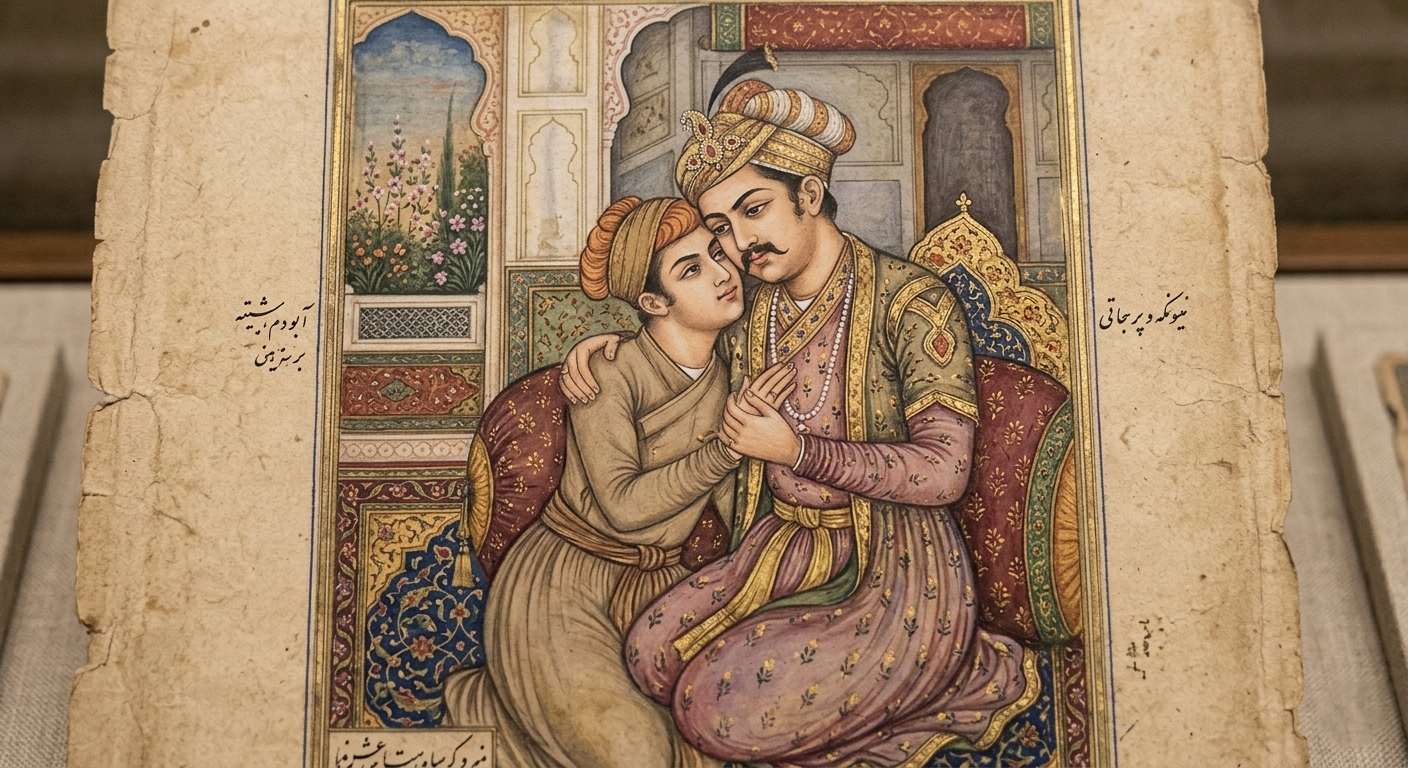
For centuries before the arrival of foreign legal codes, the Indian subcontinent did not view human desire through the narrow lens of “straight” or “gay.” In the courts of the Mughal Empire, identity was not a fixed label but a spectrum of the soul’s expression.
The Heart of the Emperor: Babur and Baburi
One of the most honest accounts of same-sex attraction in our history comes from the founder of the Mughal Empire himself. In his autobiography, the Baburnama, Emperor Babur writes with startling vulnerability about his infatuation with a young boy in the camp bazaar named Baburi. He describes being “confused and distracted,” unable to look the boy in the eye—a classic description of a heart in the throes of Ishq (love). This was not recorded as a scandal, but as a legitimate state of the human heart.
The Sacred Presence of the Khwaja Sira
The people we now call the “Third Gender” were the backbone of the Mughal administration. Khwaja Siras were not marginalized; they were the “Grand Viziers” and trusted guardians of the most private royal spaces. They held titles of nobility, managed vast estates, and led armies. Their presence was a testament to a society that recognized that wisdom and authority did not belong to men or women alone, but to those who existed between worlds.
Sufi Love: Where Genders Dissolve
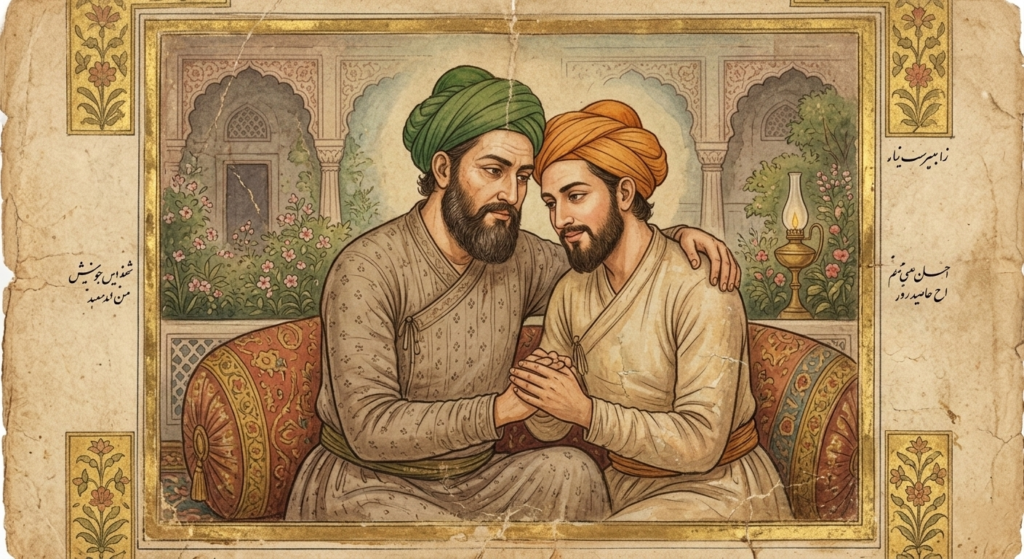
Our history is inseparable from the Sufi tradition. The legendary love between the Sufi saint Shah Hussain and the Hindu boy Madho Lal is perhaps the greatest “queer” epic of Lahore. To this day, they are buried together at the Shrine of Madho Lal Hussain. In Sufi poetry, the lover often takes the feminine persona to address the Divine, or the “Beloved” is described in terms that transcend gender. This ideology of Ishq-e-Majazi (metaphorical love) serving as a bridge to Ishq-e-Haqiqi (divine love) allowed for a social tolerance that modern “binary” thinking has forgotten.
The Poetry of the ‘Zanana’
Literature of this era, specifically Rekhti poetry, often featured voices that celebrated intimacy between women or expressed the “Zanana” (feminine) spirit within various bodies. These were not seen as “crimes” but as nuances of a rich, diverse social fabric.
Leave a Reply