Pride Pakistan is more than an organization; it is an ideology. Our story didn’t start in a vacuum, it is a legacy that flows from the fluid courts of the Mughals, through the dark shadows of colonial laws, to the digital revolution of today. This timeline honors the pioneers, the activists, and the everyday people who refused to be erased.
The Era of Fluidity: The Mughal Empire
Before colonial borders and Victorian laws, the Indian subcontinent viewed gender and desire with a sense of fluidity. In the Mughal era, same-sex intimacy and “third gender” individuals held roles as trusted servants, poets, and advisors in the royal courts. Love was often seen as a spiritual journey that transcended the physical binary.
The landscape changed forever with the arrival of British rule. In 1860, the colonial government introduced Section 377, a law that criminalized “natural” desires as “carnal intercourse against the order of nature.” This was a foreign legal transplant that replaced local tolerance with institutionalized shame and homophobia.
[Read More: How Colonialism Invented Homophobia in South Asia]
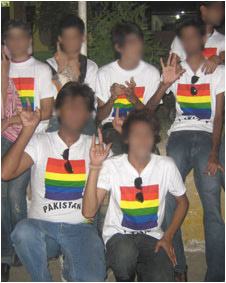
In July 2009, the Supreme Court of Pakistan made history by recognizing the “Third Gender” on national ID cards. Just months later, in November 2009, a small group of gay men in Karachi organized a historic public gathering reported by the BBC. Though they hid their faces for safety, their courage marked the birth of modern gay activism in Pakistan.
The movement gained institutional strength through the NAZ Male Health Alliance, led by Qasim Iqbal. Qasim became a prominent face for gay rights, organizing indoor, closed-door Pride events across Pakistan. These gatherings provided a rare safe space for the community to connect, even as the legal and social climate remained hostile.
[Read More: Qasim Iqbal and the Legacy of NAZ Pakistan]
2011: The US Embassy Incident & Extremist Backlash
On June 26, 2011, the US Embassy in Islamabad hosted an LGBTQI Pride social event. The subsequent media coverage sparked a massive nationwide backlash from Islamic extremist groups and conservative politicians. This event forced the movement back underground, highlighting the extreme risks associated with Western-aligned visibility.
[Read More: The 2011 Pride Social – A Turning Point for Safety]
2018–2024: The Transgender Rights Battle
In 2018, Pakistan passed the landmark Transgender Persons (Protection of Rights) Act. However, the law faced intense opposition and was challenged in the Federal Shariat Court in 2023, leading to significant rollbacks that shifted the focus toward “intersex” definitions. This period saw the rise of public Trans Prides in Lahore and other cities, even as legal protections were being dismantled.
[Read More: From 2018 to the Shariat Court – The Fight for Trans Rights]
2020: The Roots of PridePakistan.org
Our campaign, founded by Ali Raza Khan, began within the empowering network of NAZ. In 2020, with the support of the European Union, we began organizing closed-space community gatherings. These underground meetings focused on building the “Pink Triangle”, a member alliance of the Pakistan LGBTQI Alliance, designed to unite diverse voices under one banner.
[Read More: Our Origins – From the Pink Triangle to Pride Pakistan]
2021–2023: Security Risks & Decentralization
Following increased security incidents, raids, and the closing of NAZ Pakistan’s main operations in 2021, the Pink Triangle alliance began to decentralize. Lack of funds, security threats, and internal community conflicts, specifically tensions between some trans networks and gay advocacy, led to a period of fragmented activism. We realized we needed a new way to reach our people safely.
[Read More: Navigating Conflict – The Closing of the Pink Triangle]
2024: The Digital Frontier & Global Pride
In late 2023, we recognized that physical gatherings in elite city centers were not enough to reach the non-elite and rural gay community. We launched PridePakistan.org in early 2024 to provide an online sanctuary. Despite being blocked by the PTA, we expanded into digital gaming, represented the community at the Human Rights Commission, and began raising the Pakistani Gay Pride flag at international Prides worldwide.
[Read More: Digital Resistance – PTA Blocks and Global Flags]
Leave a Reply