بابر اور بابری: ایک شاہی داستانِ عشق کا انکشاف
| English Version | Urdu Version |
| The Candid Memoirs of an Emperor History often sanitizes the lives of great rulers, but Zahir-ud-Din Muhammad Babur, the founder of the Mughal Empire, chose a different path. In his autobiography, the Baburnama, he left behind one of the most honest accounts of homoerotic desire in world literature. | شہنشاہ کی بے باک خود نوشت تاریخ اکثر بڑے حکمرانوں کی زندگیوں کو چھپا کر پیش کرتی ہے، لیکن مغل سلطنت کے بانی ظہیر الدین محمد بابر نے ایک مختلف راستہ چنا۔ اپنی آپ بیتی ’بابر نامہ‘ میں انہوں نے عالمی ادب میں ہم جنس پسندی کے جذبات کی ایک انتہائی ایماندارانہ عکاسی چھوڑی ہے۔ |
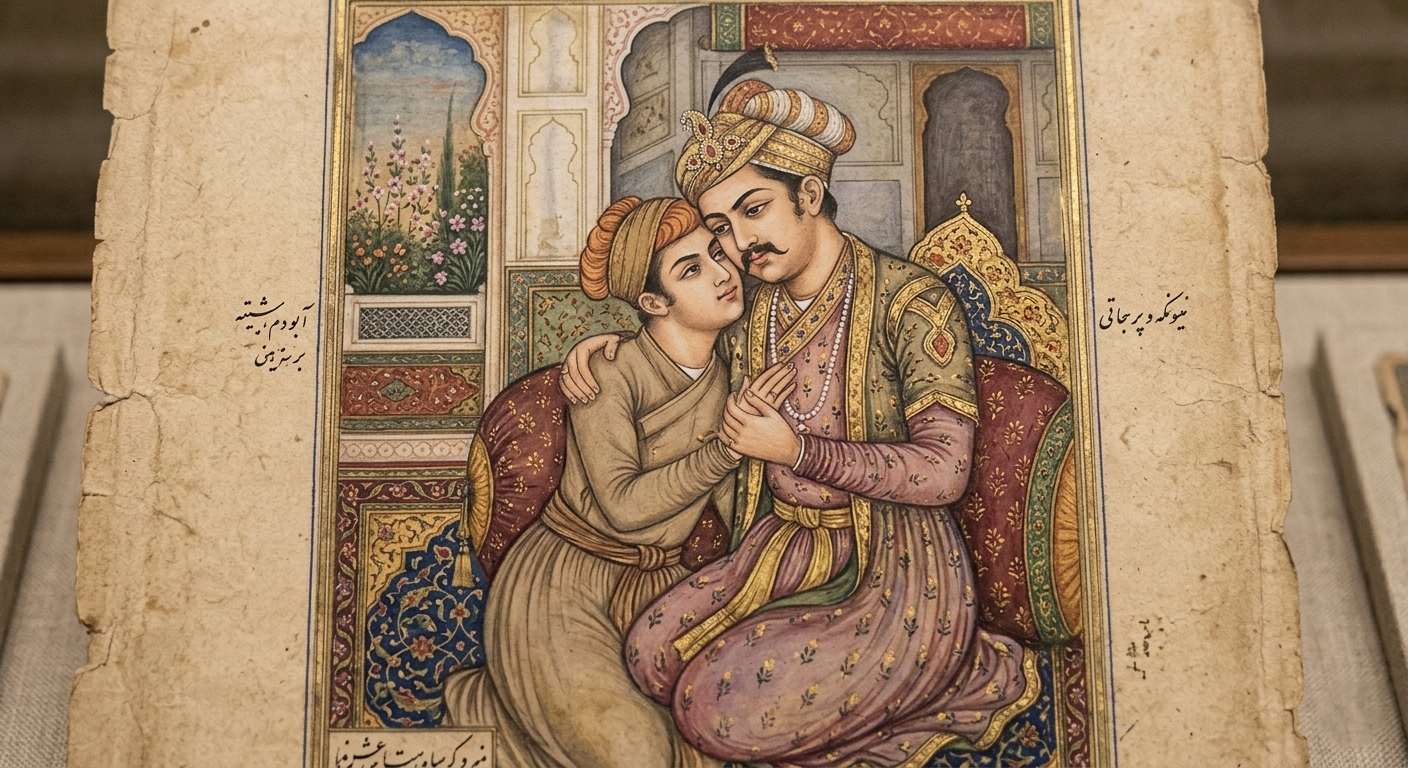
| Meeting Baburi In the year 1499-1500, while in the camp bazaar of Samarkand, Babur encountered a young boy named Baburi. Babur writes: “In those days, I discovered in myself a strange inclination… for a boy named Baburi in the camp bazaar.” He describes being so overwhelmed by attraction that he could not look the boy in the eye, wandering bareheaded and barefoot through the streets in a state of romantic confusion. | بابری سے ملاقات سن 1500 کے لگ بھگ، سمرقند کے کیمپ بازار میں بابر کی ملاقات ایک نوجوان لڑکے سے ہوئی جس کا نام بابری تھا۔ بابر لکھتا ہے: “ان دنوں میں نے اپنے اندر ایک عجیب رجحان پایا… بازار کے ایک لڑکے بابری کے لیے۔” وہ لکھتا ہے کہ وہ اس کشش سے اتنا مغلوب تھا کہ لڑکے سے آنکھ نہیں ملا سکتا تھا اور وہ گلیوں میں ننگے پاؤں اور ننگے سر دیوانہ وار پھرتا تھا۔ |
| Gay, Bisexual, or Fluid? While “Gay” and “Bisexual” are modern Western labels, Babur’s experiences clearly fit these descriptions. Despite being a father and a husband, his recorded passion for Baburi highlights a sexual orientation that was fluid. This confirms that homoerotic attraction was a lived reality for the highest levels of Islamic royalty in South Asia long before colonial intervention. | گے، بائی سیکشول یا صنفی لچک؟ اگرچہ “گے” یا “بائی سیکشول” جدید اصطلاحات ہیں، لیکن بابر کے تجربات ان تعریفوں پر پورا اترتے ہیں۔ ایک باپ اور شوہر ہونے کے باوجود، بابری کے لیے ان کی تڑپ ایک ایسی صنفی میلان کو ظاہر کرتی ہے جو لچکدار تھی۔ یہ اس بات کی تصدیق کرتا ہے کہ نوآبادیاتی دور سے بہت پہلے جنوبی ایشیا کی شاہی زندگیوں میں ہم جنس پسندی ایک حقیقت تھی۔ |
| A Legacy of ‘Ishq’ Babur expressed his longing through Persian couplets: “I am abashed whenever I see my friend; my companions look at me and I look another way.” His struggle was not with the “sin” of the act, but with the vulnerability of love itself. To call his identity a “Western import” is to ignore the very words written by the man who built our history. | عشق کی میراث بابر نے فارسی اشعار کے ذریعے اپنی تڑپ کا اظہار کیا: “میں جب بھی اپنے دوست کو دیکھتا ہوں شرما جاتا ہوں؛ میرے ساتھی مجھے دیکھتے ہیں اور میں دوسری طرف دیکھتا ہوں۔” ان کی جدوجہد کسی “گناہ” کے احساس سے نہیں تھی، بلکہ محبت کی بے بسی سے تھی۔ ان کی شناخت کو “مغربی درآمد” کہنا اس شخص کے اپنے الفاظ کو جھٹلانے کے برابر ہے جس نے ہماری تاریخ لکھی۔ |
References:
- Primary Source: The Baburnama: Memoirs of Babur, Prince and Emperor, translated and edited by Wheeler M. Thackston (1996) or Annette Beveridge (1922).
- Scholarly Analysis: The Garden of the Eight Paradises: Babur and the Culture of Empire in Central Asia, Afghanistan and India by Stephen F. Dale.
- Literary Reference: Same-Sex Love in India: Readings from Literature and History by Ruth Vanita and Saleem Kidwai.
Leave a Reply